In general terms, tall drivers need a karting helmet that fits their head properly and leaves enough clearance under the kart’s seat and steering setup — which usually means choosing by head size and shell shape, not by height alone, and checking the fit while seated in the kart. Height itself does not change helmet size, but it changes posture, seating, and the space around the driver.
Tall drivers often struggle with karting fit in ways that have little to do with the helmet label. Knees hit the steering column, the seat feels short, and the helmet can feel cramped against the seat back or catch the wind differently. This guide covers helmet fit for tall drivers and the seating tweaks that make it work.
Does Height Change Your Helmet Size?
No — helmet size is determined by head circumference and head shape, not by how tall you are. A tall driver with a medium head wears a medium helmet, just like a shorter driver with the same head. Buying a larger helmet because you are tall is a common mistake, and it leads to a helmet that moves around and protects less well.
What height does change is proportion. Tall drivers often have longer necks and a higher seating position, which can make a helmet feel top-heavy or make the chin bar sit differently against the chest when looking down. That is a fit and posture issue, not a size issue, and it is solved by trying helmets on and checking the fit in a driving position, not by sizing up.
Head shape matters as much as circumference. Some helmets suit rounder heads, others suit longer, oval heads. A tall driver with a long, narrow head may find one brand comfortable and another pressing on the forehead, even in the same labelled size. Trying several brands is the only reliable way to find the right shape.
How Should a Tall Driver Check Helmet Fit?
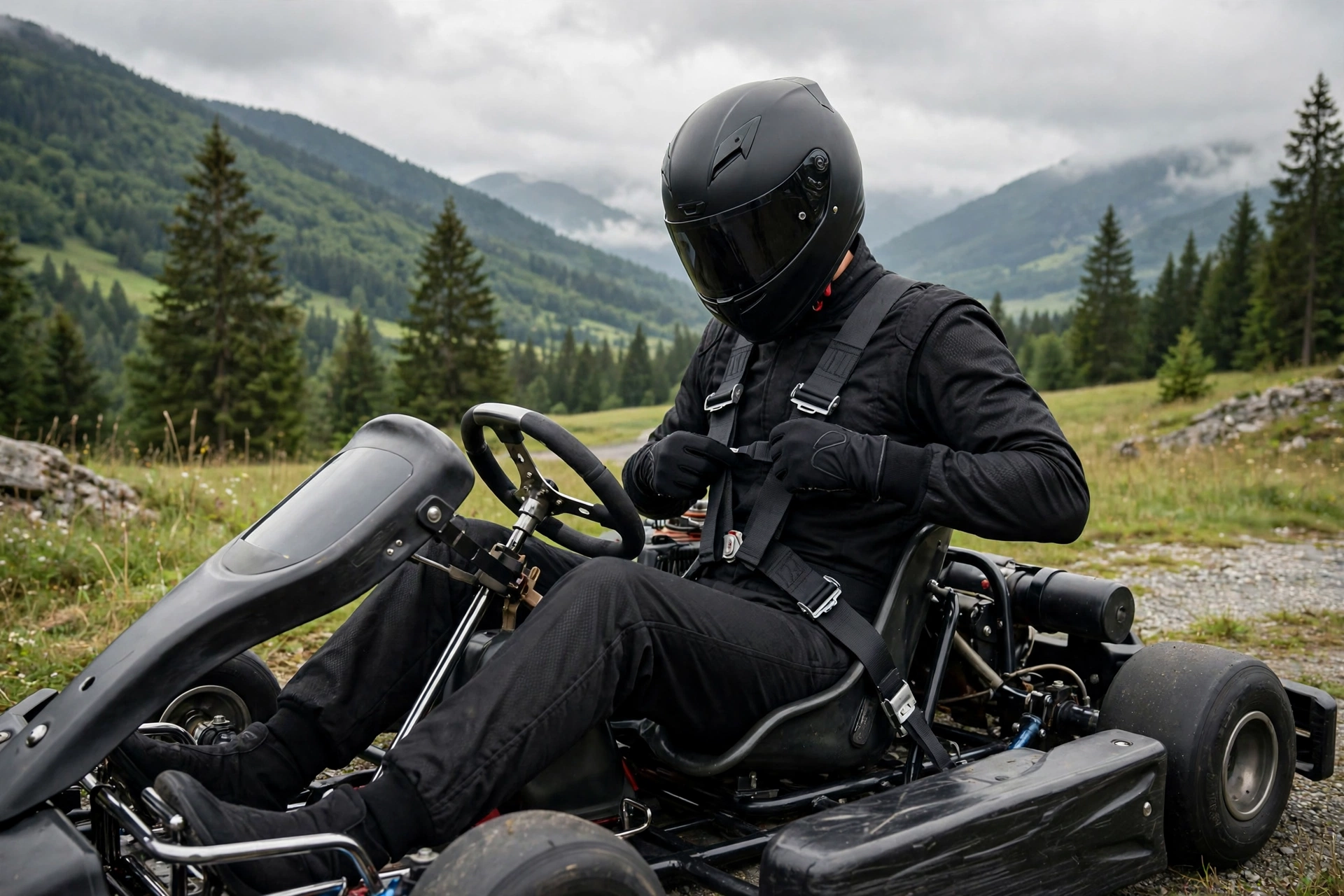
Check fit the same way any driver should, but do it seated in a kart if possible. The helmet should sit level, cover the forehead, and stay put when you shake your head gently. The cheek pads should touch firmly without squeezing painfully, and the chin strap should hold the helmet securely.
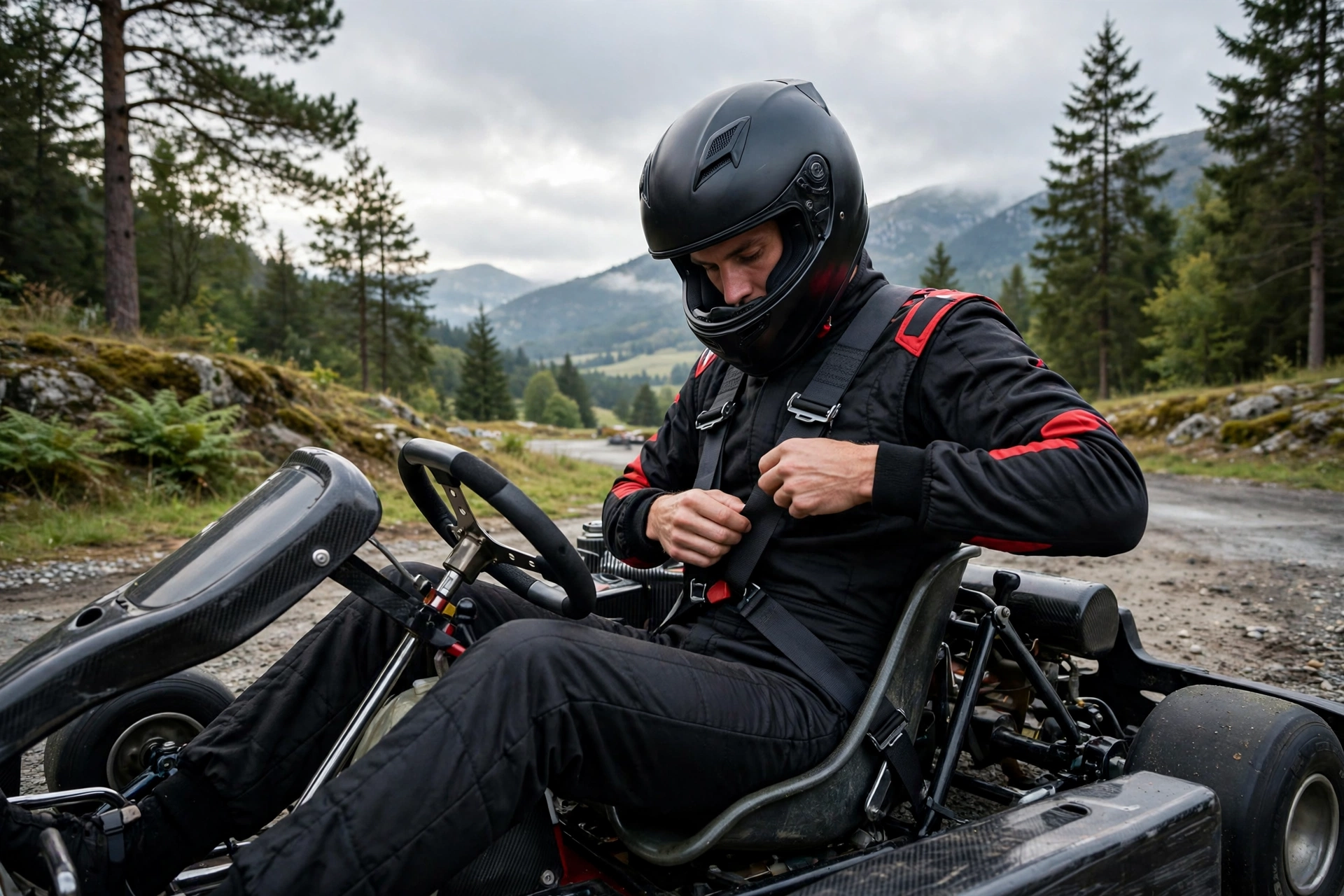
In the kart, check the extra things height affects. Can you turn your head freely to look for other karts, or does the helmet catch on the seat back? Does the chin bar press on your chest when you look down at the pedals? Can you see the track ahead clearly without the top of the visor cutting into your view? These checks only work in the driving position.
Also check the seating position itself. Many karts allow the seat to be moved back or the pedals to be adjusted, and a small change there can transform helmet comfort. A driver who is cramped into a seat will hunch, and a hunched driver will find any helmet uncomfortable, however well it fits on its own.
What About Neck Strain for Tall Drivers?
Tall drivers sometimes report more neck strain in karts, and the reasons are partly postural. A higher seating position and a longer neck can mean the head sits further forward or higher in the airflow, and karting involves constant head movement to check for other drivers. Over a long session, that adds up.
Helmet weight is therefore worth paying attention to. A lighter helmet reduces the load on the neck, and for a tall driver that difference is noticeable over a race day. Weight is not the only factor — fit and balance matter too — but when two helmets fit equally well, the lighter one is usually the better choice for a tall driver.
Simple habits help as well. Keeping the neck and shoulders relaxed, avoiding a tense, hunched posture, and taking breaks between sessions all reduce strain. Some tall drivers also find that a seat insert or a small change to the seat angle improves their posture enough to ease neck fatigue noticeably.
Which Helmet Features Help Tall Drivers Most?
Good ventilation helps, because tall drivers often sit higher in the airflow and can catch more wind — and more dust — than shorter drivers in the same kart. Vents that can be opened and closed let you manage airflow without removing the helmet, which is useful on a long day.
A wide, clear visor helps too. A visor with a generous field of view makes it easier to see the track and other karts without turning the head as far, which reduces neck movement. Check the visor’s vertical range as well: a tall driver looking down at pedals or up at overhead signals needs a visor that works across that range.
Removable, washable linings are a practical bonus for any regular driver, and tall drivers who kart often will appreciate them just as much. A lining that can be refreshed keeps the helmet comfortable and hygienic, and replacement cheek pads in different thicknesses can fine-tune the fit without buying a new helmet.
What Seating Adjustments Work With the Helmet?
Start with the seat position. Moving the seat back gives legroom and lets you sit more upright, which improves both helmet clearance and vision. If the kart’s seat cannot move far enough, a different seat size or a seat insert may help, and many centres and clubs can advise on this.
Pedal position is the next adjustment. Pedals that are too close force the knees up and the driver into a crouch, which pushes the helmet forward and strains the neck. Pedals set further away let the legs extend naturally and the torso sit upright, which is the posture a helmet is designed for.
Finally, remember that the helmet, the seat, and your posture work together, and that fit is what makes any helmet’s protection work — including systems that address angled impacts, as explained in this guide to what MIPS means for helmets. A helmet that fits, in a kart adjusted to your height, is the combination that keeps tall drivers comfortable and safe.
Frequently Asked Questions
Q: Do tall drivers need a special karting helmet?
A: In general terms, no — there is no tall-specific helmet. Choose by head size and shape, check the fit seated in a kart, and adjust the seat and pedals to suit your height.
Q: Will a bigger helmet give me more headroom in a kart?
A: No. A larger helmet sits higher and moves more, which makes fit worse, not better. Headroom comes from seat and kart adjustment, not from sizing up the helmet.
Q: Are tall drivers at more risk in a kart crash?
A: In general terms, height alone does not make a crash more dangerous, but a poor seating position can. A driver who is cramped or hunched is less able to brace and control the kart, so getting the seat right matters for safety as well as comfort.

Olivia
Writer at Helmet Today, covering helmet reviews, fit and riding safety.