To get a kids ski helmet size right, measure your child’s head in centimeters, match that number to the brand’s size chart, and aim for a snug fit with the thin layer they will actually ski in — not a bigger helmet bought to grow into. A ski helmet that is too large shifts on impact and gaps at the forehead with the goggles, while a correct one feels like a firm, even hug all around the head. Size by measurement, never by age alone.
Ski helmets do not size like shoes, and “close enough” is not close enough when the helmet’s whole job happens in one split second. The good news: measuring takes two minutes, and this guide covers the chart, the sizing-up trap, hats and balaclavas, and the goggle fit check that ties it all together.
How Do You Measure a Child’s Head for a Ski Helmet?
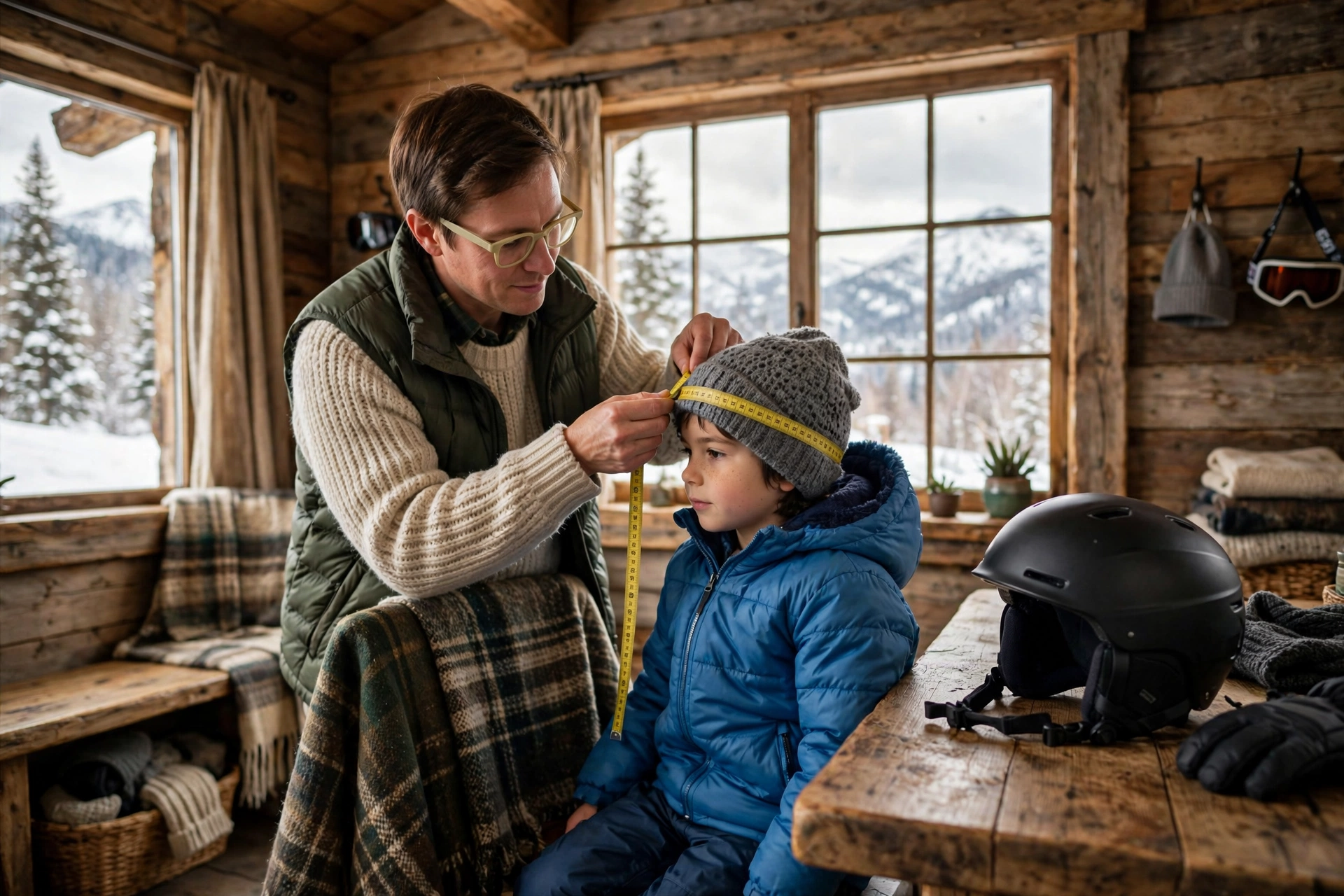
Use a soft measuring tape — or a piece of string you then measure against a ruler. Wrap it around your child’s head at the widest point: just above the eyebrows, above the ears, and around the fullest part of the back of the head. Keep the tape level and snug against the hair without compressing it.
Measure two or three times and use the largest consistent number. Kids wriggle, tape slips, and a single centimeter can move your child into a different size, so take the extra minute to be sure. Write the number in centimeters down; every ski helmet brand charts its sizes in centimeters even when the box also shows inches.
Resist the urge to shop by age. Charts sometimes print rough age ranges, but in general terms two children of the same age can have head sizes several centimeters apart — one comfortably in a small, the other nearly out of it. The tape measure is the authority; age is at most a hint about which shelf to start on.
Which Size Should You Choose From the Chart?
Find your child’s measurement on the specific brand’s chart for the specific model you are buying — size labels are not standardized, and a “medium” from one maker can overlap a different range from another. If your child’s head lands comfortably inside one size’s range, that is the size. Most kids ski helmets use a rear adjustment dial that fine-tunes the fit across the range, which gives you some room as they grow within that size.
If the measurement falls right at the top of a size range, try both that size and the next one up if you can. The right one feels snug and even, without a hard pressure point on the forehead. If it falls between sizes in a model without a dial, the fit of the individual helmet decides — try them on, because head shape varies as much as head size.
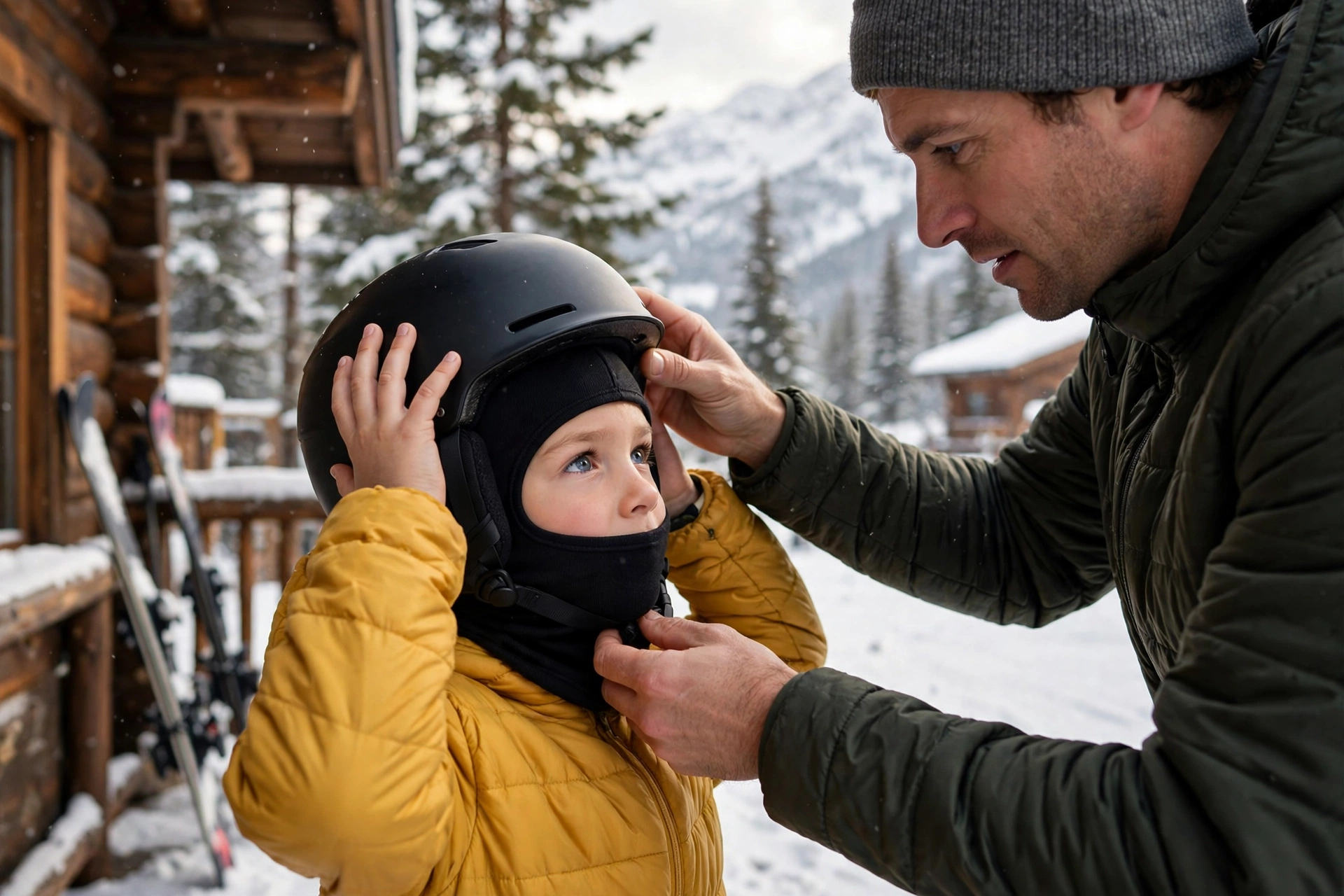
When you try the helmet on, it should sit low and level, covering the forehead, and feel snug all around. Your child should be able to shake their head without the helmet sliding, yet report no pain after wearing it for several minutes.
Should You Size Up So Your Child Can Grow Into It?
No — this is the most common and most consequential mistake in kids ski helmet sizing. A helmet protects by staying in position and managing impact where it contacts the head. An oversized helmet can shift or partially come off in a fall, exposes parts of the head it should cover, and leaves a forehead gap that defeats the goggle seal. Thick hats stuffed underneath to fill the space make the fit worse, not better, because the helmet then perches on top of the head instead of cupping it.
Children do outgrow helmets — that is normal and expected. The adjustment dial in most kids models buys you growth room within the size, often a season or two. When the dial is at its loosest and the helmet still will not sit snugly, or your child’s measurement has moved past the size range, it is time for the next size.
If budget is the worry, consider last season’s colors of a correctly sized helmet rather than the wrong size at any price, and check the fit again at the start of every season. Correct fit is not an upgrade feature; it is the feature.
How Does the Helmet Fit With Hats and Balaclavas?
Fit the helmet the way your child will actually wear it. Many kids ski in just the helmet, whose liner and ear pads are designed to provide warmth on their own. If your child skis in very cold conditions and wears a thin balaclava or a slim helmet liner underneath, do the fitting with that layer on — a thin layer can add the equivalent of a size step for a small head.
What should not go under a ski helmet is a thick winter hat. Bulky knit hats lift the helmet up, create a slippery layer between head and helmet, and bunch at the forehead where the goggles need to seal. If your child is cold, the answer is a thin, close-fitting liner made for the purpose, or a helmet with warmer ear pads — not a pom-pom hat.
Re-check the fit any time the under-layer changes between trips. It takes ten seconds: helmet on over the day’s layers, shake test, quick look in the mirror to confirm it is still sitting low and level.
How Do You Check Goggle Fit With the Helmet?
Helmet and goggles are a system, so always test them together — ideally your child’s own goggles, or the pair you are buying at the same time. Put the helmet on first, then the goggles. The classic problem is the “gaper gap”: a strip of exposed forehead between the top of the goggles and the edge of the helmet. That gap means cold air and snow blast the skin, and it signals the helmet or goggles are not matched well. Look for the goggle frame to meet or slightly overlap the helmet’s lower edge.
Check the strap too. It should sit flat around the helmet, held by the goggle clip or retainer at the back, without riding so high or low that it tilts the frame. Your child should be able to breathe comfortably with no hard pressure on the nose bridge, and the foam should seal evenly around the face.
One more consideration: some ski helmets offer extras such as the rotational liner technology explained in our guide to what MIPS is and how it works, and many add audio-ready ear pads. Extras are nice, but for kids the hierarchy is fixed — certified helmet, correct size, then goggle compatibility, then features.
Frequently Asked Questions
Q: Can my child wear a bike helmet for skiing instead?
A: It is not a good substitute. Ski helmets are certified to ski and snowboard standards such as ASTM F2040 or CE EN 1077 in general terms, and they are designed for cold temperatures, fuller coverage, and warmth. A bike helmet is built and certified for cycling, with vents and a shape that leave a child cold and less covered on the slopes.
Q: How tight should a kids ski helmet feel?
A: Snug and even all around, like a firm hug, with no sliding when your child shakes or nods their head — but never painful. Pressure points, a red mark across the forehead, or a headache mean the size or shape is wrong.
Q: When should a child’s ski helmet be replaced?
A: Replace it after any significant impact or crash, even if it looks undamaged, and whenever your child outgrows the size range. Manufacturers also give helmets a service life — in general terms, around five years from first use is a common guideline, after which materials age and the helmet should be retired.

Olivia
Writer at Helmet Today, covering helmet reviews, fit and riding safety.