In general terms, there is no single lightest safe helmet, because safety comes from the whole helmet — shell, liner, fit, and certification — not from weight alone, and the lightest certified helmet for one sport may be far too light, or entirely wrong, for another. Weight matters for comfort, but it is a poor shortcut for judging protection.
Riders often ask about weight limits because a heavy helmet is tiring. Neck strain on long rides, fatigue in hot weather, and discomfort for children or smaller riders all push buyers toward the lightest option they can find. That instinct is understandable, but chasing the lowest number on the scale can lead to the wrong helmet for the job.
Is There a Minimum Legal Weight for Helmets?
No major helmet standard sets a minimum weight. Standards set performance requirements: how much force may reach the head in an impact test, how far a strap system may stretch, how well the helmet stays in place, and how it resists penetration. A helmet passes or fails on those results, regardless of what it weighs.
That is why certified helmets vary so much in weight. Different sports need different coverage, different shell materials, and different liner densities, and all of those affect weight. A lightweight road cycling helmet and a full-face motocross helmet can both be certified, yet differ enormously in weight, because they are built for different risks.
The absence of a weight limit cuts both ways. It means manufacturers are free to make helmets lighter, but it also means a very light helmet is not automatically unsafe — and a heavy helmet is not automatically safer. The certification label, not the scale, is what tells you a helmet meets its standard.
Why Can’t Helmets Just Keep Getting Lighter?
Impact protection needs material. The liner — usually expanded foam — works by crushing in a controlled way, absorbing energy over a distance. A thinner, lighter liner has less distance to work with, so it must be made from denser or more advanced material to absorb the same energy. That trade-off sets a practical floor for how light a helmet can be while still passing its tests.
The shell adds weight too. It spreads impact forces over a wider area, resists penetration, and holds the liner together during a crash. Lighter shell materials, such as advanced composites, can reduce weight, but they generally cost more and may be more fragile in everyday knocks. There is a point where saving weight starts costing durability or price faster than it gains comfort.
Coverage also adds weight. A full-face helmet protects the chin and jaw, but the chin bar and larger shell weigh more than an open-face design. A helmet that covers more of the head will almost always weigh more than one that covers less, even with the same materials. Cutting coverage to save weight is a real trade, not a free gain.
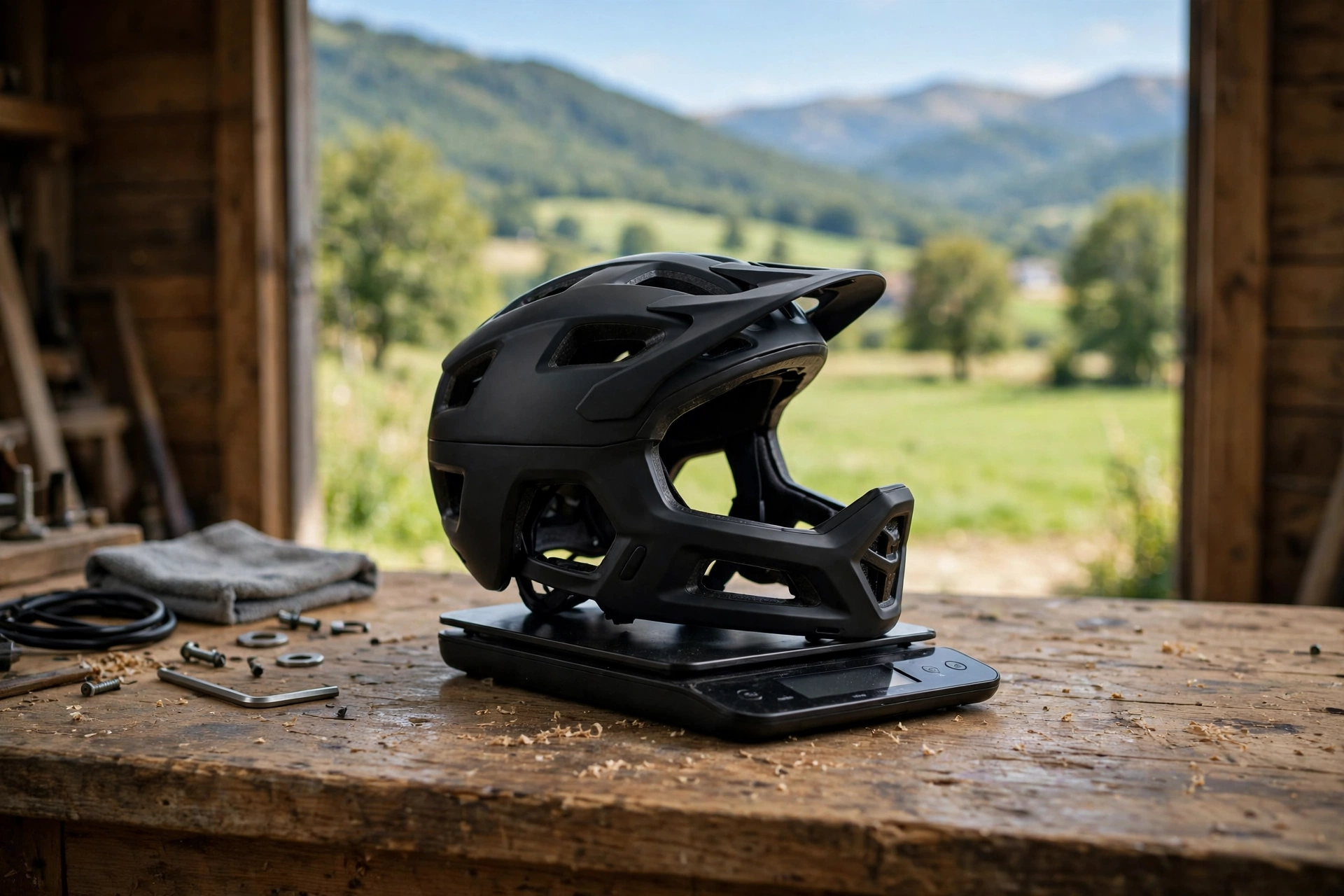
Does a Lighter Helmet Protect Less?
Not necessarily. Two helmets can pass the same certification at very different weights, because materials and design matter more than raw mass. A well-engineered light helmet with an advanced liner can absorb impact energy as effectively as a heavier helmet with a simpler liner. The test results, not the weight, are the fair comparison.
What weight does affect is how the helmet behaves on your head. A heavier helmet creates more leverage on the neck in a crash and more fatigue during long use, which is why racers and endurance riders care about grams. A lighter helmet that fits well and stays put is easier to wear correctly for hours, and a helmet worn correctly protects better than a heavier one left loose or taken off early.
Be cautious, though, with helmets that seem impossibly light for their type. If a full-face helmet weighs far less than comparable certified models, check its certification carefully, including whether it is certified for your sport at all. Some very light helmets are certified only for low-speed activities, and wearing one at higher speeds would be a mismatch, not a bargain.
How Much Does Helmet Weight Matter for Comfort?
Weight matters most over time. For a short ride, most riders barely notice a difference of a few hundred grams. Over several hours, that difference becomes neck fatigue, headaches, and a temptation to loosen straps or remove the helmet at stops. For touring riders, commuters, and children, weight is a genuine comfort factor worth weighing in the purchase decision.
Balance matters as much as total weight. A helmet whose weight sits high or forward feels heavier than a slightly heavier helmet that sits level and balanced on the head. Fit, padding, and weight distribution all influence how heavy a helmet feels, which is why trying helmets on matters more than comparing specification sheets.
Children deserve special attention here. A child’s neck muscles are still developing, so a heavy helmet is proportionally more tiring for a young rider. Choosing the lightest certified helmet that fits the child’s sport and head size is sensible — but never at the cost of certification or fit. A light helmet that wobbles is worse than a slightly heavier one that stays put.
What Should You Check Besides Weight?
Start with certification for your activity, then fit, then coverage, then weight — in that order. A helmet should sit level, feel snug without pressure points, and stay in place when you shake your head. No weight saving compensates for a helmet that moves around or leaves part of the head exposed.
Check ventilation and visibility too. A light helmet that cooks your head in summer, or that blocks peripheral vision, will not get worn happily. Comfort features like washable liners, good vents, and a clear visor all affect whether the helmet becomes a habit or a chore.
Finally, look at the whole protection system, including how the helmet handles angled impacts, as explained in this guide to what MIPS means for helmets. The lightest safe helmet for you is the lightest certified helmet that fits your head, suits your sport, and that you will actually wear on every ride — and that answer will differ from rider to rider.
Frequently Asked Questions
Q: What is a good weight for a motorcycle helmet?
A: In general terms, full-face motorcycle helmets commonly fall in a broad range, and the right weight for you depends on the helmet type, materials, and how long you ride. Prioritise certification and fit first, then choose the lightest option that meets both.
Q: Is a heavier helmet safer in a crash?
A: Not automatically. Safety is measured by certification test results, not by weight. A heavier helmet can add neck strain, while a lighter certified helmet can protect just as well if it is properly designed and fitted.
Q: Should children wear the lightest helmet available?
A: A light helmet helps a child’s comfort, but only if it is certified for their activity and fits snugly. Never trade certification or fit for a lower weight.

Olivia
Writer at Helmet Today, covering helmet reviews, fit and riding safety.