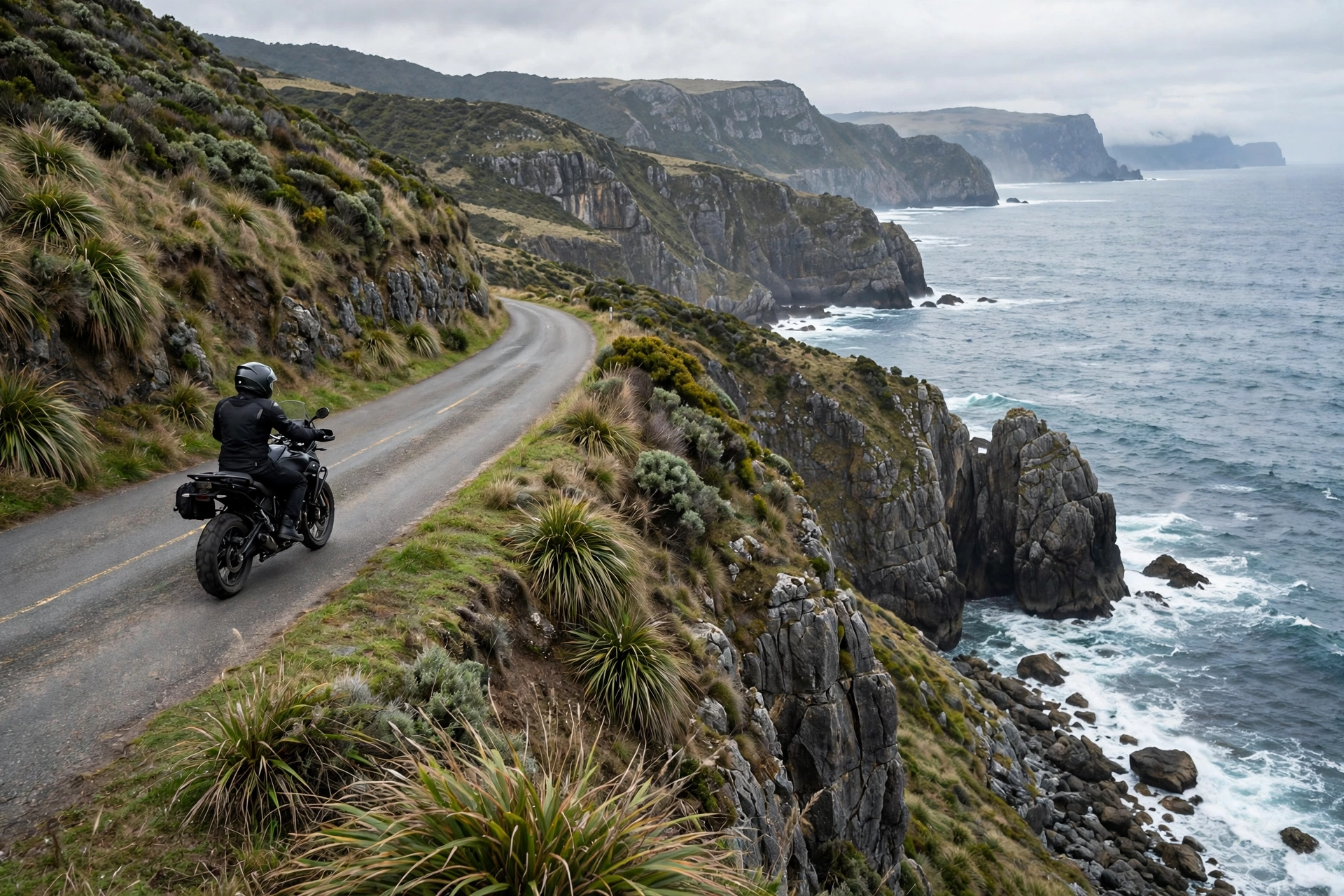
In general terms, motorcycle helmets are compulsory in New Zealand for riders and passengers on public roads, and the helmet must meet an approved safety standard and be worn correctly — a rule that applies across the country, so riders should make sure their helmet is compliant before riding. New Zealand’s helmet law is one of the more straightforward in the world: there is a national requirement, it covers both rider and passenger, and enforcement is routine. The complications lie in the details — which standards are approved, how helmets are checked, and what happens with visiting riders — rather than in whether a helmet is needed at all.
This guide explains, in general terms, how motorcycle helmet laws work in New Zealand, what counts as an approved helmet, and what visitors should know. It is general information only, not legal advice, and it avoids specific fines or statute numbers, since those can change.
Who Has to Wear a Motorcycle Helmet in New Zealand?
In general terms, everyone on a motorcycle on a public road in New Zealand must wear an approved helmet: the rider and any passenger, on every trip, however short. There is no exemption for a quick ride around the block or for low-speed urban trips, and passengers are covered just as riders are. The rule applies to motorcycles of all sizes, and in general terms to mopeds and similar powered two-wheelers as well, subject to their own classifications.
The universality of the rule is its strength: riders do not need to work out whether their particular road, vehicle, or trip is covered. If you are on a motorcycle on a public road, the helmet goes on. Private land use sits outside the road rules, but the safety case for a helmet is unchanged, and most experienced riders wear one wherever they ride.
What Counts as an Approved Helmet in New Zealand?
In general terms, an approved helmet is one that meets a safety standard recognised in New Zealand and carries the appropriate certification marking. The recognised standards include New Zealand’s own standard and several well-known international standards, and helmets sold by reputable New Zealand retailers will normally carry the right markings. A helmet without a recognised marking, or one bought overseas to an unfamiliar standard, may not be compliant even if it looks substantial.
Condition matters as much as certification. A helmet that has been dropped hard or involved in a crash should be replaced, since the liner may have absorbed an impact invisibly. The helmet must also be worn correctly: fastened, sitting level, and fitting snugly enough not to rock or slide. A helmet carried on an arm or perched unfastened on the head does not satisfy the rule and does not protect the rider.
How Are Helmet Laws Enforced in New Zealand?
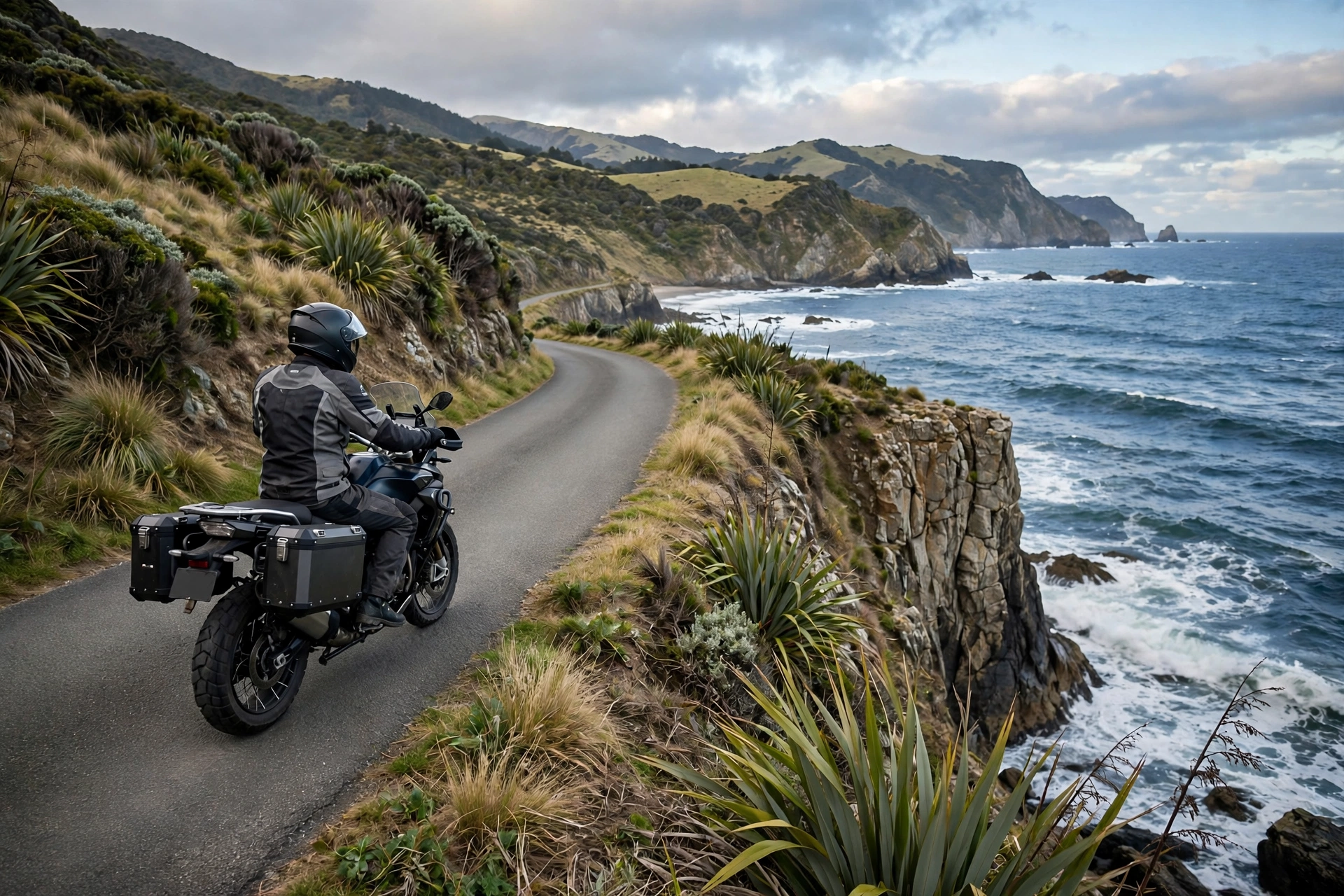
Enforcement is, in general terms, a routine part of road policing in New Zealand. Police may stop a rider who is not wearing a helmet, or whose helmet appears non-compliant or unfastened, and deal with the matter under road traffic law. Because the rule is national and long-standing, most riders comply without thinking about it, and non-compliance stands out quickly.
Beyond enforcement, non-compliance can affect insurance and liability after a crash. An insurer may raise questions about a claim where a required helmet was not worn or was non-compliant, and a rider’s injuries may be worse than they would have been with a proper helmet. The legal consequence is only part of the cost; the physical consequence is usually larger. Wearing an approved helmet correctly avoids both problems at once.
What Should Visiting Riders Know?
Visitors hiring motorcycles in New Zealand should confirm that the hire includes an approved helmet in their size, and check the helmet’s markings and condition before riding. Hire companies normally supply compliant helmets, but sizes run out and condition varies, so inspect the helmet rather than assuming it is fine. Bringing your own helmet is an option, but check that it meets a standard recognised in New Zealand before relying on it.
Visitors should also remember that New Zealand rides on the left, that rural roads can be narrow and winding, and that weather can change quickly — all of which make a well-fitting, undamaged helmet more important, not less. A helmet with a clean visor, a working fastening, and a comfortable fit is worth sorting out before the first ride, not after it. For background on how helmet liners manage impact energy, this guide to modern helmet liner systems explains the basics.
What Kind of Helmet Suits New Zealand Riding?
The best helmet is an approved one that fits your head shape, suits your riding, and stays comfortable for a full day. Full-face helmets offer the most coverage and are the common choice for road riding, while open-face and modular helmets suit riders who value ventilation or convenience, provided they are approved and worn fastened. Whatever the style, the essentials are the same: recognised certification, correct size, level fit, and undamaged condition.
New Zealand’s varied riding — city commuting, long touring routes, and winding rural roads — rewards a helmet with a good visor, effective ventilation, and compatibility with the eyewear or communication gear you use. Try helmets on with your usual gear, and replace a helmet that has aged, been damaged, or no longer fits. A helmet is not a lifetime purchase, and treating it as one is a false economy.
How Can Riders Stay Compliant?
Compliance is simple: buy or hire an approved helmet from a reputable source, check its markings, wear it fastened and level on every ride, and replace it after a crash or when it no longer fits properly. If you are unsure whether a helmet meets a recognised standard, ask the retailer or check the official guidance rather than guessing.
New Zealand’s rule has been stable for many years, but standards and recognised lists can be updated, so a quick check of current official guidance before buying a helmet — especially an imported one — is worthwhile. The habit itself never changes: approved helmet, fastened, every ride, rider and passenger alike.
Frequently Asked Questions
Q: Are motorcycle helmets compulsory in New Zealand?
A: Yes, in general terms, for riders and passengers on public roads, with the helmet meeting an approved standard and worn correctly. There is no short-trip exemption.
Q: Can I use a helmet bought overseas in New Zealand?
A: Only if it meets a standard recognised in New Zealand and carries the appropriate marking. Check the recognised standards before relying on an imported helmet.
Q: Does a passenger need a helmet in New Zealand?
A: Yes. Passengers are covered by the same requirement as riders, and the helmet must be approved and worn fastened.

Olivia
Writer at Helmet Today, covering helmet reviews, fit and riding safety.