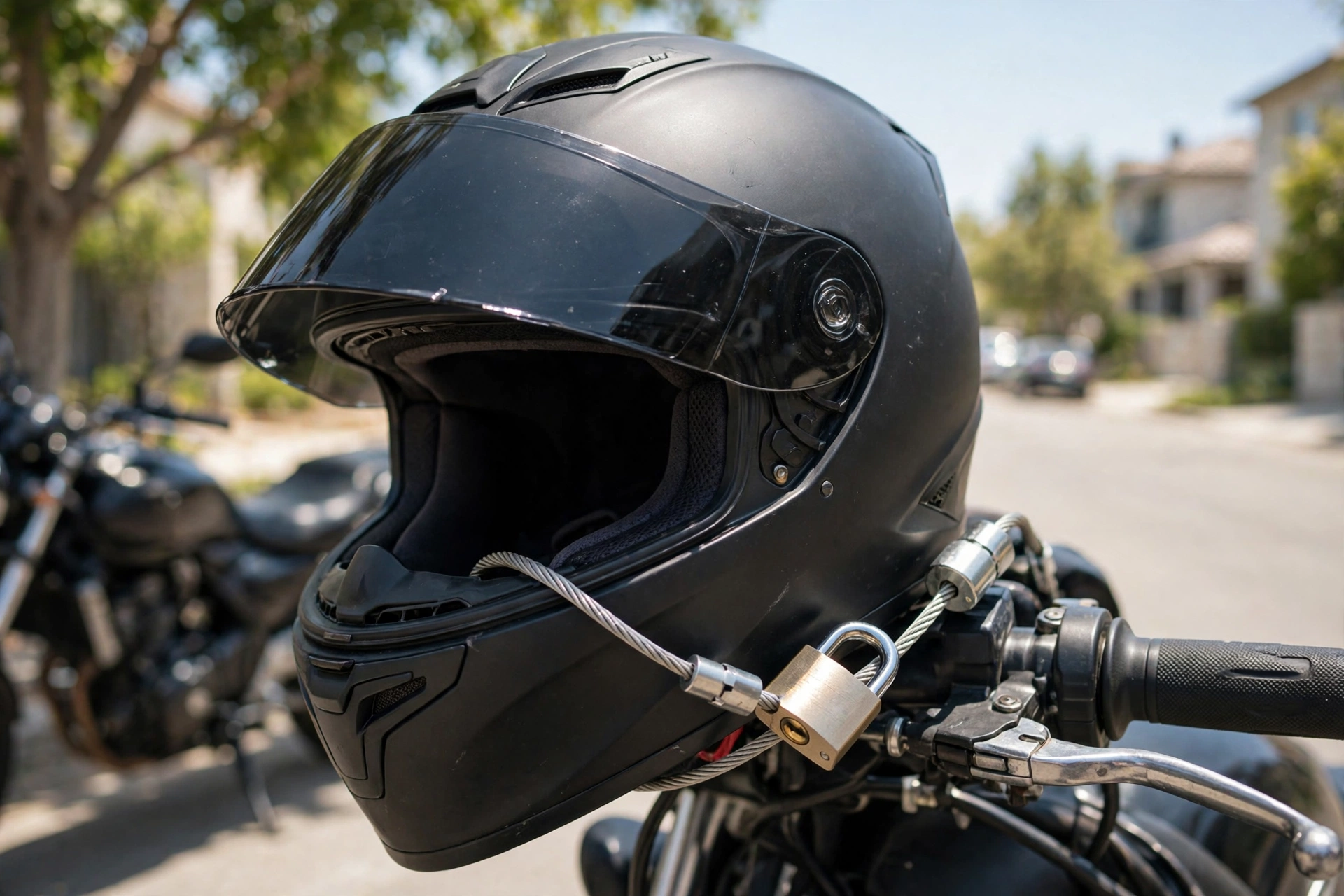
To secure a motorcycle helmet on the bike, use a dedicated helmet lock — either the lock built into your bike, a cable or chain lock through the helmet’s D-ring or chin strap, or a helmet lock accessory fitted to the frame. A helmet left hanging loose on a mirror or seat is an easy target for theft, and a helmet that falls to the ground can be damaged even if it looks fine afterwards. A proper lock keeps the helmet attached to the bike and off the ground while you are away.
This guide explains the main ways to lock a helmet to a motorcycle, in general terms, from the built-in lock that many bikes already have to portable locks you can carry in a pocket. It also covers what to do when your bike has no lock at all, and how to avoid the common mistakes that leave a helmet damaged or stolen.
What Is a Motorcycle Helmet Lock?
Most locks work by passing through the metal D-ring on the helmet’s chin strap, or through the strap itself, and then fastening to a fixed point on the motorcycle. Once locked, the helmet hangs from the bike and can only be removed by unlocking it or by cutting the strap — and cutting the strap ruins the helmet, which makes it a poor target for a thief. Many motorcycles also come with a built-in helmet lock fitted under the seat or on the side of the bike, usually a small hook or loop with a key-operated catch that uses the bike’s ignition key.
Aftermarket helmet locks are also widely available, including small padlock-style locks that clamp to the handlebar or frame, cable locks that loop through the helmet and around a solid part of the bike, and combination locks that need no key at all. The best choice depends on your bike, your helmet, and how often you leave the helmet on the bike.
How Do You Use the Built-In Helmet Lock on Your Bike?
Using a built-in helmet lock is usually straightforward, though the exact steps vary by bike. In general terms, you unlock the catch with the key, hook the helmet’s D-ring over the lock’s post or hook, and then turn the key to close the catch. The helmet then hangs from the side of the bike, usually near the rear of the seat or under the pillion seat. Check your owner’s manual for the exact location and method, because it differs from one model to another.
There are a few things to watch for. First, make sure the D-ring is fully on the hook before you lock it — a ring that is only half on can slip off when the bike is bumped. Second, position the helmet so it does not rest against a hot exhaust pipe, which can melt the shell or the lining. Third, if your helmet has a quick-release buckle instead of a D-ring, you may need a small adapter loop, often called a helmet lock extension, that gives the lock something to pass through.
If you want to learn more about the safety technology inside your helmet, reading about what MIPS is for helmets can help you understand how modern helmets protect your head.
What Portable Helmet Locks Work Best?
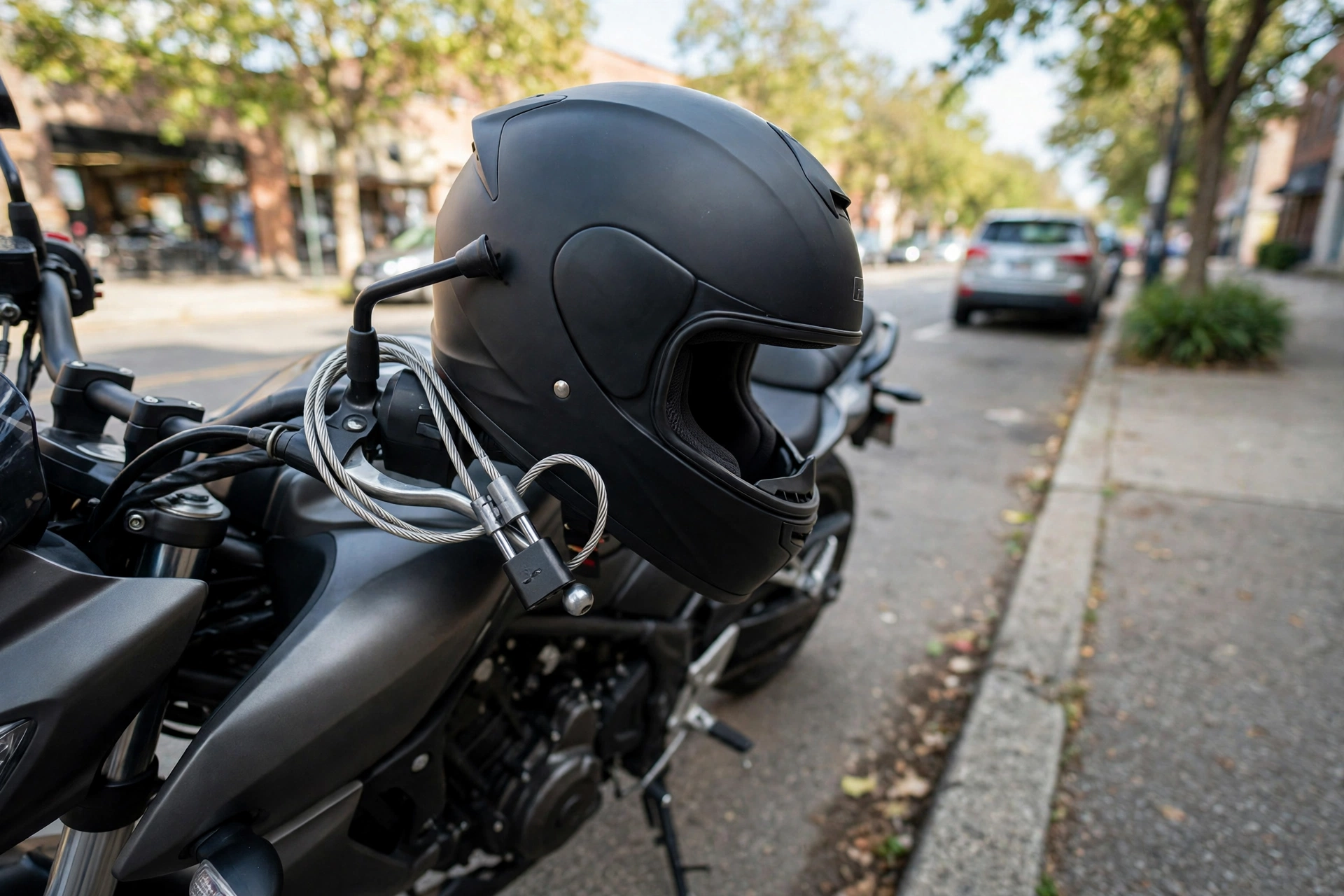
Portable helmet locks are a good option when your bike has no built-in lock or when you want stronger security. A cable lock is one of the most popular choices: a short steel cable with a lock at one end, long enough to loop through the helmet’s D-ring and around a solid part of the bike such as the frame, a handlebar, or a grab rail. Cable locks are light, flexible, and easy to carry, and they let you hang the helmet in a spot that keeps it off the ground and away from the exhaust.
A small padlock with a short shackle is another simple option: pass it through the D-ring and around a frame tube or a luggage rack, and carry it in a jacket pocket. Combination padlocks remove the need to carry a key, though the short shackle gives you less choice about where the helmet hangs.
Helmet lock accessories that bolt to the bike are a more permanent solution: small brackets fitted to the handlebar, frame, or number plate holder, with a lock that holds the D-ring. They are always on the bike, so you never forget them, and they are usually stronger than a portable lock, though they need fitting and add hardware to the bike.
How Do You Lock a Helmet Without a Dedicated Lock?
If you have no helmet lock at all, a luggage cable or a small chain lock can do the job in a pinch. Pass the cable through the helmet’s D-ring and around a solid part of the bike, such as the frame or a wheel spoke, and lock it. This is not as neat as a dedicated helmet lock, but it keeps the helmet attached to the bike and stops a casual thief from walking away with it. Avoid locking the helmet to a mirror or a turn signal, because these are not strong enough and can be damaged.
Whatever method you use, keep the helmet off the ground. A helmet that falls from the bike, even from a low height, can suffer hidden damage to the inner lining that you cannot see from the outside, so if a helmet has had a hard knock, check it carefully and replace it if there is any doubt.
What Mistakes Should You Avoid When Locking a Helmet?
The most common mistake is hanging the helmet on a mirror or a handlebar grip without locking it. This is quick and easy, but the helmet can slide off, fall to the ground, or simply be picked up and taken. A helmet that is only hanging is not secured at all. If you are stopping for more than a few minutes, take the extra moment to lock it properly.
Another mistake is locking the helmet where it can be damaged — next to a hot exhaust, which can warp the shell and melt the lining, or where it swings against the bodywork and scratches both the helmet and the paint. Position it so it hangs clear of hot and sharp parts.
Finally, do not leave a valuable helmet locked to a bike in a risky area for a long time. A lock slows a thief down but does not make theft impossible, so a helmet lock is best for short stops where the bike is visible. For longer parking, especially overnight, take the helmet with you or lock it inside a secure box.
Frequently Asked Questions
Q: Can I lock my helmet to my motorcycle with a bicycle lock?
A: Yes, in general terms. A short bicycle cable lock works well if it is long enough to pass through the helmet’s D-ring and around a solid part of the bike. Make sure the cable is thick enough to resist a quick cut and that the helmet hangs clear of the exhaust.
Q: Will a helmet lock damage my helmet strap?
A: A well-designed helmet lock should not damage the strap, because it passes through the metal D-ring rather than gripping the strap itself. Avoid locks that clamp tightly onto the strap fabric, and check the D-ring for wear from time to time.
Q: Is it safe to leave a helmet locked on the bike in the rain?
A: For a short time, yes, though the helmet will get wet and will need drying out afterwards. For longer periods, rain can soak the lining and cause smells, so use a helmet cover or a waterproof bag, or take the helmet with you if you can.

Olivia
Writer at Helmet Today, covering helmet reviews, fit and riding safety.