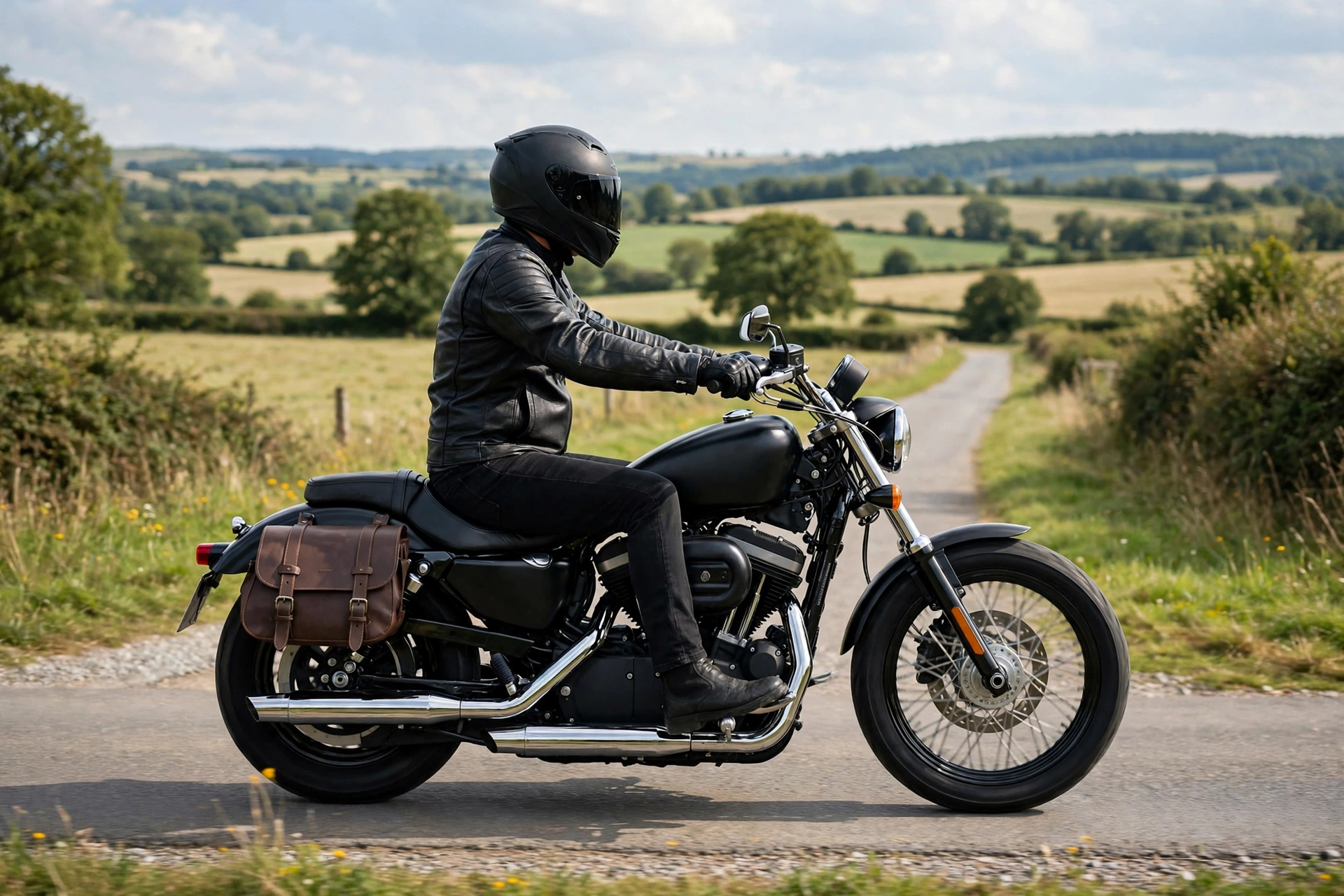
For an upright riding position, look for a helmet with a wide, tall field of view, good ventilation, a comfortable upright fit, and a visor or peak that does not block your sightline. Upright riding — on cruisers, adventure bikes, standard bikes, and scooters — puts your head in a near-vertical position, so a helmet designed for a tucked-in sports riding posture can feel wrong: the top of the shell may cut into your view, and the vents may not line up with the airflow. The right helmet for upright riding matches the way you actually sit on the bike.
This guide explains what to look for in a helmet for upright riding, in general terms, so you can choose one that feels comfortable on long rides and gives you a clear view of the road. It covers helmet styles, fit, ventilation, visors, and the small details that matter more when you ride upright than when you lean forward.
Which Helmet Style Suits Upright Riding Best?
In general terms, full-face helmets and modular helmets are the most common choices for upright riders, and both have real strengths. A full-face helmet gives the most coverage and the best wind and weather protection, which matters on a cruiser or adventure bike where you sit exposed to the wind. A modular helmet, with a chin bar that flips up, adds convenience at fuel stops and when you want to talk to someone without taking the helmet off, though it is usually a little heavier than a full-face helmet of the same size.
Open-face helmets are also popular with upright riders, especially on scooters and classic-style bikes, because they feel light and airy and give a wide view. The trade-off is less protection for the chin and face, and more wind, dust, and insects reaching your face. If you choose an open-face helmet, a good pair of riding glasses or goggles becomes important. Half helmets offer the least coverage of all and are the least protective option, so they suit only low-speed, short rides in general terms.
The best style depends on your riding. If you ride at higher speeds or in mixed weather, a full-face or modular helmet is the sensible choice, while an open-face helmet can work well for slow rides around town. What matters most is that the helmet matches your riding position rather than fighting it.
Why Does Field of View Matter More When You Ride Upright?
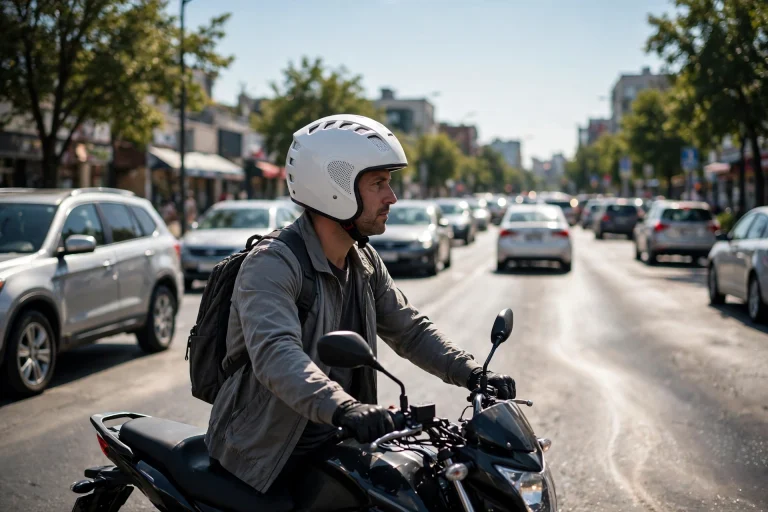
When you ride upright, your head is vertical and your eyes look straight ahead, so the top edge of the helmet’s eye opening sits right at the top of your sightline. A helmet shaped for a leaned-forward sports rider often has a higher eye port, designed for a rider looking up from a crouched position. On an upright rider, that same helmet can feel as if the top of the opening is too low, cutting into the view of the road ahead, traffic lights, and overhead signs.
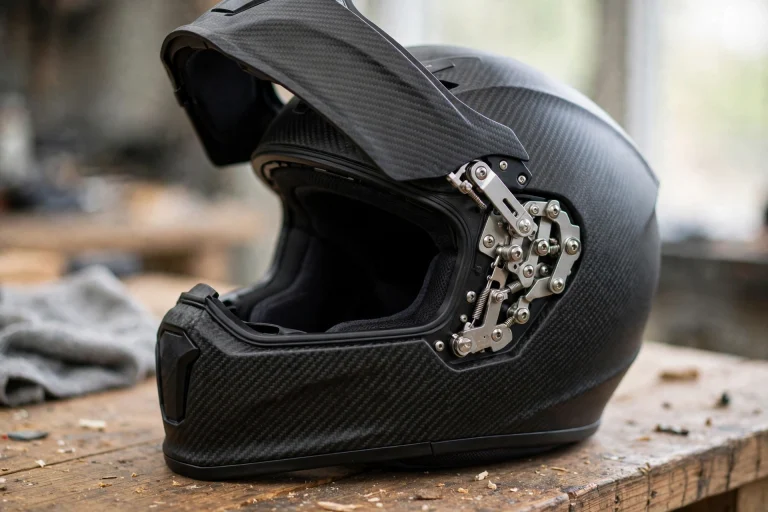
The visor also plays a part. A clear visor that opens smoothly and stays in place at speed is essential, and a drop-down internal sun visor is a useful extra for upright riders who face the sun directly. A peak, like those on adventure helmets, can shade your eyes from the sun, but it can also catch the wind and lift the helmet at speed, so test it at riding speed if you can. If you want to understand more about how modern helmets manage impact protection, reading about what MIPS is for helmets is a useful starting point.
How Should a Helmet Fit an Upright Rider?
Fit works the same way for every rider: the helmet should sit level on your head, snug all the way around, with no pressure points and no rocking when you shake your head gently. For an upright rider, though, there are two details worth extra attention. First, the helmet should not press on the back of your neck when your head is vertical. Some helmets have a shell shape that works well when the rider leans forward but pushes against the neck when the rider sits up straight. Second, the chin bar should not press against your chin or throat when you sit upright and look ahead.
Remember that helmet sizes vary between makers, so a medium in one brand may fit like a large in another. Always try before you buy when you can, and measure your head with a tape measure if you are ordering online. In general terms, a helmet that is slightly snug when new is better than one that is loose, because the padding settles a little with wear.
What Ventilation Works Best for Upright Riding?
Ventilation matters a lot for upright riders, because the airflow hits the helmet differently when you sit up straight. On a sports bike, the rider’s head is tucked behind a screen, and air flows over the top of the helmet. On an upright bike, the air hits the front of the helmet directly, so the chin vent and the forehead vents do most of the work. A helmet with a good chin vent that feeds fresh air to the face and a set of top vents that can be opened and closed easily with gloves on will keep you comfortable in warm weather.
Look for vents you can operate while riding, because stopping to adjust a vent is not practical in traffic. Vents with large, glove-friendly sliders are easier to use than small fiddly ones, and they should close properly too, to keep cold air out in winter. A fog-free visor, or a visor with a pinlock insert, also helps a lot for upright riders, because the direct airflow can cause the visor to mist up quickly in cold or damp conditions.
What Else Should You Check Before Buying?
Weight matters more than many riders expect, especially on long upright rides. When you sit upright, the weight of the helmet rests on your neck without the support of a leaned-forward posture, so a heavy helmet can cause neck ache after an hour or two. In general terms, a lighter helmet is more comfortable for upright riding, though lighter helmets can also cost more. Try to keep the weight reasonable for the length of rides you do most often.
Noise is another factor. Upright riders sit in the full wind stream, so wind noise is louder than it is for a rider tucked behind a screen. A helmet with a good neck roll, a chin curtain, and a visor that seals tightly against the shell will be quieter than one with gaps and loose seals, and earplugs are still a good idea on longer rides.
Frequently Asked Questions
Q: Can I use a sports bike helmet for upright riding?
A: You can, but it may not be ideal. Sports helmets are shaped for a leaned-forward posture, so the eye port and shell shape may not suit an upright position. Try it on while sitting upright to check the view and neck comfort before you buy.
Q: Is a modular helmet good for upright riding?
A: Yes, in general terms. A modular helmet suits upright riders well because the flip-up chin bar is convenient at stops, and the upright posture makes the extra weight less noticeable than it is on a sports bike.
Q: Do I need a peak on a helmet for upright riding?
A: Not necessarily. A peak can shade your eyes from the sun, which helps when you ride upright, but it can also catch wind and lift the helmet at speed. If you ride mostly at lower speeds, a peak is a useful extra; at higher speeds, a plain full-face helmet may be better.

Olivia
Writer at Helmet Today, covering helmet reviews, fit and riding safety.