In general terms, you can part out an old helmet for spares — but only after you have made sure the helmet will never be worn again. Pads, visors, peaks, buckles, and screws can be useful for repairing another helmet, but the shell and foam liner must never be reused once a helmet is retired. This guide explains what is safe to salvage, what must be destroyed, and how to do the job without risking anyone’s safety.
Parting out a helmet is a sensible way to reduce waste and keep a second helmet going. The key rule is simple: cosmetic and comfort parts can be reused, but anything that absorbs impact cannot. Get that distinction right and you can save money and materials safely.
Which Helmet Parts Are Safe to Reuse?
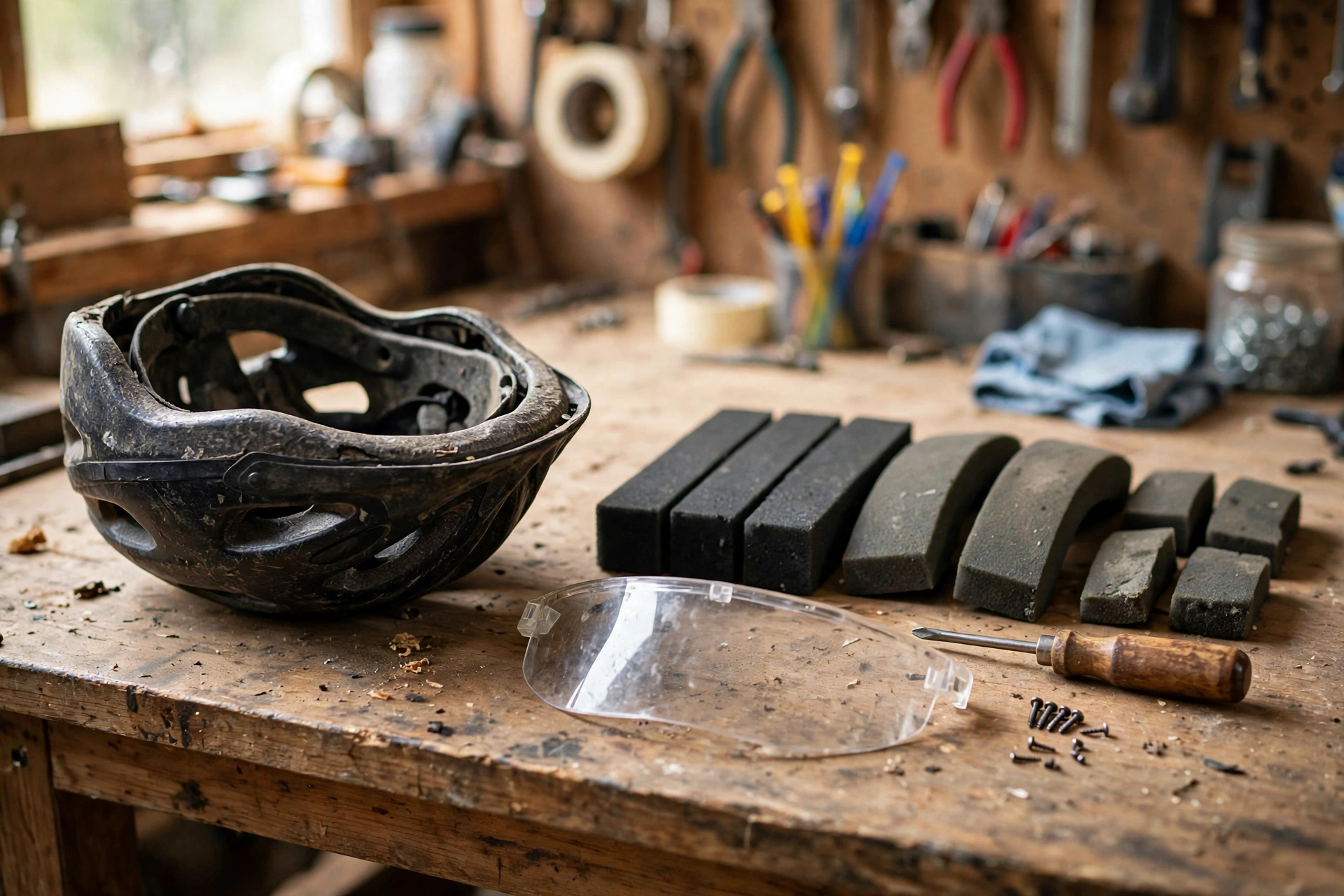
The safest parts to salvage are comfort and accessory parts that do not absorb impact. Removable pads are the most useful: if they are clean, undamaged, and the right shape for another helmet of the same model, they can extend that helmet’s life. Visors, peaks, and vents covers are also good candidates, as long as their fixings are intact and they fit the receiving helmet properly.
Buckles, strap adjusters, and screws can be reused too, provided they are not cracked, bent, or worn. These small parts are often the hardest to buy separately, so salvaging them can save a second helmet from being thrown away for want of a five-minute fix. Keep them in a labelled bag with the helmet model written on it, so you can find them later.
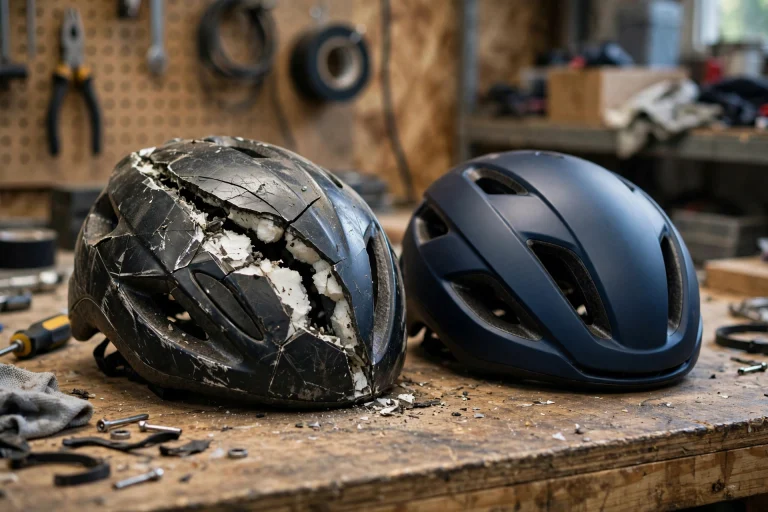
What you must never reuse is the shell or the foam liner. Even if they look perfect, a retired helmet may have hidden damage from a crash, a drop, or simple ageing. The foam’s job is to crush once and absorb energy — once it has been stressed, it cannot be trusted again. A shell that has been exposed to years of sunlight may also have weakened in ways you cannot see.
How Do You Take a Helmet Apart Safely?
Start by removing the pads, which usually pull out or unclip. Wash them if you plan to store them, and let them air-dry fully before putting them away — damp pads stored in a bag will smell and may grow mould. Check each pad for wear, thinning, or torn fixings, and throw away any that are past their best.
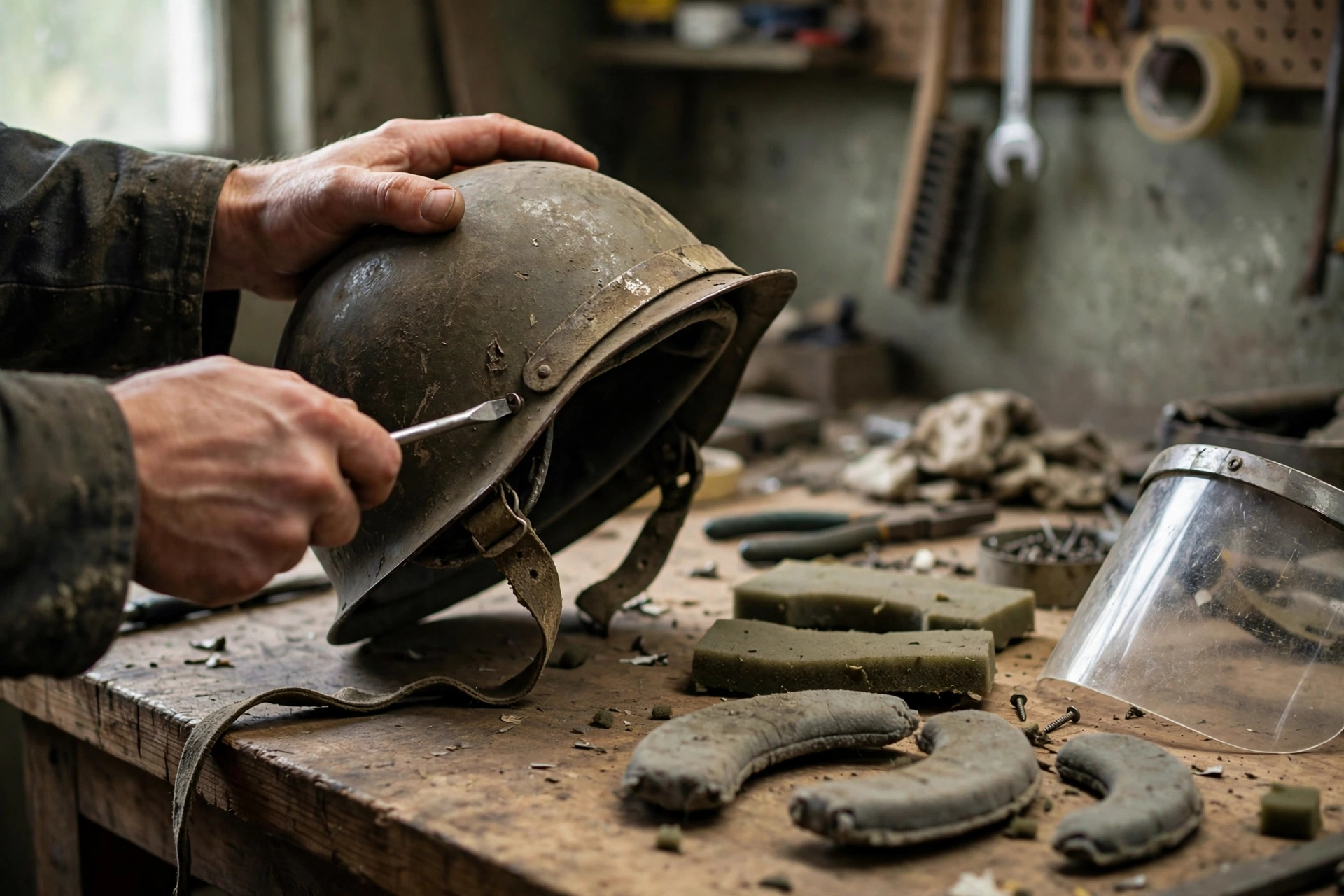
Next, remove the visor or peak. Most are held on with screws or snap fittings, and a small screwdriver is usually enough. Keep the screws with the part they belong to, ideally in a small labelled bag. If a fitting is cracked or a screw is stripped, throw that part away rather than forcing it onto another helmet.
Straps and buckles are usually riveted or stitched into the shell, so they are harder to remove cleanly. If the buckle is held on with a screw or a clip, take it off carefully. If the strap is stitched in, cut it free with scissors — but cut it close to the shell, so the strap cannot be mistaken for a working part. Never leave a removed strap attached to a shell that still looks wearable.
How Do You Make Sure the Retired Helmet Is Never Worn Again?
This is the most important step, and it is the one people most often skip. A retired helmet shell left whole looks wearable, and someone — a child, a friend, a stranger at a recycling point — may pick it up and use it. Once you have removed the useful spares, you need to make the shell and liner unusable.
The simplest way is to cut the straps off completely, then crush or crack the foam liner. You can press a screwdriver through the liner in several places, or cut the liner out of the shell with a knife. Some riders also cut the shell itself, which makes it obvious the helmet is finished. Wear gloves and eye protection if you use a knife or a saw, and work on a stable surface.
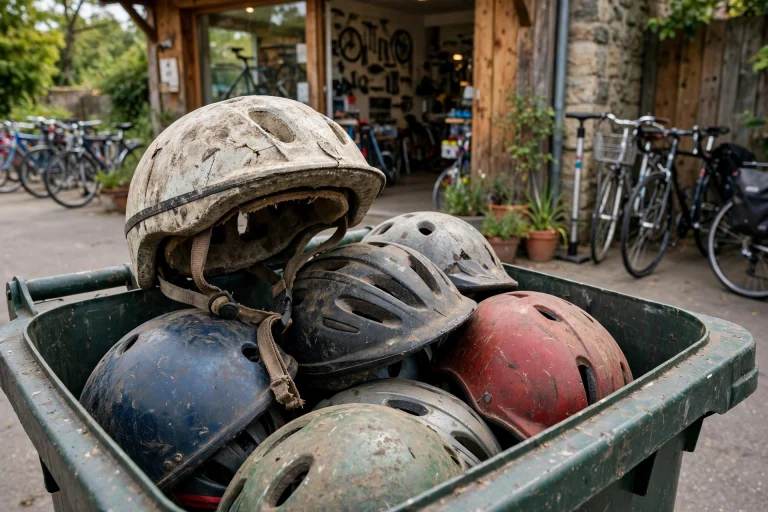
Once the shell is damaged beyond use, dispose of it through the right route. Check whether the maker runs a take-back scheme, or whether your local waste service accepts helmets. In general terms, helmets do not go in ordinary household recycling because they mix several materials, but some areas have specialist collection points for sports equipment.
Can Salvaged Parts Fit a Different Helmet Model?
In general terms, pads and visors are designed for a specific helmet model, and they rarely fit a different model well. A pad that is the wrong shape can create pressure points or leave gaps, and a visor that does not sit properly can rattle or catch the wind. Before you store a part, check which models it fits and write that on the bag.
Buckles and screws are more forgiving, because they are often standard sizes across a maker’s range. Even so, check that the replacement part matches the original in size and strength. A buckle from a lightweight cycling helmet may not be strong enough for a motorcycle helmet, and a screw that is too long can press into the foam liner.
If you are not sure a part fits, do not guess. Compare it side by side with the original part from the receiving helmet, or ask the maker. A spare part that does not fit properly is worse than no spare at all, because it can give a false sense of security. If you want to understand what is inside a helmet and why the liner matters so much, reading about what MIPS is for helmets is a useful starting point.
What Spares Are Worth Keeping?
Pads are the spares most worth keeping, because they wear out faster than any other part and are often model-specific. If you own two helmets of the same model, keeping one set of spare pads can double the life of the second helmet’s comfort. Visors and peaks are worth keeping too, especially for helmets where replacements are hard to find.
Small fixings — screws, washers, and vent covers — are worth keeping in a labelled box, because they are cheap to store and hard to replace when lost. Buckles and strap adjusters are worth keeping if they are in good condition, but check them carefully for cracks before storing them.
Do not keep anything you are unsure about. A pad with torn fixings, a visor with a cracked mounting point, or a buckle that sticks is not a spare — it is rubbish that takes up space and might get used by mistake. Be honest with yourself about what is genuinely reusable, and throw the rest away.
Frequently Asked Questions
Q: Can I reuse the foam liner from an old helmet?
A: No. The foam liner is the part that absorbs impact, and once a helmet is retired it may have hidden damage or age-related weakening. Never reuse a liner, even if it looks undamaged.
Q: Is it safe to use a second-hand buckle on my helmet?
A: In general terms, yes, if the buckle is undamaged, the right size, and made for your helmet model. Check it for cracks and test that it fastens and releases smoothly before you rely on it.
Q: What should I do with the shell after removing the spares?
A: Make it unusable by cutting the straps and damaging the foam liner, then dispose of it through a maker take-back scheme or your local waste service. Never leave a whole retired shell where someone could pick it up and wear it.

Olivia
Writer at Helmet Today, covering helmet reviews, fit and riding safety.