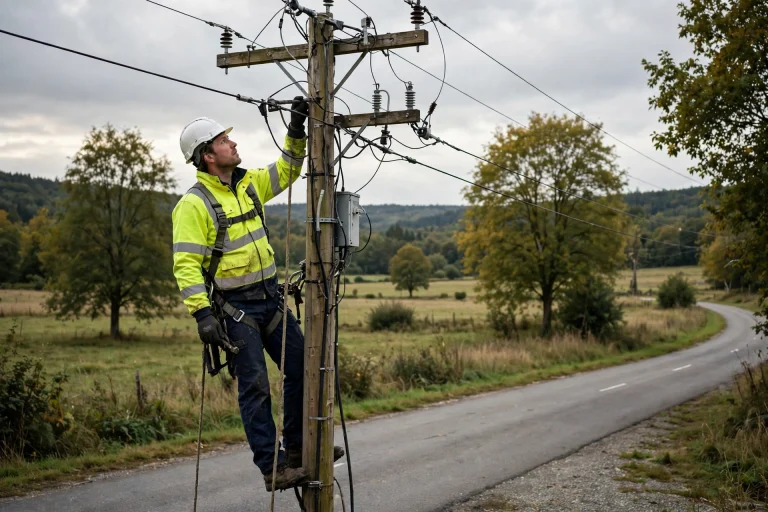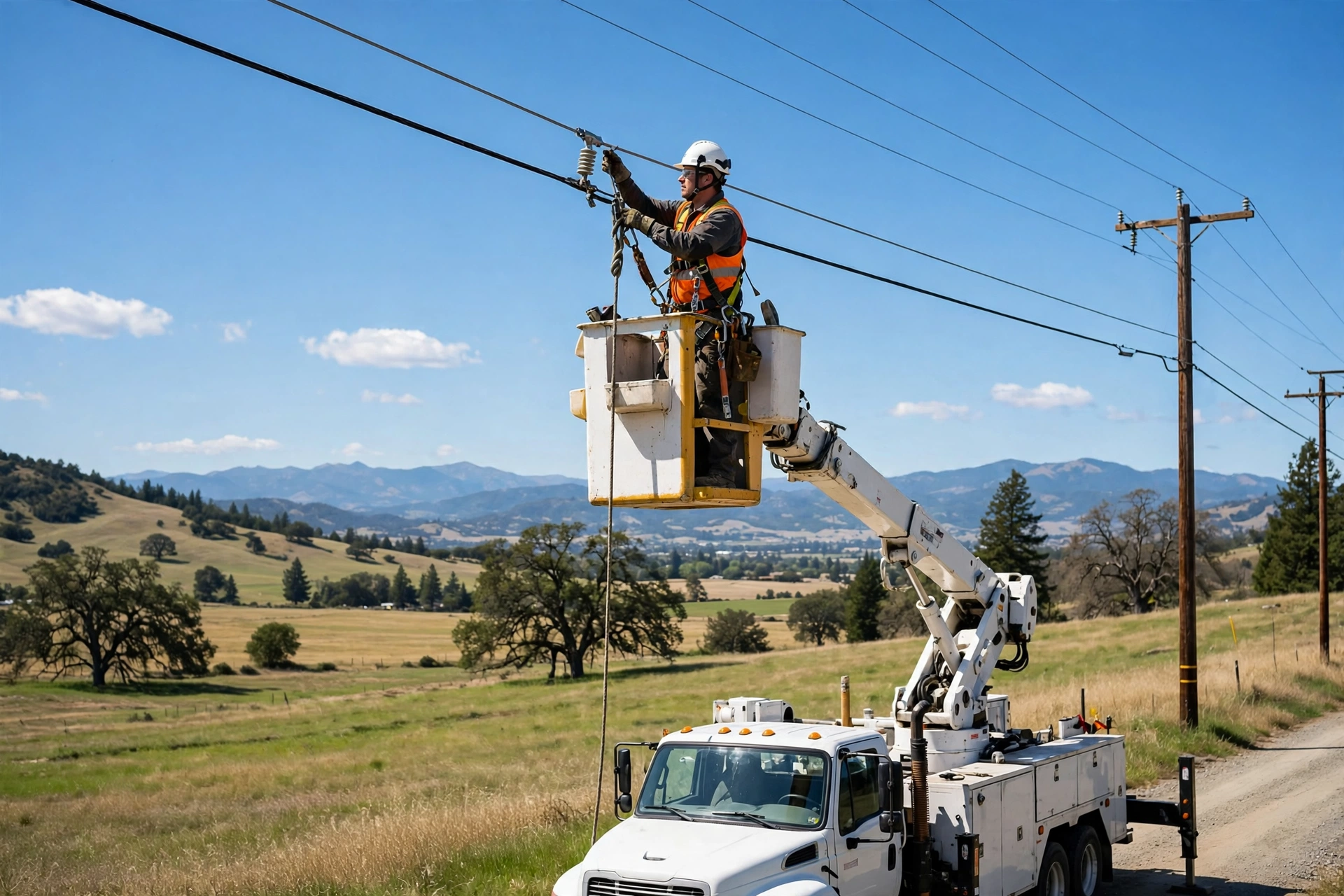
A power line worker helmet is a hard hat designed to protect workers who install, repair, and maintain overhead power lines from falling objects, electric shock, and head impacts. It looks like an ordinary industrial hard hat at first glance, but it is built to a higher standard for electrical work, with no metal parts that could conduct electricity and a shell that resists electric current.
Working on power lines is one of the most dangerous jobs in the utilities industry. Workers climb poles and towers, handle live conductors, and work in all weathers, often at height and near high-voltage equipment. A helmet is a basic part of their protective equipment, alongside insulated gloves, safety glasses, and a harness. This guide explains what makes a power line worker helmet different, what features to look for, and how to use one safely.
What Makes a Power Line Worker Helmet Different?
The main difference is electrical protection. A power line worker helmet is made from a non-conductive material, usually a type of plastic, and it has no exposed metal parts on the outside. Metal screws, vents, or fittings could carry electricity to the wearer’s head, so they are left out or covered. The shell is also tested to resist electric current up to a certain voltage, so that it does not become a path for electricity.
The helmet also protects against falling objects, which are a constant risk on a work site. Tools, bolts, and pieces of equipment can fall from above, and a hard hat shell spreads the force of an impact across the helmet so that it does not strike the head directly. Inside the helmet, a suspension system holds the shell away from the head, leaving a gap that absorbs some of the force.
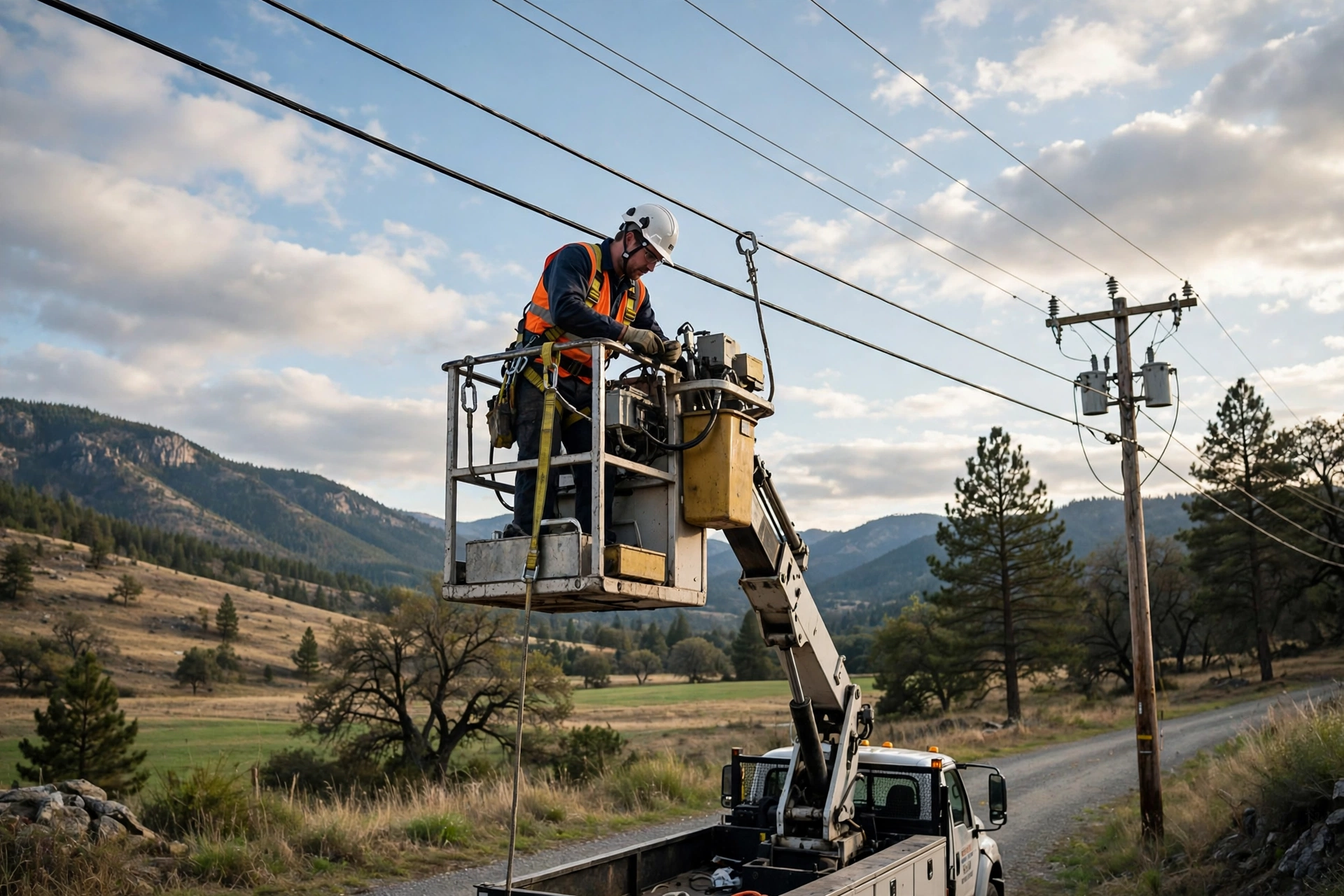
Another difference is the way the helmet is worn. Power line workers often work at height and in awkward positions, leaning out from a pole or a bucket truck. The helmet needs a chin strap that holds it firmly in place, so that it does not fall off when the worker looks up or bends over. A helmet that falls from height is a danger to people below, as well as a loss of protection for the worker.
What Features Should a Power Line Worker Helmet Have?
A good power line worker helmet starts with the right electrical rating. Check the label inside the helmet, which shows the class and the voltage it is rated for. The rating should match the work you do, and you should never use a helmet for work above its rated voltage. If you are unsure which class you need, ask your employer or safety officer before you start work.
The helmet should also have a four-point chin strap, which holds it securely from four directions and keeps it in place when you move. The strap should be adjustable, comfortable, and easy to fasten with gloves on. Some helmets also have a built-in face shield or earmuffs, which can be useful, but they should not get in the way of your work or your view.
How Do You Fit a Power Line Worker Helmet Correctly?
Start by adjusting the suspension system to fit your head. Most helmets have a knob or a strap at the back that tightens or loosens the headband. The helmet should sit level on your head, with the front edge just above your eyebrows. It should feel snug all round, without pressing hard on your forehead or temples.
Next, adjust the chin strap so that it sits comfortably under your chin, with no more than a finger’s width of slack. The strap should hold the helmet in place when you shake your head gently, but it should not be so tight that it is uncomfortable. If the helmet moves when you bend over or look up, tighten the strap or adjust the suspension until it stays put.
Finally, check that nothing interferes with the helmet. If you wear safety glasses, earmuffs, or a face shield, make sure they fit comfortably with the helmet on. If you wear a headlamp, check that it does not unbalance the helmet or cover the vents. A helmet that fits well is one you will keep on, and a helmet that stays on is one that can protect you.
How Should a Power Line Worker Helmet Be Checked and Cared For?
Inspect your helmet before every shift. Look at the shell for cracks, dents, or deep scratches, and check the suspension system for frayed straps, broken clips, or worn padding. If you find any damage, take the helmet out of service and replace it. Do not try to repair a damaged shell with glue or tape, because that will not restore its strength.
Clean the helmet regularly with mild soap and warm water, and let it air dry away from direct sunlight. Do not use solvents, petrol, or harsh cleaners, because they can weaken the shell. Do not paint the helmet or stick labels on it unless the maker says it is safe to do so, because paint and adhesives can hide damage and may affect the shell material.
Store the helmet in a cool, dry place, away from sunlight and chemicals. Do not leave it in a hot vehicle for long periods, and do not hang it on a hook by its chin strap, because that can stretch the strap. If you are learning about how helmets handle different kinds of impact, reading about what MIPS is for helmets can help you understand one of the technologies used in modern helmet design. Replace the helmet when the maker recommends it, or sooner if it has taken a hard impact, even if the damage is not visible.
When Should a Power Line Worker Helmet Be Replaced?
A helmet should be replaced after any serious impact, such as a heavy object falling on it or a fall from height. The shell may look fine on the outside, but the material inside can be damaged in ways you cannot see. In general terms, a helmet that has taken a hard blow should not be used again, even if it still looks new.
Helmets also wear out over time, even without an impact. Sunlight, heat, sweat, and chemicals can slowly weaken the shell and the suspension. Most makers give a recommended service life, often printed inside the helmet or in the instructions that come with it. Follow that guidance, and keep a note of when the helmet was first put into service so you know when it is due for replacement.
Frequently Asked Questions
Q: Can an ordinary construction hard hat be used for power line work?
A: In general terms, no. Power line work needs a helmet with the right electrical rating and no exposed metal parts. An ordinary hard hat may protect against falling objects, but it may not give the electrical protection the job requires.
Q: Do power line workers wear their helmets all day?
A: Yes, in general terms, the helmet is worn whenever the worker is on site and there is a risk of falling objects or electrical contact. It is part of the standard protective equipment for the job, alongside gloves, glasses, and a harness.
Q: Can a power line worker helmet be worn with a face shield?
A: Yes, many power line helmets are designed to accept a face shield or earmuffs as accessories. Check that any accessory you fit is made for your helmet model and does not affect its electrical rating.

Olivia
Writer at Helmet Today, covering helmet reviews, fit and riding safety.