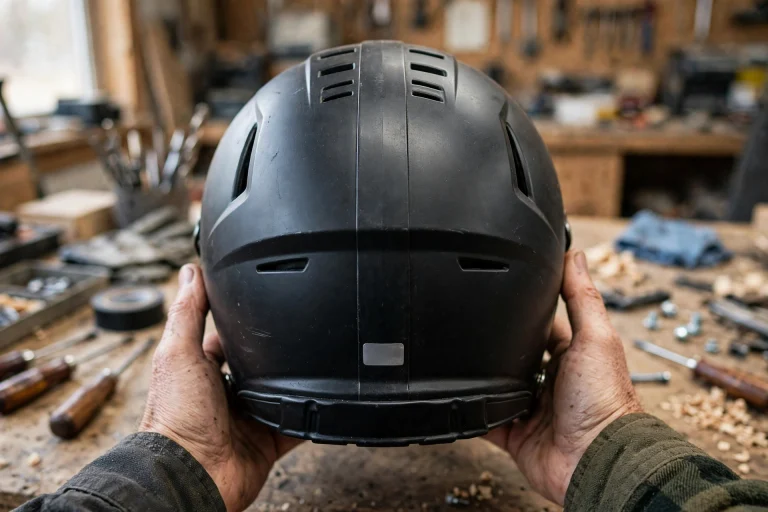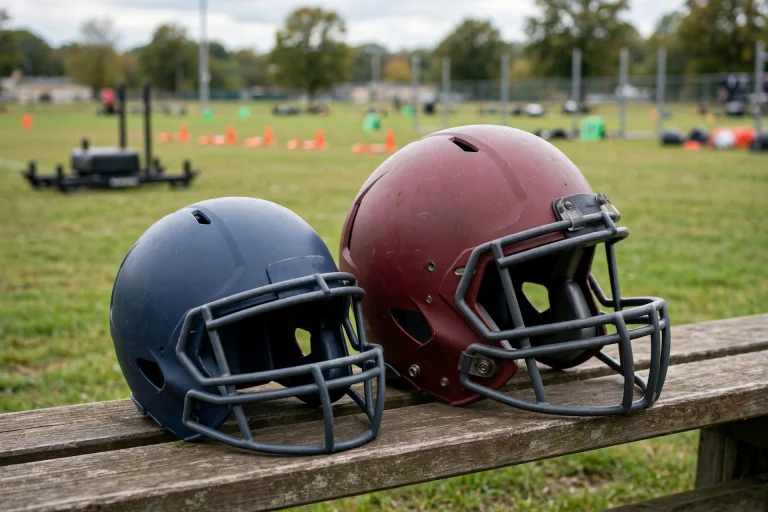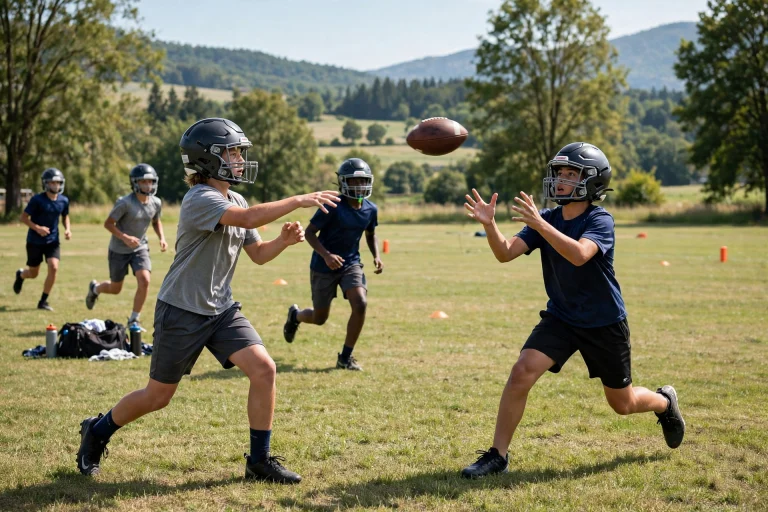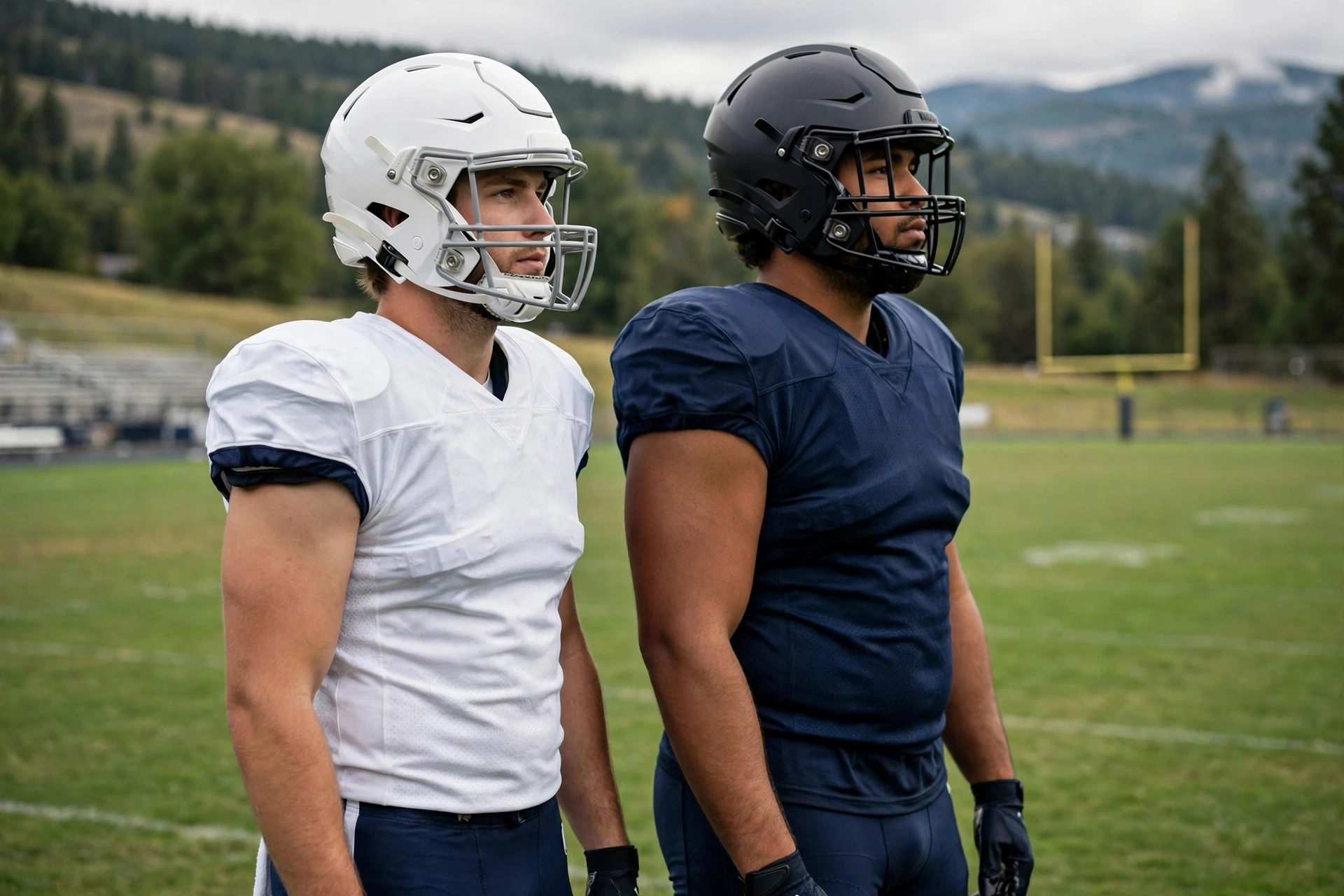
Quarterback and lineman helmets are usually the same certified helmet models — the real differences are in the facemask, the padding setup, and the priorities: quarterbacks choose open masks and lighter setups for vision and communication, while linemen choose heavier, more protective masks with more bars and firmer jaw fit for constant close contact. Position changes the accessories and the fit preferences, not the safety standard the shell must meet.
This guide breaks down what actually differs, what does not, and how to set up a helmet for each kind of role.
Are Quarterback and Lineman Helmets Really Different Helmets?
Mostly, no. In general terms, players at the same programme wear helmets from the same ranges, all meeting the same certification requirements — the standard does not have a quarterback version and a lineman version. A helmet is a certified protective system, and every position needs it to work whole.
What differs is configuration. Helmets accept different facemasks, different padding thicknesses at the jaw, and in some models different liner options, and players — with their equipment staff — configure those choices around the job they do on the field. Two helmets that look different across a locker room often started as identical shells.
There are position-leaning tendencies in helmet models themselves: some shells are built lighter with vision as a selling point, others are marketed on maximum coverage and protection. But those are spectrums any player can choose from, not position assignments, and the choice should always follow fit and role, not a label.
How Do Facemasks Differ Between Quarterbacks and Linemen?
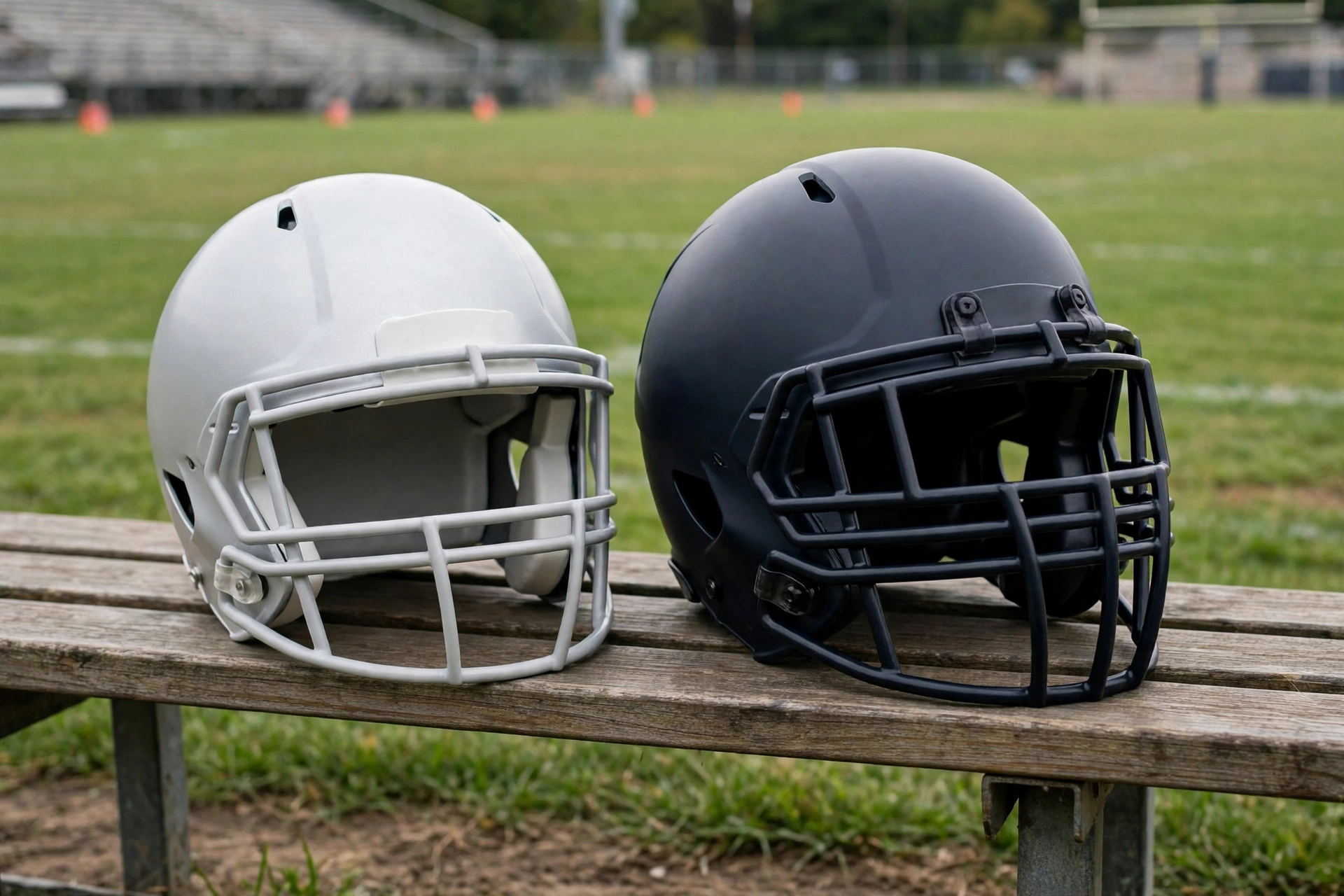
The facemask is the most visible difference. Quarterbacks typically wear open masks with fewer bars and a wide, unobstructed opening: they need maximum peripheral vision to read a defence, a clear view downward, and nothing muffling their voice as they call signals and audibles.
Linemen live at arm’s length from opponents on every snap, with hands constantly at face height in the trenches. Their masks typically have more bars, closer spacing, and often extra vertical or diagonal protection across the eyes and nose — designed to keep hands, fingers, and elbows out. The trade is accepted knowingly: a little more weight and a little less open vision, for a lot more barrier where contact is constant.
- Quarterback masks: open design, fewer bars, widest field of view, voice carries clearly
- Lineman masks: more bars, tighter spacing, extra coverage over eyes and nose
- Shared rule: the mask must be the maker’s approved part for the helmet, properly mounted
Receivers, running backs, and defensive backs land between these poles, which tells you the facemask is really chosen by how much contact the face expects and how much vision the role demands.
How Do Weight and Vision Trade Off by Position?
Vision is a quarterback’s working tool. Reading coverage, seeing pressure from the edge, and finding a second receiver all happen through the helmet’s opening, so quarterbacks favour the widest eye opening, minimal mask obstruction, and often a lighter overall setup that keeps the head free to swivel quickly for three hours.
Linemen trade a slice of that for coverage. Their visual world is mostly directly ahead and close, so a protective mask costs them less, while the extra bars can make a genuine difference across hundreds of snaps of hand fighting. Weight matters less in absolute terms too — though a heavier mask in front does change the helmet’s balance and can pull it forward if the fit is not set for it.
Neither trade is free. A lineman mask on a quarterback would be a real handicap, and a quarterback mask on a lineman leaves a face exposed to the most hand-dense environment in the sport. Position setup exists because the jobs genuinely differ, not because of fashion.
What Fit and Padding Differences Do the Positions Prefer?
The fit principles are identical — correct shell size, level position, snug and even everywhere, no movement — but the emphasis shifts. Linemen usually set jaw pads firmer and value absolute stability, because their helmet is grabbed, pushed, and struck from close range on every play; any looseness gets found immediately. Their chin straps are checked religiously for the same reason.
Quarterbacks prioritise a fit that forgets itself: balanced weight so the head turns freely, jaw fit firm but never distracting, since they may wear the helmet for long stretches while calling plays and communicating. Some quarterbacks, at levels where the rules allow it, also have communication equipment fitted inside the helmet — which is arranged through the programme, follows the competition’s rules, and is never a player modification.
What never changes is the underlying requirement: the helmet has to stay exactly positioned in an impact, because its liner works from that position to manage force, including the angled, rotational impacts explained in this guide to what MIPS is for helmets. A lineman and a quarterback need that identically — they just decorate the requirement differently.
Can a Player Use the Same Helmet at Both Positions?
Yes — and for players who move between roles, especially at school level, that is the normal situation. The helmet stays the same certified, correctly fitted helmet; what changes, if anything, is the facemask, swapped by someone who knows the hardware, to suit the role the player will actually play.
The practical approach: fit the helmet perfectly once, with jaw pads and strap set for stability. If the player shifts from line to a skill role or the reverse for a season, talk to the equipment staff about the mask, rather than loosening the fit, removing padding, or any other shortcut that would compromise how the helmet sits.
If a player genuinely plays both ways in the same game, choose the setup for the more contact-heavy role — protection for the trenches first — and accept a slightly more protective mask as the compromise. Vision can adapt; a hand in an unprotected face cannot be undone.
Frequently Asked Questions
Q: Do linemen need a stronger or more certified helmet than quarterbacks?
A: No. Helmets are certified to the same standard regardless of position, and there is no separate lineman certification. Linemen’s extra protection comes from configuration — a more protective facemask, firmer jaw fit, full use of the helmet’s padding options — not from a different safety standard or a special heavy-duty shell category.
Q: Why do quarterbacks sometimes have a green dot on their helmet?
A: At professional level, a marking identifies the helmet fitted with a radio receiver, under that league’s specific rules. It is a competition-specific system, not a general feature of quarterback helmets, and it does not apply at school level. If you see it on television, that is the entire explanation — it is not something to replicate.
Q: Should a young player copy the helmet setup of a pro at their position?
A: Copy the principles, not the exact parts: an open mask if the role needs vision, a protective mask if the role takes constant contact, perfect fit before everything. Youth programmes may also have their own rules about facemasks and equipment, so check with your coach or league before buying position-specific parts.

Olivia
Writer at Helmet Today, covering helmet reviews, fit and riding safety.