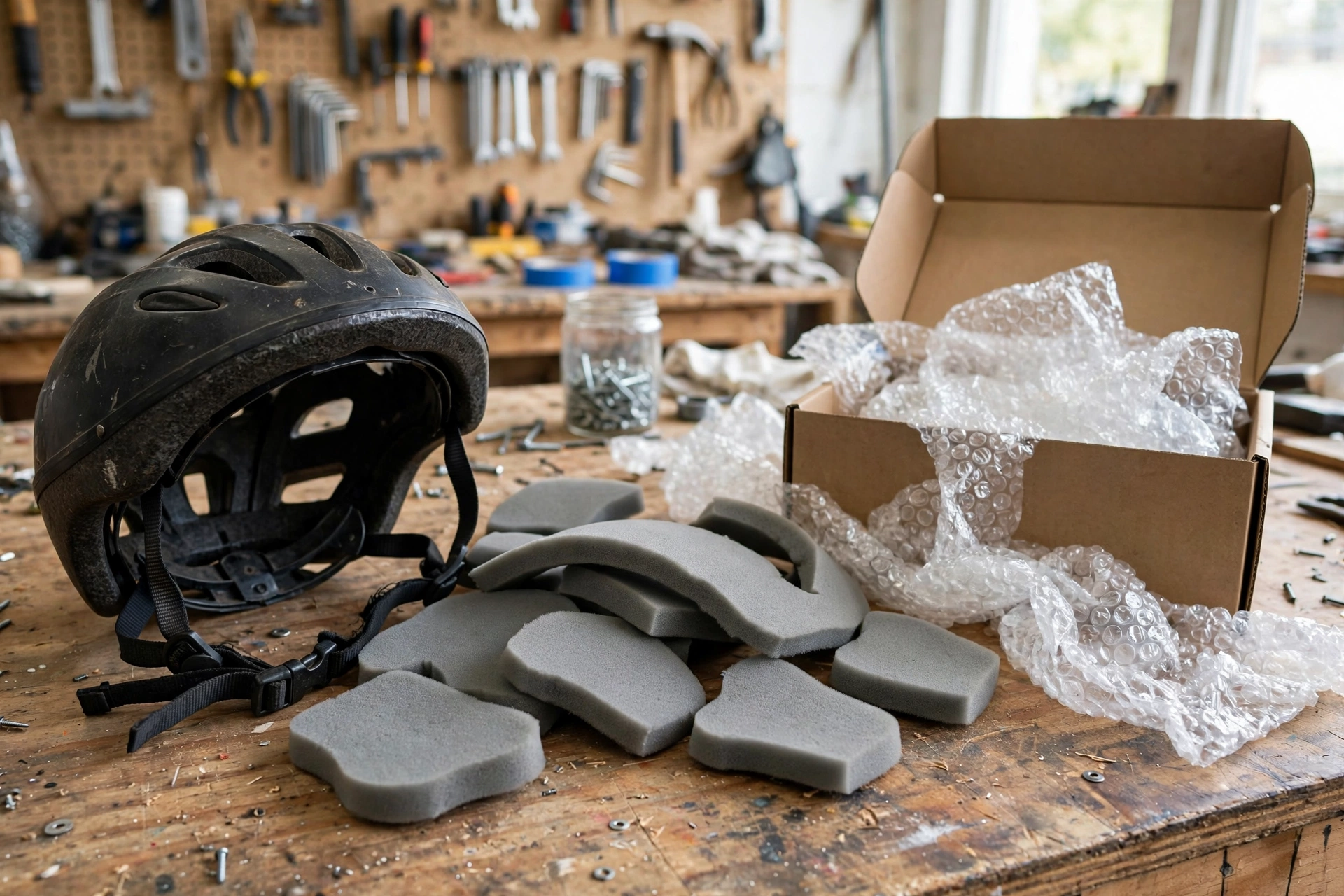
Yes, you can reuse helmet foam for packing, and the soft foam from an old helmet can work well as padding for fragile items. The foam padding inside a helmet is light, springy, and good at absorbing knocks, which makes it useful for protecting items in a box. It is important to use foam from a helmet that is no longer needed for safety, and to remember that the hard foam liner that absorbs crash impacts is different from the soft comfort padding. In general terms, soft padding is easy to reuse, while the hard impact liner is best left alone unless you know what you are doing.
What Kind of Foam Is Inside a Helmet?
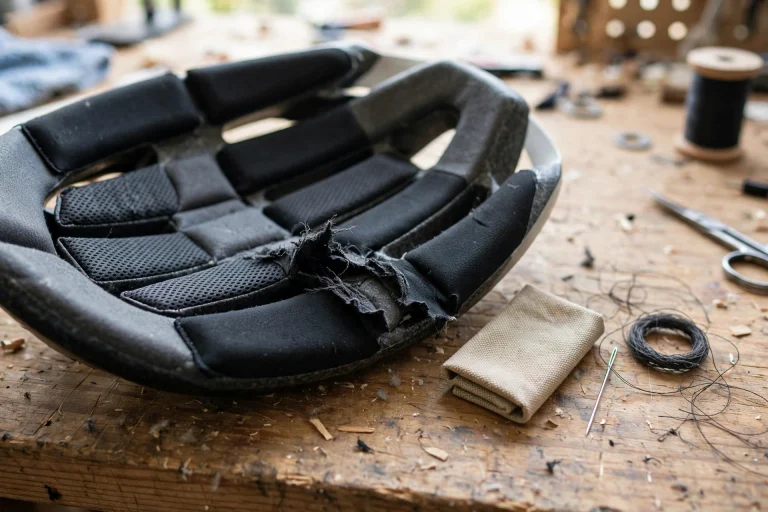
Most helmets contain two kinds of foam, and it helps to know which is which before you start cutting anything up. The soft foam is the comfort padding that sits against your head: it is usually made of open-cell foam covered in fabric, and it can be removed, washed, and handled easily. This is the foam that is most useful for packing, because it is flexible, easy to cut, and gentle on the items it protects. It comes in small pads that fit around the forehead, the sides, and the crown of the helmet.
The second kind is the hard foam liner, usually made of expanded polystyrene, which sits between the comfort padding and the outer shell. This liner is the part that absorbs the force of a crash, and it is rigid, light, and crumbly when cut. In general terms, the soft comfort foam is the better choice for most packing jobs, while the hard liner is more useful as a shaped block for a single item than as loose padding.
How Do You Remove Foam From an Old Helmet?
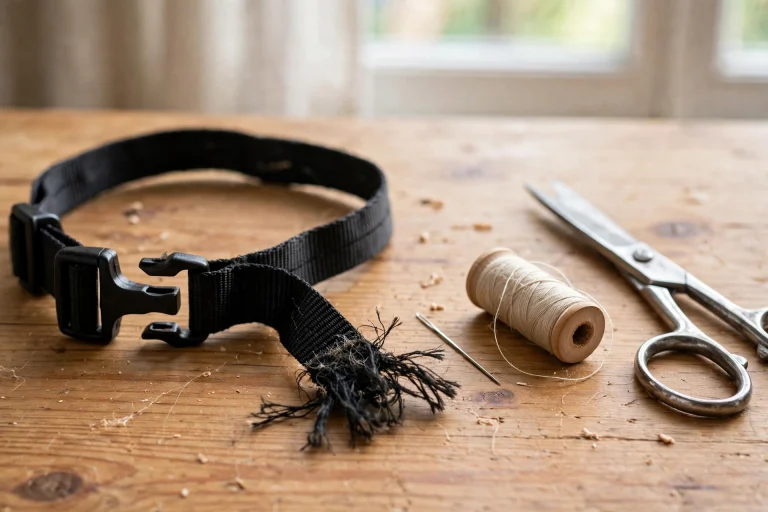
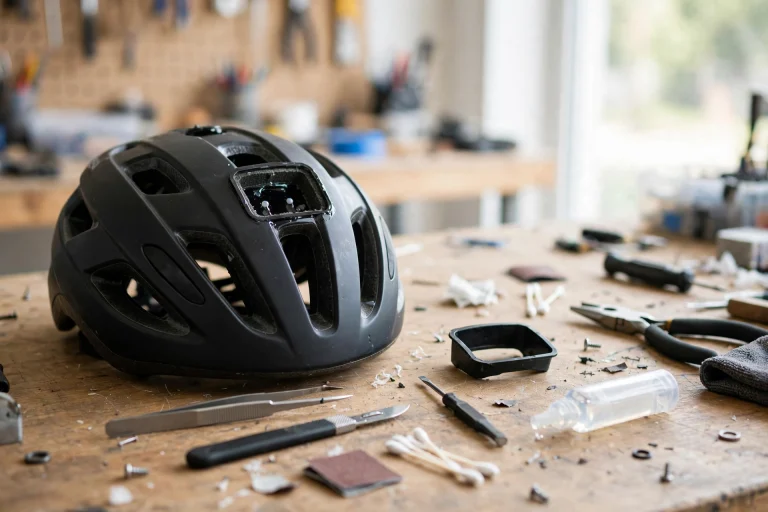
Removing foam from an old helmet is usually simple, and you do not need special tools. Start by taking out the comfort padding, which is often held in place with press studs, hook-and-loop tabs, or a light adhesive. Pull it away gently, a piece at a time, and set each pad aside. If a pad is glued down, work it loose slowly rather than tearing it, so that you keep the largest usable pieces. Wash the pads with mild soap and water and let them dry fully before using them for packing.
If you also want to use the hard liner, you will need to separate it from the shell, which may be glued or clipped in place. A flat tool such as a butter knife can help to ease it free, but take care not to snap it into pieces unless that is what you want.

What Can You Pack With Helmet Foam?
Helmet foam works well for packing small fragile items such as glassware, ceramics, ornaments, and electronics. The soft pads can be wrapped around a single item, tucked into the corners of a box, or layered between plates and bowls to stop them knocking together. Because the foam is springy, it holds its shape under light pressure and keeps items from moving around in transit.
The foam is less useful for very heavy items, because it can compress flat under a heavy load and stop protecting the contents. It is also not a replacement for proper packing materials when you are shipping something valuable over a long distance, since purpose-made bubble wrap or foam is more consistent.
How Do You Cut and Shape Helmet Foam for Packing?
Cutting helmet foam is easy if you use the right tool. A sharp pair of scissors works well for the soft comfort padding, and a craft knife or a serrated kitchen knife works well for thicker pieces. Cut the foam into flat sheets, strips, or small blocks, depending on what you need.
To protect a fragile item, wrap it in a sheet of foam and hold the wrap in place with tape or a rubber band, then place it in a box with more foam packed around it. The item should not be able to move when you shake the box gently.
Is Reused Helmet Foam Safe to Use for Packing?
Reused helmet foam is safe for packing as long as it is clean and dry, and as long as you use it for the right job. Wash the soft padding before you use it, and let it dry completely so that it does not pass damp or smells on to the items you are packing. Do not use foam that is mouldy, badly stained, or falling apart, because it will not protect anything well and may damage the contents of the box. Clean foam from a well-kept helmet is perfectly fine for household packing.
There is one important safety point to remember: foam taken from a helmet means that helmet can no longer be used for protection. Never strip the foam from a helmet that is still in use, and never give away a helmet that has had its padding removed. If you want to understand one of the safety technologies used in modern helmets, reading about what MIPS is for helmets is a useful starting point, and it is a good reminder that the foam you are cutting up once played a real safety role.
What Else Can You Do With Old Helmet Foam?
Helmet foam has other uses beyond packing. Small pieces of soft foam make useful knee pads for gardening, padding for tool handles, or cushioning inside a camera bag or a toolbox.
Reusing foam in these ways keeps it out of landfill and makes good use of a material that is light, tough, and easy to shape. It is a small act of reuse, but it is a practical one, and it suits a material that would otherwise be thrown away. In general terms, the best reuse is the one that matches the foam’s strengths: soft padding for cushioning, and rigid liner for light, shaped support. With a little care, an old helmet can keep being useful long after it has stopped protecting your head.
Can I use helmet foam to pack fragile items?
Yes. The soft comfort padding from a retired helmet works well as cushioning for glassware, ceramics, and small electronics, as long as it is clean and dry.
Is the hard foam liner safe to reuse for packing?
It can be used, but it is crumbly and messy to cut. The soft padding is usually the better choice for most packing jobs.
Should I remove foam from a helmet I still use?
No. Never strip foam from a helmet that is still in use. A helmet without its padding does not fit or protect properly, and it should be replaced if its protection is in doubt.

Olivia
Writer at Helmet Today, covering helmet reviews, fit and riding safety.