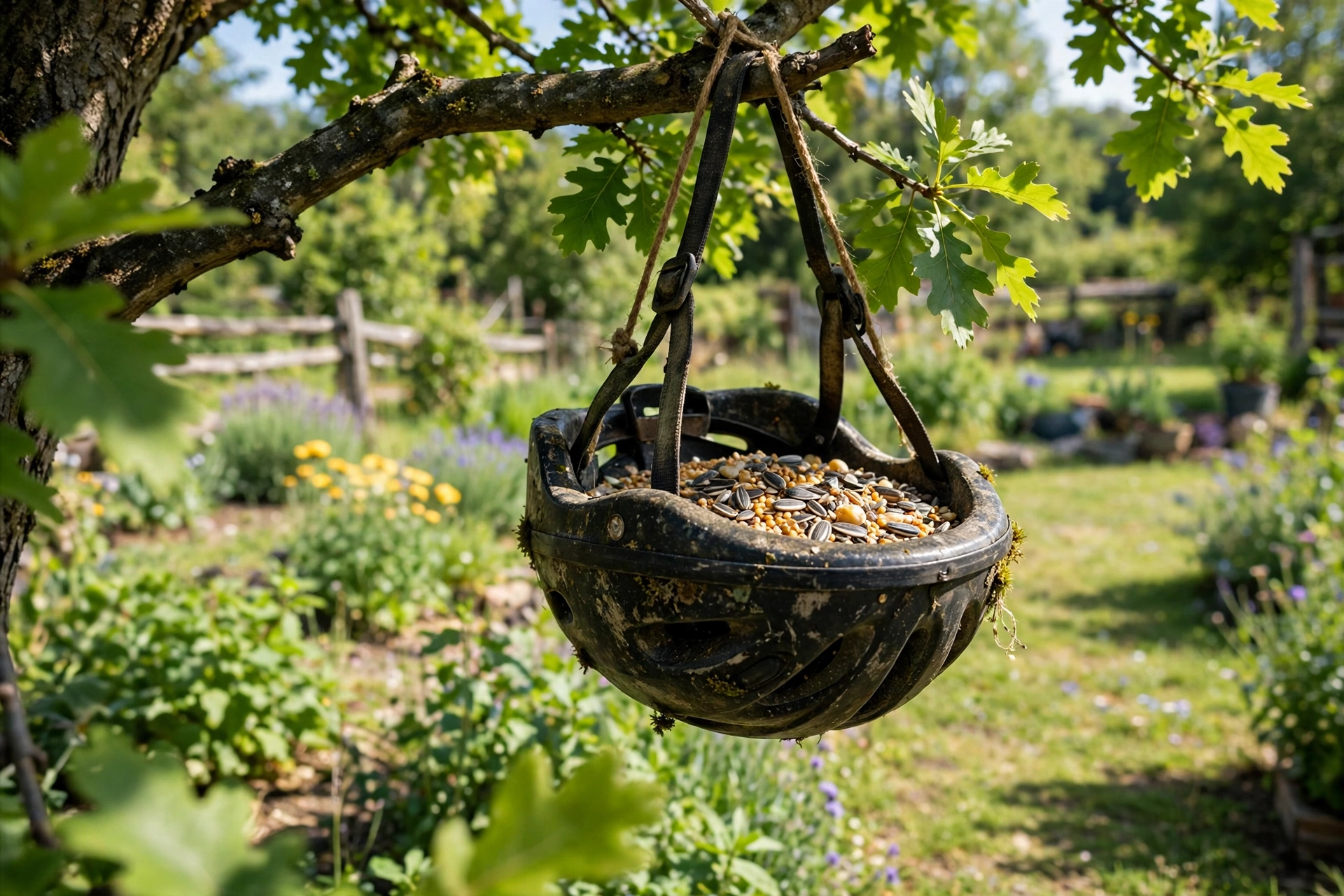
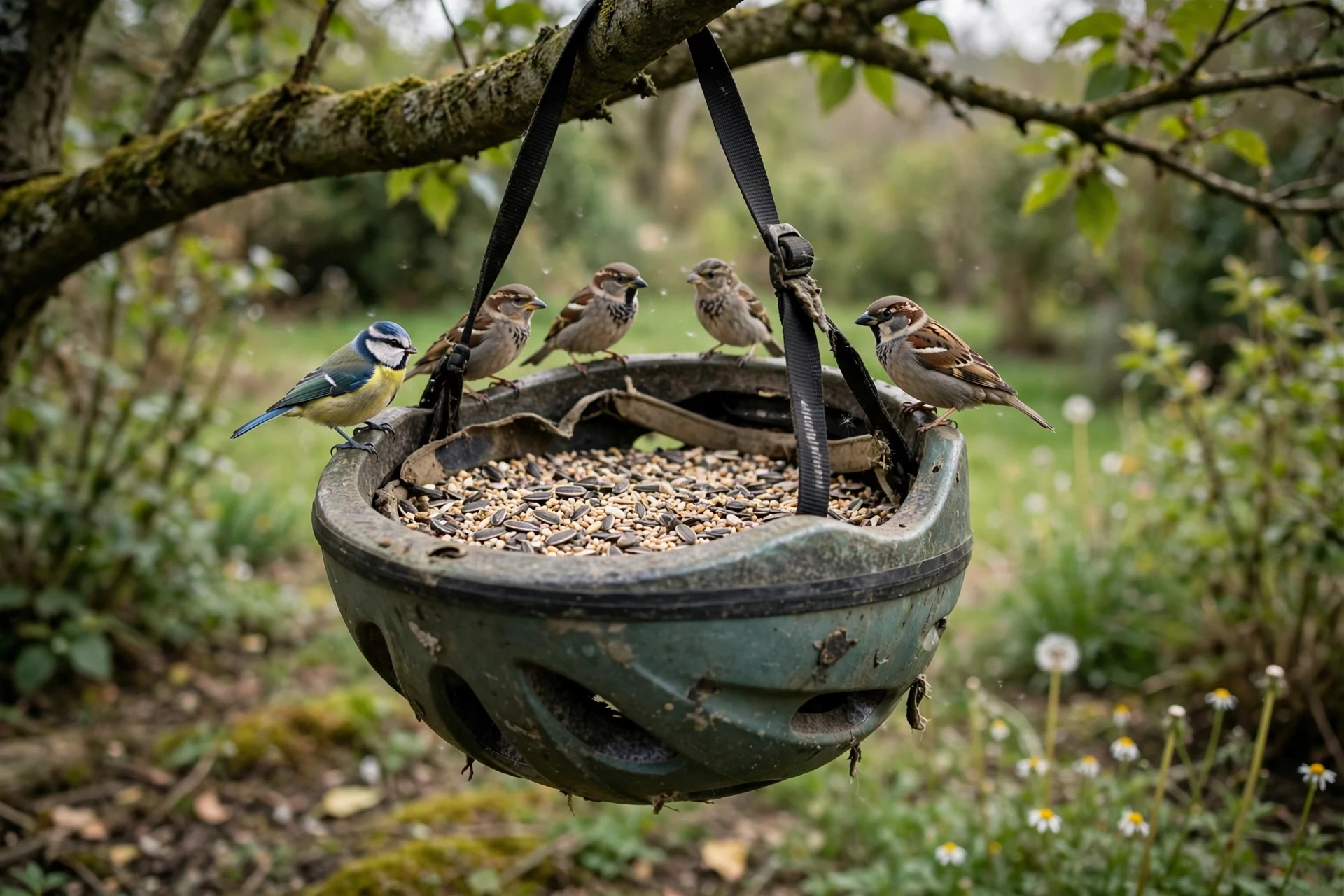
Yes, you can turn an old helmet into a garden bird feeder, and it makes a sturdy, weatherproof feeder with very little work. A retired helmet already has a bowl shape that holds seed well, and its hard shell can cope with rain and sun in the garden. The key rule is to use only a helmet that has already been retired from safety use, and never to take a working helmet out of service for a craft project. In general terms, this is a fun reuse for a helmet that is too old or too damaged to protect a rider, as long as you make it safe and comfortable for the birds.
Which Helmets Work Best as a Bird Feeder?
Almost any old helmet can become a bird feeder, but some shapes work better than others. A round, open helmet such as a bike helmet or a skate helmet makes a natural bowl, with plenty of room for seed and an easy edge for birds to perch on. A helmet with vents is fine, because the holes help rainwater drain away, which keeps the seed dry and fresh for longer.
The condition of the helmet matters more than its type. Use a helmet that is clean, dry, and free of mould, and avoid one that has been stored with chemicals or fuel. In general terms, the best donor helmet is a plain, sturdy shell that has been retired for age or for a small crack, and that has no loose parts left inside it.
How Do You Turn a Helmet Into a Bird Feeder?
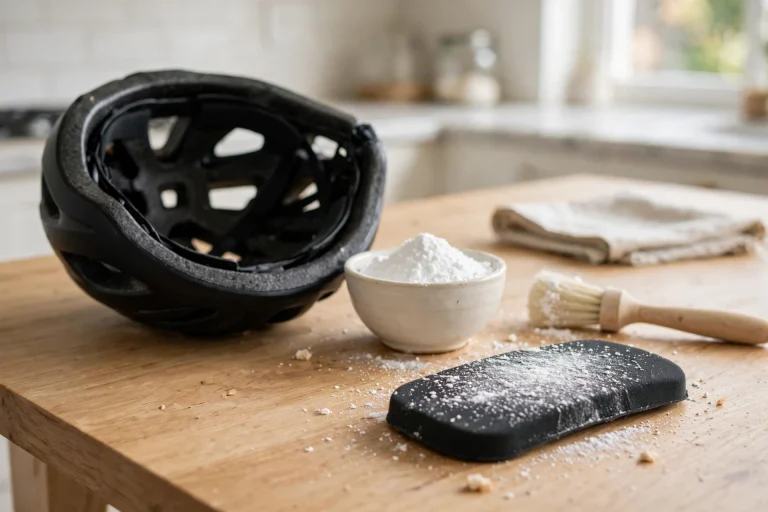
Start by cleaning the helmet shell thoroughly with warm soapy water, then rinse it and let it dry completely in the sun. Take out all the padding, the straps, and any clips or fittings that are no longer needed. Check the inside for sharp edges or rough spots, and smooth them down with sandpaper so that birds will not hurt their feet.
Next, add drainage holes if the helmet does not already have vents in the base. A few small holes made with a drill will let rainwater escape, which stops the seed from going soggy and mouldy. Then make three or four small holes around the rim, thread strong cord or wire through them, and tie the ends together above the helmet so that it hangs level. Hang it from a tree branch or a hook, fill it with seed, and you have a feeder. The whole job usually takes less than half an hour, and you need no special skills.
What Seed Should You Put in a Helmet Feeder?
A helmet feeder works best with a general wild bird seed mix, which usually contains sunflower seeds, millet, and cracked corn. These are eaten by a wide range of garden birds, from sparrows and finches to tits and blackbirds. Sunflower hearts are a good choice if you want to attract smaller birds, because they are easy to eat and do not leave messy husks behind.
Keep the seed fresh by filling the feeder with small amounts often, rather than piling it high and leaving it for weeks. Empty the feeder, clean it, and refill it regularly, particularly in wet weather. In general terms, a little seed, refreshed often, is far better for the birds than a large amount left to spoil in the shell.
Where Should You Hang a Helmet Bird Feeder?
Hang your helmet feeder in a spot where birds can find it easily and feel safe while they eat. A branch near a bush or a hedge is ideal, because birds can dart into cover if a cat or a larger bird appears. Hang it at about head height or a little higher, so that it is easy for you to reach for refilling, but out of easy reach of cats on the ground. A spot that gets some shelter from wind and heavy rain will keep the seed drier for longer.
Avoid hanging the feeder too close to a window, because birds flying to and from it can hit the glass. Once the feeder is up, give the birds a few days to find it, and be patient if they are slow to arrive at first.
How Do You Keep a Helmet Bird Feeder Clean and Safe?
A helmet bird feeder needs regular cleaning to stay safe for the birds. Once a week, or more often in wet weather, empty out any old seed, scrub the shell with warm soapy water, and rinse it well. Let it dry fully before you refill it, because damp seed is the main cause of mould in a feeder.
Check the hanging cords regularly too, because sun and rain can weaken them over time. Replace any cord that looks frayed or worn, so that the feeder does not fall and spill seed on the ground, where it can attract rats. If you want to understand one of the safety technologies used in modern helmets, reading about what MIPS is for helmets is a useful starting point, and it is a reminder that the helmet in your garden once had a serious job to do. In general terms, a clean feeder with fresh seed and sound cords is a safe feeder, and a few minutes of care each week will keep it that way all year round.
What Other Garden Uses Are There for an Old Helmet?
An old helmet can be useful in the garden in other ways besides feeding birds. Turned upside down, it makes a handy plant pot for herbs or small flowers, with drainage holes already built in if it has vents. Its hard shell is tough enough for these jobs, and its shape is easy to carry by the strap holes.
Children often enjoy a helmet planter as a small garden project, and it is a good way to show them how an old object can be given a second life. Just as with the bird feeder, the rule is the same: use only a helmet that has already been retired, and never take a working helmet out of use. If a helmet’s protection is ever in doubt, replace the helmet rather than trying to keep using it for safety, and let its second life be in the garden instead.
Can any old helmet become a bird feeder?
Yes, in general terms any retired helmet with a bowl-like shape can work. A bike or skate helmet is ideal, but the key point is that the helmet must already be retired from safety use.
How do I stop the seed getting wet in a helmet feeder?
Use a helmet with vents or drill small drainage holes in the base, hang it in a sheltered spot, and refill it with small amounts of fresh seed often.
Is it safe to use a cracked helmet as a bird feeder?
Yes, as long as there are no sharp edges and all padding and straps are removed. A cracked helmet must never be used as safety gear again, but it can be safe in the garden once it is cleaned and smoothed.

Olivia
Writer at Helmet Today, covering helmet reviews, fit and riding safety.