

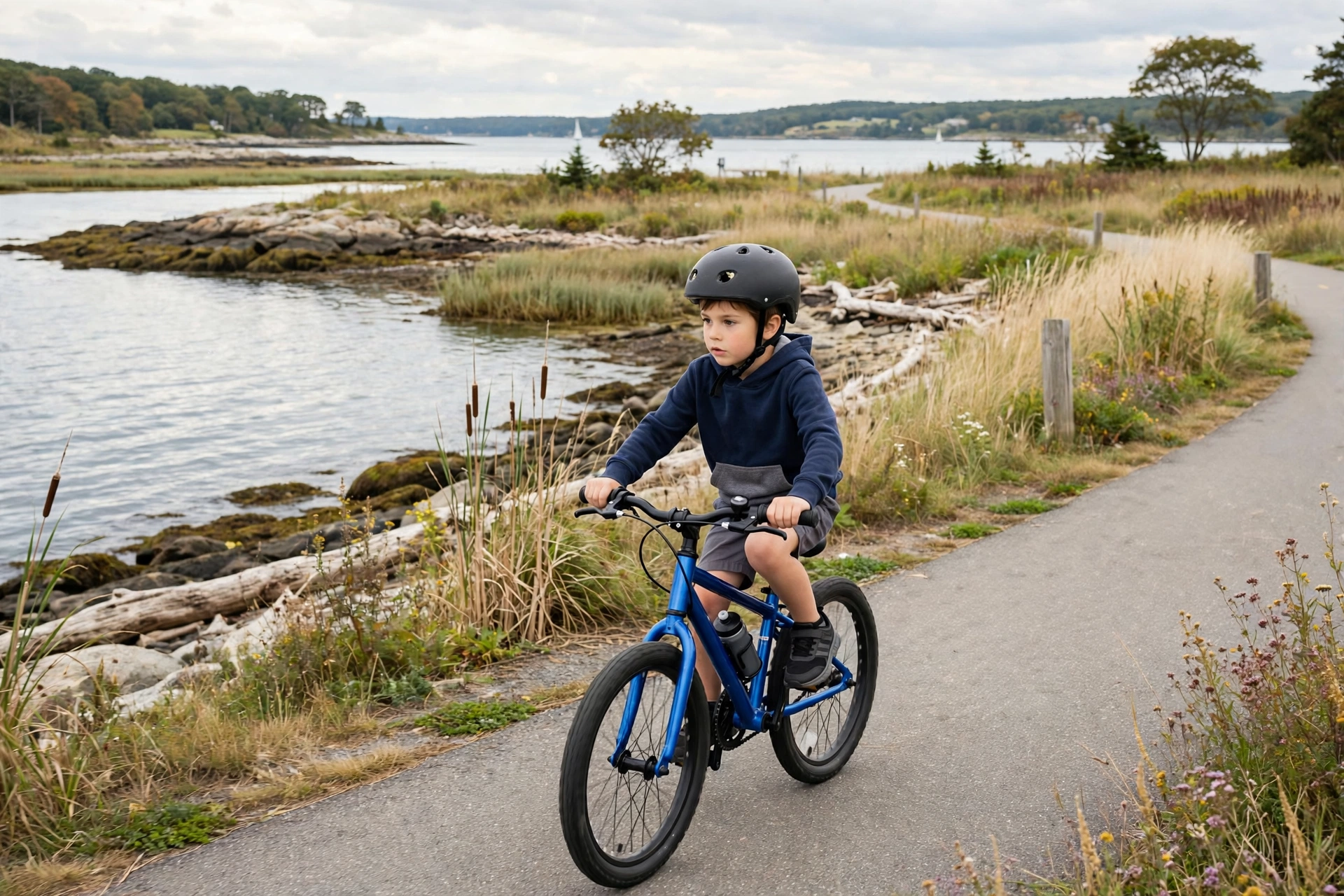
Yes — Rhode Island law requires every bicycle rider and passenger aged 15 and under to wear a helmet. The rule covers children riding their own bikes and children riding as passengers, including in child seats and trailers, whenever they are on public roads, bike paths, and other public ways. Riders aged 16 and older are not required by state law to wear a helmet, though safety experts strongly recommend one for everyone.
If your child rides anywhere in Rhode Island — to school, around the neighborhood, or on a local bike path — a properly fitted, approved helmet is not optional. It is the law. This guide explains exactly who must wear a helmet, where the rule applies, what counts as a legal helmet, and how to make sure your child’s helmet actually protects them.
Who Has to Wear a Bicycle Helmet in Rhode Island?
The Rhode Island bicycle helmet requirement applies to anyone aged 15 or younger who is riding a bicycle or being carried as a passenger on one. That includes:
- Children and teens riding their own bicycles
- Toddlers and young children riding in child bike seats
- Children riding in bicycle trailers
- Passengers riding on any part of a bicycle meant to carry more than one person
Once a rider turns 16, the state mandate no longer applies to them. However, many parents keep the helmet rule in place at home — and for good reason. Most serious bicycle injuries involve the head, and a helmet works exactly the same at 17 as it does at 15. The law sets the minimum; your family’s rules can go further.
Note that the requirement is about the rider’s age, not the type of bicycle. A 14-year-old on a mountain bike, a BMX bike, or a road bike is covered the same way. If your teen rides an e-bike, check the specific rules for that class of bike as well, since motorized categories can follow different regulations.
Where Does the Rhode Island Bicycle Helmet Law Apply?
The law applies on public roads, streets, highways, and bike paths — the places where most children actually ride. If your child rides to school, to a friend’s house, or along a shared-use trail, the helmet requirement is in force.
Private property is a grayer area. A child riding only in your own driveway or yard is not on a public way, but the safest approach is simple: the helmet goes on every time the wheels turn. Habits formed at home carry over to the road, and most falls happen close to home at low speeds — exactly the kind of crash a helmet handles best.
Some towns, schools, and youth programs also set their own expectations. School bike programs, scout troops, and organized rides may require helmets for all participants regardless of age or location. When in doubt, wear it.

What Kind of Helmet Counts as Legal in Rhode Island?
Rhode Island expects riders to wear a proper protective helmet that meets recognized safety standards. In practice, that means a bicycle helmet certified to the U.S. Consumer Product Safety Commission (CPSC) standard. Every bicycle helmet legally sold in the United States must carry the CPSC sticker, so check inside the helmet before you buy.
A legal, effective helmet should:
- Carry the CPSC certification label inside the shell
- Fit snugly without rocking side to side or front to back
- Sit level on the head, covering the forehead — not tilted back
- Have straps fastened and adjusted so the chin strap is snug, with room for about one finger underneath
- Be free of cracks, crushed foam, or damage from a previous crash
A helmet that has been in a crash should be replaced even if it looks fine. The foam that absorbs impact crushes permanently, and a second impact in the same spot will not be absorbed the same way. Also avoid second-hand helmets unless you know their full history.
For a wider view of how bicycle and motorcycle helmet rules differ from state to state, see our guide to what states have helmet laws.
What Happens If a Child Rides Without a Helmet?
Rhode Island treats the child helmet rule primarily as a safety measure rather than a money-making penalty scheme. Parents and guardians are responsible for making sure children in their care comply. Exact enforcement and any fines vary, and the law’s main intent is to get helmets onto heads — not to punish families.
In practice, the real cost of skipping a helmet is not a ticket. It is the injury risk. Head injuries are the leading cause of serious harm in children’s bicycle crashes, and a certified helmet dramatically reduces that risk. One fall onto pavement at playground speed can be enough to cause a concussion or worse.
Parents can also face a civil responsibility question after a crash: if a child is injured while not wearing a legally required helmet, it can complicate insurance claims and liability arguments. That is another practical reason to treat the rule as non-negotiable.
Avoid making the helmet a daily argument. Let your child pick the color or style (as long as it is certified and fits), store it with the bike so it is always together, and wear one yourself when you ride — kids copy what they see far more than what they hear.
How Do You Fit a Child’s Bicycle Helmet Correctly?
A helmet only works when it fits. Use this quick three-point check before every ride:
- Eyes: With the helmet level on the head, your child should see the helmet’s front rim when looking up. It should sit about one to two finger-widths above the eyebrows.
- Ears: The side straps should form a “V” shape just below each ear, with no loose slack.
- Mouth: When your child opens their mouth wide, the helmet should press down slightly on the top of the head. If it doesn’t, tighten the chin strap.
Size matters too. Measure your child’s head circumference with a soft tape just above the eyebrows and match it to the size chart on the box. Don’t buy a helmet “to grow into” — a loose helmet can shift or come off in a crash. Most kids’ helmets come with fit pads or a dial system to fine-tune the fit as they grow.
Finally, replace helmets as your child outgrows them and after any crash or hard drop onto a hard surface. Foam also degrades over time with sweat and sunlight, so a helmet that is several years old deserves a close look even if it has never been in an accident.
Frequently Asked Questions
Q: What is the bicycle helmet age requirement in Rhode Island?
A: Riders and passengers aged 15 and under must wear a helmet on public roads and bike paths. Riders 16 and older are not covered by the state requirement.
Q: Does the law apply to toddlers in bike seats and trailers?
A: Yes. The rule covers passengers as well as riders, so young children carried in child seats or trailers must also wear a properly fitted helmet.
Q: What standard must the helmet meet?
A: The helmet should be certified to the U.S. CPSC bicycle helmet standard — look for the CPSC label inside any helmet sold in the United States, and make sure it fits snugly with the straps fastened.

Olivia
Writer at Helmet Today, covering helmet reviews, fit and riding safety.


