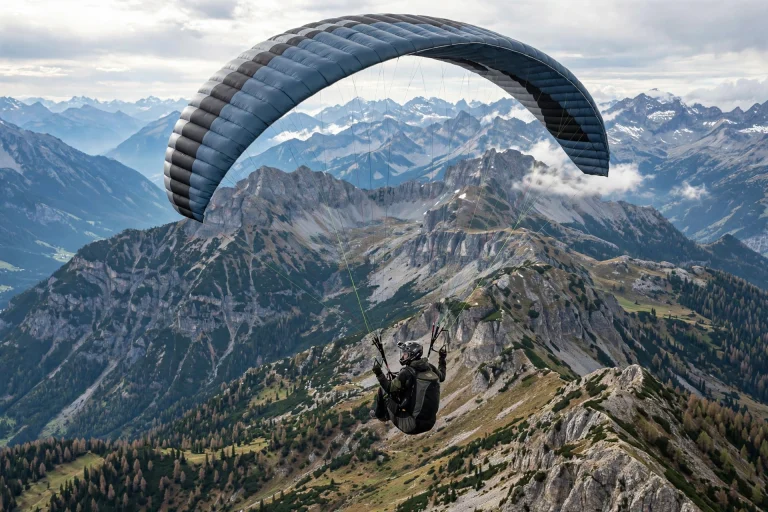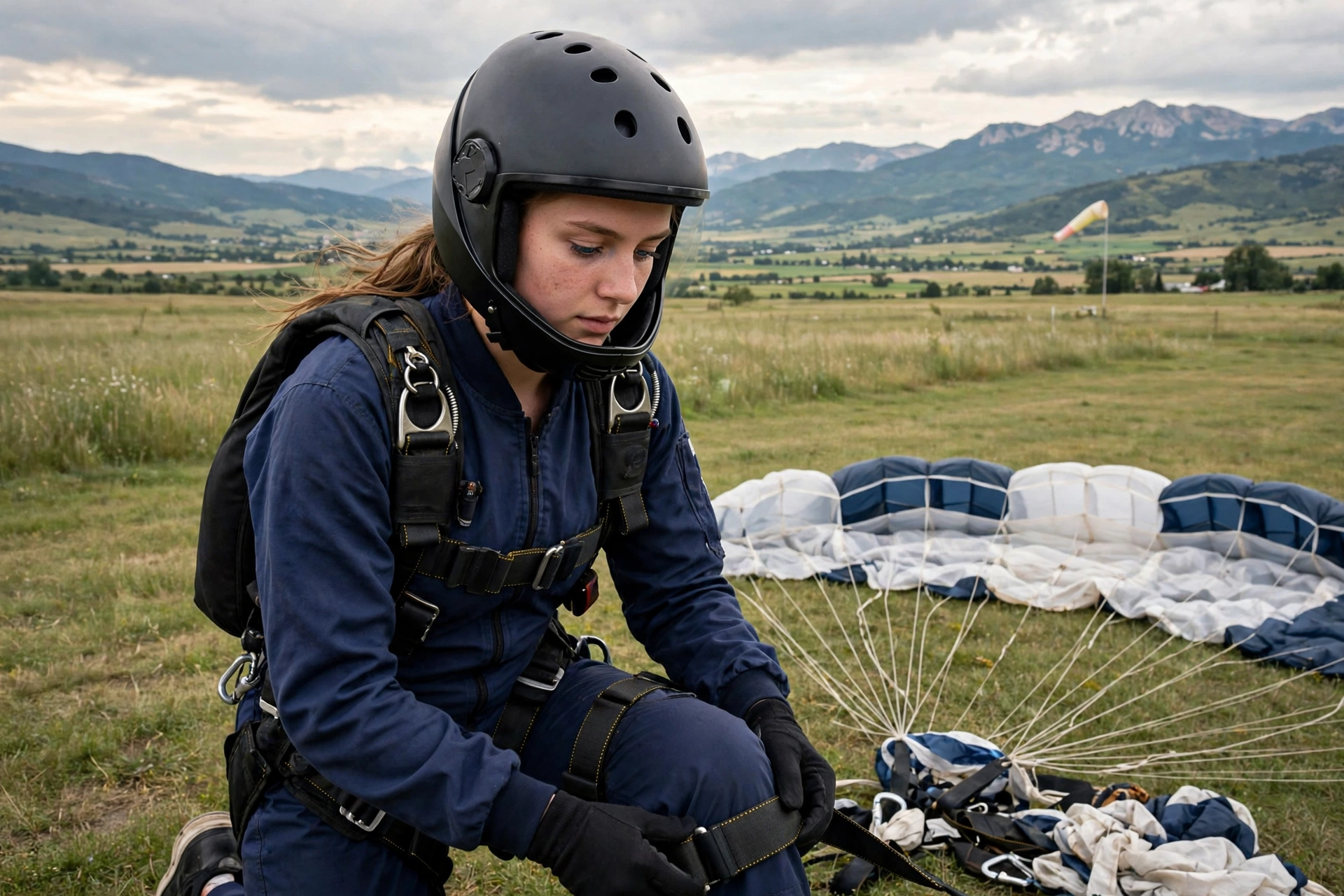
In general terms, student skydivers usually wear a helmet provided by their dropzone during training, and the key basics are a snug, level fit, a secure chin strap, clear vision, and a style — open-face or full-face — that suits the stage of training you are at. You do not need to buy a helmet before your first jumps, and your instructors will guide the choice when the time comes.
For a student, the helmet is one part of a much larger learning curve: exit position, canopy control, landing, and safety procedures all demand attention at once. A helmet that fits well and stays out of the way lets you focus on those skills instead of fighting your equipment. Getting the basics right early saves distraction later.
What Helmet Will You Wear as a Student?
Most dropzones provide helmets for students as part of the training kit, just as they provide jumpsuits, altimeters, and rigs. The helmets are usually sturdy, simple models chosen to fit a range of head sizes, and instructors will help you pick the right size and check the fit before each jump. Using the dropzone’s helmet also means you learn what a good fit feels like before spending money on your own.
The style you wear may depend on the training programme. Some programmes start students in open-face helmets, which allow clearer hearing and easier communication with instructors in freefall and under canopy. Others use full-face helmets from the start, or move students to full-face once basic skills are established. Both approaches are common, and your dropzone will explain its own preference.
Do not be surprised if you wear different helmets on different days. Dropzone kit is shared, sizes vary, and instructors may swap a helmet if the fit is not right. That is normal, and it is a good habit to check the fit every time rather than assuming yesterday’s helmet still fits today.
How Should a Student Helmet Fit?
The helmet should sit level on your head, covering the forehead, and stay put when you shake your head gently. The cheek pads or lining should touch firmly all round without painful pressure, and the chin strap should be snug enough that the helmet cannot roll forward or back. If the helmet rocks, slips over your eyes, or pinches, tell your instructor and try another size.
Vision is part of fit. You need to see your altimeter, your instructor’s signals, and the landing area clearly, so check that the helmet does not cut into your field of view and that your goggles sit correctly with it. Fogging is a common student problem, especially on humid days, and instructors can advise on goggle choice and anti-fog habits.
Hearing matters too, especially in training. You need to hear radio instructions under canopy and instructor calls in freefall, so an open-face helmet or a full-face helmet with good ear access may be preferred early on. If you cannot hear instructions clearly, say so — communication is a safety issue, not a minor comfort point.
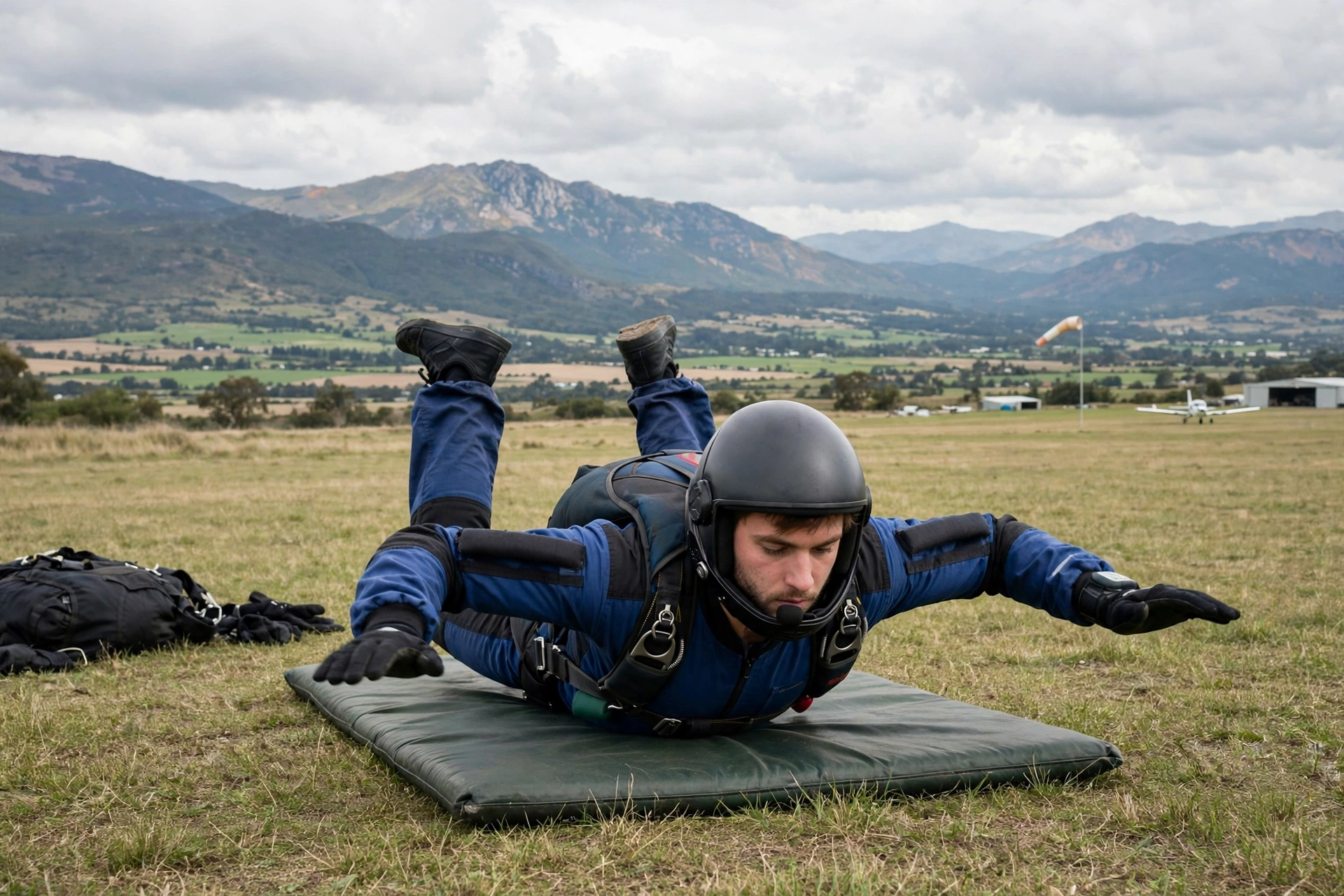
Open-Face or Full-Face for a First Jump?
Open-face helmets are the traditional student choice in many programmes. They are lighter, cooler, and allow the student to hear and be heard more easily, which helps instructors coach in the air. The trade-off is less coverage for the chin and face, and more wind on the face in freefall, which some students find distracting at first.
Full-face helmets offer more coverage and better wind protection, and many experienced skydivers prefer them. For a student, the extra coverage can feel reassuring, but the helmet can also feel heavier and warmer, and it can muffle hearing slightly. Some students find full-face helmets harder to get used to while they are still learning basic body position.
There is no single right answer for every student, and your dropzone’s programme will usually decide for you at the start. The important thing is that the helmet you wear fits well and does not distract you. As you progress, you will form your own preference, and that is the right time to invest in a helmet of your own.
When Should a Student Buy Their Own Helmet?
In general terms, wait until you have a few jumps behind you and a clearer sense of what suits you. Early on, your preferences are still forming, and the dropzone’s kit lets you try different styles without committing. Buying too early often means buying a helmet you later wish you had chosen differently.
A good time to buy is when you are jumping regularly, know whether you prefer open-face or full-face, and have a stable head size and fit reference from the helmets you have worn. At that point, visit a reputable skydiving supplier, try several models, and ask experienced jumpers and riggers for advice. A helmet is a long-term purchase, so trying before buying is worth the effort.
Budget is a real consideration for students, who are already paying for training and jumps. A mid-range helmet that fits perfectly is a better choice than an expensive one that fits poorly, and second-hand helmets should be treated with caution — check the shell, liner, straps, and fit carefully, and ask about any impacts the helmet has taken. A helmet with an unknown history is a gamble.
What Mistakes Do Student Skydivers Make With Helmets?
The most common mistake is wearing a loose helmet because it feels more comfortable on the ground. A loose helmet shifts in freefall, blocks vision, and protects less well, so snug is correct even if it feels unfamiliar at first. Instructors check fit for a reason, and their judgement is worth trusting while you learn.
Another mistake is fiddling with the helmet in freefall. Adjusting straps, pushing the helmet back, or lifting a visor mid-jump distracts from the skills you are practising and can make the helmet less secure. Sort out fit and comfort on the ground, before the jump, and leave the helmet alone once you are in the air.
Finally, students sometimes forget that the helmet is only part of the system. A well-fitted helmet, a correctly worn rig, and good training work together, and no single item replaces the others. That principle holds for every helmet, including those with systems for angled impacts, as explained in this guide to what MIPS means for helmets. Learn the helmet basics well now, and they will serve you for every jump that follows.
Frequently Asked Questions
Q: Do I need to buy a helmet before my first skydive?
A: In general terms, no. Most dropzones provide helmets for students as part of the training kit, fitted and checked by instructors before each jump.
Q: Is an open-face or full-face helmet better for students?
A: It depends on the training programme and your preference. Open-face helmets allow clearer hearing and communication, while full-face helmets offer more coverage and wind protection. Your dropzone will advise what suits its programme.
Q: How do I know if my student helmet fits?
A: It should sit level, cover your forehead, stay put when you shake your head, and feel snug without painful pressure. If it rocks, slips, or pinches, tell your instructor and try another size.

Olivia
Writer at Helmet Today, covering helmet reviews, fit and riding safety.