To store several helmets for a family, give each helmet its own spot on a wall rack, a shelf, or a set of hooks — off the floor, in the open air, away from heat and sunlight, and labelled or arranged so everyone can find their own helmet quickly. A simple system that everyone understands keeps helmets safe, dry, and ready to ride, instead of piled in a corner where they get knocked and mixed up.
A family that rides together can easily own four, five, or six helmets, and they are not cheap. Children outgrow theirs, adults have different sizes, and there may be a spare for guests. Without a system, helmets end up stacked on top of each other, dropped on the floor, or left in the car, and that is how they get scratched, damp, and damaged. This guide explains how to store a family’s helmets properly at home.
Where Is the Best Place to Store Family Helmets?
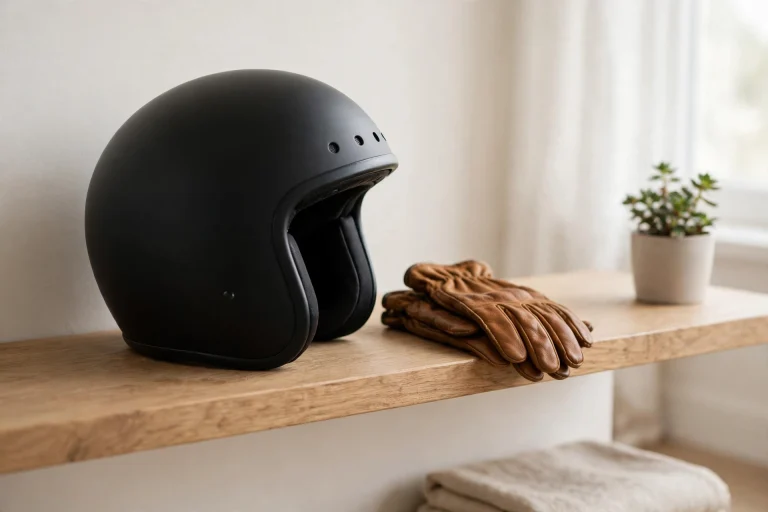
A cool, dry room indoors is the best place, and a hallway, a utility room, or a spare bedroom wall usually works well. The key is a spot that is easy to reach, out of the way of passing feet, and away from radiators, boilers, and direct sunlight. Sunlight and heat age the materials inside a helmet, so a sunny windowsill or a spot above a radiator is a poor choice, however convenient it looks.
A garage can work if it is dry, but many garages are damp, dusty, and full of chemicals, fuel, and tools — all of which are bad for helmets. If the garage is your only option, use a closed cupboard or a covered rack inside it, and keep helmets away from paints, solvents, and petrol fumes. In general terms, a helmet stored indoors in the house will last longer and stay in better condition than one stored in a garage.
How Do You Give Each Helmet Its Own Spot?
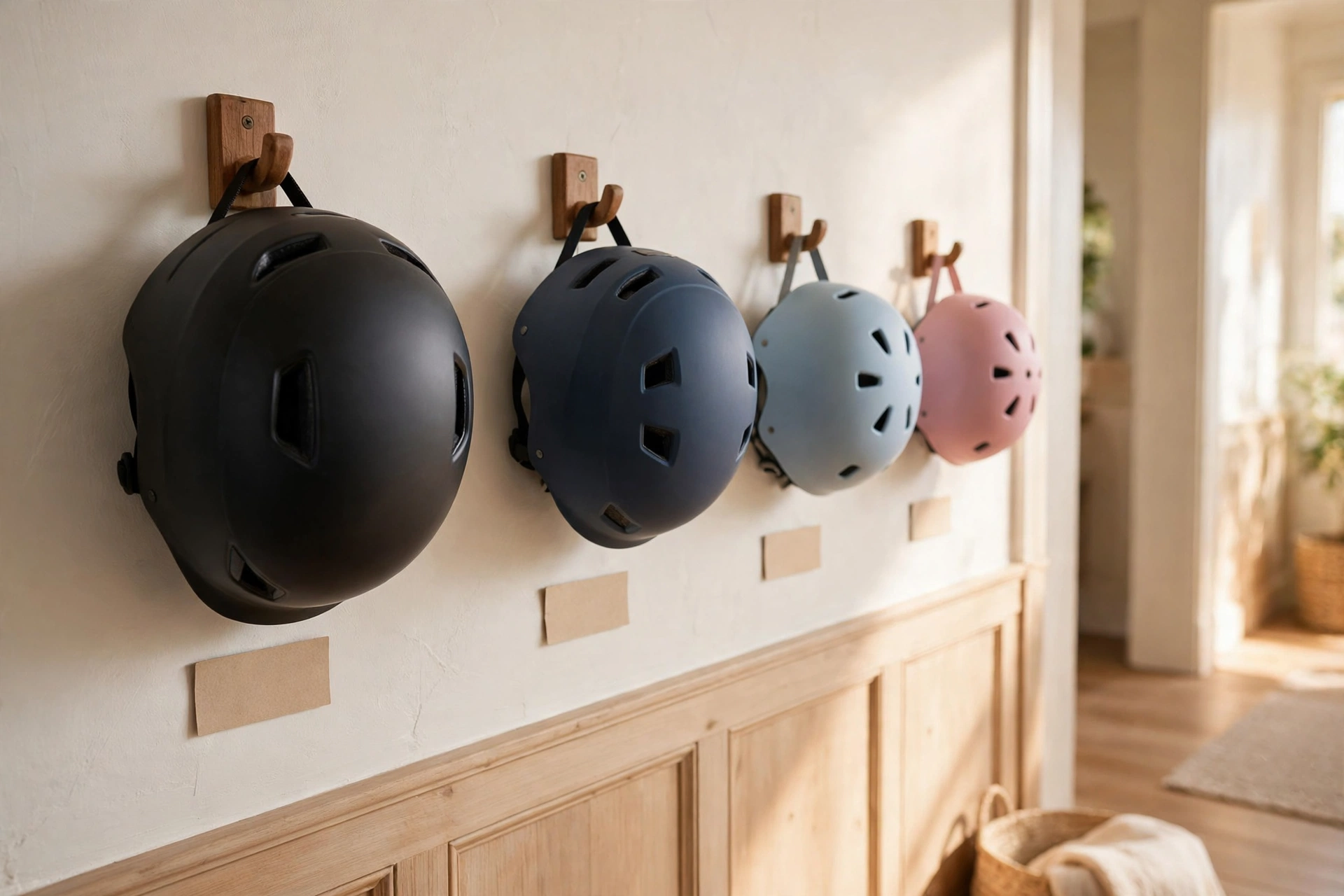
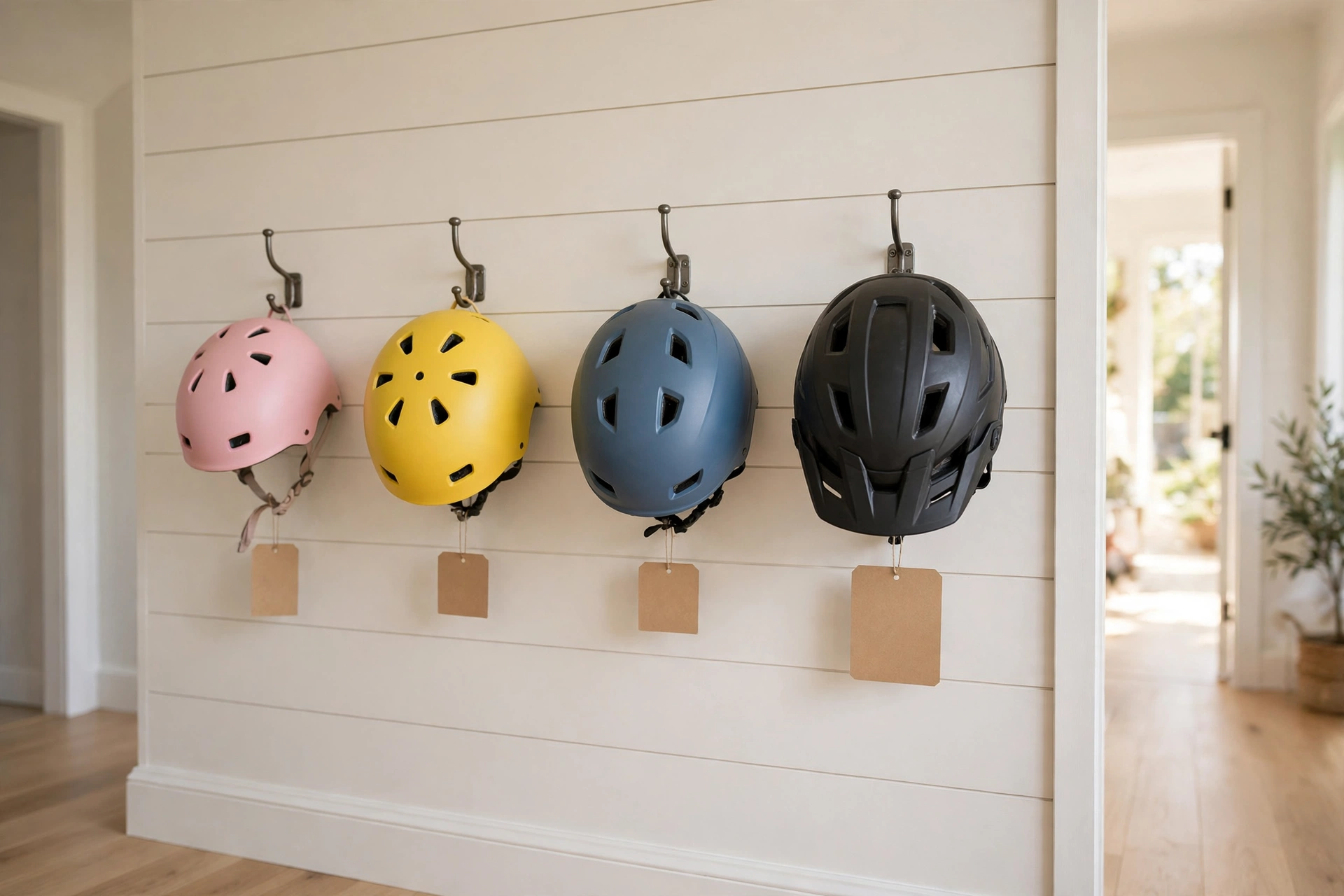
A wall rack with one hook or cradle per helmet is the tidiest answer for most families. Each helmet has its own place, and there is no stacking, which means no helmet is pressing down on another. Stacking helmets is one of the worst things you can do: the weight can dent liners, scratch shells, and make it hard to get the bottom helmet out without dropping the ones on top.
Label the spots if you have young children. A small name tag under each hook, or a different coloured hook for each person, helps children find their own helmet and put it back in the right place. This matters more than it sounds — a child who can find their own helmet quickly is a child who is ready to ride on time, and a helmet that goes back to its own spot is a helmet that does not get lost.
If wall space is short, a deep shelf with a lip at the front can hold several helmets side by side. Leave a gap between them so they cannot knock together, and put the helmets the right way up with the opening facing down or to the side. A shelf inside a cupboard works too, as long as there is some airflow and the helmets are not shut in while still damp from a ride.
How Do You Keep Children’s Helmets in Good Condition?
Children’s helmets need the same care as adult ones, and they are often treated more roughly. Teach children to put their helmet on its hook or shelf after every ride, rather than dropping it on the floor or throwing it in the car. A helmet that is looked after lasts longer, and the habit of caring for it is a good one to build early.
Check children’s helmets often for fit. Children grow quickly, and a helmet that fitted perfectly last season may be too small now. A helmet that is too tight is uncomfortable and may not sit properly on the head, while one that is too loose will not protect well. Try the helmet on at the start of each season, and replace it when the fit has changed, even if the helmet still looks new.
What About Storing Helmets Between Seasons?
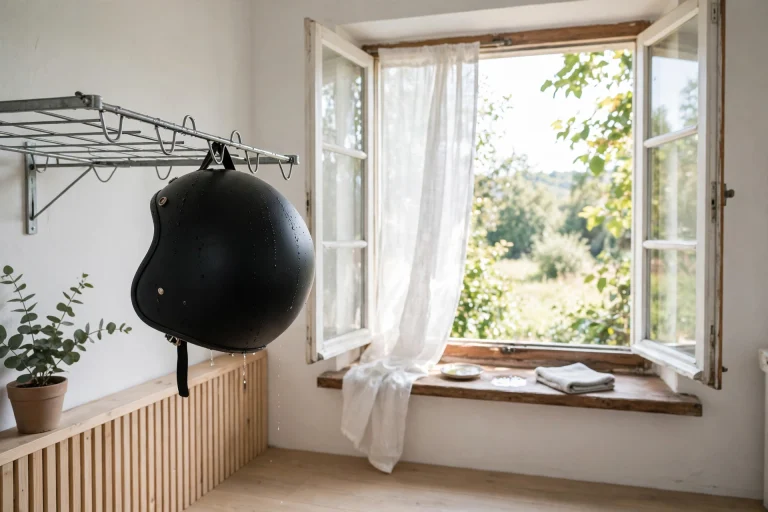
If the family does not ride through the winter, give the helmets a clean before they go away for the season. Wipe the shells with a damp cloth, clean the visors gently, and let the liners dry fully in the open air. A helmet that is put away damp can go musty, and mould can grow in the padding, which is hard to remove and unpleasant to wear.
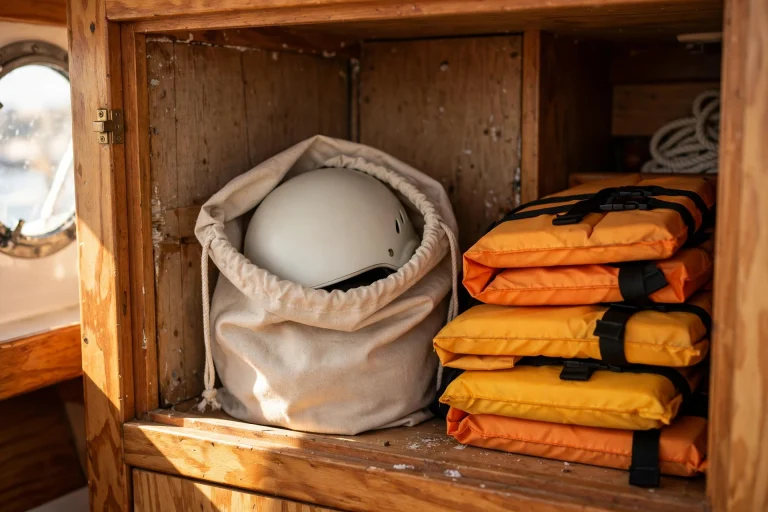
Store each helmet in its own helmet bag or a clean cotton bag, on its own hook or shelf, in a cool, dry place. The bag keeps dust off and stops the shell getting scratched, but the helmet should be fully dry before it goes in the bag. Do not stack bagged helmets on top of each other, and do not put heavy objects on top of them.
If you are learning about how helmets handle different kinds of impact, reading about what MIPS is for helmets can help you understand one of the technologies used in modern helmet design. Knowing how a helmet is built helps you understand why proper storage matters — the liner and shell work together, and both need looking after.
How Do You Keep a Family Helmet System Working?
The best system is a simple one that everyone can follow. One hook per person, in the same place every time, with names or colours to make it obvious. When a new helmet arrives, give it a spot straight away, before it ends up on the floor. When a child outgrows a helmet, take the old one off the rack so the system stays clear and the right helmet is always easy to find.
Do a quick family helmet check a few times a year. Look at each shell for cracks, check the straps and buckles, and make sure the liners are clean and firm. Let children check their own helmets with you — it teaches them what to look for and makes them more likely to speak up if something feels wrong on a ride.
Frequently Asked Questions
Q: Can I stack helmets on top of each other to save space?
A: In general terms, no. Stacking presses down on liners, scratches shells, and makes the bottom helmet hard to reach. Give each helmet its own hook or its own space on a shelf instead.
Q: How often should I check my children’s helmets for fit?
A: Check the fit at the start of each riding season and after any growth spurt. A helmet that fitted last year may be too small now, and a helmet that is too tight or too loose will not protect properly.
Q: Is it okay to store family helmets in the car between rides?
A: In general terms, no. A car gets very hot in summer and very cold in winter, and both can damage helmet materials. Bring helmets indoors and store them on a rack or shelf in the open air.

Olivia
Writer at Helmet Today, covering helmet reviews, fit and riding safety.