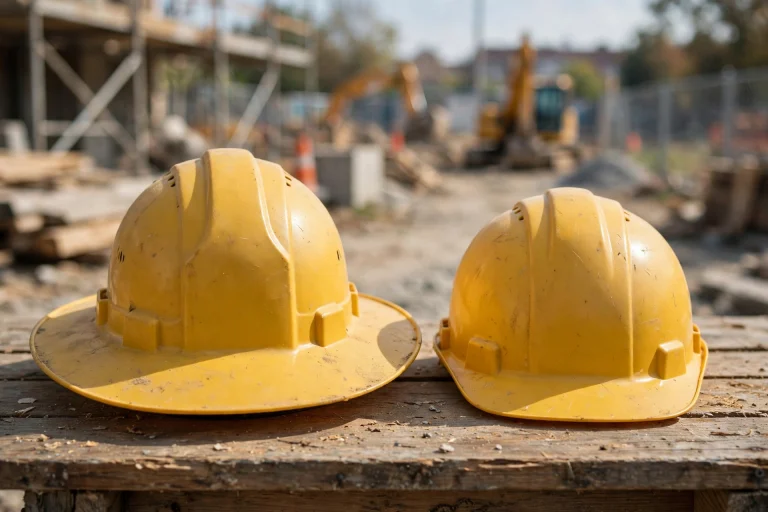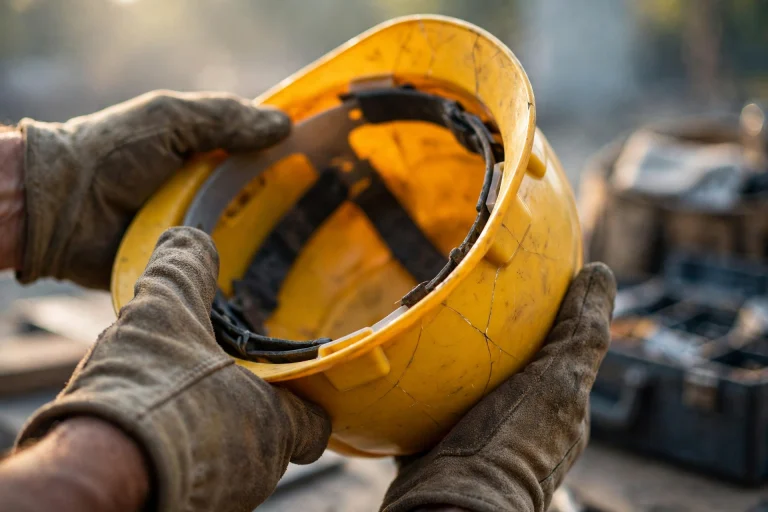
The difference between Type 1 and Type 2 hard hats is where they protect you from impact. A Type 1 hard hat is tested to protect the top of the head, while a Type 2 hard hat is tested to protect against impacts to the top and the sides of the head. In general terms, Type 1 is the traditional construction hard hat, and Type 2 adds side protection for workplaces where blows can come from more than one direction.
The two types look similar on the shelf, and both are legitimate safety equipment. Which one you need depends on the hazards around you and on what your employer or site rules require. This guide explains what each type is tested for, how to tell them apart, and how to choose between them.
What Does a Type 1 Hard Hat Protect Against?
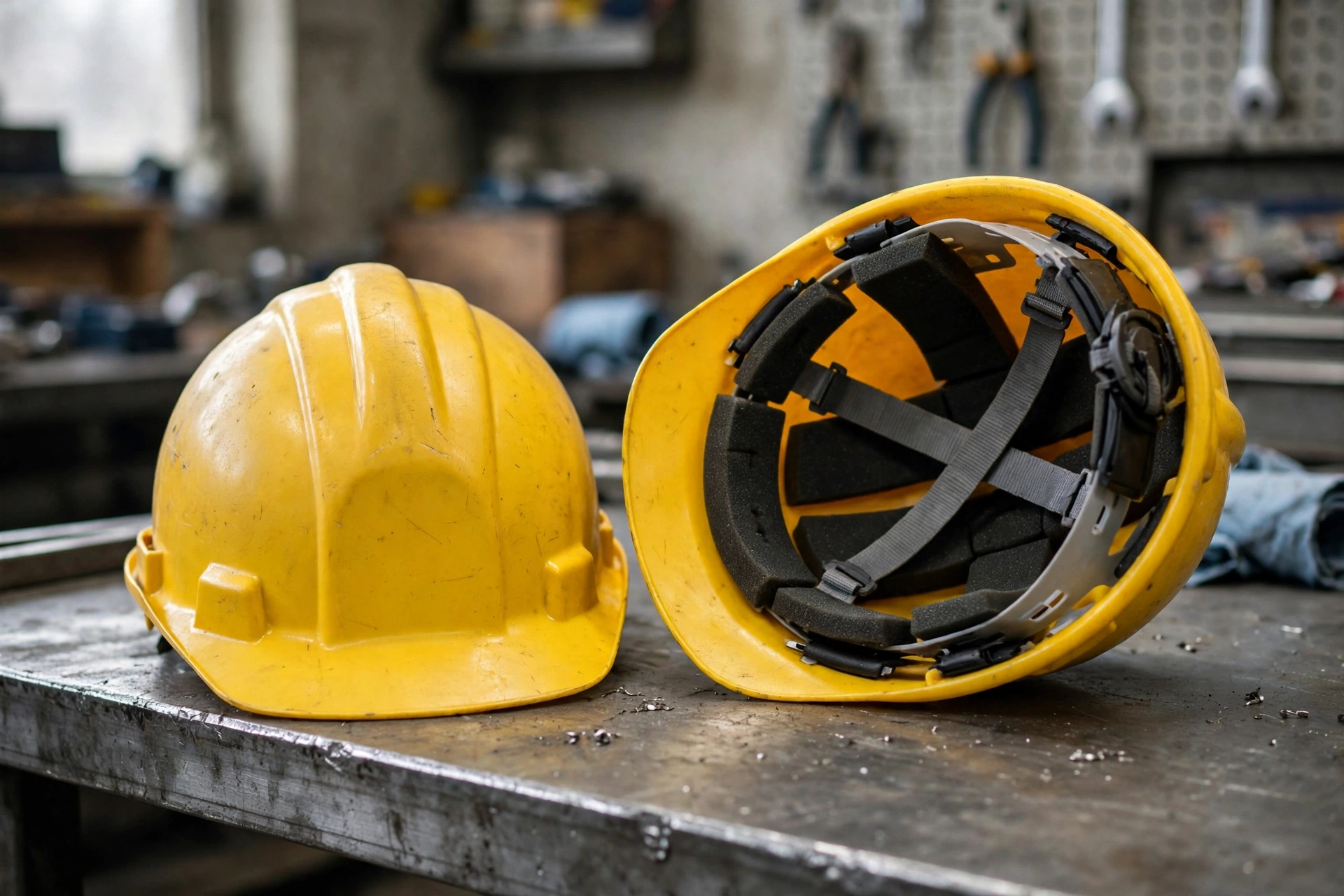
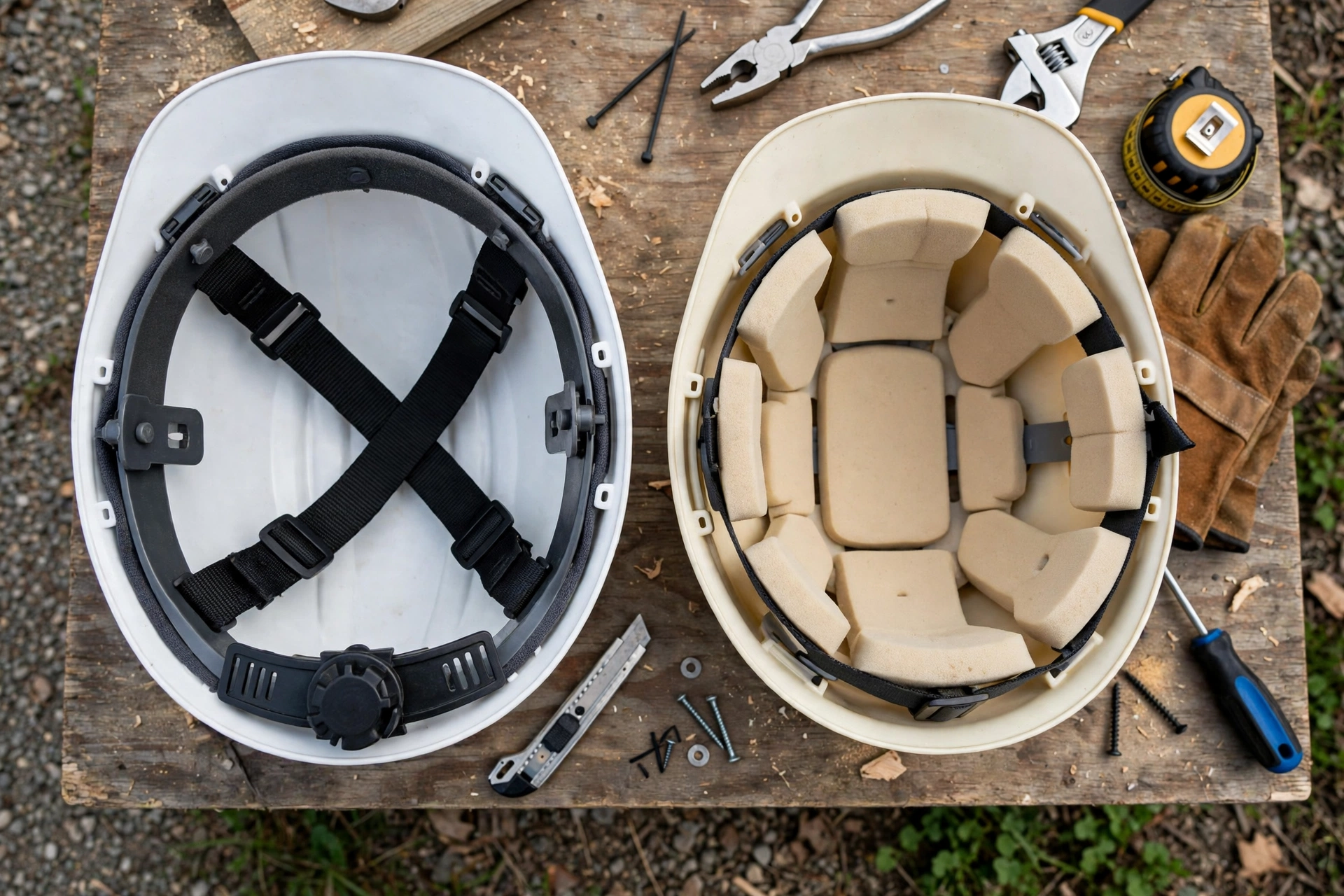
A Type 1 hard hat is designed and tested for impacts to the top of the head — the classic scenario of a tool, bolt or piece of material falling from above. Its shell and internal suspension work together: the shell resists penetration, and the suspension webbing holds the shell away from your skull so the force of a blow is spread out and absorbed rather than passed straight through.
This top-only design has been the standard site helmet for decades, and for work where the realistic hazard is falling objects, it does the job it was made for. Most general construction work falls into this category, which is why Type 1 hats are by far the most common ones you will see.
What a Type 1 hat is not tested for is a hard blow to the side of the head — swinging loads, a fall sideways against a structure, or being struck by moving equipment at head height. Its suspension is not arranged to absorb that kind of force in the same way.
What Extra Protection Does a Type 2 Hard Hat Add?
A Type 2 hard hat must pass the same top-impact testing as a Type 1, and then additional testing for impacts to the sides, front and back of the head. To do that, Type 2 hats usually include energy-absorbing foam padding around the inside of the shell, not just a suspension over the crown, so the sides of the head are cushioned as well.
Type 2 hats are also tested for things like how well the chin strap holds the hat in place, because side protection only works if the hat stays on during a fall or collision. Many Type 2 models therefore come with a chin strap as standard, where most Type 1 hats have one only as an option.
The trade-offs are practical ones. A Type 2 hat is often a little heavier, warmer and more expensive than a basic Type 1, and the foam lining can make it feel more like a helmet and less like a cap. For workers facing side-impact risks, that is a trade most safety managers consider well worth making.
How Can You Tell Which Type a Hard Hat Is?
Check the label inside the hat. Certified hard hats carry printed information under the brim or inside the shell showing the standard they meet, their type and their class. That label, not the shape or the sales packaging, is the reliable way to identify what you are holding.
Appearance gives clues but nothing more. If you can see or feel a substantial foam liner wrapping around the inside of the shell, the hat is very likely a Type 2. If the inside is just a fabric or plastic suspension harness over the crown, it is almost certainly a Type 1. But because designs vary between makers, always confirm with the label or the manufacturer’s specification.
If the label is missing, damaged or unreadable, treat the hat as unknown. A hard hat whose type cannot be verified should not be relied on for work where the type matters, and most safety officers would retire it or restrict it to tasks where any certified hat is acceptable.
Which Type Do You Need for Your Job?
In general terms, the starting point is your employer’s risk assessment and site rules. Many employers simply specify one type for everyone. Where the choice is yours, think about the direction hazards actually come from. Work dominated by falling-object risk points to Type 1. Work around moving loads, swinging materials, vehicles, scaffolding at head height, or anywhere a fall could throw your head sideways into a structure points towards Type 2.
Some industries have been moving towards Type 2 as a default, on the reasoning that real accidents rarely deliver a perfectly vertical blow. Others keep Type 1 for general work and reserve Type 2 for higher-risk tasks. Neither approach is wrong; what matters is that the choice is deliberate rather than accidental.
Remember that type is only half the specification. You also need the right electrical class for your work — the class system is covered in our companion article on hard hat classes — and a hat that fits you properly and is in good condition.
How Does Hard Hat Impact Protection Compare With Other Helmets?
Hard hats manage impact in their own way: a rigid shell to resist penetration and spread the load, plus a suspension or foam system to absorb energy. Sports and cycling helmets take a different route, relying on a thick crushable foam liner that is destroyed by a serious impact and must then be replaced.
Some bicycle and snow helmets go further and address the twisting forces in a fall, using slip-plane systems designed to reduce rotational motion — explained in our guide to what MIPS is in a helmet and how it works. Industrial head protection has historically focused on straight-line blows from above, which is exactly the gap the Type 2 category exists to close for side impacts.
The lesson carries across all of them: a helmet only protects against the kinds of impact it was designed and tested for. Matching the type of protection to the direction of your risks is as important on a building site as it is on a bike.
Frequently Asked Questions
Q: Is a Type 2 hard hat always better than a Type 1?
A: It protects against more directions of impact, but “better” depends on the job. For work where the only realistic hazard is falling objects, a Type 1 meets the need; where side impacts are a real risk, Type 2 is the appropriate choice. Your site’s risk assessment decides.
Q: Can a Type 1 hard hat be upgraded to Type 2 with extra padding?
A: No. The type is a tested property of the complete hat as the manufacturer made it. Adding your own padding does not make a Type 1 into a Type 2 and can interfere with how the suspension works, so it should not be done.
Q: Do Type 1 and Type 2 hard hats cost very different amounts?
A: Type 2 hats generally cost more because of the extra foam lining and testing, and they can be slightly heavier and warmer to wear. Prices vary widely by brand and features, so compare specifications rather than price alone.

Olivia
Writer at Helmet Today, covering helmet reviews, fit and riding safety.