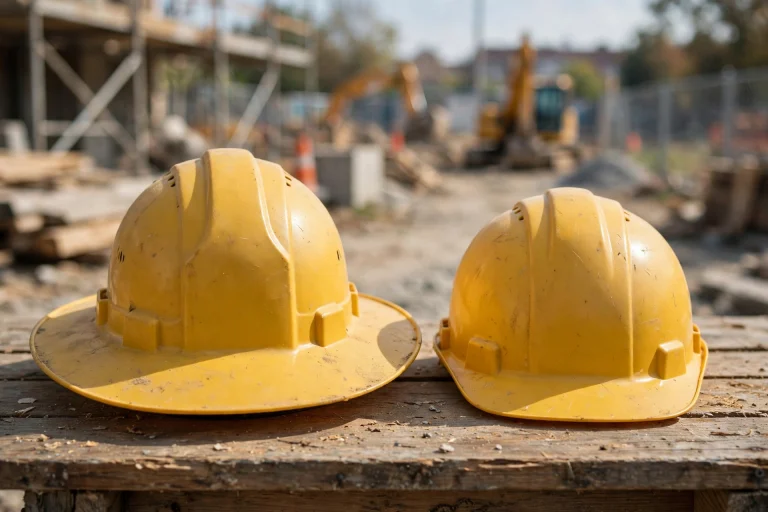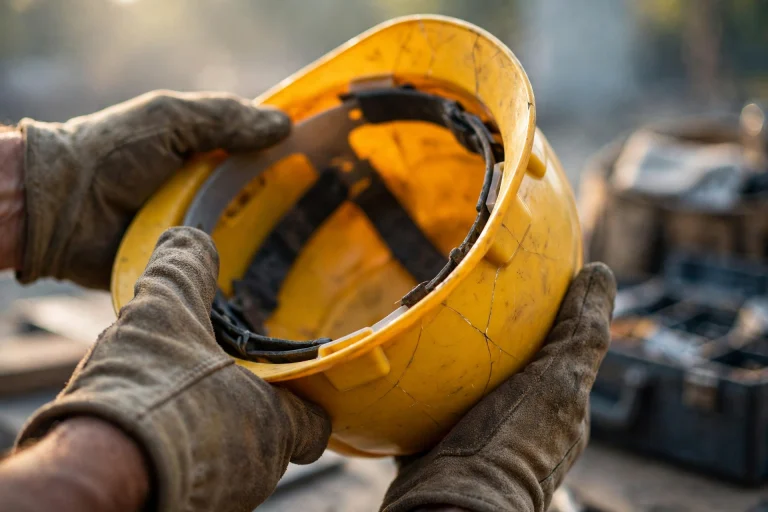
There is no single official rule for what hard hat colors mean. In general terms, the colors are a convention set by each employer or job site, not by law, and the same color can mean different things in different places. Some patterns are very common — white is often worn by supervisors, engineers and visitors, and yellow by general laborers — but you should always confirm the scheme used on your own site before relying on it.
Color coding exists for one simple reason: it lets people identify roles at a glance across a noisy, busy site. When a crane operator, a first aider or a site manager can be spotted instantly by hat color, communication gets faster and safer. This guide covers the meanings you are most likely to meet, why they vary, and how to find out what applies where you work.
Is There an Official Standard for Hard Hat Colors?
In general terms, no. The safety standards that govern hard hats deal with how much protection the hat provides — impact resistance, penetration resistance and, for some classes, electrical insulation. They do not assign meanings to colors. Nothing in those standards says a white hat must belong to a manager or a yellow one to a laborer.
Because no authority fixes the colors, the scheme belongs to whoever runs the site. A large contractor may publish a color chart in its site rules, a smaller firm may simply hand out whatever hats it has in stock, and some workplaces use a single color for everyone and identify roles with stickers or vests instead.
That is why two workers doing the same job on two different sites can be wearing completely different colors. The color tells you about the system on that particular site, not about a universal code, and treating common patterns as guaranteed rules is the mistake to avoid.
What Do the Most Common Hard Hat Colors Usually Mean?
Although nothing is fixed, some associations turn up again and again. White is the classic color for supervisors, site managers, engineers, architects and visitors — people who oversee the work rather than carry it out. Yellow is the most common color for general laborers and ground workers, and it is the default hat on many construction sites. Blue is often used for electricians, carpenters and other technical trades, and sometimes for temporary or subcontracted workers.
Green is frequently linked to safety roles — safety officers and inspectors — and on some sites it marks newer workers so others know to keep an eye on them. Orange is a high-visibility color used for road crews, traffic marshals, banksmen and lifting teams, where being seen matters as much as head protection. Red is often worn by fire marshals and emergency responders, and sometimes by welders, who on other sites wear brown. Pink hats are commonly kept as loaners for visitors or for anyone who has forgotten their own, which is exactly why they stand out.
Other colors you may meet include grey for visitors or trainees on some sites, and black, which a few companies reserve for senior supervisors or use simply as a company color. Treat every one of these as a strong tendency, not a promise.

Why Do Hard Hat Colors Vary From Site to Site?
The simplest reason is that the employer chooses. A company may build its scheme around its own structure: one color for its own staff, another for subcontractors, another for visitors. A firm with several sites may keep one scheme across all of them, while a joint project between two contractors may have to merge two different systems.
Trade and task also shape the choices. Where a trade needs to be found quickly — electricians who can isolate a circuit, a fire marshal, a first aider — a distinct color is genuinely useful. Where visibility is the main concern, bright colors like orange and yellow dominate regardless of role.
Local custom plays a part too. Conventions differ between countries and even between industries in the same country: mining, shipbuilding, warehousing and construction all have their own habits. The result is a patchwork of similar-but-not-identical systems, which is why checking locally always beats assuming.
How Can You Tell What the Colors Mean on Your Site?
Start with your site induction. Most organized sites explain their color scheme when you arrive, and many include it in the written site rules or on a notice board near the entrance. If colors were covered and you have forgotten, ask — nobody minds a worker checking what a hat means.
Your supervisor is the next source. If you are handed a particular color on your first day, ask what it signifies and whether it restricts where you can go or what you can do. Visitor colors, in particular, sometimes come with conditions, such as needing an escort in certain areas.
Pay attention during your first days on any new site, even if you are experienced. Watch who wears what, match colors to the people doing each job, and you will usually decode the local system quickly. The one thing not to do is direct questions or permissions to someone based purely on the color habits of your last site.
Does the Color of a Hard Hat Change Its Protection?
No. The shell color is a surface pigment; it does not make the hat stronger, weaker or suitable for different hazards. Two hats of the same model in white and yellow offer the same protection. What actually determines protection is the hat’s rated type and class — whether it is built for top or side impact, and whether it is tested for electrical insulation — along with its condition and fit.
This is worth remembering when choosing or being issued a hat. If a job involves electrical hazards, the question is the hat’s class, not its color. If the work has side-impact risks, the question is the type. Color only enters the decision for identification and visibility.
Other kinds of head protection manage energy in different ways again. Cycling and climbing helmets, for example, use crushable foam liners, and some add systems designed to reduce rotational forces in a fall — our guide to what MIPS is and how it works in a helmet explains that approach. A hard hat works differently, spreading and absorbing force through its shell and suspension, but the principle is the same: protection comes from the design and rating, never from the color.
Frequently Asked Questions
Q: What does a white hard hat mean?
A: On many sites, white is worn by supervisors, managers, engineers and visitors. It is the most widespread convention of all, but it is still only a convention — some sites use white differently or not at all.
Q: Can I just choose my own hard hat color?
A: Usually not on an organized site, because the color is part of the identification system and your employer issues the hat that matches your role. If you supply your own hat, check the site rules first and make sure it also meets the required type and class.
Q: Do faded hard hat colors matter?
A: The meaning still reads the same, but fading is a useful warning sign for the hat itself: heavy sun exposure over time can degrade the shell material, so a badly faded or chalky hat is worth inspecting and may be due for replacement.

Olivia
Writer at Helmet Today, covering helmet reviews, fit and riding safety.