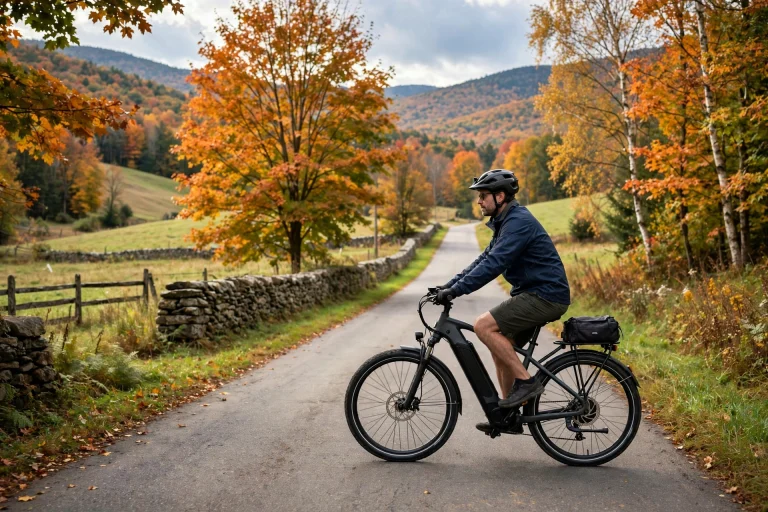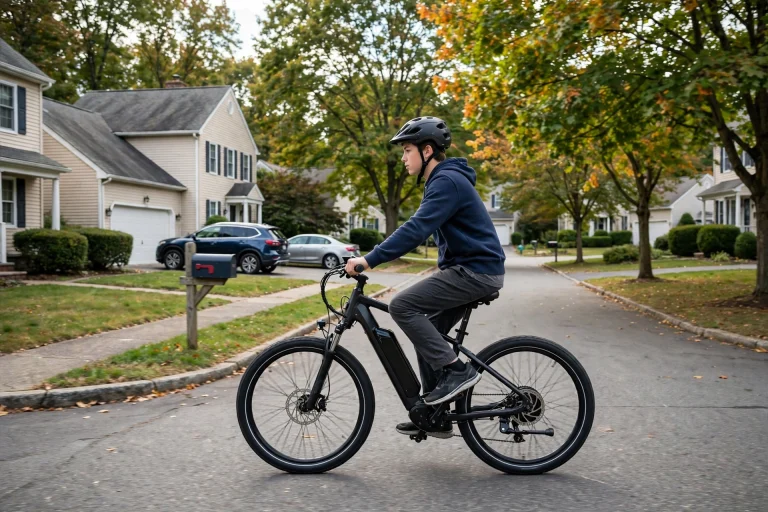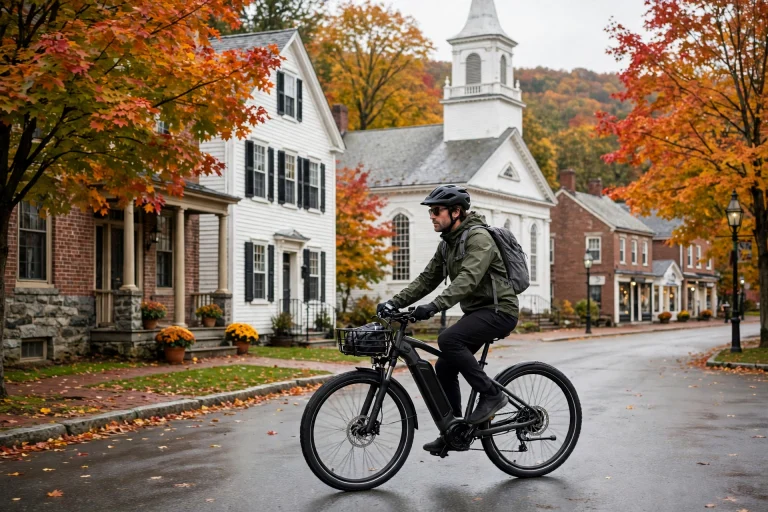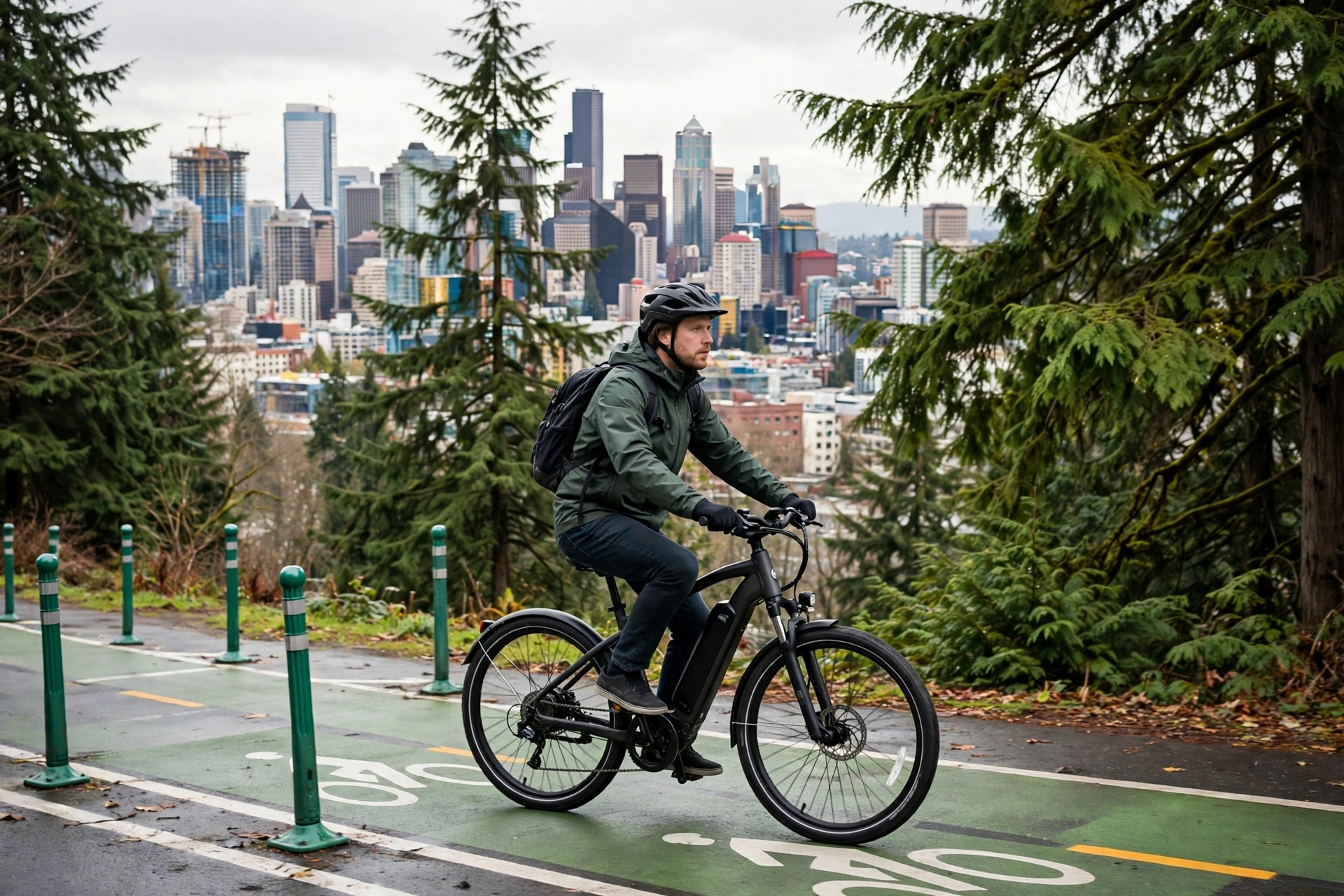
Washington has no statewide helmet requirement for e-bike riders — or for bicycle riders of any age. Helmet rules in Washington are set locally, and many cities and counties, including communities around King County and a number of individual cities, require helmets for riders of all ages on their streets and trails.
That patchwork is the thing to understand before you ride: whether you legally need a helmet in Washington depends on where you are riding, not just what you are riding. Here is how the state and local rules fit together, how e-bike classes work, and how to check the rule that applies to you.
Does Washington state require a helmet for e-bike riders?
No. There is no Washington state law requiring a helmet for e-bike or bicycle riders, whether the rider is an adult commuter in Seattle, a teenager on a Class 2 e-bike in Spokane, or a child on a neighborhood street. The state legislature has never enacted a general bicycle helmet mandate, and e-bikes have not changed that.
Instead, Washington leaves the decision to cities and counties — and many have decided in favor of helmets. That makes Washington unusual: in much of the state, riders are covered by a local all-ages helmet rule, even though no state rule exists. If you want the bigger national picture first, our guide to what states have helmet laws shows how Washington’s local-control approach compares.
The practical takeaway is simple: assume you need to check. In a large share of Washington’s population centers, a helmet is not just recommended — it is the local law.
Which Washington cities and counties require helmets?
Local rules vary in both coverage and detail, but the pattern is well established. King County long had an all-ages helmet rule for its unincorporated areas and many of its cities, and numerous cities across the Puget Sound region and beyond adopted their own all-ages requirements. Other communities apply helmet rules only to minors, or to riders on certain paths and in certain parks, and a few places have repealed or adjusted their rules over time.
These ordinances commonly apply to e-bikes in the same way they apply to regular bicycles, because local rules were typically written around the rider and the roadway rather than the type of bike. They can also come with a fine for riding without a helmet — enforcement varies, but in many areas a citation is a real possibility, especially for repeat or combined violations.
Because city boundaries in the Seattle–Tacoma–Everett corridor are invisible from the saddle, a single ride can cross several jurisdictions. The rule of the place you are physically riding in is the one that applies, so when in doubt, wear the helmet and you are covered everywhere.
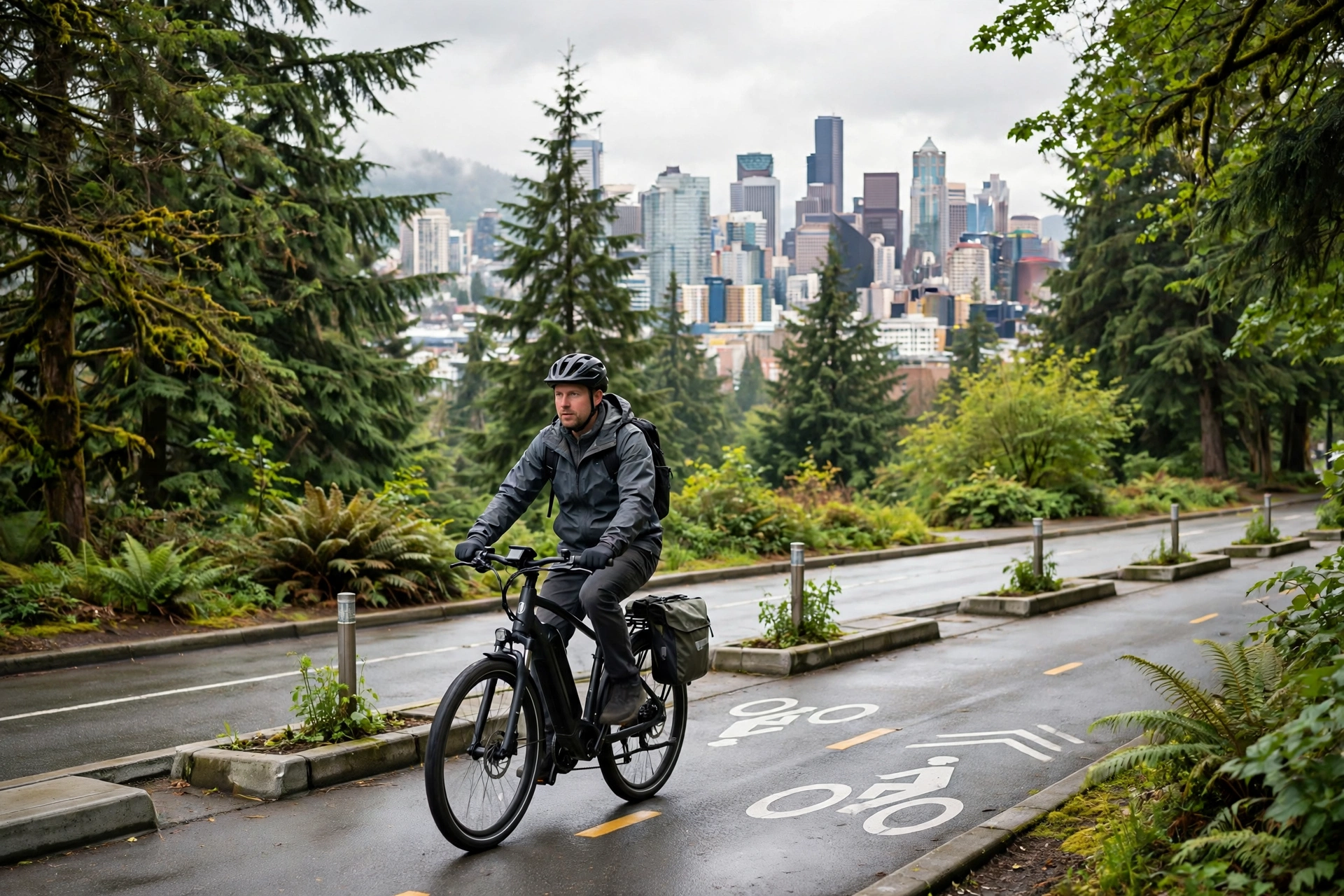
How are e-bike classes defined in Washington?
Washington state law defines three classes of electric-assisted bicycles. Class 1 e-bikes assist only while you pedal, up to 20 mph. Class 2 e-bikes can propel you with a throttle, also up to 20 mph. Class 3 e-bikes assist while pedaling up to 28 mph and are aimed at faster road commuting. Riders generally need no license, registration, or insurance for any of the three classes, and there are minimum-age expectations for the faster Class 3 bikes.
Where each class may ride is a mix of state framework and local decision-making. Lower-speed e-bikes are broadly allowed where bicycles are allowed, including many shared-use paths, while Class 3 bikes face more restrictions on paths and trails, and local agencies can set their own access rules for the land they manage. None of the class definitions changes the helmet picture directly — helmets are governed by those local ordinances — but class does determine where you can legally ride, so it is worth knowing which class your bike is before you plan a route.
How can you check the helmet rule where you ride?
Start with your city or county government website and search for its helmet or bicycle ordinance; most publish their municipal code online. If you ride in several cities, check each one, or simply adopt the strictest rule — wear a helmet everywhere — and stop worrying about boundaries. Rental and bike-share programs simplify this further: most provide helmets or require them under their terms, whatever the local law says.
Also check the rules for the specific trail or park system you use. Agencies managing regional trails can impose their own equipment rules, and organized rides, charity events, and tours in Washington routinely require helmets for every participant as a condition of entry.
If you are a parent, the simplest and safest approach is to treat a helmet as mandatory for your children everywhere in Washington. Many local laws require it for minors anyway, and a consistent family rule avoids confusion when you ride in a new town.
What kind of helmet should a Washington e-bike rider wear?
Choose a helmet certified to the U.S. CPSC bicycle helmet standard, fitted so it sits level and low on your forehead and cannot rock forward or back. For Class 3 commuting at up to 28 mph, consider a helmet certified to the NTA 8776 e-bike standard, which tests at higher speeds and covers more of the head. Features like MIPS rotational protection, a rear light, and good ventilation suit Washington’s mix of fast commuting and rainy shoulder seasons.
Replace your helmet after any crash, and store it away from heat and solvents. A helmet only works on the rides where it is on your head — and in much of Washington, it is the law besides.
Frequently Asked Questions
Is a helmet required for e-bikes anywhere in Washington?
Yes — not by the state, but by many cities and counties. Numerous Washington communities, including many around King County, require helmets for riders of all ages, and those local rules generally cover e-bike riders too.
Do children need a helmet on a bike or e-bike in Washington?
There is no state rule, but many local ordinances require helmets for all ages, which includes children. Check your city or county code — and regardless of the law, a helmet is strongly recommended for every child rider.
Can you be fined for riding without a helmet in Washington?
Where a local helmet ordinance exists, yes — riding without a helmet can result in a citation and fine under that city or county rule. Where no local rule exists, there is no penalty, but a helmet is still the safer choice.

Olivia
Writer at Helmet Today, covering helmet reviews, fit and riding safety.