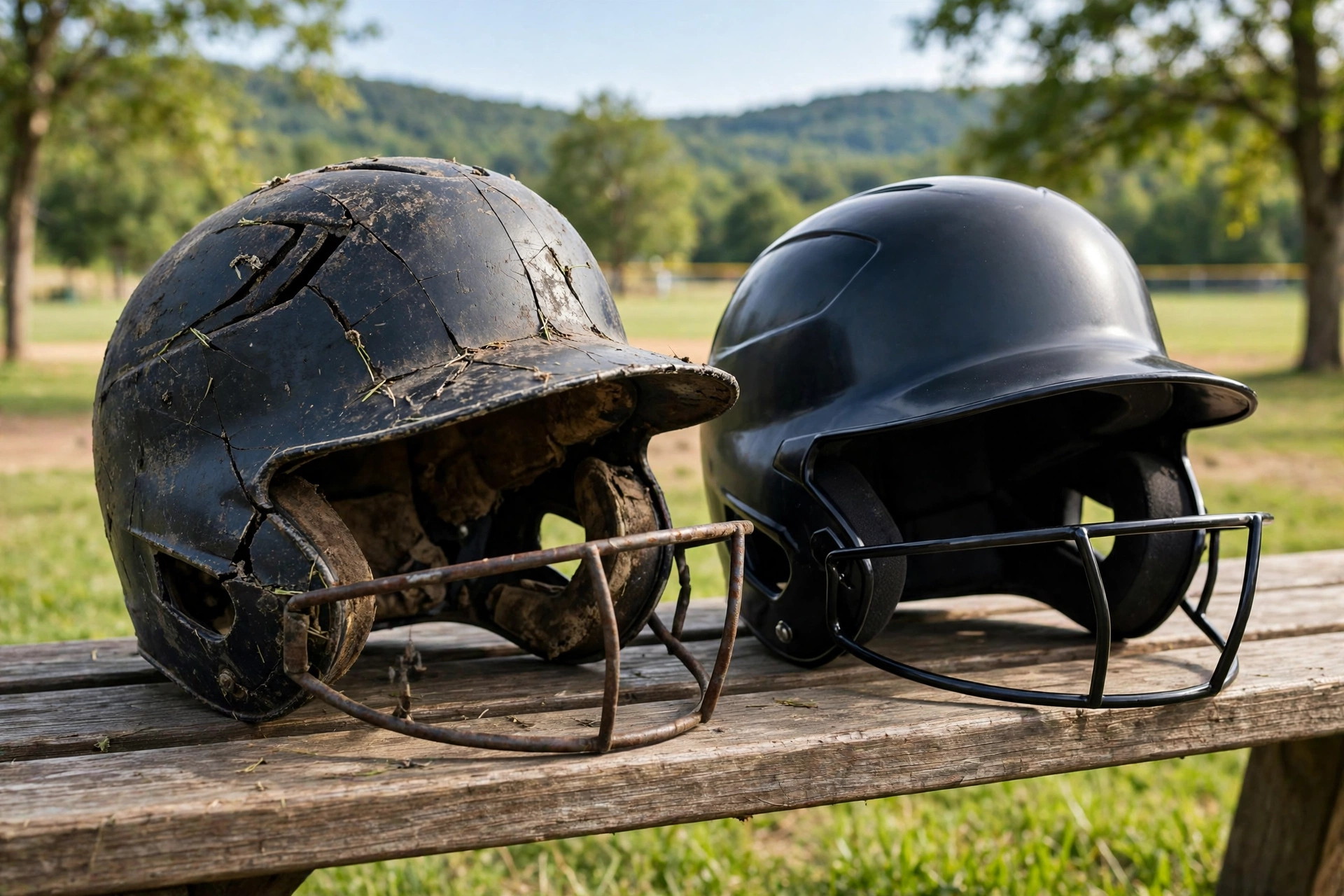
Replace a batting helmet immediately if it has any crack in the shell, damage from a hard ball impact, or padding that is compressed, cracked, or coming loose. There is no safe way to repair a cracked helmet. Even without visible damage, replace a helmet that no longer fits, that has lost its certification label, or that the manufacturer or your league says is past its usable life.
Batting helmets look simple, but they are certified safety equipment with a limited life. The shell and foam slowly age, impacts leave damage you cannot always see, and a growing player’s fit changes. Knowing the warning signs helps you retire a helmet at the right time, before it fails when it matters.
What damage means a batting helmet must be replaced right away?
Any crack in the shell, however small, ends a batting helmet’s life. Cracks can start at screw holes, ear flap edges, or the point where a ball struck, and a cracked shell can split further on the next impact instead of spreading the force. The same goes for a shell that is dented, warped, or has a piece chipped away. Do not glue, tape, or drill a cracked helmet to keep using it; none of those repairs restore its certified protection.
A significant impact is another reason to retire a helmet even when it looks fine. If a helmet takes a hard direct hit from a pitch or a batted ball and shows any mark, deformation, or loose part afterward, replace it. When in doubt after a hard impact, treat the helmet as finished. Helmets are designed to manage impact energy once in the damaged spot, and hidden damage to the inner foam is common after a serious hit.
What are the visible signs of wear to look for?
Inspect a batting helmet regularly under good light. Look for fine hairline cracks around the brim and ear flaps, a faded or chalky shell from long sun exposure, and scratches deep enough to catch a fingernail. Check inside for padding that is peeling away from the shell, torn coverings, or straps and snaps that no longer hold.
Pay close attention to the foam. Press the padding in several places: it should feel firm and spring back. Foam that stays flattened, feels crumbly or unusually hard, or has visible cracks has lost its ability to absorb energy and the helmet should be replaced. Some helmets add liner technologies such as MIPS on top of the base foam, but no liner can compensate for worn-out padding or a damaged shell.

How long does a batting helmet usually last?
There is no single expiry date that fits every batting helmet, because life depends on how often it is used, how it is stored, and how many impacts it has taken. A helmet used daily through school, travel ball, and summer seasons ages far faster than one used for a short recreational season. As a general guide, many helmets in regular youth and school use are replaced after a few seasons of play, and any helmet should be replaced sooner if the checks in this article raise concerns.
Follow the manufacturer’s guidance for your specific model, and follow your league’s rules, since some leagues set maximum ages for helmets or require current certification for play. Storage matters too: a helmet kept in a cool, dry place away from sunlight and car-trunk heat will age more slowly than one left in a gear bag in a hot garage.
Why does the certification label matter?
Batting helmets for organized baseball and softball are certified to the NOCSAE standard, and the certification label or stamp on the helmet is proof it met that standard when it was made. If the label has worn off, been removed, or is unreadable, umpires and leagues may refuse to allow the helmet in a game, and you have no way to confirm what standard it meets.
Check the label during your regular inspections. If it is missing or illegible, plan to replace the helmet, especially for league or school play. Also never paint a helmet or add unapproved attachments, since solvents in paint can weaken some shells and modifications can void the certification the label represents.
When does growth or fit mean a young player needs a new helmet?
For youth players, fit is one of the most common reasons to replace a helmet. A helmet that has become too small will sit high, squeeze the head, and leave the lower head exposed. A helmet that is too large, often a hand-me-down from an older sibling, wobbles and can shift on impact. Run a fit check at the start of every season: the helmet should sit level about an inch above the eyebrows, feel snug all around, and stay still during a shake test.
If a child’s helmet fails that check and padding adjustments approved by the manufacturer cannot fix it, it is time for a new one in the correct size. Never solve growth with a helmet bought a size too big, and never keep a too-small helmet in service hoping a player will manage for one more season.
Can a batting helmet be repaired instead of replaced?
Only minor, manufacturer-approved items can be serviced, such as replacing a worn chin strap, a missing snap, or padding inserts that the manufacturer sells for that exact model. Structural parts are different: a cracked shell, damaged foam, or a bent face guard cannot be repaired safely at home, and face guards with bent bars or loose mounting hardware should be replaced with approved parts.
When a helmet reaches the end of its life, retire it completely rather than passing it to a younger player or keeping it as a spare. Marking it clearly as retired, or cutting the straps before throwing it away, makes sure a damaged helmet does not find its way back onto the field.
Frequently Asked Questions
Can I keep using a batting helmet with a small crack?
No. Any crack in the shell means the helmet can no longer be trusted to protect as certified, and cracks cannot be repaired. Replace it before the player bats again.
Does a batting helmet expire if it looks fine?
Materials age even without visible damage, so follow the manufacturer’s lifespan guidance and your league’s rules. If the foam has hardened or compressed, or the certification label is gone, replace it even if the shell looks good.
Should I replace a batting helmet after one hard pitch impact?
Inspect it carefully. If there is any crack, dent, loose padding, or deformation, replace it. After a truly hard impact, replacing the helmet is the safe choice even when damage is hard to see.

Olivia
Writer at Helmet Today, covering helmet reviews, fit and riding safety.