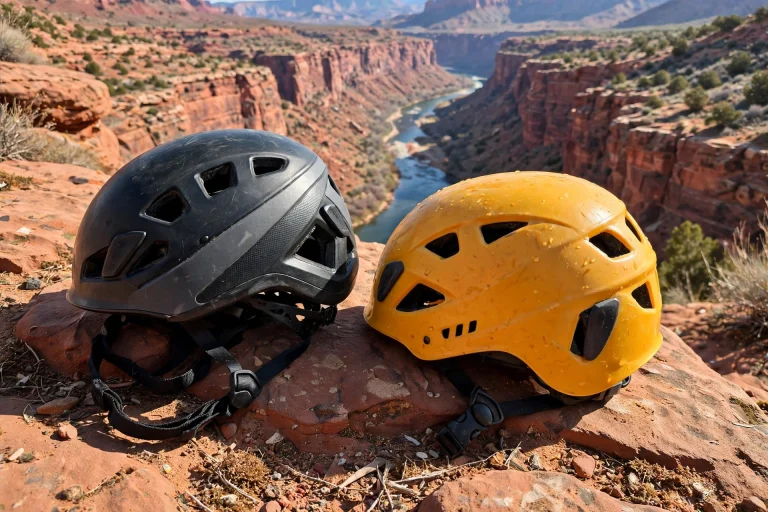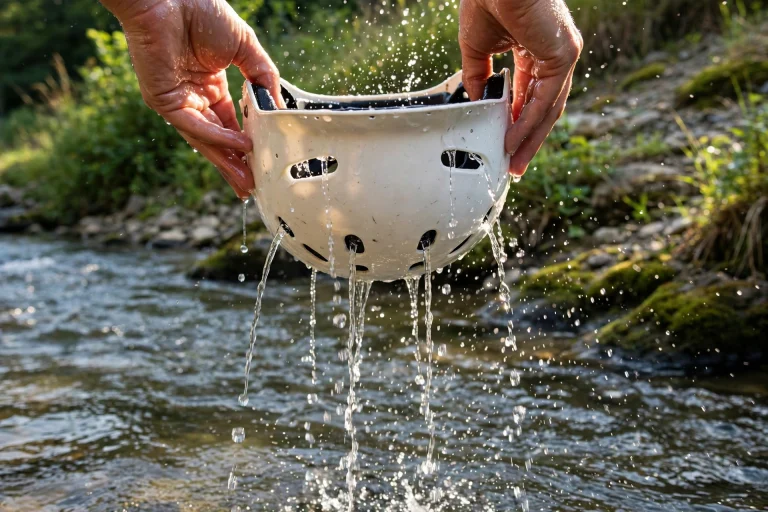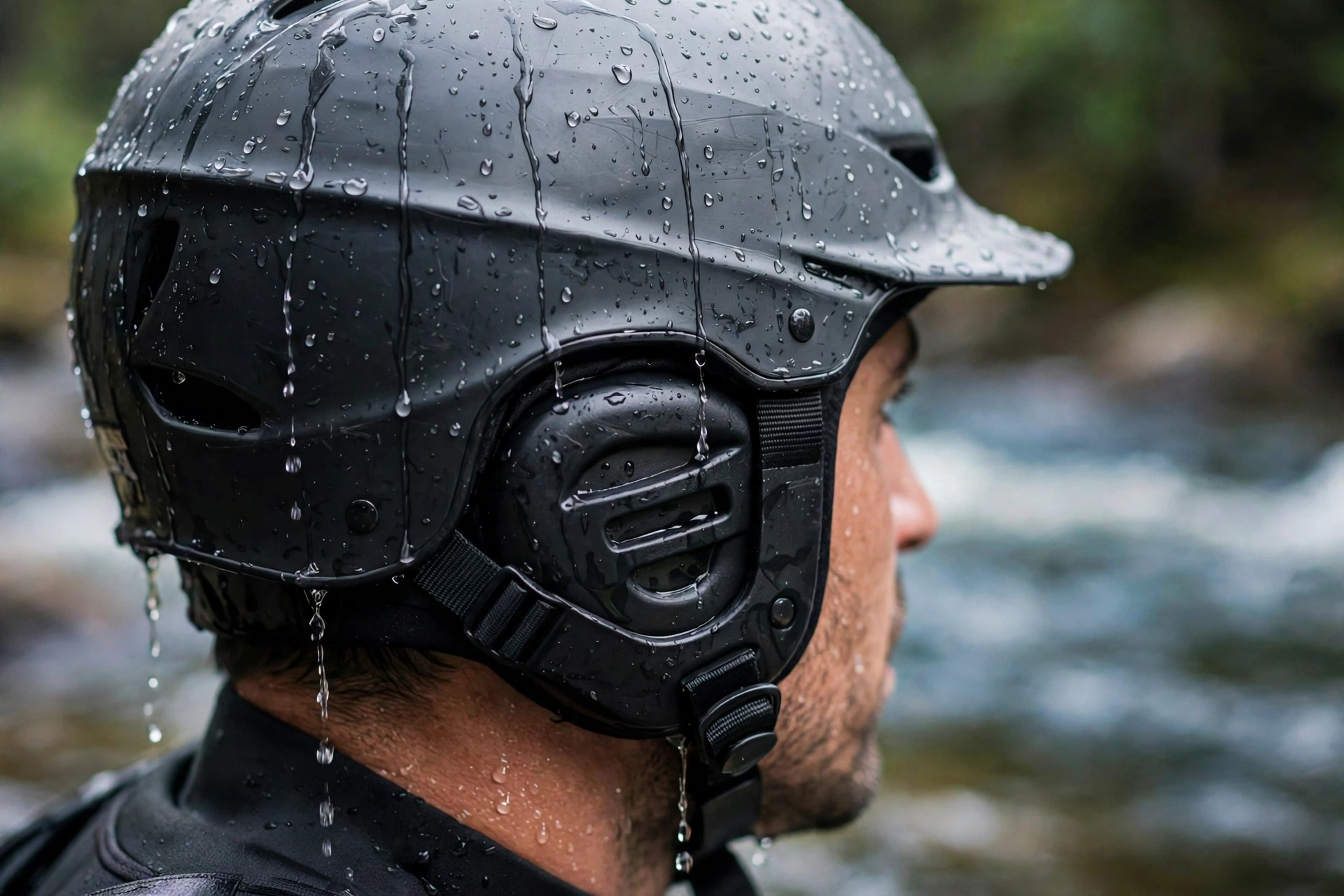
Whitewater helmets cover the ears because the ears and the side of the head are exposed to exactly what rivers contain: rocks at head height during rolls and swims, cold water that can damage the ear over time, and sudden pressure and water surges that can hurt the eardrum. In general terms, ear coverage is protection for a vulnerable area, not a styling choice or a way to keep the helmet on.
This guide explains each reason, what coverage should feel like, and how to choose between full and open-ear designs.
How Does Ear Coverage Protect You From Rocks?
Start with position. When a kayaker rolls, braces low, or swims through a rapid, the side of the head passes very close to boulders, ledges, and riverbed — often closer than the crown ever gets, because you are sideways or inverted in shallow, moving water. The ear sits on that exposed side, with thin skin and cartilage and very little natural padding.
A blow that would bruise a padded crown can cut or tear an unprotected ear, and the bone just behind the ear is itself an area you do not want struck. A helmet extending over the ears puts shell and foam over that zone, spreading a side impact and keeping rock off skin.
This is also why coverage varies by discipline. Helmets for steep, rocky creeking tend to cover the most; helmets for deep, open rivers may cover less. The more time you spend inverted or swimming in shallow rock gardens, the more side and ear coverage earns its place.
Why Does Cold Water Make Ear Coverage Matter?
The second reason is slower, but paddlers who ignore it regret it. Repeated cold water and wind can, over seasons, irritate the ear canal and in general terms is linked with bony growths in the canal often called surfer’s ear. The risk is about repeated exposure over time, not a single cold swim.
Ear coverage helps by keeping cold water from flushing directly through the ear area on every roll and by sheltering the ears from wind between rapids. It is not a complete answer — many cold-water paddlers also wear ear plugs made for watersports, or a neoprene hood under the helmet — but a covered ear starts each rapid warmer and drier than a bare one.
- Impact: shell and foam over the ear and the bone behind it
- Cold: less cold water flushing and less wind chill on the ear
- Pressure: some shielding from sudden surges of water into the canal
- Warmth: a covered ear simply stays more comfortable on cold days
If you paddle cold water year-round, treat ear coverage, plugs, and a hood as one system rather than competing choices.
Can Water Pressure Itself Hurt Your Ears?
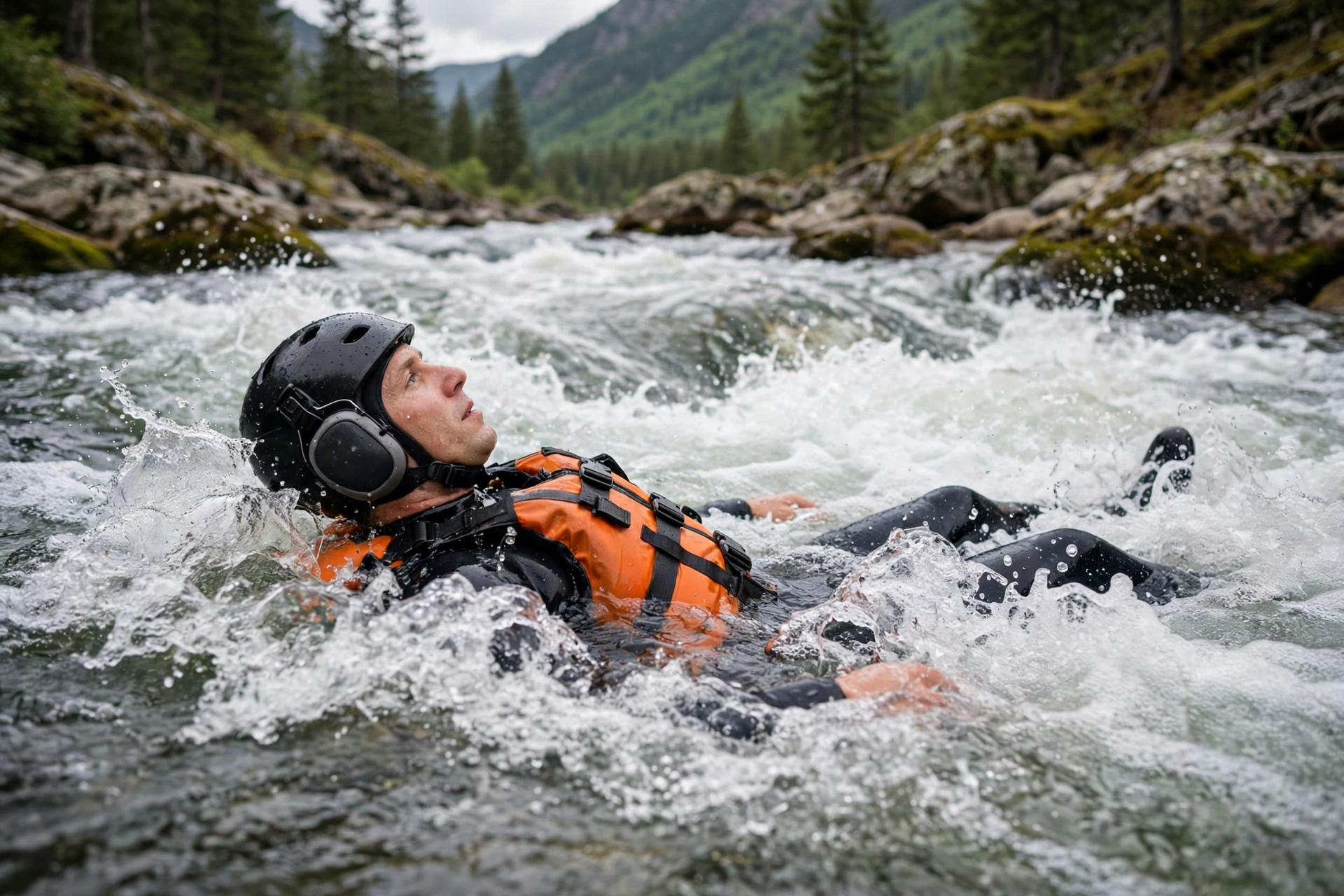
Yes, in the right circumstances. A sudden surge of water driven into the ear canal — in a forceful roll or a hard swim — can in general terms stress or even injure the eardrum. It is not the most common paddling injury, but it is disorienting as well as painful, which is the last thing you need mid-rapid.
Ear coverage reduces the directness of that surge. A shell or a close-fitting ear panel deflects the main force of moving water so the canal is not taking the full blast at point-blank range. Purpose-made paddling ear plugs add another layer inside the canal itself, and the two are often used together on powerful water.
Coverage is not a seal, and it is not meant to be. Water will still reach your ears under any normal whitewater helmet, and drainage out again matters just as much, so look for designs that cover without trapping a pocket of water against the ear after every roll.
Does Ear Coverage Affect Hearing and Fit?
It can, and this is the honest trade-off. Covering the ears muffles sound a little, and rivers are already noisy places where hearing a whistle, a shout, or an approaching paddler matters. Good designs use shaped panels, mesh, or cut-outs over the ear to keep most sound coming through while keeping rock and the worst of the water out, so try a helmet on and test your hearing in it.
Fit also changes. An ear panel that presses on the ear itself will ache within the hour, and one that sits at the wrong height can push the helmet up or tilt it. The panel should surround the ear, not squash it, and the helmet should still sit level, a sensible distance above the eyebrows, with the straps meeting correctly around the covered area.
Hearing and protection are both safety features, so neither should be sacrificed entirely to the other. If a full-coverage helmet leaves you unable to hear your group, look at a design with vented ear panels or accept slightly less coverage on the gentler water where hearing matters more than rock contact.
How Does Ear Coverage Fit Into Overall Head Protection?
Ear coverage is one part of how a helmet handles real river impacts, alongside shell, foam, fit, and retention. Side impacts are rarely neat, straight blows; they often arrive at an angle and can twist the head as the helmet slides on rock. Managing that rotational side of an impact is a broader design question, covered in this explanation of what MIPS is for helmets, and good coverage works with it by keeping the helmet positioned over the side of the head in the first place.
In general terms, watersport helmets are made and tested as watersport helmets, and coverage is part of how a maker shapes that protection for a type of paddling. More coverage is not automatically better in every case: it is better when it matches your water, stays comfortable, and does not block the hearing and awareness you also rely on.
So choose by your river. Rocky, cold, technical water argues for full ear coverage, possibly with plugs or a hood. Warm, deep, gentle water may suit a lighter, open-ear design you will happily wear all day. Either way, the ears were covered on serious whitewater helmets for sound physical reasons, and understanding them helps you pick the version that fits your paddling.
Frequently Asked Questions
Q: Can I wear ear plugs under a whitewater helmet that covers the ears?
A: Yes, and many cold-water paddlers do exactly that. The helmet panel protects against rock and deflects surging water, while watersport ear plugs guard the canal against cold water and pressure. Make sure the plugs do not push the helmet panels outward or change the fit, and choose plugs designed to let some sound through.
Q: My helmet covers my ears and they ache after an hour. Is that normal?
A: No. Coverage should surround the ear without pressing hard on it. Aching usually means the panel sits at the wrong height for your head, or the helmet is slightly too small or the wrong shape. Try adjusting any fit system, then a different size or model, rather than enduring it or wearing the helmet loose.
Q: Do rafting helmets need ear coverage too?
A: It depends on the water. On rocky rivers where a swim could carry a rafter past boulders at head height, ear coverage is a sensible extra. On deep, gentle scenic floats, the impact and cold risks are lower and simpler open designs are common. Outfitters match the helmet to the river, and private rafters can do the same.

Olivia
Writer at Helmet Today, covering helmet reviews, fit and riding safety.