

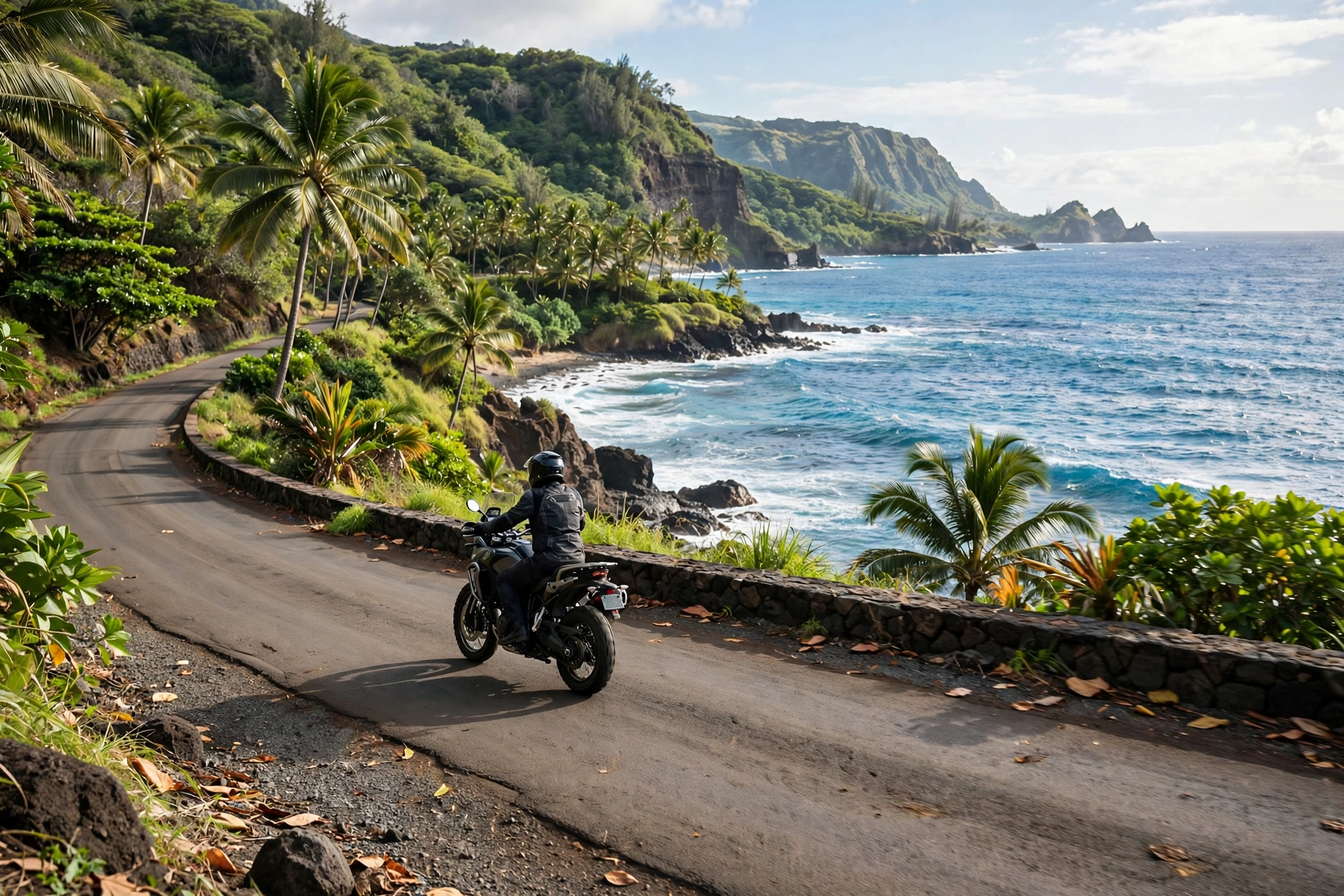
In Hawaii, motorcycle helmets are required for riders and passengers under 18. Adults aged 18 and over are not required to wear a helmet under Hawaii law, which makes Hawaii a partial helmet law state with the age requirement set at under 18.
Island riding has its own quirks — rental scooters and motorcycles everywhere, sudden rain showers, and heavy tourist traffic — and Hawaii pairs its helmet rule with eye protection requirements that apply much more widely. Here is who has to wear a helmet in Hawaii, what the eye protection rule says, and what visitors renting a bike on the islands need to know.
Who Must Wear a Motorcycle Helmet in Hawaii?
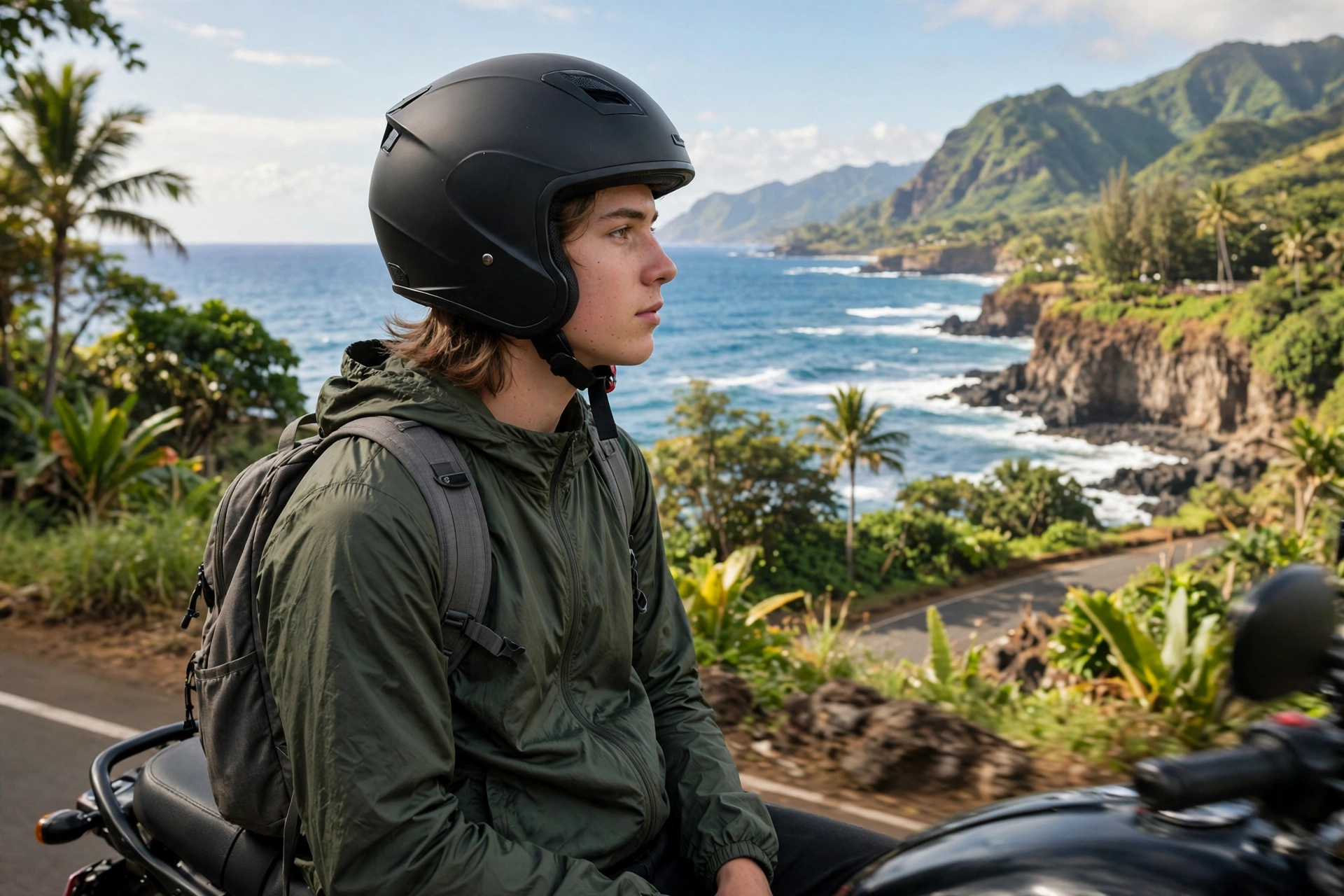
The requirement covers anyone under 18 on a motorcycle, in either seat. A 16- or 17-year-old operator must wear a helmet, and so must any passenger under 18, even when the adult driving the motorcycle is legally riding without one. Parents riding two-up with a teenage passenger are responsible for making sure that passenger is properly helmeted.
At 18, the legal requirement ends. Adult operators and adult passengers may choose whether to wear a helmet on Hawaii’s roads. There is no insurance-based condition, no permit-only extra rule for adults beyond the licensing process itself, and no requirement to carry a helmet you are not wearing — unlike Delaware’s unusual possession rule.
Where a helmet is required, it must be a proper approved motorcycle helmet meeting federal safety standards, worn with the chin strap fastened. A bicycle helmet, novelty shell, or unstrapped helmet does not satisfy the law for a rider under 18.
Does Hawaii Require Eye Protection for Riders?
Yes. Hawaii’s safety gear rules require eye protection for riders, unless the motorcycle is equipped with a windshield. That means adult riders who choose to go helmet-free still need goggles, protective glasses, or a shield. On the islands this is more than a legal technicality: trade winds throw up sand near beaches, and showers can start with almost no warning.
Many rental companies supply helmets free or for a small fee, and taking one solves the eye protection question at the same time if it has a shield. If you plan to ride without a helmet as an adult, pack proper riding eyewear rather than relying on ordinary sunglasses, which are not designed as protective equipment.
Do Hawaii’s Helmet Rules Apply to Scooters and Mopeds?
This is where visitors most often get confused. Hawaii draws legal lines between motorcycles, motor scooters, and mopeds, and the exact classification of a rental machine affects which equipment rules apply to it. Many of the small step-through rentals popular in Waikiki and other resort areas are classed as mopeds or motor scooters rather than motorcycles.
The safe approach for any visitor is simple: if you are under 18, wear a helmet on anything with two wheels and a motor; if you are an adult, wear eye protection at minimum and strongly consider the helmet the rental shop offers. Rental staff can confirm the class of the vehicle you are hiring. Riders comparing rules across states can also check our guide to helmet laws by state before travelling.
What Happens If a Rider Under 18 Skips the Helmet in Hawaii?
Riding under 18 without a required helmet is a traffic violation in Hawaii, and the adult operator carrying an unhelmeted minor passenger can also be cited. The fines that apply vary by court and by the details of the stop, so there is no single amount that covers every case.
The bigger practical risk is a crash, not a citation. Hawaii’s roads combine unfamiliar rental riders, distracted tourists, wet patches after rain, and volcanic gravel at road edges. For a young rider or passenger, a DOT-approved helmet is the difference between a scare and a life-changing head injury. No island ride is short enough to make that gamble sensible, which is why the under-18 rule exists in the first place.
Should Adults Wear a Helmet Riding in Hawaii?
The law leaves the choice to adults, but the conditions on the islands argue for taking the helmet. Sun, wind, sudden rain, and flying debris all punish an unprotected rider, and a helmet with a shield handles all four. Riders covering longer distances — the run to the North Shore on Oahu, or the curves of Maui — also arrive fresher with the wind noise and fatigue reduced.
If you are visiting, remember your home state’s rules return the moment you fly home; Hawaii’s under-18 requirement also sits close to the national mainstream, unlike the no-law approach of states such as New Hampshire. Choose a helmet that meets federal standards, check the fit before leaving the rental lot, and fasten the strap every time. For young riders and passengers, Hawaii law makes that decision for you.
What Should Parents Know About Young Riders and Passengers in Hawaii?
For local families, the under-18 rule covers the years when young people are most likely to be passengers — riding to school, to the beach, or on family errands. The helmet has to fit the child or teenager properly, not just exist. A helmet that is too large can shift or come off in a crash, so measure the rider’s head, follow the maker’s size chart, and choose the smallest size that fits snugly and evenly, with the strap adjusted so the helmet cannot be pulled forward or backward off the head.
Teenagers operating their own motorcycle or qualifying scooter face the same rule from the other seat: the helmet goes on for every ride, no matter how short. That consistency matters in Hawaii, where a large share of riding is made up of short hops in warm weather — exactly the trips where people are tempted to skip gear. Building the habit early also prepares young Hawaii riders for travel, since most other states they might ride in later have helmet rules at least as strict as Hawaii’s under-18 requirement.
Frequently Asked Questions
What is the motorcycle helmet age requirement in Hawaii?
Hawaii requires helmets for all riders and passengers under 18. Adults aged 18 and over are not required to wear one.
Do motorcycle passengers need a helmet in Hawaii?
Passengers under 18 do. An adult passenger does not have to wear a helmet, but eye protection rules still apply to riders on motorcycles without a windshield.
Is eye protection required on a motorcycle in Hawaii?
Yes. Hawaii requires eye protection for riders unless the motorcycle has a windshield, so helmet-free adults still need goggles or protective glasses.

Olivia
Writer at Helmet Today, covering helmet reviews, fit and riding safety.


