

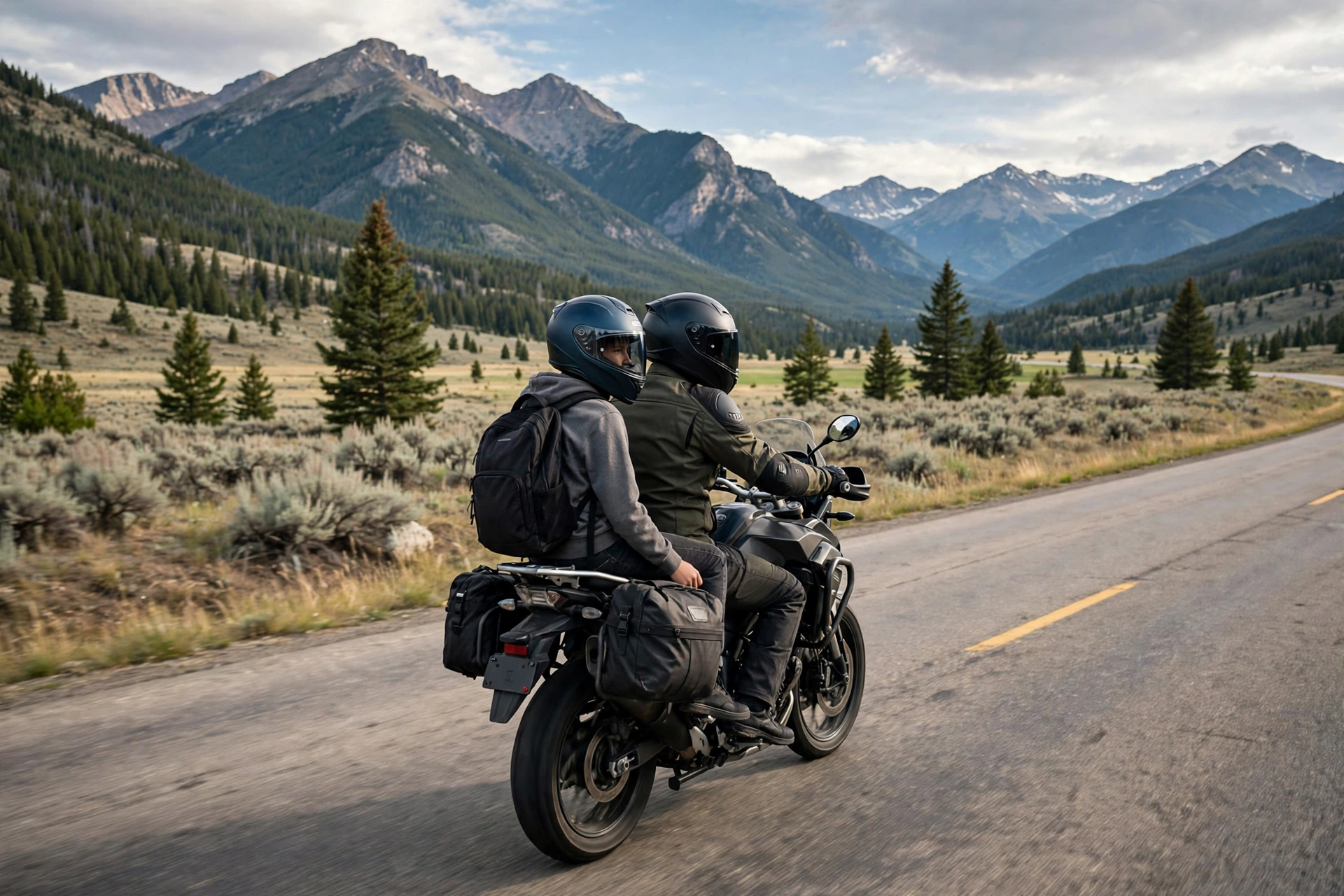
Montana’s motorcycle helmet law is simple: riders and passengers under the age of 18 must wear a helmet. Once you turn 18, Montana does not require you to wear one, no matter your experience level, insurance status, or the type of bike you ride.
That makes Montana a partial helmet law state. Minors are covered by a clear rule, while adults are free to choose. Even so, what is legal and what is safest are two different things, and many Montana adults still choose to wear a helmet on every ride.
Below, we break down who must wear a helmet in Montana, what counts as an acceptable helmet, what happens if a teen is caught without one, and how Montana compares with nearby states.
Who Has to Wear a Helmet in Montana?
Only riders and passengers under 18 are required to wear a helmet in Montana. The rule applies to the operator of the motorcycle and to anyone riding as a passenger. If a 16-year-old is driving and a 15-year-old is on the back, both must be helmeted. If both are 18 or older, neither is legally required to wear one.
Unlike some states, Montana’s rule turns purely on age. There is no experience-based exception or additional requirement for new riders, and there is no insurance-based condition attached to riding without a helmet as an adult. For a wider look at how states differ, see our guide to what states have helmet laws.
Montana also does not have a separate statewide eye protection mandate for motorcyclists the way some states do, though a windshield or visor is still a smart idea given Montana’s wind, gravel, and insects.
What Type of Helmet Does Montana Require for Minors?
For riders under 18, the helmet must be a proper protective motorcycle helmet securely fastened on the head. In practice, that means a helmet designed and approved for motorcycle use, worn with the chin strap done up — not a bicycle helmet, ski helmet, or novelty shell.
The safest choice for any young rider is a full-face helmet that meets the U.S. Department of Transportation (DOT) standard. Look for the DOT label on the back of the helmet. A well-fitting full-face helmet offers the most coverage for the chin and face, which are common impact areas in a crash.
Parents should also make sure the helmet fits correctly. A helmet that is too loose can shift or come off in a fall. It should sit level, feel snug all around without painful pressure points, and not move when the rider shakes their head.
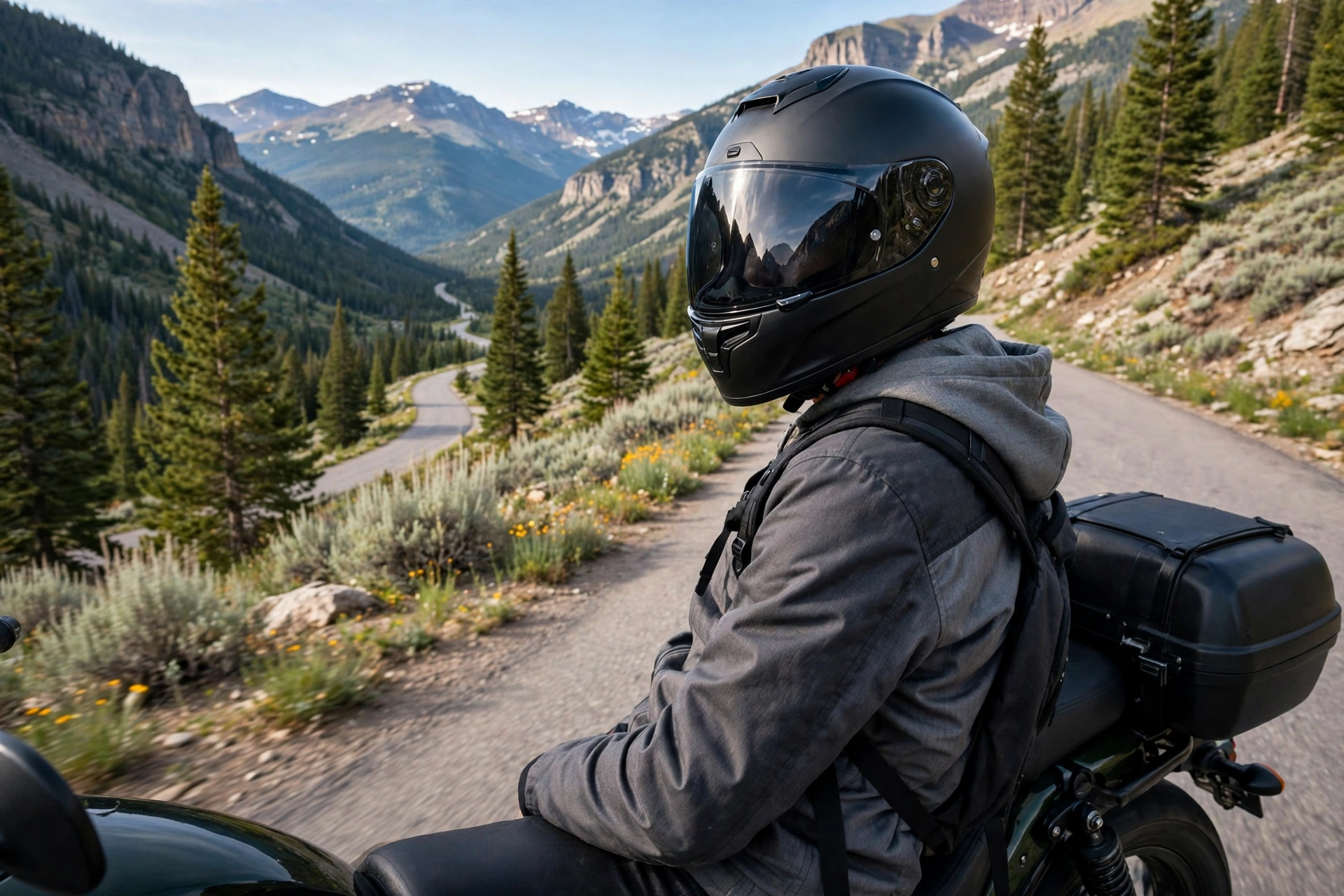
Fit checks deserve a place in the family routine. Before a young rider’s first trip of the season, try the helmet on: the cheek pads should press firmly, the crown should feel evenly snug, and the strap should be tight enough that you cannot slip more than a finger or two underneath. If the helmet rocks forward or back, it is the wrong size or shape, and it is worth replacing before the next ride rather than after a scare.
Parents should also remember that Montana’s rule follows the youngest person on the bike. An experienced adult may ride bareheaded legally, but carrying a 14-year-old passenger without a helmet is a violation and a serious risk. Keeping a spare youth helmet at home solves the problem when a teen friend or relative joins a ride.
What Happens If a Rider Under 18 Skips the Helmet?
Riding without a helmet as a minor in Montana is a traffic offense. A stop can result in a citation, and fines vary by court, so the exact amount depends on where the ticket is issued. For a young operator, a citation can also complicate things with a graduated driver’s license and may lead to points or restrictions depending on the circumstances.
Parents can face headaches too. Letting an unhelmeted teen ride — as operator or passenger — invites legal trouble and, far more importantly, serious risk. The legal penalty is minor compared with the medical consequences of a head injury, which is why enforcement and common sense point the same way here: under 18, helmet on, every ride.
Do Adults Need a Helmet Anywhere in Montana?
No. Adults 18 and older are not required to wear a helmet anywhere in Montana under state law, whether riding through Billings, Missoula, or on an interstate highway. There is no local Montana helmet ordinance that overrides the state rule for adults in the way some cities do for bicycles.
Two exceptions are worth knowing about. First, if you ride onto federal or military property, facility rules may require a helmet regardless of state law. Second, if you cross into a state with a universal helmet law — such as Oregon or Washington to the west — that state’s law applies to you the moment you cross the border, at any age. Montana riders heading west should pack a helmet for the trip even if they don’t wear one at home.
Should Adults Wear a Helmet Even Though It Isn’t Required?
Legally, the choice is yours in Montana. From a safety standpoint, the evidence strongly favors wearing one. Helmets are estimated to be highly effective at preventing fatal head injuries, and head trauma is the leading cause of death in motorcycle crashes. Montana’s rural highways, high speed limits, wildlife crossings, and sudden weather changes all raise the stakes.
Many experienced Montana riders treat a helmet as standard gear alongside gloves and a jacket, regardless of the law. A quality DOT-approved helmet also cuts wind noise and fatigue on long rides across the state’s wide-open distances — a practical comfort benefit, not just a safety one.
Montana’s riding conditions strengthen the case. Deer and other wildlife cross rural roads without warning, summer brings sudden thunderstorms and hail, and many scenic routes include gravel shoulders and chip-sealed surfaces that throw debris. A stone kicked up by a truck or a slide on loose gravel does not check your age before it happens. Riders under 18 have no legal choice in the matter, and plenty of Montana adults decide the protection is worth it for exactly these reasons.
Whatever you decide, make sure any rider or passenger under 18 with you is wearing a properly fitted, approved helmet. That part is not optional.
Frequently Asked Questions
What is the helmet age limit in Montana?
Montana requires helmets for all motorcycle riders and passengers under 18. Adults 18 and older are not required to wear a helmet.
Can a passenger under 18 ride without a helmet in Montana?
No. The under-18 rule covers passengers as well as operators, so a minor on the back of the bike must wear an approved helmet too.
Does Montana require eye protection for motorcyclists?
Montana does not impose a separate statewide eye protection requirement like some states, but glasses, goggles, or a visor are strongly recommended for comfort and safety.

Olivia
Writer at Helmet Today, covering helmet reviews, fit and riding safety.


