

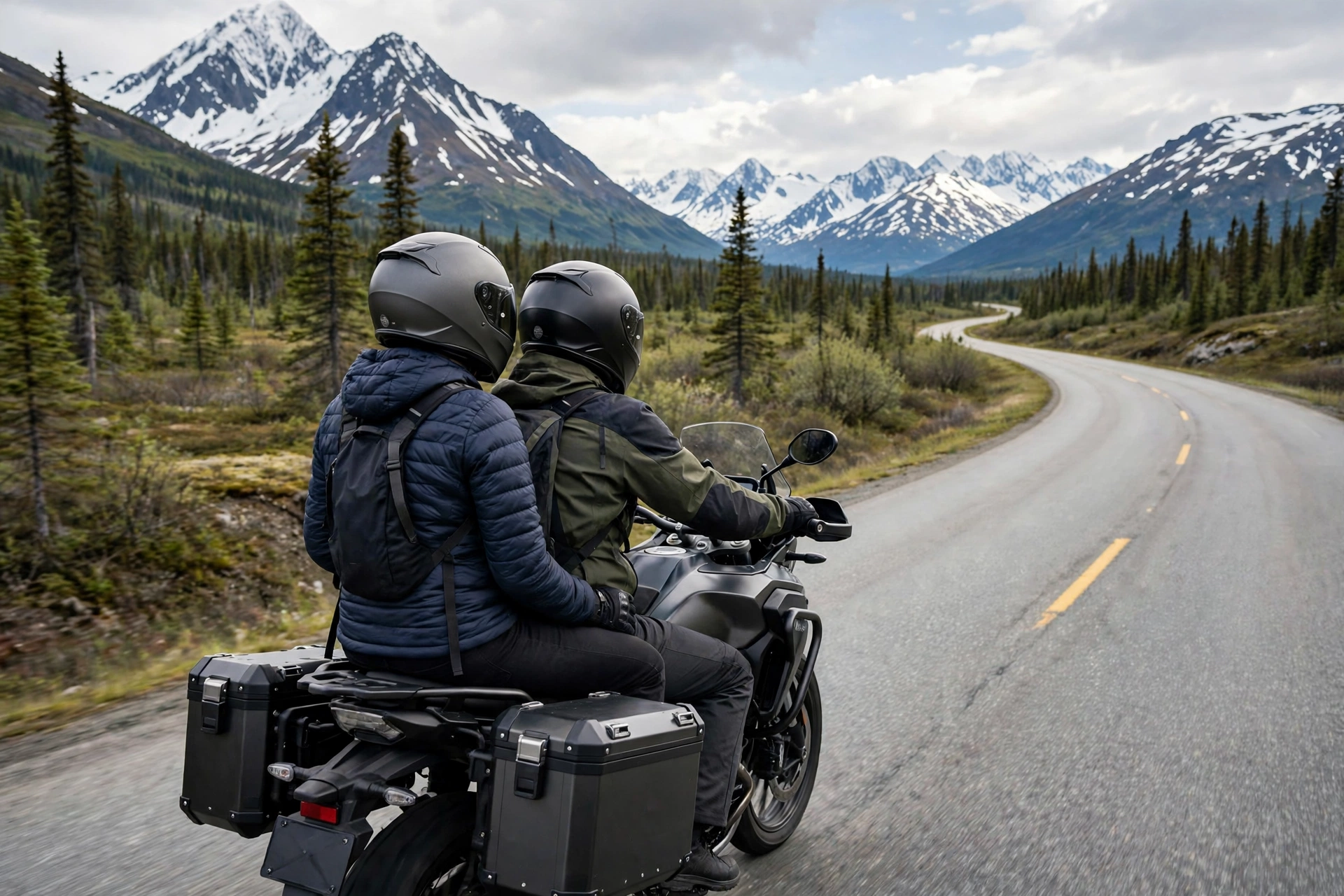
In Alaska, every motorcycle passenger must wear a helmet, no matter their age. Operators are treated differently: an adult licensed operator aged 18 or over may ride without a helmet, but helmets are required for operators under 18 and for anyone riding on an instruction permit. So in Alaska, the adult driver can legally be helmet-free while the passenger behind them cannot.
That split makes Alaska’s law one of the more distinctive in the country, and it catches riders out — especially couples touring the state and visitors on rental bikes. This guide explains the passenger rule in full, the operator rules next to it, and what to do before carrying any passenger in Alaska.
Do All Motorcycle Passengers Need a Helmet in Alaska?
Yes. Alaska’s passenger helmet rule has no age limit and no exceptions based on experience or distance. A 45-year-old passenger needs a helmet just as much as a 15-year-old does. Short hop or long haul on the Parks Highway, the rule is the same: if you are sitting on the passenger seat, an approved helmet is required.
The helmet must be a genuine motorcycle helmet that meets federal safety standards, worn properly with the strap fastened. It is the operator’s practical responsibility to make sure a compliant helmet is available before the passenger gets on. Riders who carry passengers regularly in Alaska keep a suitable spare helmet with the bike, sized to fit an adult passenger.
This all-passenger approach differs from the more common pattern in partial-law states, where only young passengers need helmets. Alaska chose to protect the person with the least control over the motorcycle — the passenger — at every age.
When Must Motorcycle Operators Wear a Helmet in Alaska?
For the person at the controls, Alaska’s rule is based on age and license status. Operators under 18 must wear a helmet. So must anyone operating on an instruction permit, at any age, while they learn. Once an operator is 18 or over and fully licensed, wearing a helmet becomes their choice.
That creates Alaska’s unusual legal picture: a licensed 30-year-old operator with no helmet, carrying a properly helmeted 30-year-old passenger, is fully within the law. It also means a newly licensed adult who rode helmeted on a permit can legally stop wearing one — though instructors and experienced Alaska riders will tell you the state’s gravel shoulders, frost heaves, wildlife, and fast-changing weather argue strongly for keeping it on. Our comparison of helmet laws by state shows how Alaska’s passenger-first approach compares with its neighbours and the rest of the US.
Does Alaska Require Eye Protection for Motorcyclists?
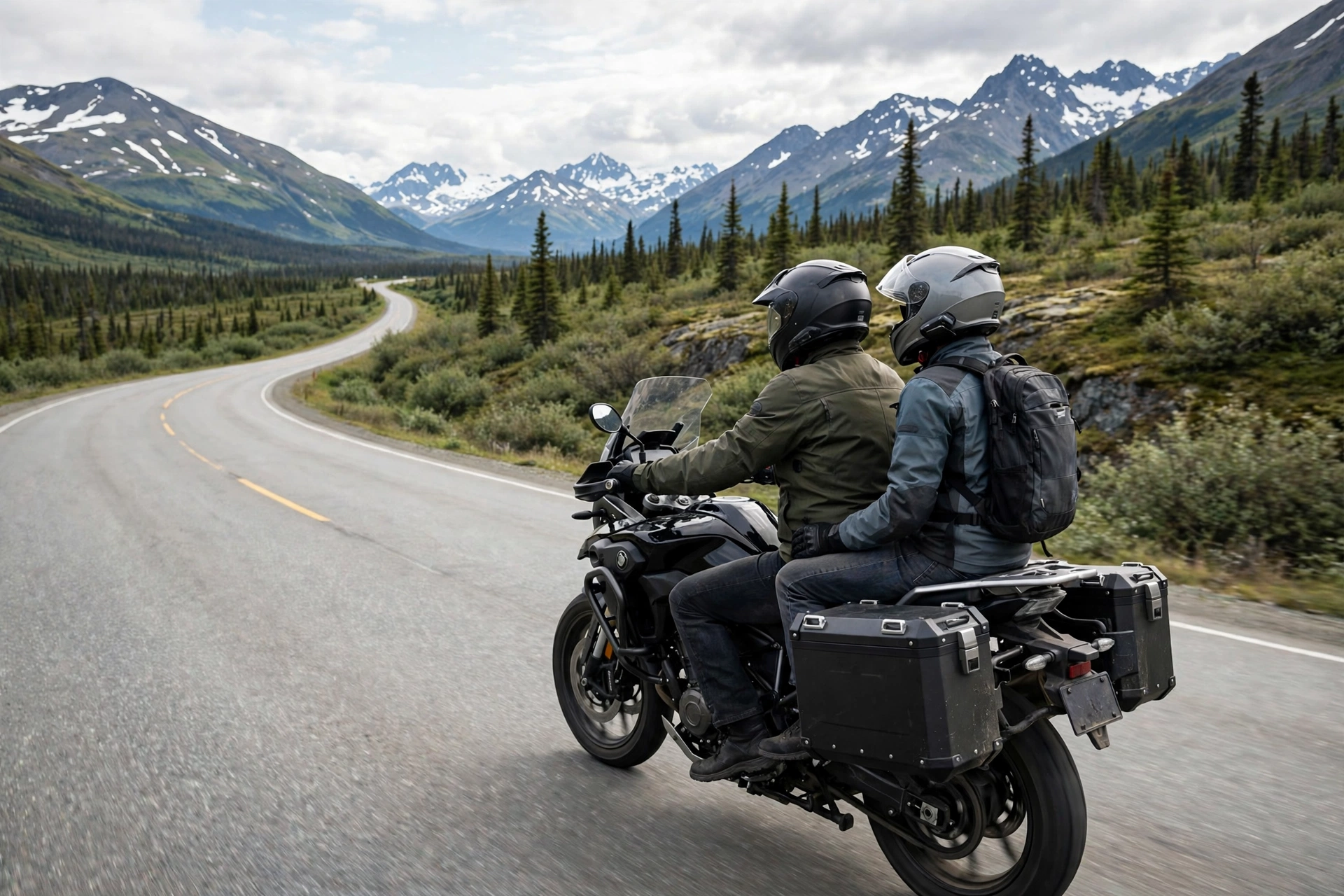
Eye protection matters in Alaska law as well. Riders should expect to wear goggles, protective glasses, or a face shield unless the motorcycle provides a windshield; an operator riding without a helmet still needs their eyes covered. Alaska’s roads make the case on their own: gravel sections on major highways, dust, insects in summer, and long daylight hours with low sun all punish unprotected eyes.
A helmet with a shield is the simplest combined answer, and for passengers it is effectively part of meeting the helmet rule well — a full-face or shield-equipped helmet handles both protection duties in one piece of gear. Operators choosing to ride without a helmet should carry dedicated riding eyewear as a permanent part of their kit.
What Happens If a Passenger Rides Without a Helmet in Alaska?
Carrying an unhelmeted passenger, or riding as one, violates Alaska law. Both the passenger and the operator can face consequences, since the operator controls whether the ride happens at all. Fines for this kind of violation vary by court, so the amount depends on where the citation is dealt with and the circumstances of the stop.
Enforcement aside, the practical reason for the rule is crash reality. A passenger has no controls, less warning of sudden moves, and the same exposure to the road as the operator. Alaska’s long rural distances also mean help can be far away after a crash, which raises the stakes of any head injury. A properly fitted, standards-approved helmet is cheap insurance for the person on the back, and in Alaska it is the law at every age.
How Should Riders Prepare for Carrying a Passenger in Alaska?
Start with the helmet itself. Keep a DOT-approved spare that fits an average adult, check that its strap and liner are in good condition, and replace it after any crash. Before the ride, brief your passenger: feet on the pegs, lean with the bike, hold on to you or the grab rails, and agree on signals for stops.
Then think about the route. Alaska weather changes quickly even in summer, and a helmeted passenger is also a warmer, less fatigued passenger. If your trip takes you toward Canada, remember the rules change at the border, where helmets are required for everyone on the motorcycle. Plan the helmet question before the trip, and Alaska’s distinctive passenger rule will never catch you out.
Does the Alaska Passenger Rule Apply to Visiting Riders?
Yes. Helmet law follows the state you are riding in, not the state on your license plate. Touring riders who arrive in Alaska by ferry, through Canada, or on a rental motorcycle are under exactly the same rule as residents from the moment their wheels are on Alaska roads: every passenger helmeted, operators helmeted if under 18 or on a permit, and adult licensed operators free to choose.
In practice, most visitors are already compliant without thinking about it. Riders coming through Canada must wear helmets there at all times, so their passengers arrive with helmets on. The riders caught out are usually the opposite case — Alaskans or visitors who have been riding two-up helmet-free in states with no passenger rule and forget that Alaska’s law is stricter for the back seat than for the front. A quick rule of thumb for the whole state: nobody gets on the passenger seat in Alaska without a helmet, full stop.
Frequently Asked Questions
Do motorcycle passengers have to wear a helmet in Alaska?
Yes. Alaska requires helmets for all passengers regardless of age. There is no adult exemption for the passenger seat.
Can an adult motorcycle operator ride without a helmet in Alaska?
Yes, if the operator is 18 or over and fully licensed. Operators under 18, and anyone riding on an instruction permit, must wear a helmet.
What if the passenger is an experienced adult rider?
It makes no difference. Alaska’s passenger rule applies to everyone on the passenger seat, whatever their age or riding experience.

Olivia
Writer at Helmet Today, covering helmet reviews, fit and riding safety.


