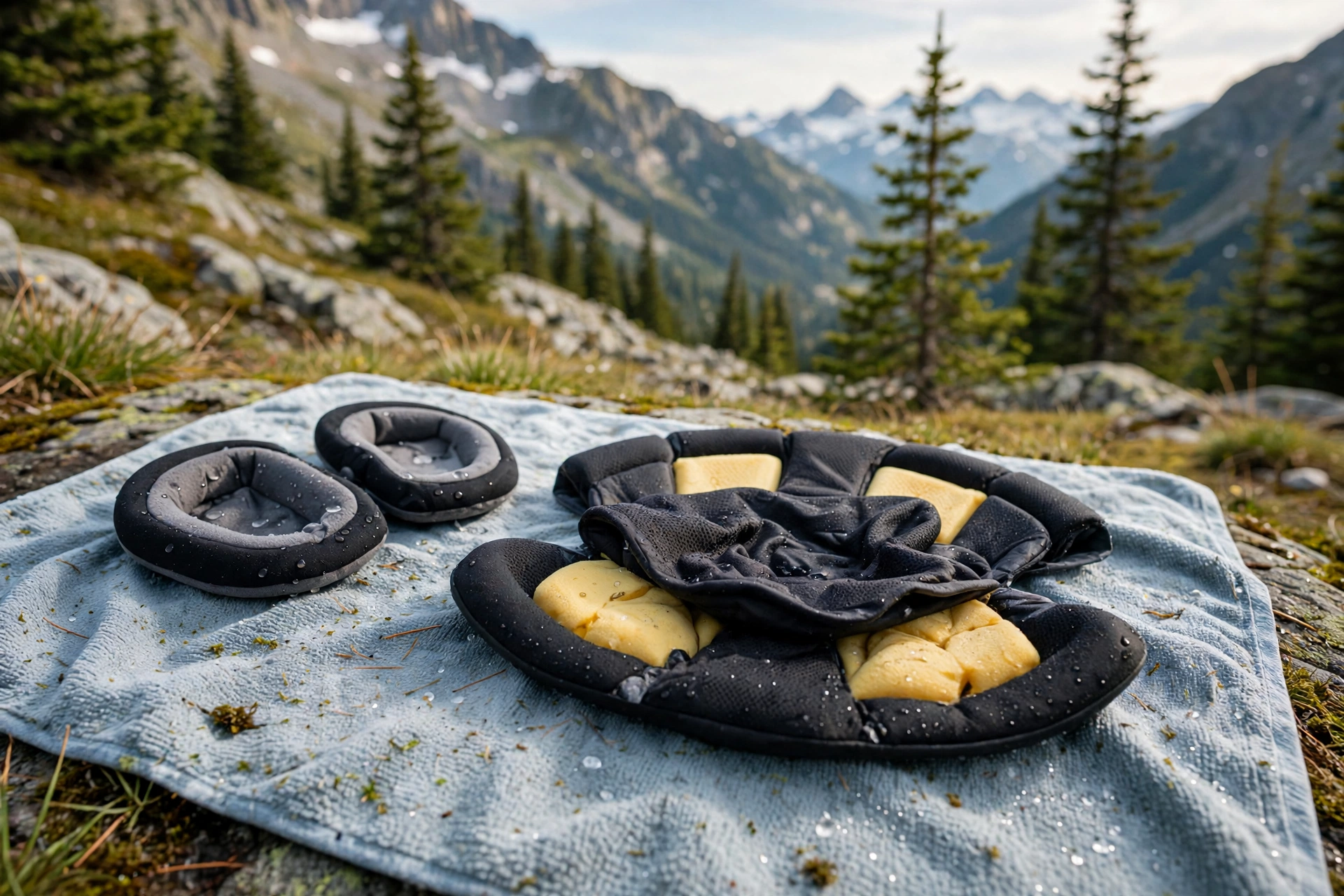
Clean a snowboard helmet by hand: remove the liner and ear pads, wash them in lukewarm water with mild soap, wipe the shell with a damp cloth, and clean the straps the same way. Never machine-wash any part, never use solvents or bleach, and always air-dry away from heat — gentle hand cleaning removes sweat and odor without damaging the protective foam.
What do you need before you start cleaning?
You need very little: a basin or sink of lukewarm water, a small amount of mild soap or gentle detergent, two soft cloths or a soft sponge, and a towel. Baby shampoo or a mild liquid soap works well. If odor is your main problem, a little baking soda helps, as explained below.
Before anything gets wet, take the helmet apart in an organized way. Remove the liner and ear pads, note how they attach — snaps, hook-and-loop tabs, or both — and take a quick phone photo if the layout looks complicated. Check whether your goggle strap retainer and any audio inserts come out too. Keeping the parts in order makes reassembly painless. This layout is shared with most snow helmets: our ski helmet vs snowboard helmet comparison shows the designs are near-identical inside, so the same cleaning method works for both.
How do you wash the liner and ear pads?
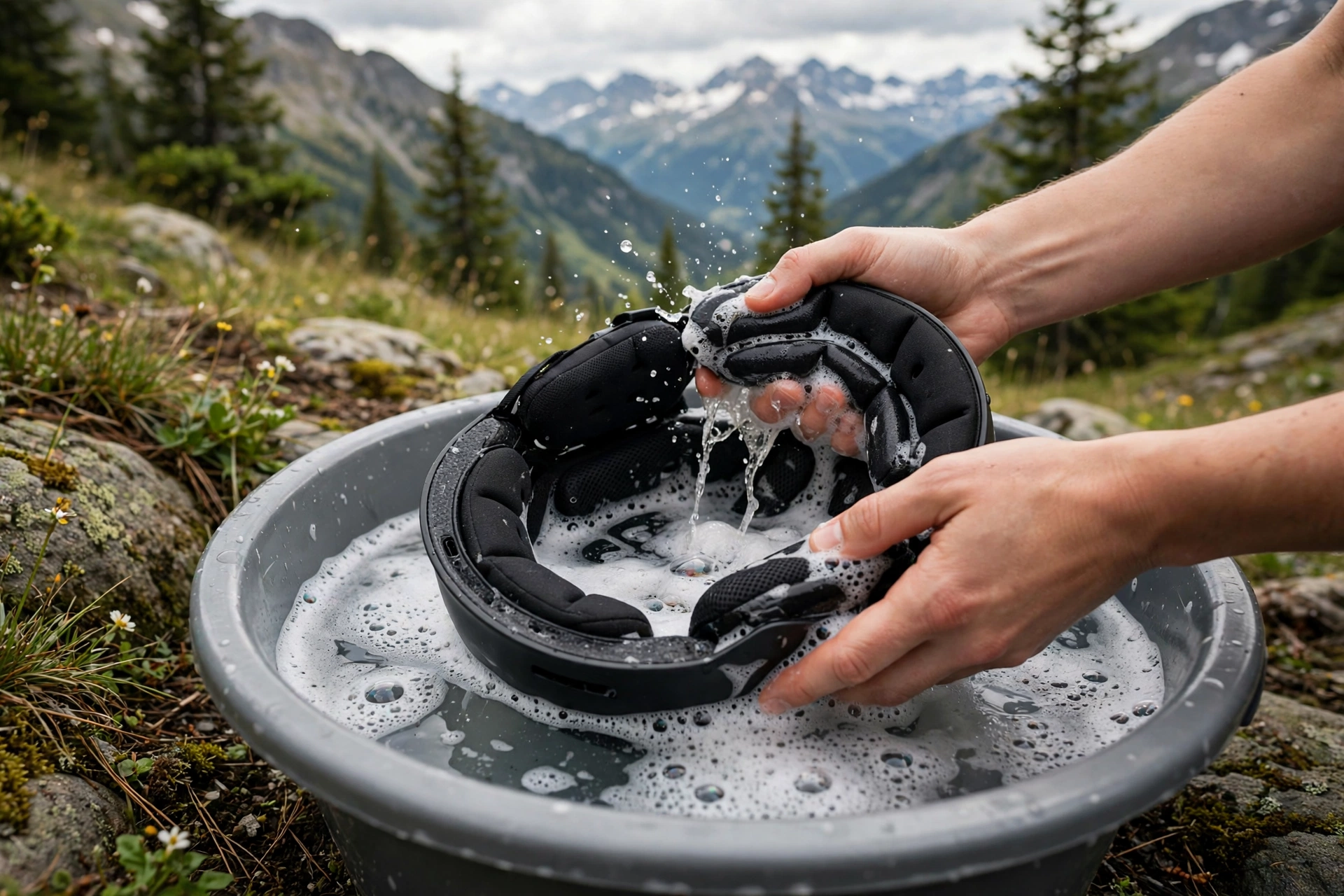
Fill the basin with lukewarm water and a few drops of mild soap. Submerge the liner and ear pads and gently squeeze them repeatedly so the soapy water works through the padding — most of what you are washing out is dried sweat. Let them soak for ten to fifteen minutes if they are heavily soiled.
Rinse in clean water, squeezing gently, until the water runs clear and no soap remains; leftover soap attracts dirt and can irritate skin. Press the padding between folds of a dry towel to remove water. Do not wring or twist the pieces hard, because that can tear stitching and distort the foam padding inside.
While the liner is out, look at the inside of the shell. The hard EPS foam bonded to the shell should never be soaked or scrubbed, but you can wipe it lightly with a damp cloth to lift dust. Check it at the same time for cracks or dents — if the foam is damaged, cleaning is pointless and the helmet should be replaced.
How do you clean the shell and vents?
The outer shell needs only a damp cloth with a drop of mild soap. Wipe the whole surface, working around vents, the goggle retainer, and any stickers you want to keep. For dried mud or chairlift grease, let a wet cloth sit on the spot for a minute to soften it rather than scrubbing harder.
Use a soft, damp cloth or a soft old toothbrush to clear dust and dried sweat out of the vent openings and the fit-adjustment dial. Avoid pushing water deep into fixed vents on helmets whose foam is exposed inside; a light touch is enough. Dry the shell with a clean cloth afterward so water spots do not set on glossy finishes. Never use abrasive pads or polishing compounds, which scratch the shell and can dull or weaken its finish.
When the shell is clean, set the helmet upside down on a towel and let it air out completely before you refit the liner. This pause matters: a helmet reassembled while the shell interior is still damp traps moisture against the fresh liner and brings the odor problem straight back. Give it at least a few hours in a ventilated room — overnight is better — and only rebuild the helmet once shell, liner, ear pads, and strap are all fully dry. Before refitting, take one last look inside the shell for cracks or damage you may have missed while everything was assembled.
How do you clean the straps and get rid of odor?
The chin strap absorbs the most sweat of any part of the helmet, so give it a proper wash rather than a wipe. With the helmet empty, dip a cloth in your soapy water and work it along the strap’s full length, on both sides, including the sections hidden under the ear pads and around the buckle. Rinse by wiping with a cloth dampened in clean water, repeating until no soap feel remains. Work the buckle open and closed under the cloth to clear grit from its mechanism.
For odor, the deep clean above solves most cases, because the smell lives in the liner and strap. For stubborn smells, sprinkle baking soda over the dry liner and strap, leave it for a few hours or overnight, then shake and brush it off before the next wash. Good habits prevent most odor: air the helmet out after every riding day, never leave it sealed in a gear bag while damp, and store it somewhere dry between trips.
What should you never use on a snowboard helmet?
Keep solvents away entirely. Gasoline, paint thinner, acetone, adhesive removers, and strong degreasers can dissolve or weaken the EPS foam that does the actual protecting — sometimes without any visible change. The same goes for bleach and harsh household cleaners on any part of the helmet.
Never put the liner, ear pads, or the helmet itself in a washing machine or dishwasher; the agitation and heat break down padding, stitching, and adhesives. Never dry any part with a hair dryer, radiator, or tumble dryer, and do not leave the helmet to dry on a hot dashboard. Finally, avoid spraying the inside with strong disinfectants or fragranced deodorizers not made for helmets — residue sitting against your skin all day is a common cause of irritation. Mild soap, water, and patience clean everything safely.
Frequently Asked Questions
How often should you clean a snowboard helmet?
Wipe the shell and air the liner out after every trip, and do a full liner-and-strap wash every few weeks of regular riding, or whenever odor builds up.
Can you wash a snowboard helmet liner in the washing machine?
No. Machine washing and drying can tear stitching, crush the padding, and damage the attachment snaps. Hand-washing in lukewarm water takes only a few minutes longer.
Can you soak the whole helmet in water?
No. The EPS foam and shell should only be wiped with a damp cloth. Only the removable liner, ear pads, and strap surfaces should get properly wet.

Olivia
Writer at Helmet Today, covering helmet reviews, fit and riding safety.