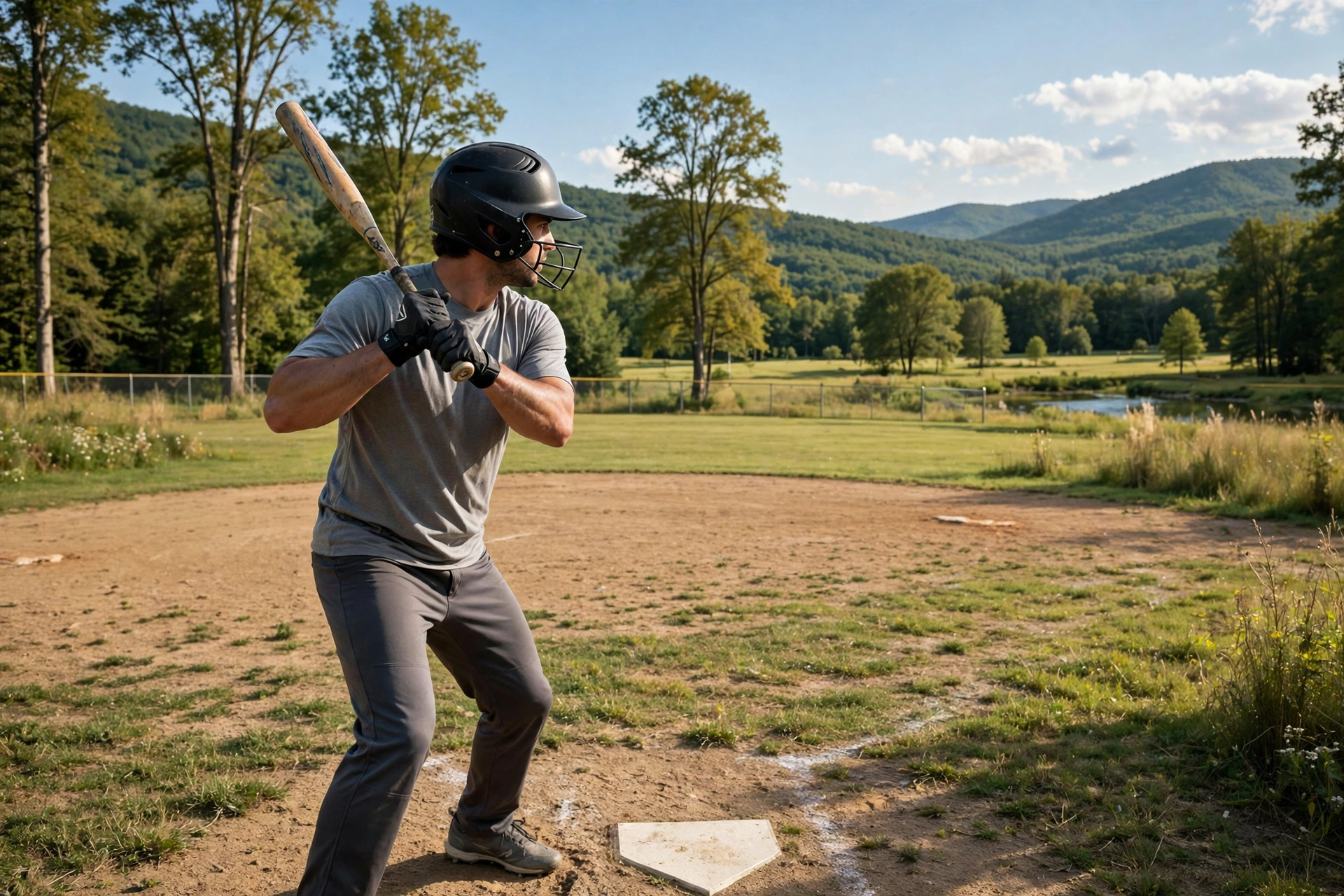
Fit a softball helmet with a face mask by sizing the helmet first, then attaching the mask firmly at all its mounting points and checking the fit together. The helmet should sit level about an inch above the eyebrows and feel snug with no wobble, and the mask should sit close to the face without touching it, with clear vision straight ahead and to the sides. Always finish with the chin strap fastened and a shake test.
In fastpitch softball the ball comes in hard and fast, and the mask is a key line of defense for the batter’s face. Many leagues now require an approved face mask on batting helmets, but a mask only protects well when the helmet underneath fits properly. Fit the two as one system, in the order below.
Why should you size the helmet before fitting the mask?
The mask attaches to the helmet, so if the helmet is the wrong size, no adjustment of the mask will fix the fit. Measure around the head just above the eyebrows and ears with a soft tape and compare the result with the helmet maker’s size chart. Try the helmet on without the mask first: it should sit level, feel snug all the way around, and stay in place when you shake your head.
Only move on to the mask once the helmet alone fits. A helmet that is too large will let the mask swing and sag in front of the face, and a helmet that is too small will push the mask out of position and cause pressure points. If the helmet does not fit on its own, change the helmet size or padding first. Some softball helmets use advanced liner systems, and designs like MIPS also depend on a correct base fit to do their job.
How does the face mask attach to a softball helmet?
Most softball face masks attach at several mounting points, typically at the sides near the ear flaps and at the front of the helmet, using screws and hardware supplied with the mask. Use only a mask that is made for your helmet model or approved by the helmet manufacturer, because hole positions and hardware differ between brands. Mixing parts that were not designed for each other can leave the mask loose or damage the shell.
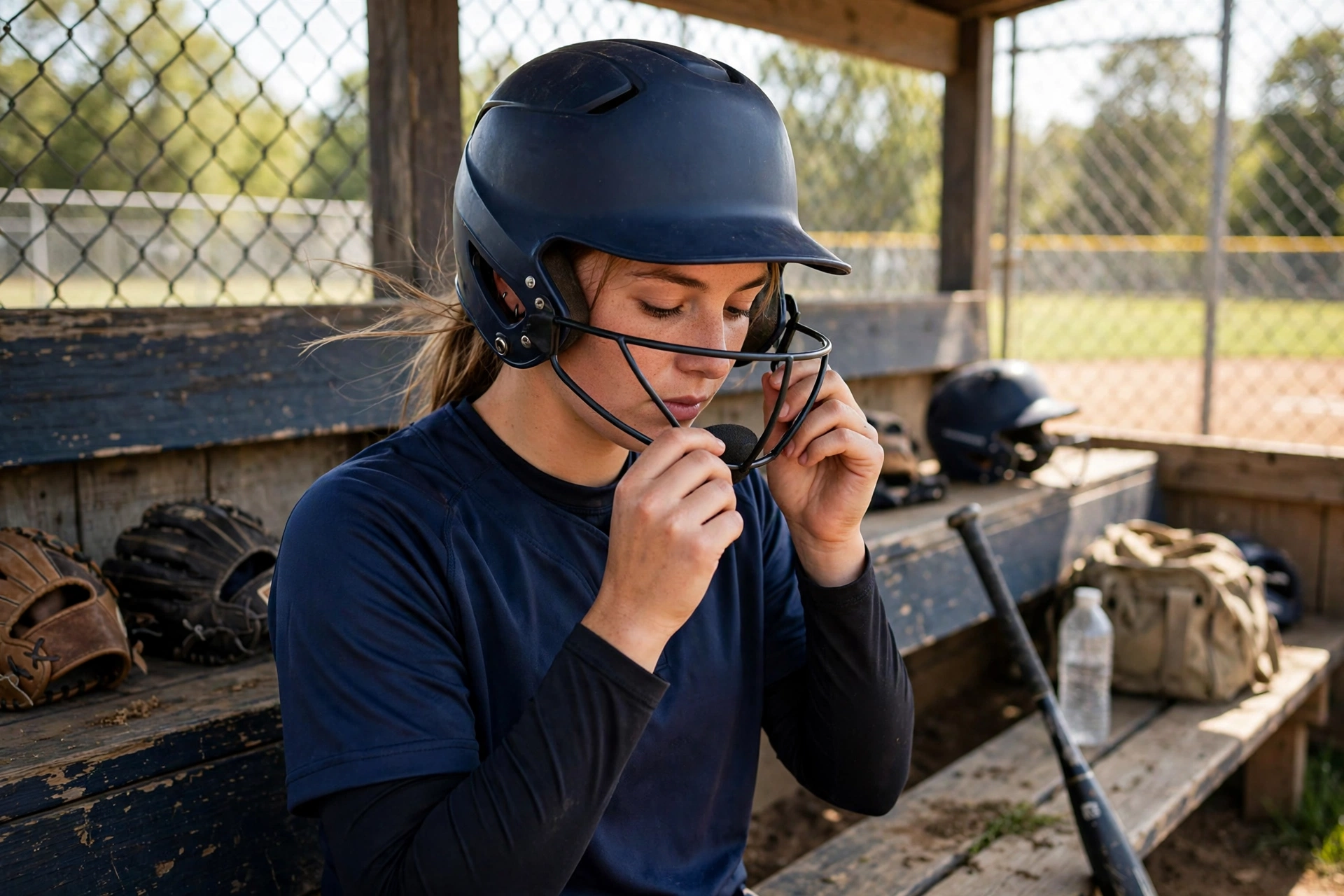
Attach the mask following the manufacturer’s instructions, fit every screw and clip, and then check each mounting point by hand. Tighten the screws snugly so there is no play or rattle, but do not over-tighten, which can crack the shell around the holes. Give the mask a firm wiggle: it should feel like one solid piece with the helmet, with no flexing at the attachment points. Recheck the screws regularly during the season, because vibration from play can loosen them.
How far should the mask sit from your face?
With the helmet on, the mask should sit close to the face without pressing against the nose, cheeks, or chin. A small, even gap is what you want: close enough that a ball cannot reach the face and that your vision is not blocked by a bouncing mask, but not so close that the mask touches the skin when you move, talk, or swing. If the mask rests on your nose or chin, something is off, usually the helmet size, the mask model, or a missing pad at a mounting point.
Check the chin area as well. Many masks include a chin cup or pad that should sit comfortably at the chin without forcing the helmet backward. Adjust or replace that pad if the mask pulls the helmet out of its level position. The whole system should feel balanced, with no sense that the mask’s weight is dragging the front of the helmet down.
How do you check vision and comfort with the mask on?
Put the fitted helmet on, fasten the chin strap, and look around the way you would in the batter’s box. You should be able to see the pitcher clearly, pick up the ball out of the hand, and glance toward first or third without the mask bars blocking your view. Turn your head side to side, nod, and take a few practice swings. The mask should stay steady and your vision should stay clear, with no need to tilt your head at an odd angle to see under or over a bar.
Comfort matters too, because an uncomfortable mask gets taken off. There should be no sharp pressure on the forehead, no pinching at the temples, and no rubbing at the chin. If anything digs in or the mask rattles when you move, adjust the padding and hardware, or try the mask size or model the helmet maker recommends instead.
What role does the chin strap play and what do leagues require?
The chin strap holds the whole system in place during a swing, a slide, or a sprint around the bases. Fasten it every time, adjust it so it is snug under the chin, and confirm the helmet and mask do not shift when you shake your head firmly. A loose strap is the most common reason a well-fitted helmet still moves in a game.
On requirements, rules vary, but many youth and school fastpitch leagues mandate that batting helmets carry an attached, approved face mask, and helmets and masks generally need to meet the applicable safety standard and be free of cracks or damage to be legal for play. Check your league’s rulebook at the start of the season and confirm the mask and helmet combination you are using is allowed, because some leagues require specific certifications or prohibit modified equipment.
What extra fit checks matter for younger players?
Young players grow fast, so repeat the full fit check, helmet first and then the mask, at the start of every season and whenever a player says the helmet feels different. Watch for the mask drifting down in front of a smaller face, which usually means the helmet has become too big or the padding has compressed. Never solve a loose fit by tightening the chin strap alone.
Teach young batters to do the shake test themselves and to tell a coach if the mask touches their face or blocks their view. Parents should also inspect the screws and mounting points on a child’s helmet regularly, since a loose mask on a young player is easy to miss in the rush before a game.
Frequently Asked Questions
Can I put any face mask on any softball helmet?
No. Use a mask made for your helmet model or approved by the helmet manufacturer. Mounting holes and hardware differ between brands, and a mismatched mask can fit poorly or damage the shell.
Should the face mask touch my face?
No. It should sit close with a small, even gap all around. If it presses on your nose, cheeks, or chin, the helmet size, mask model, or mounting pads need adjusting.
How often should I check the mask screws?
Check them before the season and regularly during it, especially after any impact. Screws can loosen with normal play, and the mask should never rattle or flex at its mounting points.

Olivia
Writer at Helmet Today, covering helmet reviews, fit and riding safety.