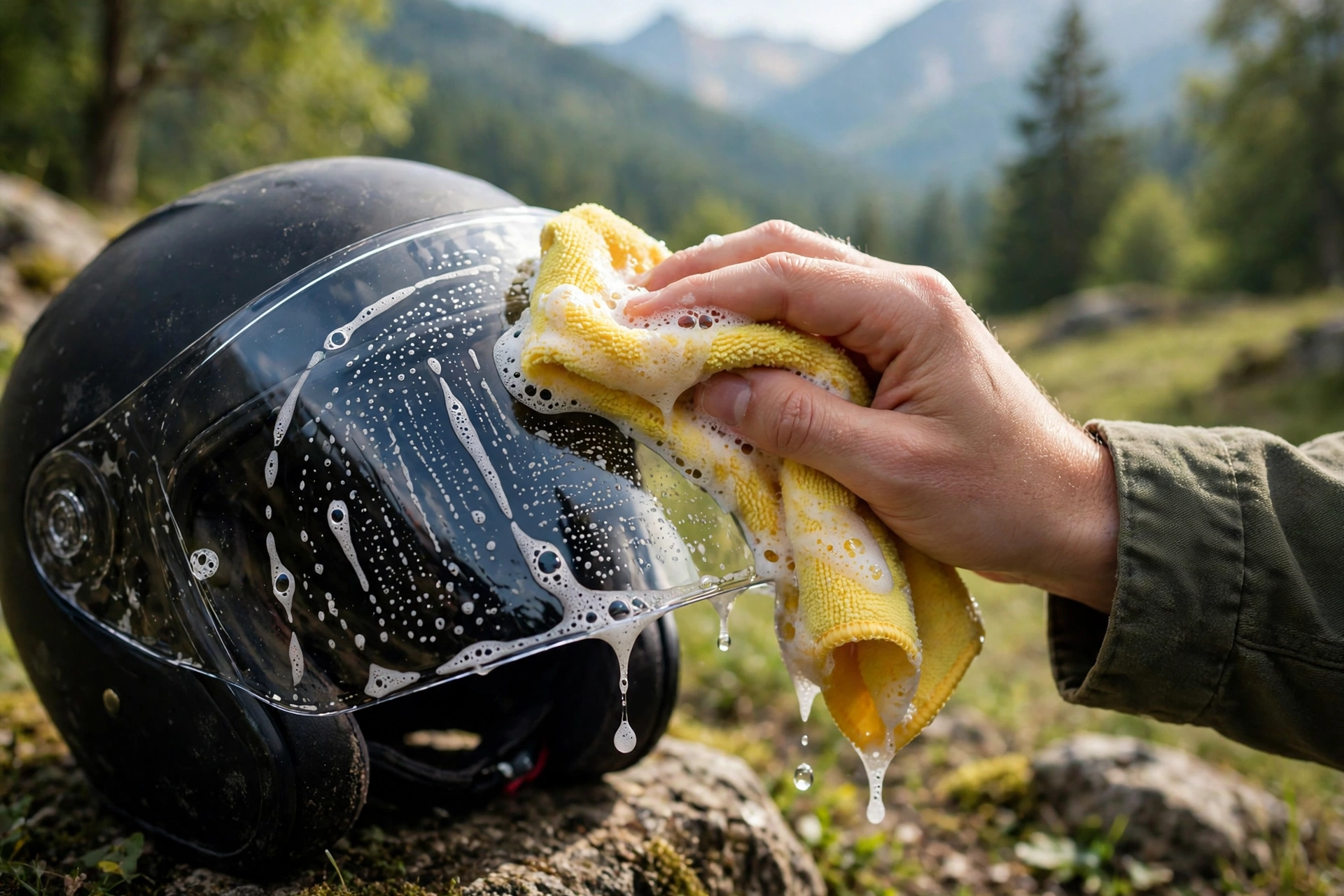
Yes — you can clean a motorcycle helmet visor without scratching it, as long as you soften the dirt first and never wipe it dry. The safe method is simple: soak the grime loose with plain water, wash gently with mild soap and a microfiber cloth, then pat dry. Most visor scratches happen in the very first wipe, when dry grit gets dragged across the surface.
A visor is not plain plastic. It is polycarbonate with a thin stack of coatings on top — typically a hard anti-scratch layer, an anti-fog treatment on the inside, and often UV protection. Those coatings are what keep your vision clear, and they are far easier to damage than the plastic underneath. Treat a visor like a pair of eyeglasses rather than a car windshield, and it will stay clear for years.
Why Does a Motorcycle Visor Scratch So Easily?
Polycarbonate is chosen because it is impact-resistant, but it is much softer than glass. The protective coatings over it are only microns thick. Bug remains, road grit, and dried dust are all abrasive, so the moment you wipe a dry, dirty visor, you are effectively sanding it with whatever is stuck to it. That is how the fine web of swirl marks appears, usually noticed first when riding into low sun or oncoming headlights at night.
The inside of the visor is even more delicate. Anti-fog coatings work by spreading moisture into a thin film instead of droplets, and they can be smeared or stripped by rough wiping and strong chemicals. A visor that fogs worse after cleaning than it did before has usually lost that inner coating to a paper towel or a harsh spray.
What Do You Need to Clean a Visor Safely?
You need very little: two clean microfiber cloths, lukewarm water, and a drop of mild soap such as diluted dish soap or baby shampoo. Keep one cloth for washing and one purely for drying, and make sure both are clean — a microfiber that has been used on wheels or chain lube will carry grit and undo everything. A soft towel to rest the visor on protects it while you work.
If your helmet has a quick-release visor mechanism, as most modern helmets do, remove the visor first. It is easier to clean thoroughly on a towel, and water and soap stay away from the helmet’s pivots, vents, and liner. If the mechanism is stiff or unfamiliar, leave the visor on and work carefully — forcing a release tab can break it.

How Do You Clean the Visor Step by Step?
Start by soaking. Lay a microfiber cloth soaked in plain lukewarm water over the outside of the visor and leave it for five to ten minutes. Dried bugs and grit soften and lift away instead of needing to be scrubbed. This one step prevents most scratches, so do not skip it on a visor that has done a long ride.
Next, wash with the soapy water and the wash cloth, using light pressure and gentle straight strokes rather than tight circles. Rinse with clean water so no soap film remains, then turn the visor over and wash the inside more gently still, because of the anti-fog coating. If the visor is still on the helmet, take care around the seal and pivots, and use less water.
Finish by patting dry with the clean dry microfiber — dabbing, not rubbing — and let the visor air for a few minutes before refitting it. On a tour, the same principles apply in miniature: carry a small microfiber and a travel bottle of plain water, dampen the cloth at a stop, and lay it over the visor for a minute or two while you refuel rather than scrubbing at bugs on the spot. Never be tempted by the gas-station squeegee bucket — the fluid is dirty, the sponge carries other people’s grit, and one pass can haze a visor that has survived thousands of careful miles. If the visor is only dusty, a damp cloth and a little patience beat any shortcut. While the visor is off, give the rest of the helmet a quick check: strap, pivots, and liner. Safety layers you cannot see, such as the EPS foam and low-friction liner systems like MIPS, only do their job when the helmet is in sound condition, so cleaning time doubles as inspection time.
How Should You Clean a Pinlock Insert?
A Pinlock insert is a separate, much softer inner lens that creates a double-glazed anti-fog chamber, and it needs gentler handling than the visor itself. Remove it carefully by flexing the visor as the maker directs, and handle it by the edges only, since fingerprints and scratches show up badly on its surface.
Clean a Pinlock by blotting with a damp microfiber cloth — no rubbing, no scrubbing, and no soaking unless the manufacturer specifically says it is safe, because the insert’s anti-fog surface absorbs moisture by design and takes a long time to dry if saturated. Avoid soap films and never apply aftermarket anti-fog sprays or coatings to it. Let it air-dry completely before refitting, and make sure the silicone seal sits evenly against the visor so the chamber stays sealed.
What Products and Habits Ruin Visor Coatings?
Paper towels, tissues, shop rags, and toilet paper are the biggest culprits: they are made from wood fibre and are abrasive enough to haze a visor in a few wipes. Gas-station squeegees and glove wipes at fuel stops do the same damage. Ammonia-based glass cleaners are the worst chemical choice — they attack coatings, can make polycarbonate brittle over time, and strip anti-fog treatments in one use.
Solvents, fuel, brake cleaner, and strong degreasers can cloud or crack the plastic itself, and even a splash of gasoline while refuelling should be rinsed off with water promptly. Prevention is the other half of visor care: store the helmet in its bag, never rest it visor-down on a hard surface, and carry a small microfiber on trips so the roadside wipe never has to be a dry one.
Frequently Asked Questions
Can I use glass cleaner on my motorcycle visor?
No. Most household glass cleaners contain ammonia, which damages visor coatings and can weaken polycarbonate. Use plain water and a drop of mild soap with a microfiber cloth instead.
How often should I clean my helmet visor?
Clean it whenever bug build-up or road film starts to blur your view — for most riders, a proper soak-and-wash after any long ride, and a gentle damp microfiber wipe for light dust between rides.
Can I clean a visor without removing it from the helmet?
Yes. Lay the wet microfiber over the visor while it is still fitted, let the dirt soak loose, and wash gently in place, using less water around the pivots, vents, and liner.

Olivia
Writer at Helmet Today, covering helmet reviews, fit and riding safety.