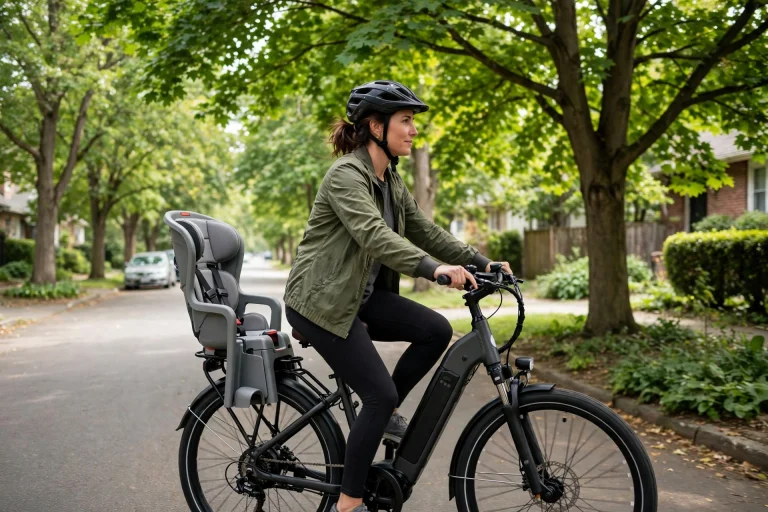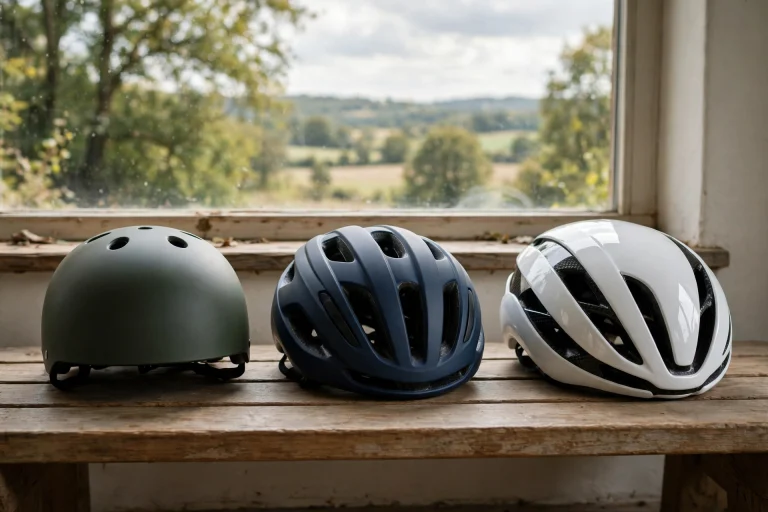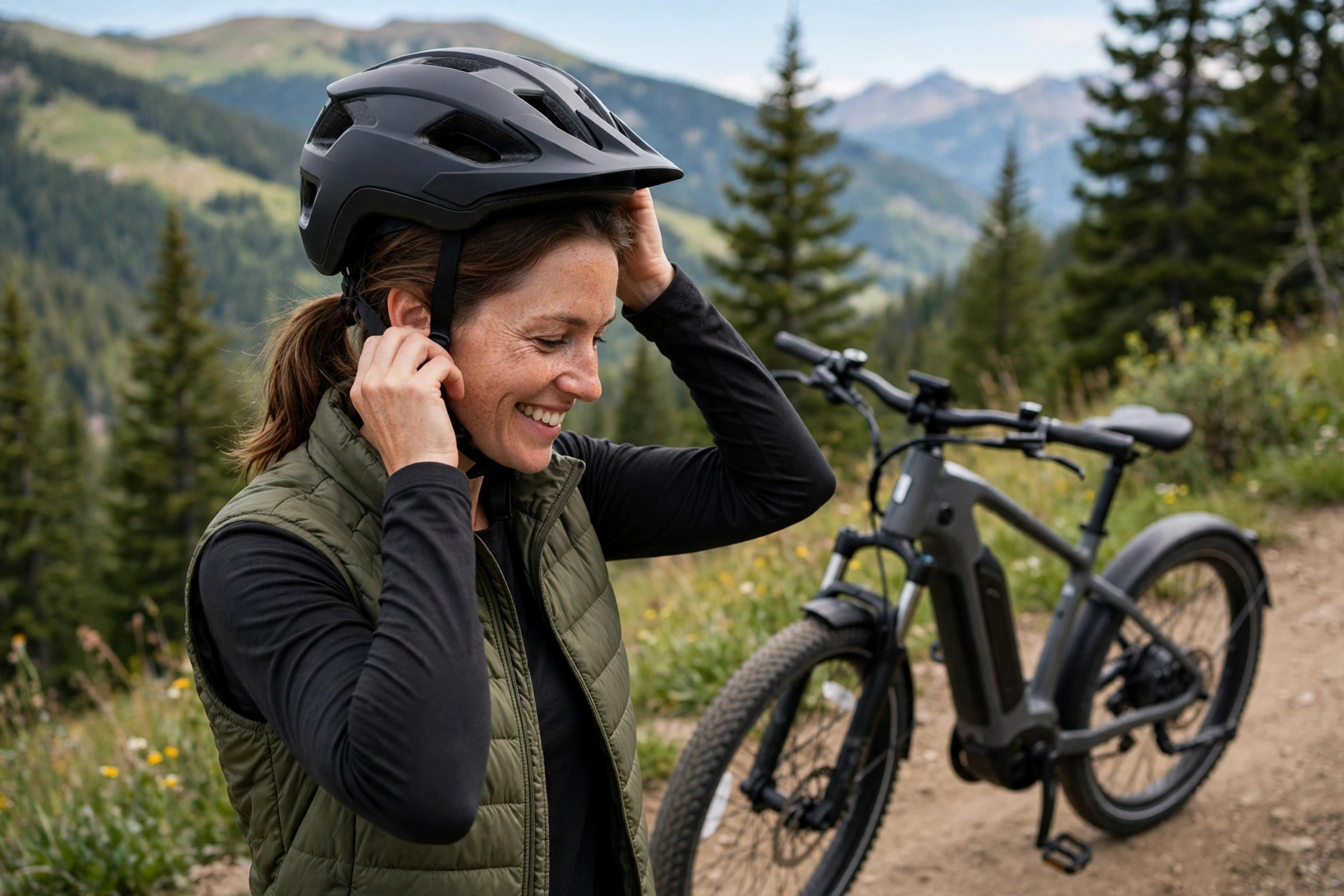
Fitting an e-bike helmet right comes down to three things: measure your head, choose the helmet whose internal shape matches yours, and wear your hair low and flat — at the nape, not bunched inside the shell. There is no separate women’s safety standard for helmets; women-specific models are usually the same certified helmets in smaller sizes and different finishes. Fit, not the label, is what protects you.
Many women riders run into the same frustrations: sizes that sell out, helmets that pinch the forehead but wobble at the sides, and hair that ruins an otherwise good fit. This guide works through each one with practical fixes.
Is There Really a Difference Between Women’s and Unisex Helmets?
In protection terms, no. Every helmet sold for road use must pass the same certification tests — CPSC in the US, EN 1078 in Europe — regardless of which department it is marketed in. A women’s model with the certification label has passed identical impact tests to the unisex model beside it.
What actually differs between lines is mostly practical: women’s ranges emphasize the smaller end of the size run, sometimes use a genuinely smaller outer shell for those sizes, and occasionally shape cheek pads or rear padding slightly differently. Colors and graphics differ most of all. None of that changes safety, but the smaller shells and better small-size availability genuinely help smaller-headed riders — which is the real reason to browse the women’s range.
The useful mindset: shop the whole wall. If your measured size and head shape match a unisex model better, that is the right helmet. If a women’s model offers the true small shell you need, take it. The category on the box is a starting point, never the decision.
How Do You Measure Your Head for the Right Size?
Use a soft measuring tape — or a string and a ruler — and wrap it around the largest part of your head: roughly an inch above your eyebrows and ears, across the bump at the back of your skull. Keep it level and snug, measure two or three times, and use the largest number.
- Match your centimeters to the specific brand’s size chart. Sizes are not standardized; a small in one brand overlaps a medium in another.
- If you fall between sizes, start with the smaller one — pads settle with use, while a loose helmet never tightens.
- Measure with your hair arranged as you will ride with it, so the number reflects real life.
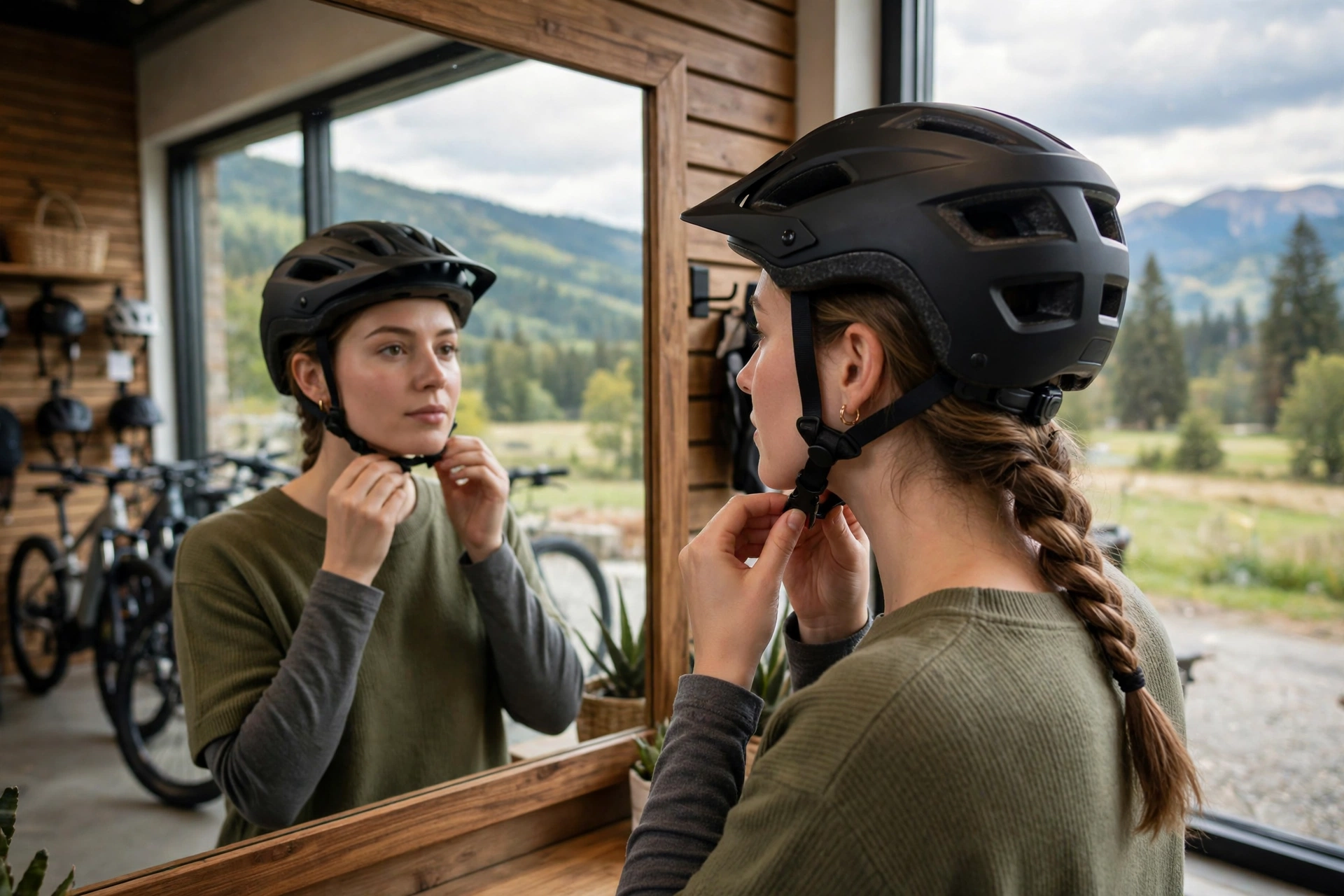
Then try the helmet on and wear it for ten to fifteen minutes. A correct fit feels evenly snug all around, like a firm handshake, with no single painful spot. A forehead hotspot that appears at minute two becomes a headache at minute forty, and it usually means the helmet’s internal shape is wrong for you, not the size.
Why Does Head Shape Matter as Much as Size?
Helmets are built on internal shapes that range from long and narrow (long oval) to short and wide (round), with most brands somewhere in between. Two riders with identical head circumference can need different helmets because their head shapes differ.
The symptoms are easy to read. A long-oval head in a round helmet gets forehead pressure and loose sides. A round head in a long-oval helmet gets squeezed temples and a gap at the front and back. Neither problem is fixed by changing size — a bigger round helmet is still round. The fix is trying a different brand or model family whose shape matches yours, and noting which ones work so future purchases get easier.
E-bike riders should also weigh coverage. Many e-bike-oriented helmets extend lower at the back and sides than minimalist road helmets, and some carry the Dutch NTA 8776 e-bike rating for higher-speed use. Features like MIPS rotational protection appear across women’s and unisex ranges alike, so you never have to trade a safety feature for a fit — keep looking until a model gives you both.
How Should You Wear Your Hair With an E-Bike Helmet?
Hair is the hidden fit variable. A high ponytail or bun inside the helmet creates a hard lump that lifts the helmet, tilts it back, and concentrates pressure into an ache. The solution is to style hair low and flat:
- Low ponytail at the nape, so it exits under the helmet’s bottom edge.
- A braid or two braids, which lie flat and also stop wind tangles on longer rides.
- A thin liner cap to smooth flyaways — choose a slim one, never a thick hat.
Some helmets have a small channel or softer padding at the back designed for a ponytail, which helps, but placement still does most of the work. Whatever your style, always do your final fit check wearing your hair exactly as you will ride. A helmet fitted over loose hair in the shop will sit differently over a braid on the road, and the road version is the one that has to be right.
What If Small Sizes Keep Selling Out?
XXS and XS helmets are produced in smaller quantities and sell through early, especially in popular colors. A few tactics help: order early in the season, check the same model in other colorways (stock is tracked per color), ask shops to check distributor stock rather than just the shelf, and use retailers with free returns to try two sizes at home.
When comparing models, ask how many shell sizes the range uses. A helmet whose smallest shell covers only the smallest sizes will look and feel trimmer — and usually quieter — than one that pads a big shell down with thick foam. What you should never do is size up to escape the hunt. A too-big e-bike helmet shifts in a crash and pumps in the wind on every ride. The right small helmet exists; it just takes one more shop or one restock to find. Your patience is buying real protection, not a nicety.
Frequently Asked Questions
Q: Are women’s e-bike helmets less protective than unisex ones?
A: No. They are certified to the same CPSC or EN 1078 standards and pass identical tests. Protection depends on certification, correct size, and an internal shape that matches your head — not on the marketing category.
Q: What is the smallest adult e-bike helmet size?
A: Most brands go down to XS, and many offer XXS in some models, roughly the low-50s in centimeters — but charts vary by brand, so always measure your head and check the specific chart before ordering.
Q: How do I stop my ponytail from making my helmet ache?
A: Move it low, to the nape of your neck, so it passes out under the helmet’s edge instead of bunching inside. A low braid works even better. Never size up to make room for hair — that creates a loose, unsafe fit.

Olivia
Writer at Helmet Today, covering helmet reviews, fit and riding safety.