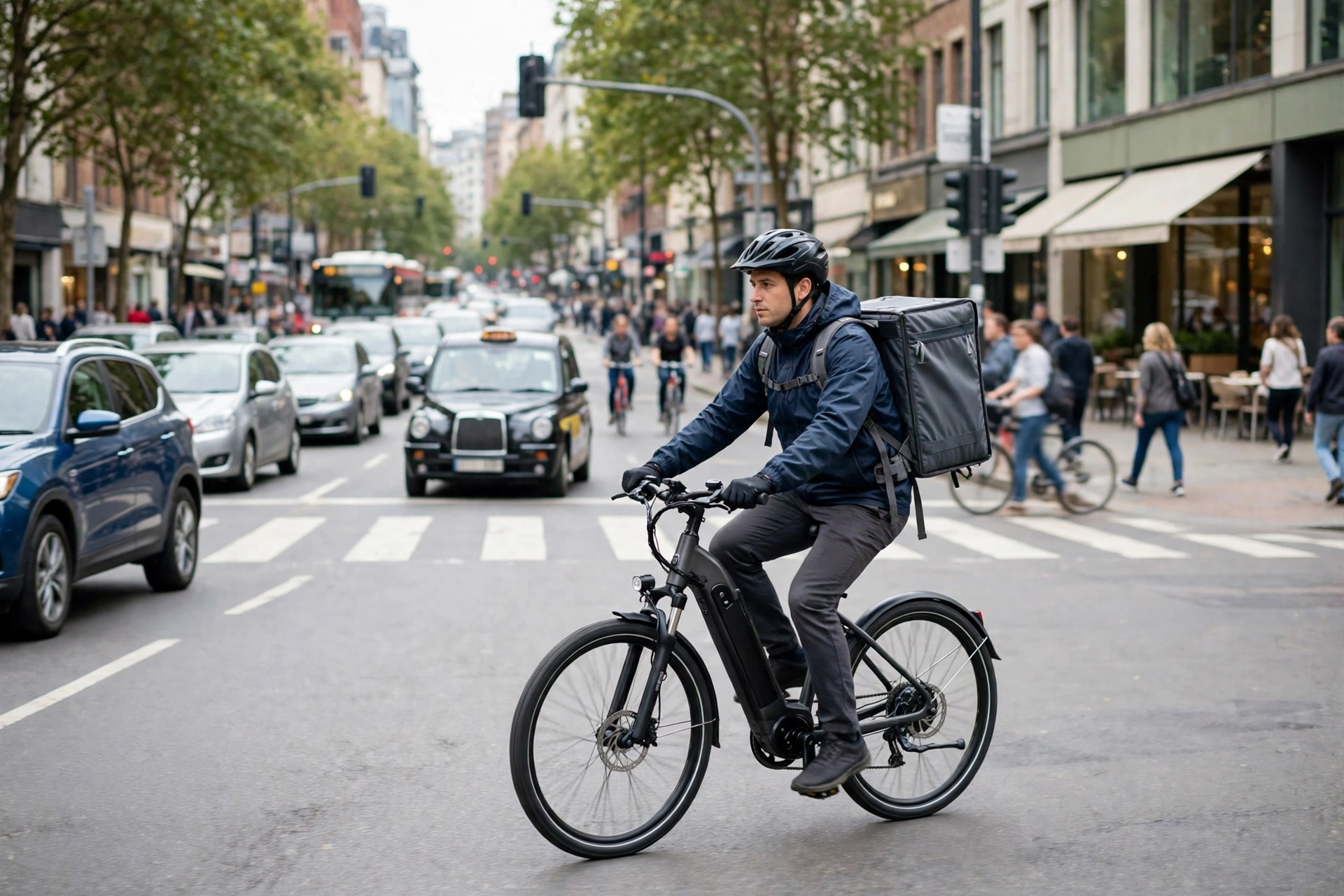
Yes — in practical terms, food delivery riders get more value from a better e-bike helmet than almost anyone, because they ride more hours, in worse conditions, than recreational riders ever do. You may not be legally required to buy a premium helmet, but fit, visibility, and ventilation upgrades pay you back every single shift.
A casual rider does five hours a week in daylight. A delivery rider can do that before lunch — then ride through rain, dusk, and dinner-rush traffic with a deadline on the screen. This guide looks at what actually wears out, what actually protects you, and where a delivery rider’s helmet money is best spent.
Why Do Delivery Riders Wear Helmets Out Faster?
Hours are the first factor. Padding that feels fine for a Sunday ride compresses under daily all-day use, sweat soaks the liner five or six days a week, and straps and dials are adjusted with gloves, in a hurry, dozens of times. A helmet that would serve a weekend rider for years can feel tired in a fraction of that time under delivery use.
Conditions are the second. Delivery happens on the platform’s schedule, not the weather’s: rain at noon, glare at six, darkness by the last orders. Riders also dismount constantly — helmets get hung on handlebars, dropped on sidewalks, knocked off delivery bags, and stored in hot boxes.
None of that means delivery riders should buy the most expensive helmet available. It means the features that matter are the durability and comfort ones: replaceable pads, a liner you can wash or swap, robust straps, and a shell that tolerates daily knocks. Plan on a shorter replacement cycle than a recreational rider, and always replace immediately after any crash.
What Helmet Features Matter Most on a Delivery Shift?
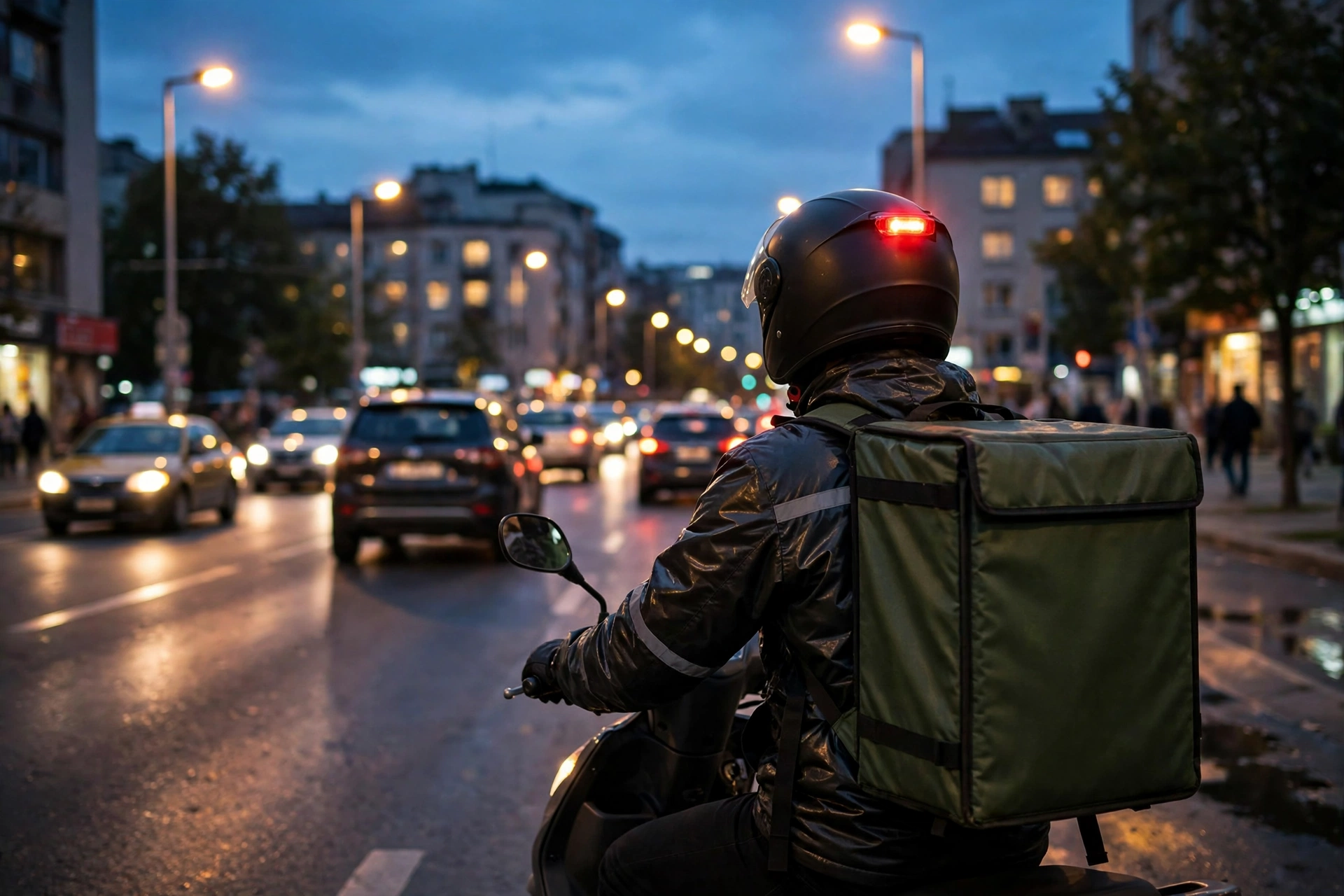
Visibility comes first. Built-in front and rear lights, or at minimum strong reflective detailing, matter enormously for riders working dawn and dinner shifts in traffic. A rear light on the helmet sits higher than a seat-post light and moves with your head when you check over your shoulder — drivers notice it.
Ventilation is second, and it works differently than riders expect. Delivery pace is stop-start: hard pedaling between drops, then standing still at a door with no airflow. Deep internal channels, a wicking liner, and a second dry liner to rotate through the week make that cycle far more bearable in summer.
Coverage and certification are third. Most delivery riding happens at Class 2 and 3 speeds in general terms — up to 20 mph with a throttle or 28 mph pedal-assisted — in the densest traffic a cyclist ever meets. An NTA 8776-certified helmet, which in general terms tests higher-energy impacts and requires more coverage, is a sensible match, and rotational protection such as the liners covered in our guide to how MIPS protection works is widely available at commuter price points.
How Should a Helmet Fit When You Wear It All Day?
All-day fit is less forgiving than weekend fit. A pressure point that is mildly annoying at minute twenty is a splitting headache at hour six, and a loose helmet shifts every time you look down at the phone mount or up at an address.
Run the standard checks, then add one: wear the helmet around the house or depot for a full 15 minutes before your first shift in it. It should sit level, about an inch above the eyebrows, snug and even with no single hot spot. Cheek and crown pads should be replaceable on the model you choose, because pad swaps are how an all-day helmet’s fit gets rescued mid-season instead of replaced.
Think about everything else on your head, too. Glasses need channels or a helmet-first, glasses-second routine. A thin liner cap or the hood of a rain jacket changes fit slightly — test the helmet in your real shift setup, including in winter layers. And style your hair as you work: a high ponytail or bun under the shell will lift the helmet and ache within the hour; low and flat is the working rider’s rule.
Are Lights and Visors Worth It for Delivery Work?
For most delivery riders, yes on both. Integrated lights remove the two classic failures — forgetting a separate light, and finding its battery dead at dusk. Helmet lights are not a substitute for proper bike lights where the law requires them, but as an additional, high, moving light source they are genuinely effective. Check runtime honestly against your longest shift, and prefer USB-rechargeable models you can top up between peaks.
A visor earns its place differently. A short brim cuts low sun on east-west evening runs and keeps drizzle off your glasses at stops; a clear or tinted shield-style visor on some commuter helmets keeps wind and road spray out of your eyes at Class 3 speeds. What a visor cannot do is replace eye protection judgment — if yours fogs at every stop in winter, crack it or choose a brim-only design.
One warning on add-ons: phone mounts, cameras, and heavy aftermarket lights change a helmet’s weight and balance, and adhesive mounts can damage shells. Use only mounts the helmet maker approves, and keep added weight small.
Who Pays for a Delivery Rider’s Helmet — and What Do Platforms Require?
Rules vary widely by city and platform, and they change, so treat this as a prompt to check rather than a settled answer. In general terms, helmet requirements for delivery riders come from three places: local traffic law, which may require a helmet for certain e-bike classes or ages; the platform’s own terms, which sometimes require or recommend helmets and other safety gear; and in some cities, specific rules written for app-based delivery work.
As for cost, riders are often classed as independent contractors, which in general terms means gear is usually the rider’s own expense unless a platform program, local rule, or promotion provides otherwise. Some platforms run safety programs that discount or supply equipment from time to time.
The practical takeaway does not depend on those details: the helmet is the one piece of delivery equipment that protects the rider rather than the order. Budget for a certified, well-fitting model with lights and spare pads as a cost of the job — like tires and brake pads — and keep the receipt, since gear expenses and crash-replacement programs both run on paperwork.
Frequently Asked Questions
Q: What is the single best upgrade for a delivery rider’s helmet?
A: Visibility. Built-in or helmet-mounted lights and strong reflectives protect you on every dark shift, and they are the feature recreational helmets most often lack. After that, replaceable pads and a washable liner for all-day comfort.
Q: How often should a full-time delivery rider replace a helmet?
A: Sooner than a casual rider. Daily hours compress pads and age straps faster, so inspect monthly, refresh pads when fit loosens, and replace the helmet when fit cannot be restored, after any crash, or after a few years at the outside in general terms.
Q: Can I use a regular bike helmet for delivery riding?
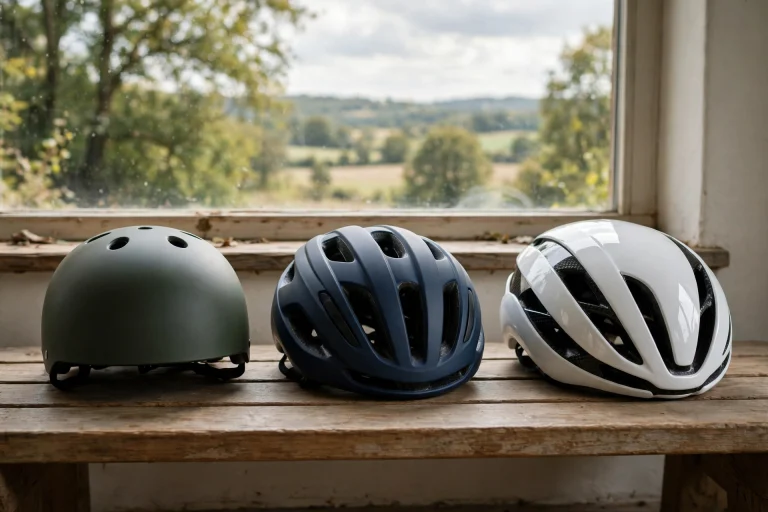
A: A certified regular bike helmet is legal in most places and far better than none. But at Class 3 speeds and delivery hours, an e-bike helmet with NTA 8776 certification, lights, and replaceable pads is the better-matched tool for the job.

Olivia
Writer at Helmet Today, covering helmet reviews, fit and riding safety.