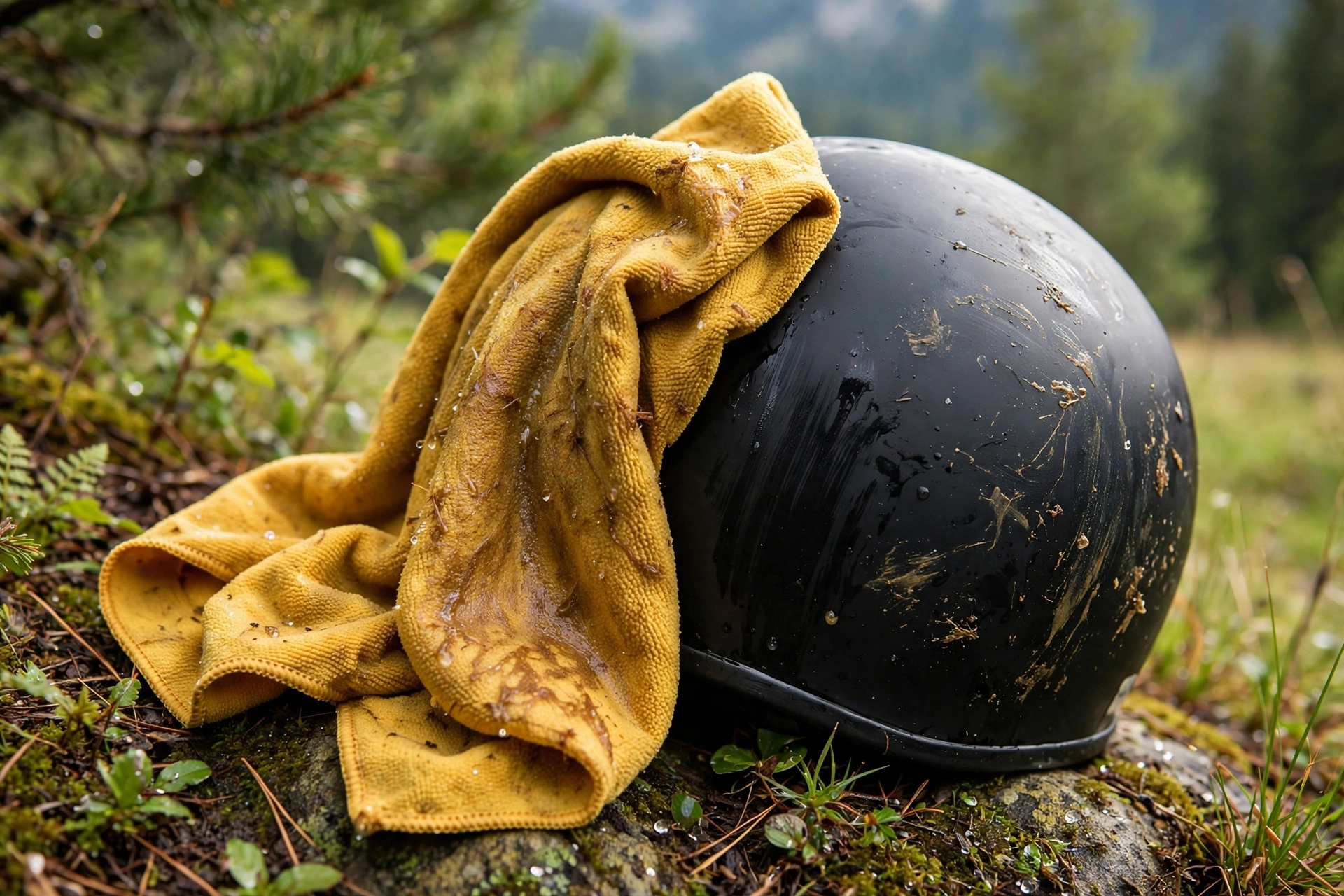
The best way to get bugs off a motorcycle helmet and visor is the soak method: lay a warm, wet microfiber cloth over the splattered area for five to ten minutes to soften everything, then gently wipe the loosened residue away. Never scrape or scrub dried bugs dry — bug remains are abrasive and acidic, and dragging them across the surface scratches visors and dulls paint. Patience and water do the work.
Bug splatter is more than ugly. Left to bake on, insect residue can etch visor coatings and stain finishes, so cleaning it promptly and correctly protects the helmet as well as your view. Here is the full technique for shell and visor, plus how to handle it mid-ride.
How Does the Soak Method Work, Step by Step?
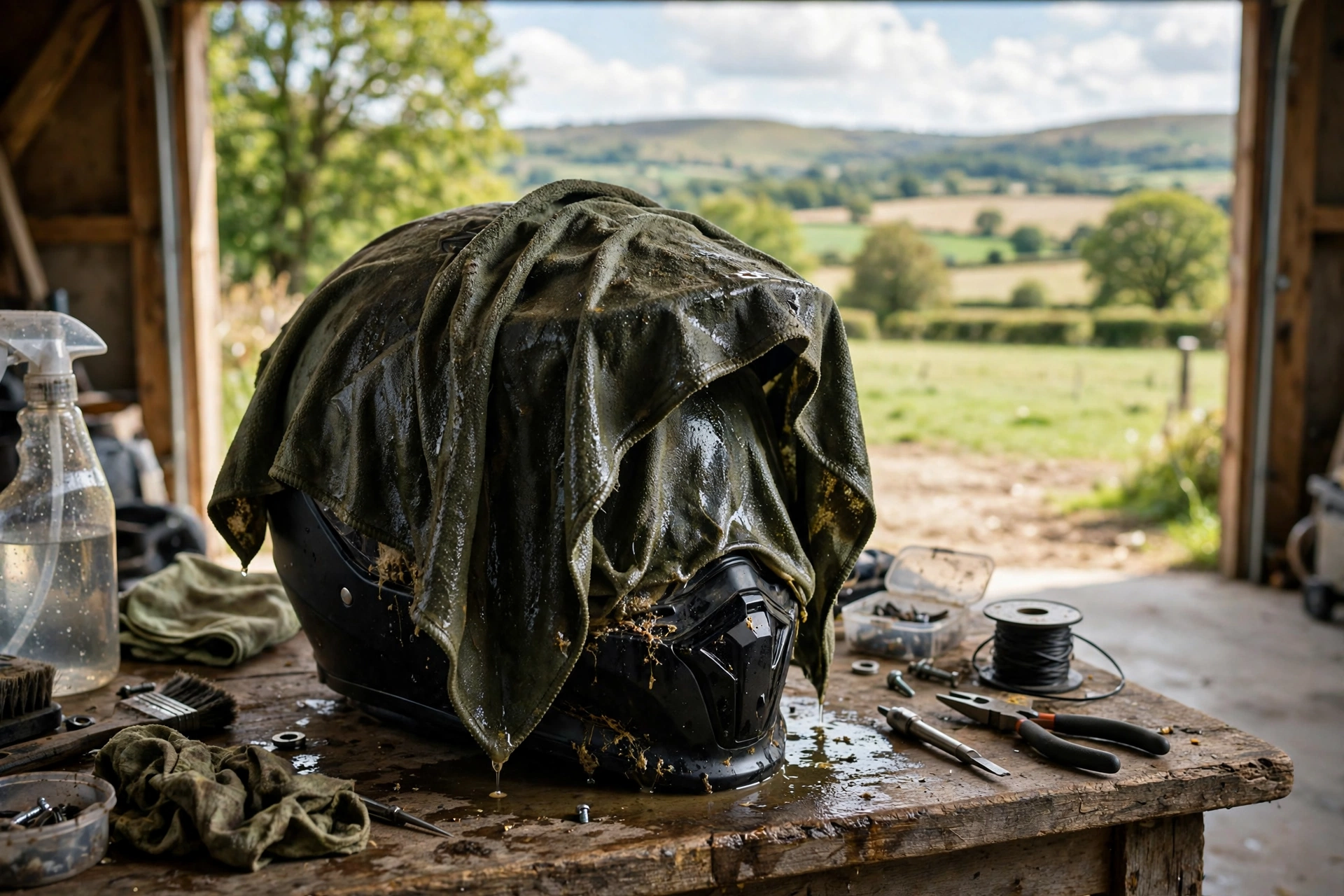
Soak a clean microfiber cloth in warm (not hot) water, wring it out so it is wet but not dripping, and drape it over the front of the helmet or visor. Leave it in place for five to ten minutes. The moisture rehydrates the dried residue and releases its grip on the surface — you will feel the difference immediately when you start wiping, because softened bugs slide off instead of smearing.
After soaking, wipe gently in straight strokes with the same cloth, rinsing it frequently so you are not dragging grit around. For stubborn spots, re-soak rather than pressing harder. Finish with a second clean, dry microfiber to remove water marks, and repeat the whole process on the shell. For a really heavy accumulation after a long summer ride, do two soak cycles instead of one aggressive scrub.
Why Should You Never Scrape Bugs Off Dry?
Dried insect remains are surprisingly hard and gritty, and they often contain tiny particles of road dust mixed in. Scrubbing them dry — especially with a fingernail, a stiff brush, or a paper towel — grinds that mixture across the surface. On a visor, the result is a patch of fine scratches right in your line of sight, which catches sunlight and headlight glare at night. On the shell, dry scrubbing dulls clear coat and can work residue deeper into the finish.
The chemistry matters too. Bug residue is acidic, and the longer it sits — especially baking in the sun — the more it can etch into visor coatings and paint. That is why the correct order is always: soften first, wipe second, and clean as soon as you reasonably can after a ride rather than letting splatter accumulate for weeks. Riders who make this a habit spend minutes per clean instead of fighting hardened, etched-in residue later in the season.
Should You Clean the Visor or the Shell First?
Clean the visor first. It is the part your vision depends on, its coatings are the most delicate on the helmet, and it deserves your cleanest cloth and freshest water before either gets loaded with shell grime. If your visor removes easily, take it off and soak and rinse it under a tap; if not, use the draped-cloth soak in place.
Then do the shell with a separate cloth and fresh water. Keep the two jobs apart and neither surface gets contaminated by the other’s grit. While you work, keep water out of the vents as much as practical and never hold a helmet under a hard jet of water — a point worth reinforcing alongside the general guidance on how long a motorcycle helmet lasts, since harsh cleaning shortens a helmet’s life just as surely as rough handling.
What Extra Care Do Matte Helmets Need?
Matte finishes show bug damage faster and forgive less. The textured surface holds residue in its grain, and any aggressive rubbing creates shiny, polished spots that cannot be undone. For matte shells: soak longer (ten minutes or more), wipe with the lightest possible pressure, use only water or a cleaner made specifically for matte finishes, and never use wax, polish, or detail sprays meant for gloss paint.
Because residue bonds to matte finishes so readily, prevention and prompt cleaning matter even more. A matte helmet cleaned the same evening, with a gentle soak, will stay even-toned for years; the same helmet left splattered in a hot garage will stain.
How Can You Clean Bugs Off During a Ride?
On the road, your tools are limited but the principle holds: water and softness only. Carry a small microfiber cloth in a sealed bag, wet it at a stop, and use the same soak-and-wipe technique in miniature — even two or three minutes of soaking helps. A visor is small enough to rinse under a tap where facilities allow.
Avoid the classic gas-station trap: the squeegee and the rough paper towels by the pumps. Squeegee edges and service-station paper are far too abrasive for a visor and will haze it in one use. If you have no water and no cloth, the safest road option is usually to leave the bugs alone until you get home rather than dry-wipe them with whatever is at hand.
Can You Prevent Bug Splatter From Sticking?
Partly. On gloss shells only, a coat of motorcycle-safe wax makes the surface slicker, so bugs release more easily at the next wash — never apply wax to a matte helmet. Some riders use helmet-safe detail products between washes for the same reason. Visor treatments marketed for rain and bug release can also help, provided they are stated as safe for your visor’s coatings.
Nothing prevents splatter entirely on a summer evening ride, though, so the real strategy is promptness: a two-minute soak-and-wipe when you get home beats an hour of restoration later, and it keeps both your paint and your night vision clear. Building the habit into your arrival routine — helmet off, cloth soaking while you park and lock up — means the residue never gets the chance to dry rock-hard, and most days the whole job takes less time than putting the bike away.
Frequently Asked Questions
How long should you soak bugs before wiping?
Five to ten minutes under a warm, wet microfiber cloth softens most splatter. For heavy or old accumulation, repeat the soak rather than wiping harder — pressure is what scratches, not patience.
Can bug residue permanently damage a helmet?
Yes. Bug remains are acidic and can etch visor coatings and stain paint, especially matte finishes, if left to bake on in the sun. Cleaning promptly after rides prevents nearly all of this damage.
Is it safe to use a gas station squeegee on a visor?
No. Squeegees and service-station paper towels are too abrasive and will scratch and haze a visor quickly. Use water and a microfiber cloth, or wait until you get home.

Olivia
Writer at Helmet Today, covering helmet reviews, fit and riding safety.