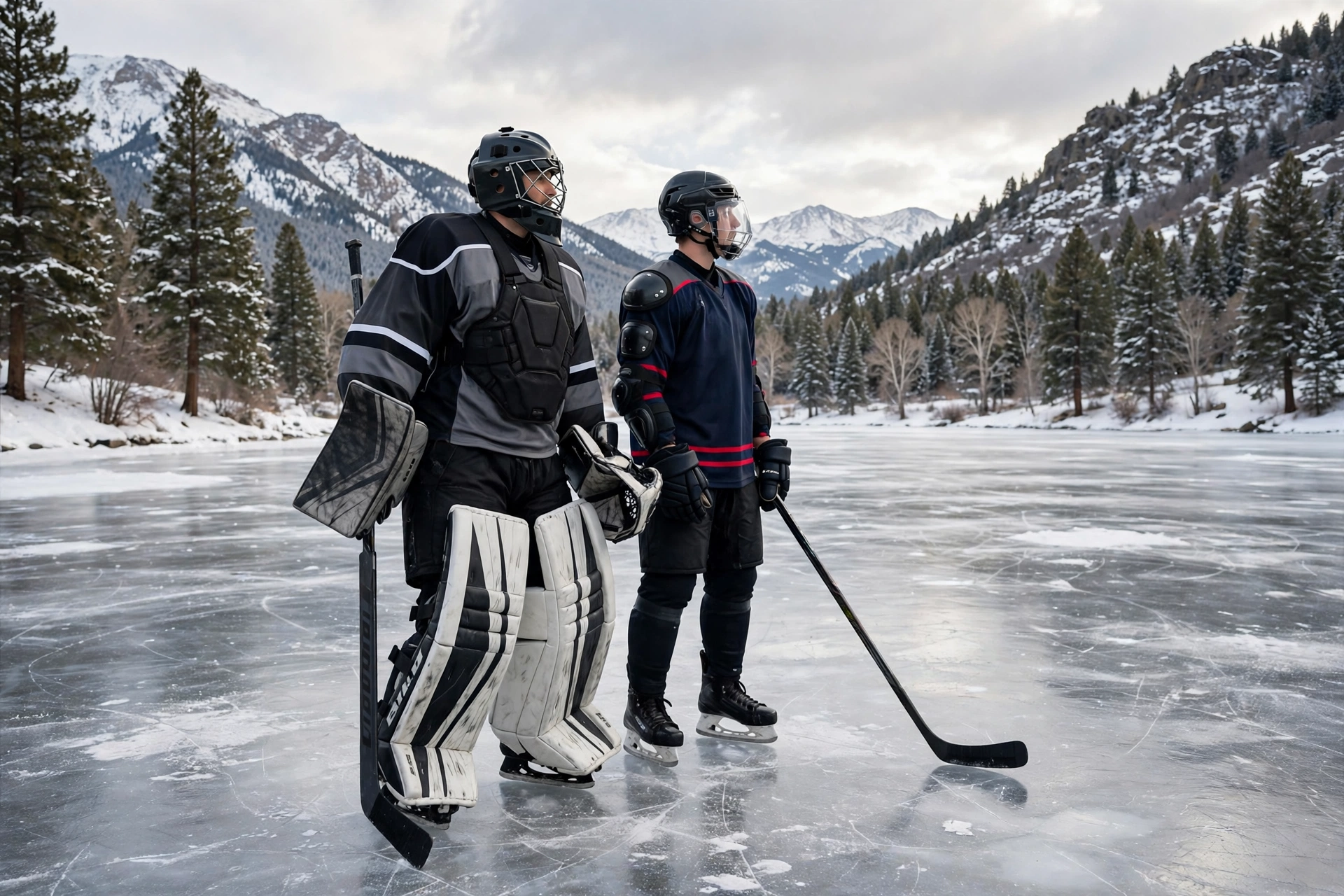
A goalie mask and a player helmet may hang on the same store wall, but they are built for two completely different jobs. A goalie mask is a rigid, one-piece shell with an attached steel cage, engineered to take direct puck shots to the face again and again. A player helmet is a foam-lined helmet designed to absorb energy from body checks, falls to the ice, and glancing stick contact. They are not interchangeable, and wearing a player helmet in net is a real safety risk.
Here is how the two designs differ, why the differences matter, and what else a goalie needs to protect the areas a mask does not cover.
What Is a Goalie Mask Built to Do?
A goalie mask is built around one main threat: a hard rubber puck flying straight at your face from close range, with almost no time to react. Everything about the design answers that threat. The shell is molded as a single rigid piece, traditionally from fiberglass and modern composite materials, so it stays stiff instead of flexing inward on impact. Its curved, angled shape is meant to deflect a puck away rather than absorb the full force head-on.
The cage is part of the system, not an accessory. Goalie cages use strong steel wire in patterns designed and certified for puck impacts, and the mask’s padding is relatively thin because the rigid shell does the heavy lifting. A pro-style mask also extends to cover the ears and the sides of the head, and it fastens with a back plate and harness straps that keep it locked in place when a shot hits. The whole unit is heavier and warmer than a player helmet, but that trade-off is exactly what standing in front of shots requires.
What Is a Player Helmet Built to Do?
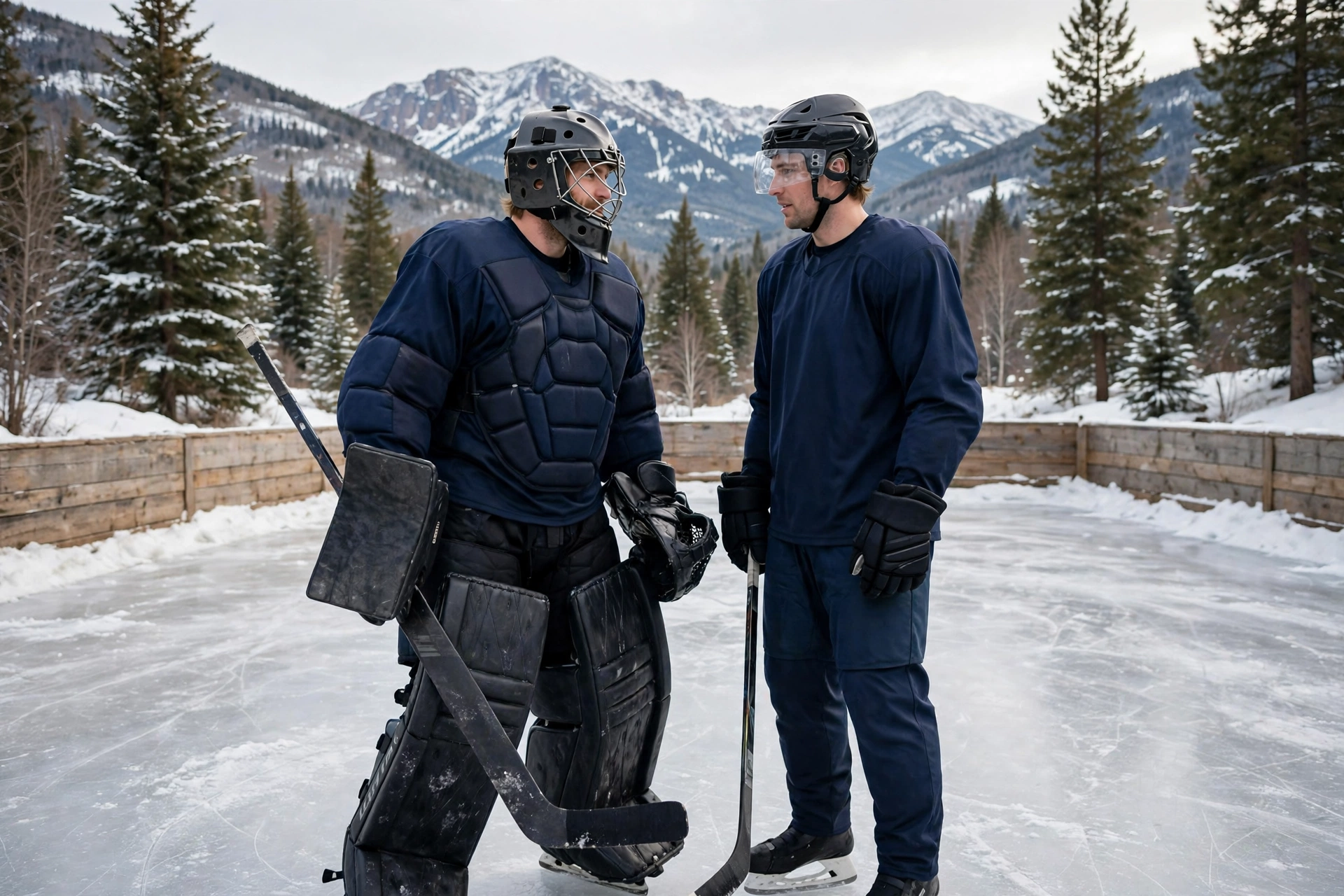
A player helmet solves a different problem. Skaters rarely take a puck square to the face, but they do get knocked into the boards, fall backward onto the ice, and catch elbows, shoulders, and the occasional stick. A player helmet uses a softer, adjustable plastic shell over a thick foam liner — materials that compress and manage energy when your head hits something. The protection strategy is absorption, not deflection.
Player helmets are also adjustable in ways a mask is not. Most have tool-free or simple tool adjustments to change the length and fit, removable ear covers, and the option of adding a visor or a player cage. Those add-ons are designed mainly to guard against sticks, deflected pucks, and incidental contact, not direct slap shots from the point. Some newer player helmets also include low-friction layers intended to reduce rotational forces in a fall, a concept explained in more detail in our guide to what MIPS is and how helmet rotation protection works. That is valuable protection for a skater — but it does not turn the helmet into goalie gear.
Why Can’t a Player Helmet and Cage Replace a Goalie Mask?
This is the most important question of the three, because budget-conscious players do ask it. The honest answer is no — a player helmet with a player cage is not a safe substitute in goal, for a few specific reasons.
First, the cage itself is different. Player cages are built to stop sticks and give general face coverage, while goalie cages are built and certified specifically to withstand and deflect direct puck impacts. The wire thickness, spacing, shape, and mounting all differ. Second, the shell behaves differently. A player helmet shell is meant to flex and let the foam absorb energy, which is the wrong behavior when a puck hits it — the force travels through instead of being deflected away. Third, the fit and coverage are wrong. A mask wraps the face and jaw in one rigid structure, while a player helmet leaves gaps and movement that a hard shot can exploit.
In short, each piece of gear is tested and certified for the impacts it was designed around. A player helmet passes player standards; a goalie mask passes goalie standards. Crossing them over voids the logic of both.
What About Throat Protection for Goalies?
Even the best mask leaves one gap: the throat and upper neck, exposed when a goalie drops into the butterfly or tips the head down to track a puck through traffic. The standard solution is a throat guard, often called a dangler — a clear or padded curved piece that hangs from the bottom of the mask and covers the front of the throat.
Danglers are inexpensive, light, and widely used at every level of hockey. Some leagues and organizations require them for youth goalies, and many goalies also wear a padded neck guard or a chest protector with a raised collar underneath for layered coverage. A dangler must hang freely and cover the throat without restricting head movement, and it should be replaced if it cracks, since its job is to take the hit a stick or puck would otherwise deliver to unprotected skin and soft tissue.
Can a Goalie Ever Wear a Player Helmet in Net?
For organized hockey, treat the answer as no. Leagues and governing bodies generally require goalies to wear a properly certified goalie mask, and officials can remove a goalie from a game for wearing uncertified or mismatched equipment. Even in casual pickup hockey, standing in net with a player helmet exposes your face to the one impact that gear was never designed to handle.
The reverse question comes up too: can a skater wear a goalie mask? Technically it would cover the face, but it makes little sense — a mask is heavier, hotter, limits the quick head movement skating requires, and still is not the right tool for the boards-and-falls impacts skaters face. Buy and wear the gear that matches your position. If cost is the concern, a certified entry-level goalie mask is a far safer purchase than any expensive player helmet used out of position.
Frequently Asked Questions
Q: Is a goalie mask stronger than a player helmet?
A: For puck impacts to the face, yes — its rigid one-piece shell and certified cage are built for exactly that. A player helmet is better at absorbing energy from falls and checks. Each is stronger against the impacts it was designed for.
Q: Can I put a goalie cage on a player helmet?
A: No. Cages and helmets are certified as matched systems, and a goalie cage is not made to mount on a player helmet. The shell underneath still flexes like a player helmet, so the combination would not protect like a real mask.
Q: Do goalies need anything besides the mask?
A: A throat guard (dangler) is strongly recommended and required by some youth leagues, since the mask leaves the throat exposed. Many goalies also use a padded neck guard under the chest protector for extra coverage.

Olivia
Writer at Helmet Today, covering helmet reviews, fit and riding safety.