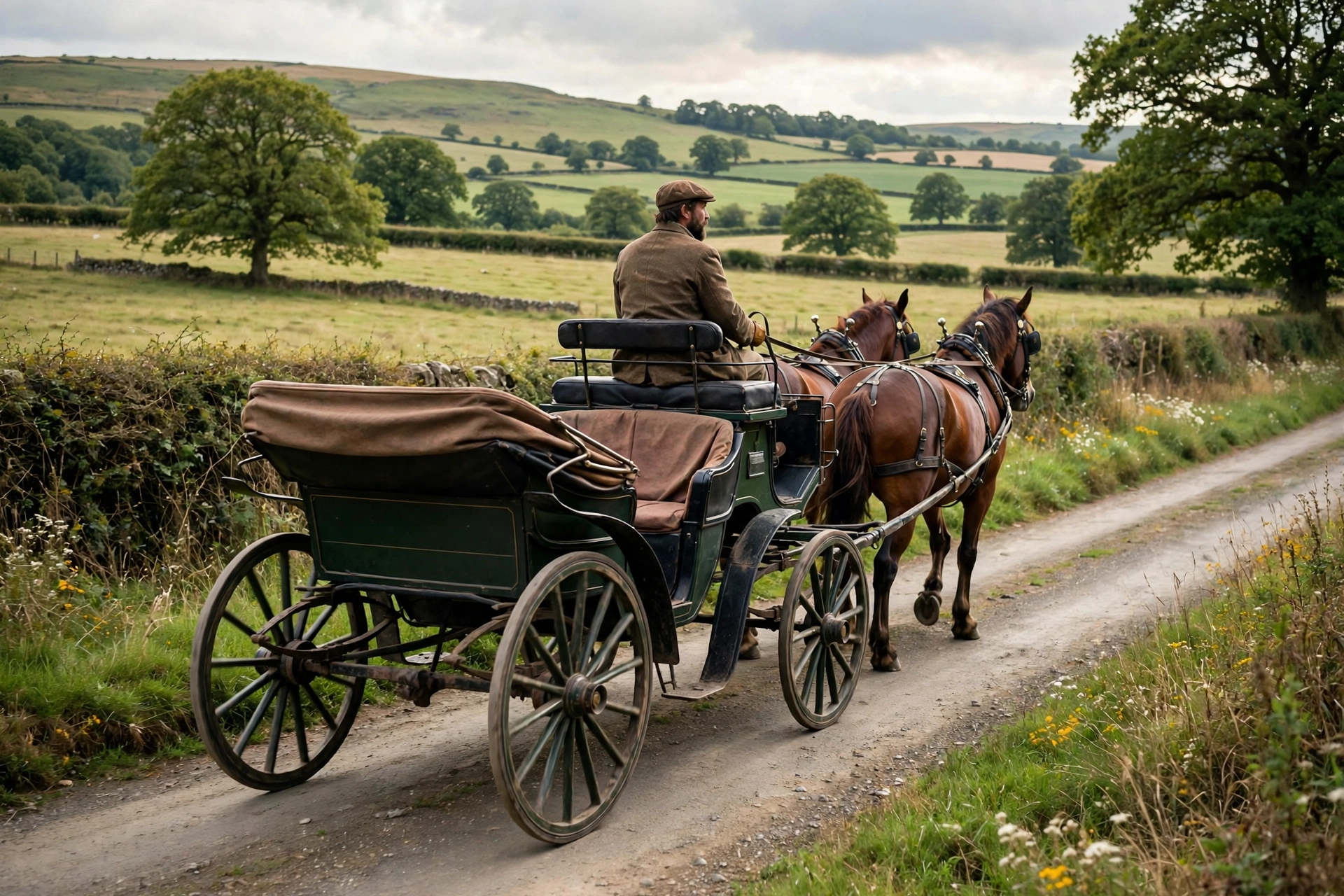
Most recreational carriage drivers do not wear a helmet, and there is no general law that requires one. Driving a horse-drawn carriage is traditionally treated differently from riding, and most pleasure drivers go out in ordinary clothing or traditional show attire. The big exception is competitive combined driving, where certified helmets are required for the marathon phase.
That honest answer surprises many horse owners, because riding helmets are now standard for mounted work. This guide explains where carriage drivers actually stand — the tradition, the competition rules, the real risks of driving on roads and from an elevated seat, and how to choose a proper certified equestrian helmet if you decide to wear one.
Are Carriage Drivers Required to Wear a Helmet by Law?
In the United States, there is no state or federal law that specifically requires an adult driving a horse-drawn carriage on public roads to wear a helmet. Equestrian helmet laws, where they exist, are usually written around riding — and several states only apply them to minors. A person driving a carriage, wagon, or cart is typically not covered by those rules at all.
Commercial carriage operators in tourist cities follow city licensing rules for their businesses, but those rules govern things like permits, horse care, and operating hours — not helmets for the driver. Passengers in a commercial carriage are likewise not required to wear helmets, and in practice almost never do.
So legally, an adult pleasure driver can head out bareheaded. Whether that is a wise choice is a separate question, and it is the question the rest of this article focuses on.
When Do Competition Rules Require a Helmet for Drivers?
Organized sport is where helmets enter the picture. In combined driving — the three-phase discipline modeled on ridden eventing — the marathon phase sends drivers at speed across country over fixed hazards. Under international and national rules in general terms, drivers and their navigators (grooms) are required to wear certified protective headgear during the marathon, and protective safety vests are very common in that phase too.
The logic is simple: the marathon is the phase with real speed, rough terrain, tight turns between obstacles, and the genuine possibility of a carriage overturning. Rules bodies respond to that risk with mandatory helmets, just as eventing rules do for riders.
Other phases and disciplines are different:
- Driven dressage and cones: traditional attire is the norm, and helmets are generally not required for adult drivers, though some competitors choose discreet modern helmets styled to look traditional.
- Pleasure showing: turnout and tradition dominate; helmets are rarely seen in the ring for adult drivers, though juniors are commonly required to wear them under show rules in many organizations.
- Junior drivers: youth rules in most equestrian organizations are stricter — young drivers are commonly required to wear certified helmets whenever they are on the box seat.
If you compete, read your organization’s current rulebook rather than relying on habit, because driving rules on protective headgear have been tightening in recent years.
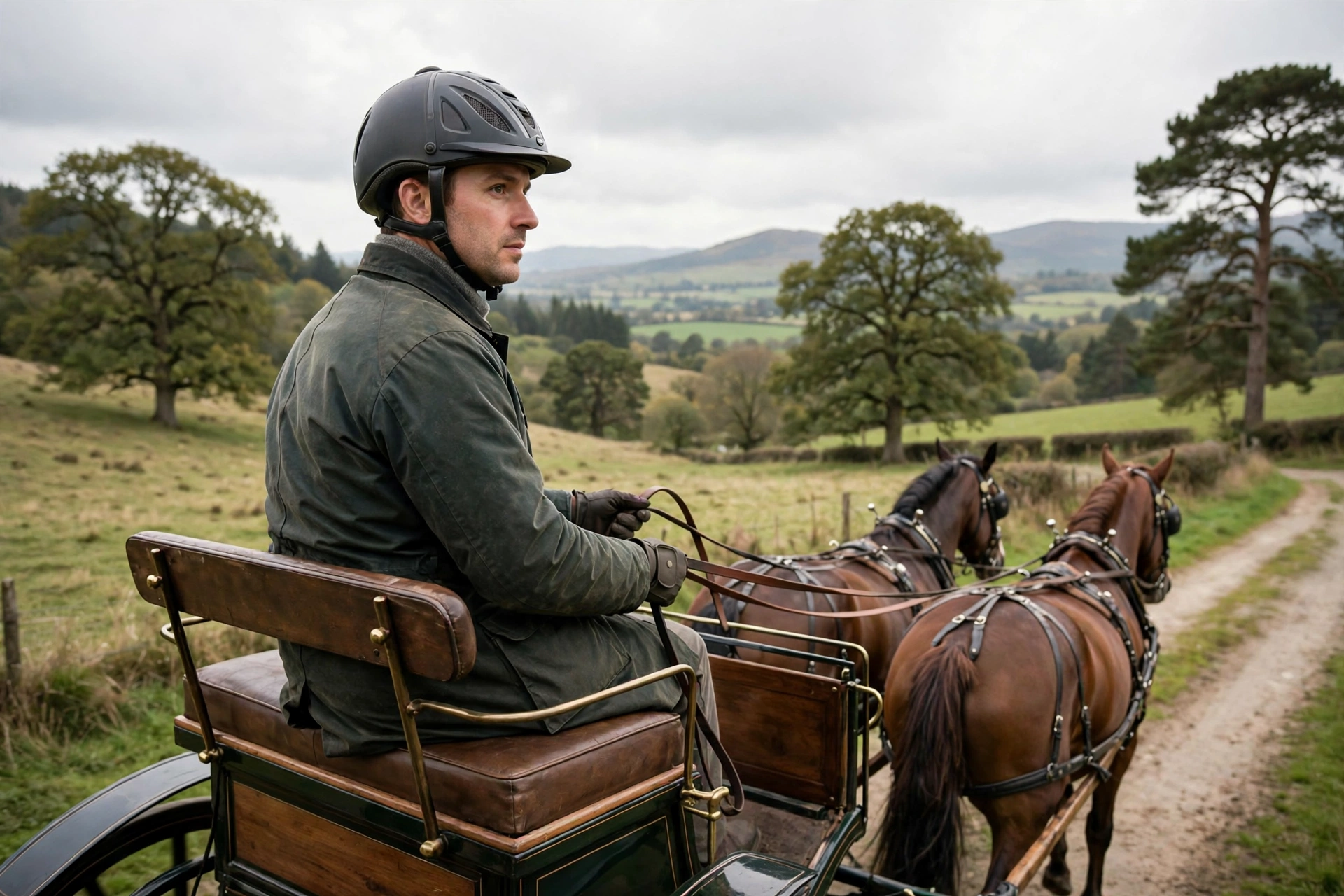
What Are the Real Risks of Driving Without a Helmet?
Drivers sometimes assume they are safer than riders because they are not on the horse’s back. In some ways that is true — a driver is not thrown from a saddle. But driving has its own specific dangers:
- The elevated seat: a driver sits high on a box seat, often higher than a rider’s head. A fall from that height onto pavement or a wheel is a serious head-impact scenario.
- Carriage overturns: a tipped carriage can throw the driver sideways or forward with no chance to brace.
- Road traffic: most pleasure driving happens on shared roads. A collision with a motor vehicle, or a spook caused by one, is the classic carriage accident.
- Runaways and equipment failure: a broken rein, a failed brake, or a panicked horse can put the driver on the ground at speed.
- Being dragged or struck: falls during hitching, unhitching, or a horse kicking near the shafts can cause head injuries at ground level.
None of these require speed or recklessness. A quiet horse, a low wheel dropping off a road edge, and an unplanned meeting with asphalt is all it takes. Head injuries are consistently among the most serious outcomes in equestrian accidents generally, and drivers are not exempt from that physics just because they hold reins instead of sitting in a saddle.
Why Are More Pleasure Drivers Choosing to Wear Helmets?
The culture is slowly shifting. Several trends are pushing helmets onto the box seat:
- Riders who also drive: most modern equestrians grew up wearing helmets every ride. When they take up driving, the habit — and the risk awareness — comes with them.
- Road driving: drivers who share busy roads with fast traffic increasingly feel exposed without head protection.
- Better-looking options: helmet makers now offer styles with traditional silhouettes that look appropriate with driving attire, removing the old “it ruins the turnout” objection for casual driving.
- Modeling for juniors: adults who require helmets for young drivers find it easier — and more consistent — to wear one themselves.
- Insurance and common sense: after a few widely shared accident stories in the driving community, many drivers quietly decided the risk was not worth it.
The rotational-protection technology in modern riding helmets is part of this story too. Systems such as MIPS are designed to reduce rotational forces in angled falls — exactly the kind of fall a driver takes from a raised seat — and they are now widely available in certified equestrian helmets.
How Do You Choose a Helmet for Carriage Driving?
A driver does not need a special “driving helmet.” The right choice is a properly certified equestrian riding helmet that fits well:
- Certification: look for a helmet certified to current equestrian standards (ASTM/SEI certification in the US in general terms). The label inside the helmet is what counts.
- Fit: snug all around without pressure points, sitting level and low on the forehead, with the harness adjusted so the helmet does not rock or lift.
- Secure harness: a driver leans, turns, and looks behind — the helmet must stay put through all of it.
- Comfort for long drives: ventilation and light weight matter on a two-hour pleasure drive in summer.
- Replacement discipline: replace any helmet after a fall or impact, and retire helmets as they age per the manufacturer’s guidance.
One caution: a bicycle helmet, hard hat, or uncertified “fashion” driving hat is not a substitute. If you are going to wear head protection while driving, wear the certified equestrian helmet designed for falls around horses.
Frequently Asked Questions
Q: Is it illegal to drive a horse carriage without a helmet?
A: For adults in the US, no — there is no general law requiring carriage drivers to wear helmets. Some youth rules and competition rules require them, but pleasure driving on public roads has no helmet mandate.
Q: When must a carriage driver wear a helmet in competition?
A: In combined driving, certified helmets are required for drivers and navigators during the marathon (cross-country) phase under international and national rules in general terms. Junior drivers are also commonly required to wear helmets in most organizations. Always check your current rulebook.
Q: What helmet should a carriage driver wear?
A: A certified equestrian riding helmet (ASTM/SEI in the US) that fits snugly and stays secure while turning and looking around. There is no separate driving-specific standard — a good riding helmet is the correct choice.

Olivia
Writer at Helmet Today, covering helmet reviews, fit and riding safety.