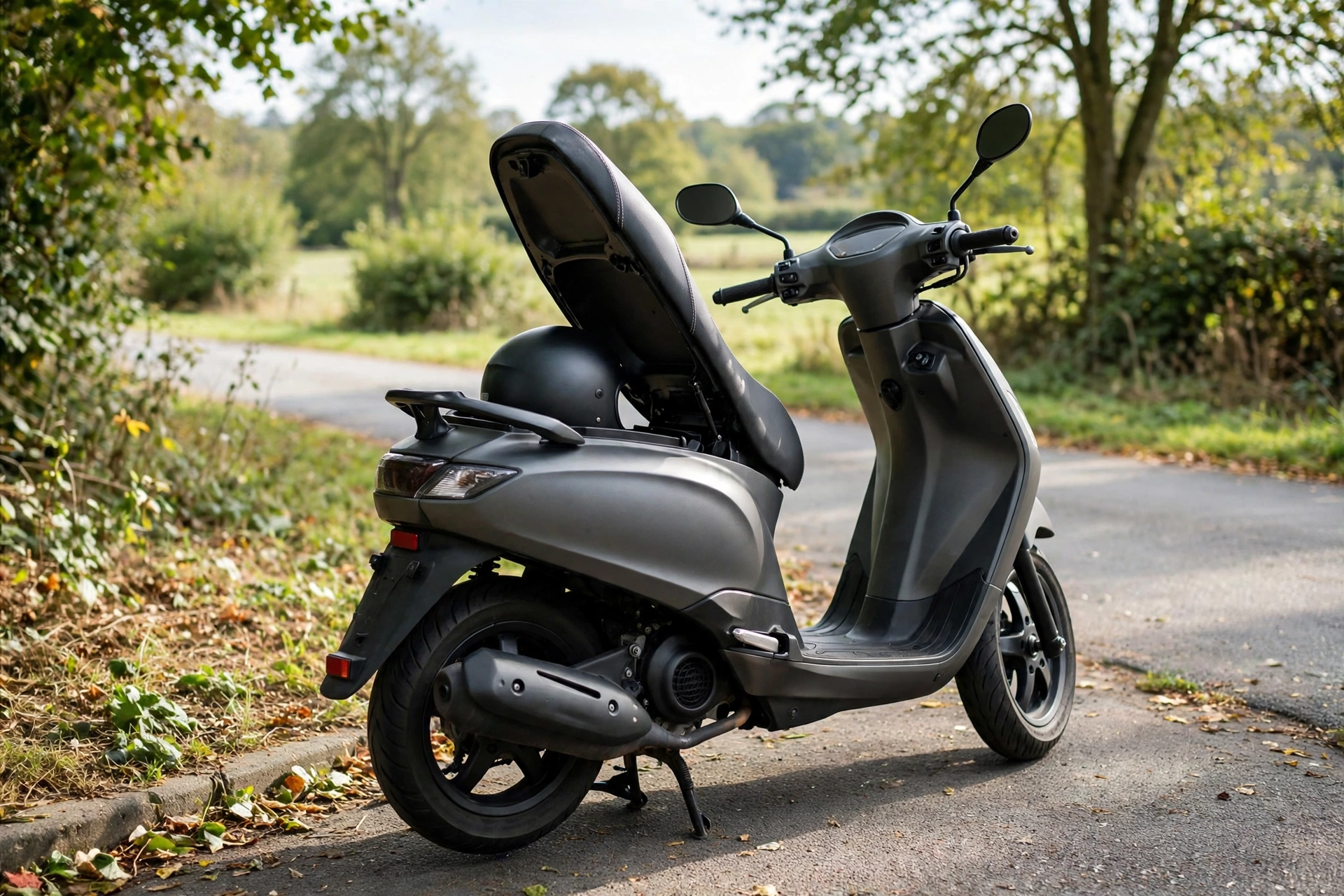
Storing a helmet under a scooter seat is easy if the helmet physically fits the compartment: measure both before you assume, place the helmet in gently with the visor protected, and avoid leaving it sealed inside a sun-baked compartment for hours. In general terms, under-seat storage is one of the best conveniences of scooter life for normal stops — as long as you manage its two real limits, space and heat.
Many scooters are sold with a photo of a helmet sitting neatly under the seat, and many owners discover their particular helmet does not fit. Shape matters as much as volume.
How Do You Check Whether Your Helmet Actually Fits?
Start with the compartment, not the brochure. Under-seat storage is shaped around the fuel tank, battery and bodywork, so published liter figures flatter it — a compartment can have generous total volume and still refuse a helmet whose crown or chin bar meets a hump in the wrong place. Race-style full face helmets with spoilers are the most common misfits; compact jet and open face helmets fit far more often.
The reliable test is physical: with the helmet you actually own, try it in both orientations — usually crown-down or on its side works best — and close the seat gently. The seat should latch with no force and no flexing. If you have to press hard, the seat is pressing on the helmet, and both lose: the latch strains and the helmet takes a load it was not designed for.
Shopping for a scooter or a helmet with this in mind? Take measurements of the compartment’s longest, widest and deepest points and compare them with the helmet’s outer dimensions, allowing a little clearance. If you are buying the scooter partly for this feature, bring your helmet to the test ride. It takes ten seconds and settles the question completely.
What Is the Safest Way to Place the Helmet Inside?
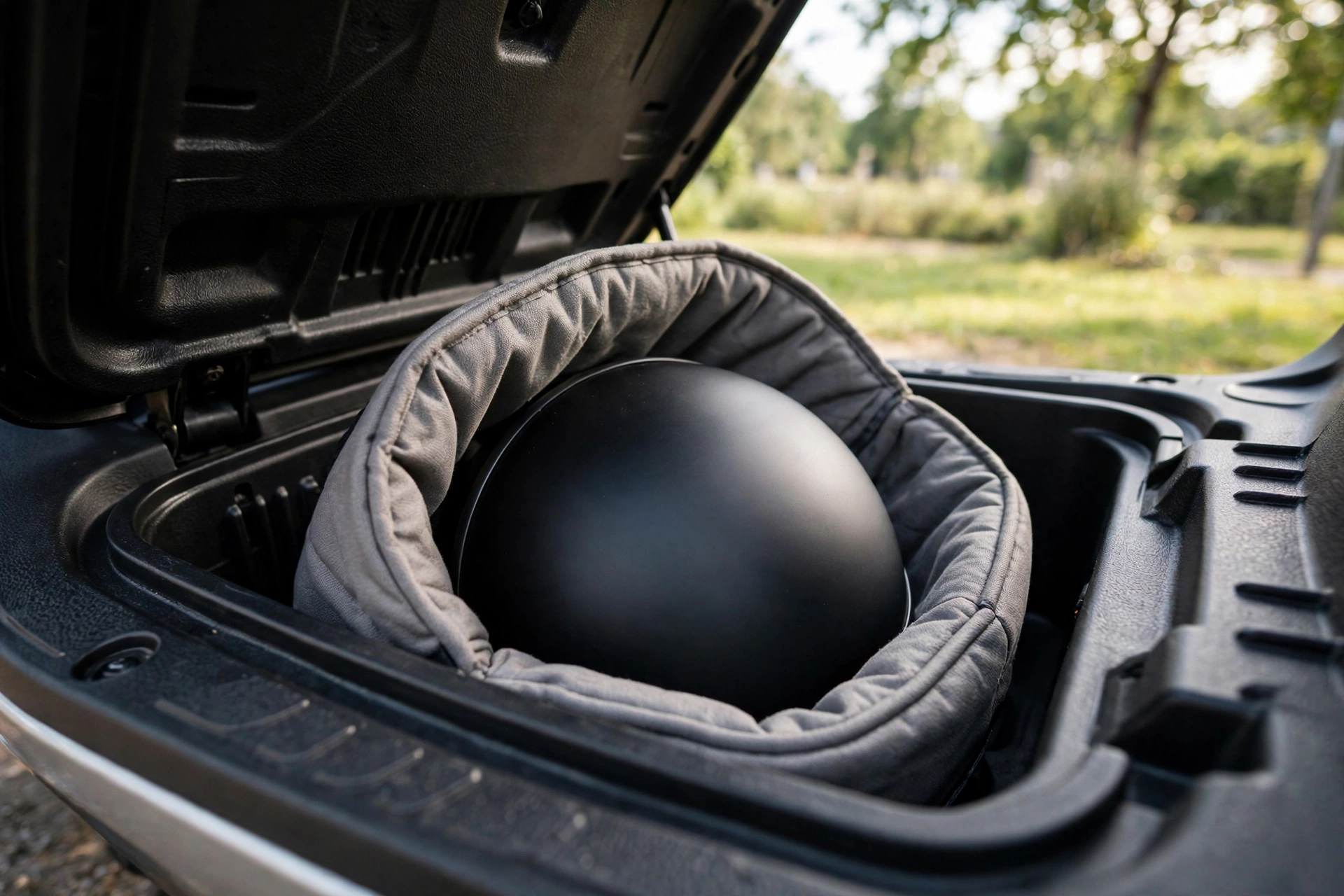
Think of the compartment as a hard plastic box that vibrates, and pack accordingly. The usual best position is crown-down or resting on one side, whichever lets the seat close without contact. Many riders line the compartment or use the helmet’s own soft carry bag — most helmets ship with one — which prevents the shell and visor from rubbing against plastic, buckles and anything else stored there.
Protect the visor specifically. It is the most scratch-prone part of the helmet, and a scratched visor is a real safety issue at night and in rain, not just a cosmetic one. Keep the visor closed, use the bag, and do not store loose hard objects — tools, locks, bottles — where they can bang against it. If you carry a disc lock or chain, give it its own pouch and its own corner.
Also mind the small stuff. Loose items migrate under vibration and can end up pressing into vents, slipping inside the helmet, or jamming the seat latch. A tidy compartment — helmet in its bag, everything else secured — means the helmet comes out exactly as it went in.
Can the Heat Under a Seat Harm a Helmet?
It deserves respect. A closed compartment on a scooter parked in summer sun can get genuinely hot, and helmet materials age faster with heat exposure. The energy-absorbing foam, comfort padding, adhesives and modern liner systems inside a helmet — including rotational systems such as MIPS — are all, in general terms, happiest at moderate temperatures — the same reason makers advise storing helmets away from heat sources at home.
For everyday use, normal stops are not a problem: a helmet under the seat during a commute, an errand or a coffee is seeing the conditions scooters are designed around. The case to avoid is the extreme one — a helmet sealed in a black scooter parked in direct sun for a full working day, repeatedly, all summer. If that is your routine, carrying the helmet with you or parking in shade is kinder to it.
Two related cautions. First, never store a helmet next to fuel, solvents or cleaning chemicals in the compartment; fumes and spills can attack foam and shell materials, and under-seat space near a fuel filler deserves extra care. Second, if the compartment also gets hot from the engine on your model, let the helmet habit be short stops rather than all-day storage after long rides.
What Are Your Options If the Helmet Won’t Fit?
The standard answer is a top case. A rear top box sized for helmets swallows most full face models, locks, and keeps the helmet out of the engine-warmed under-seat area. It changes the scooter’s looks and adds a little top weight, but for riders who park in public all day it is often the most practical upgrade they make.
Other workable options, roughly in order of convenience:
- A helmet lock or cable through the D-rings, secured to the scooter — good for short stops in low-risk places, though the helmet stays exposed to weather and tampering.
- Carrying the helmet with you in its bag — the safest option for the helmet, and common where riders park in busy areas.
- A cargo net or strap arrangement on models with a flat rear rack, for gentle short hops only, never as an all-day solution.
What not to do is force the seat down on an oversized helmet, ride with the helmet dangling from a hook by its strap near the wheel, or leave it balanced unsecured on the seat while parked. If under-seat fit matters to you, let it influence the next helmet purchase — compact-profile helmets exist precisely because scooter riders asked for them.
What Should You Check Before Closing the Seat?
Build a five-second routine. Helmet in its bag, positioned so nothing touches the visor. Straps tucked inside or folded so they cannot catch in the latch or hinge. Nothing loose and hard sharing the space. Then close the seat with a normal push, not body weight — if it resists more than usual, open it and find out why instead of leaning on it.
Check the seal too, in general terms: a seat that is being propped slightly open by an oversized helmet can let rain into the compartment, and a wet helmet liner is a miserable discovery at the end of the day. If the seat does not sit flush, the helmet does not fit — accept it and use one of the alternatives above.
Finally, remember the helmet when you park in the sun out of habit. The most common under-seat storage mistake is not damage from one hot afternoon; it is forgetting the helmet is in there for an entire holiday weekend in July. A quick mental note when you lock up keeps the helmet — and your next ride — in good shape.
Frequently Asked Questions
Q: My seat closes on my helmet but only if I push hard. Is that okay?
A: No. If you have to force it, the seat is loading the helmet’s shell, which strains the latch and can stress the helmet. Try the other orientation or the helmet without accessories fitted; if it still needs force, it does not fit — use a top case or carry it.
Q: Will under-seat storage scratch my helmet?
A: It can, mainly the visor, if the helmet sits loose against bare plastic or shares the space with hard objects. Using the helmet’s soft bag, closing the visor, and keeping tools and locks in a separate pouch prevents nearly all of it.
Q: Is it safe to leave my helmet under the seat all day at work?
A: In shaded or covered parking, generally fine. In direct summer sun, day after day, the heat build-up ages helmet materials faster, so carrying it in or choosing shade is the better habit. Never leave it stored alongside fuel or solvents.

Olivia
Writer at Helmet Today, covering helmet reviews, fit and riding safety.