Store an ATV helmet clean, fully dry, indoors in a cool, dark place, ideally in its bag or on a flat shelf — never in a hot shed, a damp garage corner, or hanging by its strap. Fifteen minutes of preparation at the end of the season decides whether the helmet comes out ready to ride or quietly aged and musty.
Helmets age fastest when they are stored badly. This guide covers the end-of-season clean, the storage spots that protect a helmet, the ones that damage it, and the checks to run before the first ride of the new season.
What Should You Do Before Storing an ATV Helmet?
Clean it first — never store a dirty helmet. Dried mud, dust, sweat, and trail grime keep working on padding, straps, and shell finishes all through the off-season, and a helmet put away dirty comes out stained, smelly, and harder to rescue. Wash the shell with mild soap and water and clean the liner as the maker directs.
Then dry it completely. Removable liners and cheek pads should be washed, rinsed, and air-dried fully before they go back in; the shell and fixed padding need time in moving air until no trace of damp remains. A helmet sealed in a bag while still damp is a mould farm by spring.
Finish with a quick inspection while you are handling it: straps for fraying, buckle action, liner for cracking or crumbling, shell for damage. It is far better to discover a tired helmet in autumn and replace it in the sales than to find out on the first spring ride.
Where Is the Best Place to Store a Helmet Between Seasons?
The ideal spot is indoors, at normal room temperature, dry, dark, and away from chemicals — a cupboard, a shelf in the house, or a clean corner of an internal room. Steady, mild conditions slow the ageing of the foam liner and the shell’s plastics more than anything else you can do.
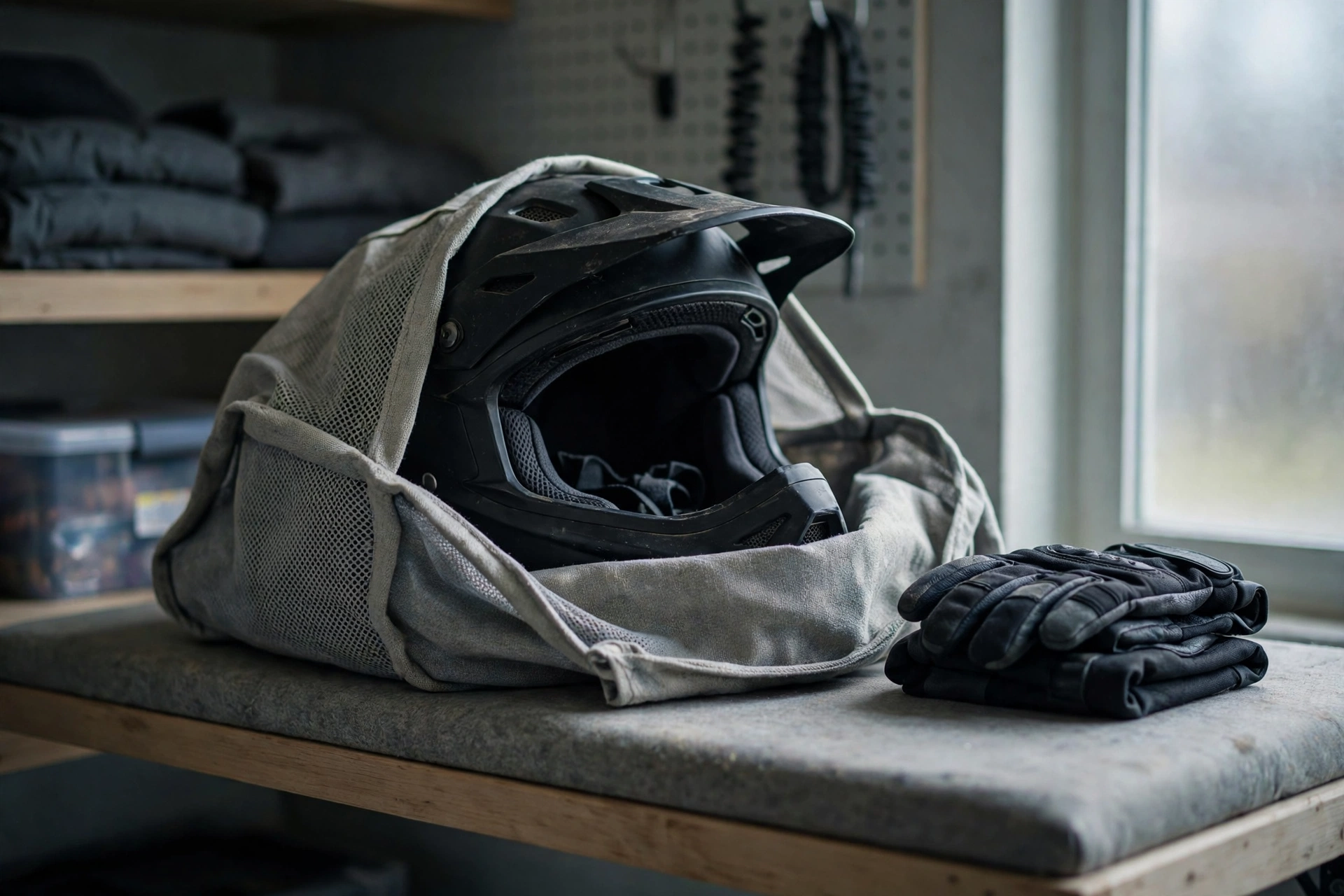
Rest the helmet on a flat surface or in its soft bag, sitting on its base as it would on your head. That keeps weight off the liner’s edges and prevents the slow distortion that comes from a helmet resting on its peak or crown for months.
Keep storage away from fuel, solvents, paints, and workshop chemicals, and away from their fumes. Petroleum vapours and solvents can attack helmet foam and shell materials without ever touching them, which is why the fuel-shelf corner of the shed is one of the worst addresses a helmet can have.
It also pays to look in on a stored helmet once or twice during the off-season. Air it for an afternoon, check that no damp has crept in, and confirm nothing has been stacked on it or nested in it — shed storage invites mice and insects, and a liner chewed or fouled over winter is a liner you will be replacing. Five minutes in mid-season saves a surprise on the first ride day.
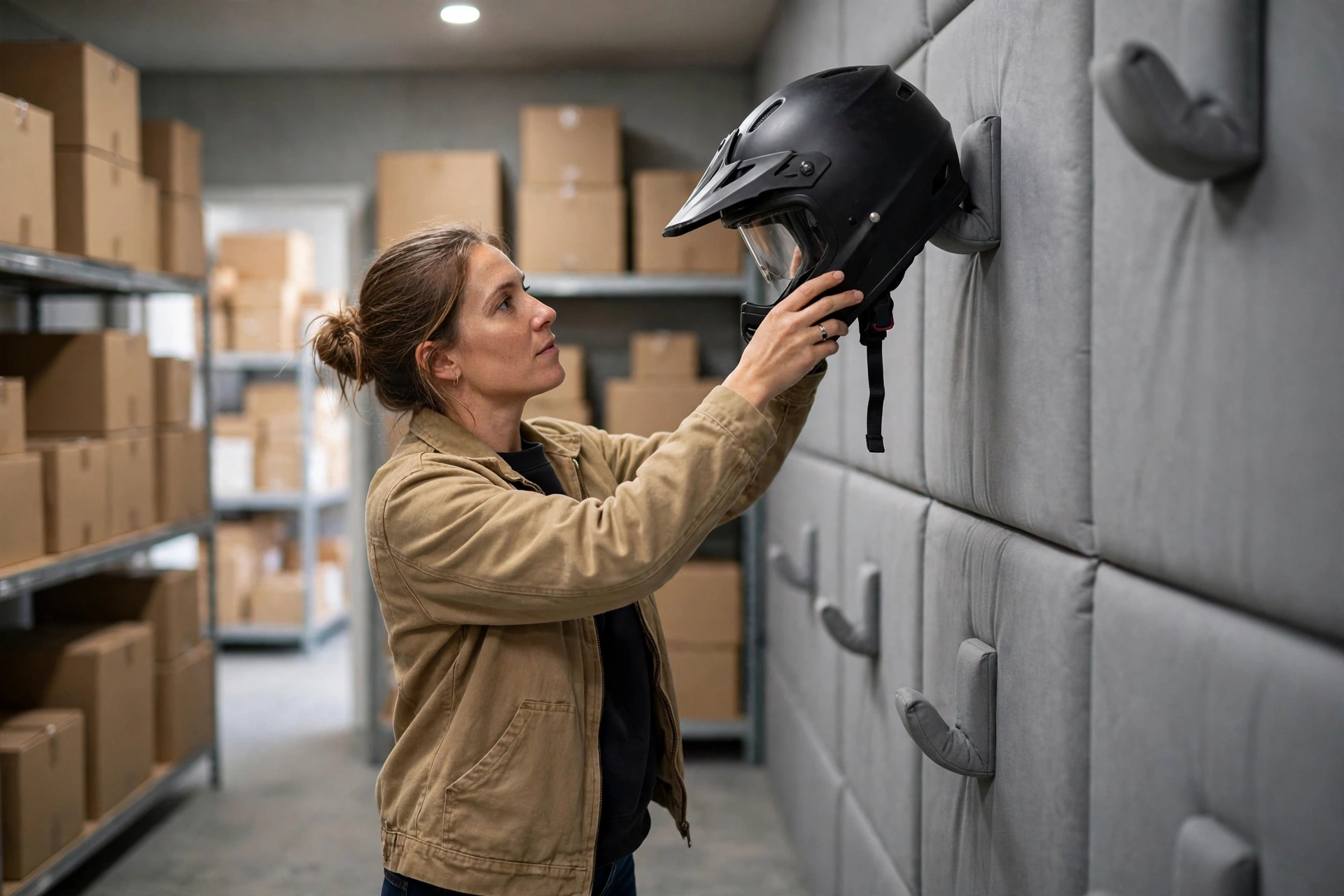
What Storage Spots and Habits Will Damage a Helmet?
Heat is the first enemy. A metal shed or a car boot in summer sun can reach temperatures that age foam and adhesives quickly, and repeated hot-cold swings through a season do their own damage. If a spot would be unpleasant for you to sit in all afternoon, it is too hot for a helmet.
Damp is the second. Garages and barns that sweat in winter grow mould in liners and corrode buckle parts. If your only storage is a garage, keep the helmet up off the floor, in its bag with the vents open, in the driest corner you have — and check it once or twice through the season.
The third enemy is load. Do not hang a helmet by its chin strap for months, stack gear on top of it, or use it as a storage bucket for gloves and tools. Slow, constant pressure deforms liners just as surely as a knock, and it is invisible until the fit feels wrong.
Should You Store a Helmet in Its Bag or on a Shelf?
Either works, as long as the basics are right. The soft bag most helmets come with protects against dust, light scratches, and sunlight, and it makes the helmet easy to move without dropping. Let the helmet dry fully before bagging it, and leave the bag slightly open if there is any doubt about damp.
An open shelf is fine in a clean, dry room, and some riders prefer it because air keeps circulating. Keep it out of direct sun through windows, away from pets that might claim it as a bed, and somewhere it cannot be knocked to the floor by passing elbows or curious kids.
Whichever you choose, the protective systems inside are ageing on a clock that storage can slow but not stop. Liners and features such as rotational-impact systems like MIPS rely on materials staying supple and correctly positioned — exactly what cool, dry, unloaded storage preserves.
How Do You Check a Stored Helmet Before the Next Season?
Start with the fit check: put the helmet on and confirm it still sits snug and level, with no new looseness or rocking. Padding can take a set in storage, and a helmet that has gone loose over winter will not protect as it should.
Then inspect piece by piece. Flex nothing — just look: foam under the liner for cracks, brittleness, or flaking; straps for fray and stitching; the buckle for smooth action; vents and peak mounts for brittle plastic; the shell for any crack or deep mark you do not remember.
Smell counts too. A liner that still smells musty after airing may have mould deep in the foam, and washing that does not fix it means replacement pads or a replacement helmet. Judge the helmet honestly: good storage preserves a good helmet, but it cannot rewind age, and a doubtful helmet should be retired, not ridden.
Frequently Asked Questions
Q: Can I store my ATV helmet in the garage over winter?
A: Only if the garage stays dry and reasonably mild. Keep it off the floor, in its bag, away from fuel and chemicals, and check it during the season. A hot or damp garage is better avoided — indoors is safer.
Q: Should I remove the liner before storing a helmet?
A: Wash and dry removable pads before storage, then refit them so the helmet keeps its shape. Storing pads separately in a dry bag is also fine, as long as nothing is put away damp.
Q: How long can a helmet sit in storage and still be safe?
A: Materials age slowly even in perfect storage. Judge a stored helmet by fit, foam condition, and straps rather than by the calendar alone, and be cautious with any helmet of unknown age.

Olivia
Writer at Helmet Today, covering helmet reviews, fit and riding safety.