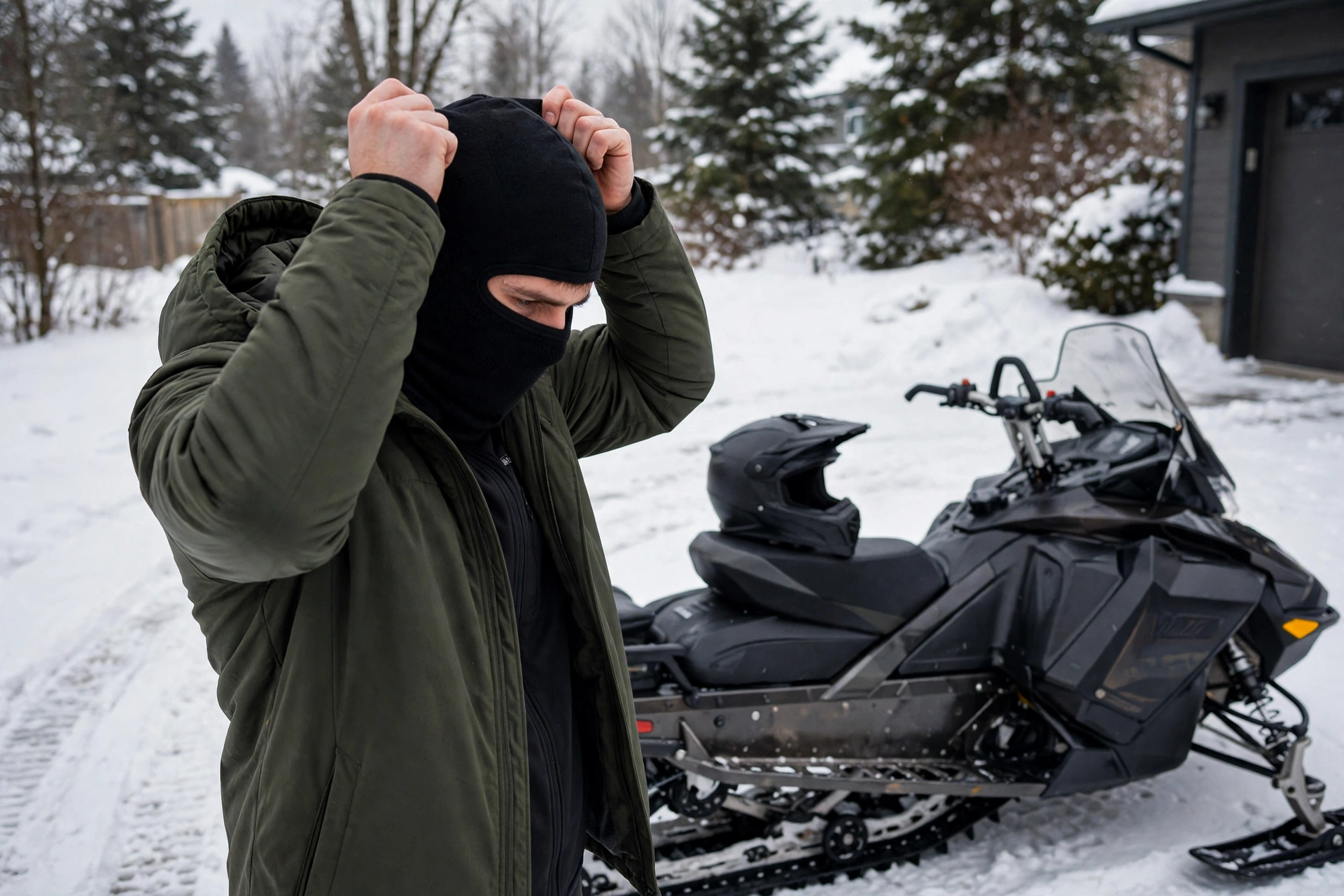
Wear a thin, smooth balaclava under your snowmobile helmet: pull it on first, settle it so the eye opening sits flat with no wrinkles across your forehead or cheeks, then put the helmet on over it and check the fit is still snug. The balaclava should add warmth without adding bulk — if it changes how your helmet fits, it is too thick or bunched up.
A balaclava worn badly causes pressure points, fogged shields, and a helmet that quietly sits wrong. Here is how to choose one and wear it properly.
What Kind of Balaclava Works Best Under a Helmet?
Thin beats thick. Look for a lightweight balaclava in a smooth synthetic or merino fabric with flat seams, made for wearing under helmets. Its job is to wick sweat, block the wind leaks at your neck and chin, and take the chill off your face — not to be a second layer of insulation with its own bulk.
Fit style matters. A balaclava with a hinged or stretch face panel lets you pull the front down under your chin at stops and back up for riding, and a longer neck skirt that tucks into your jacket collar seals the draughtiest gap in the whole setup — the one at the bottom of the helmet.
Avoid cotton, which holds sweat and turns cold, and avoid thick fleece ski balaclavas meant to be worn alone. Under a helmet they bunch, create pressure, and push the helmet up off its proper position.
How Do You Put a Balaclava On So It Fits Smoothly?
Sequence matters: balaclava first, helmet second, in front of a mirror the first few times. Pull the balaclava on and settle the eye opening so its edge sits flat all the way around, with the fabric smooth over your forehead and temples — no folds, no doubled-over seams, no hair trapped in lumps underneath.
Pull the lower part down under your chin and jaw rather than letting it ride up across your mouth, unless the design is meant to cover your nose and mouth. Smooth the neck skirt down and tuck it into your collar before the helmet goes on, so the jacket, balaclava, and helmet overlap in the right order.
Then slide the helmet straight down over it without dragging. A balaclava makes helmets glide on suspiciously easily; make sure the sliding does not roll the fabric at your forehead into a ridge — that ridge becomes a pressure point within the hour.
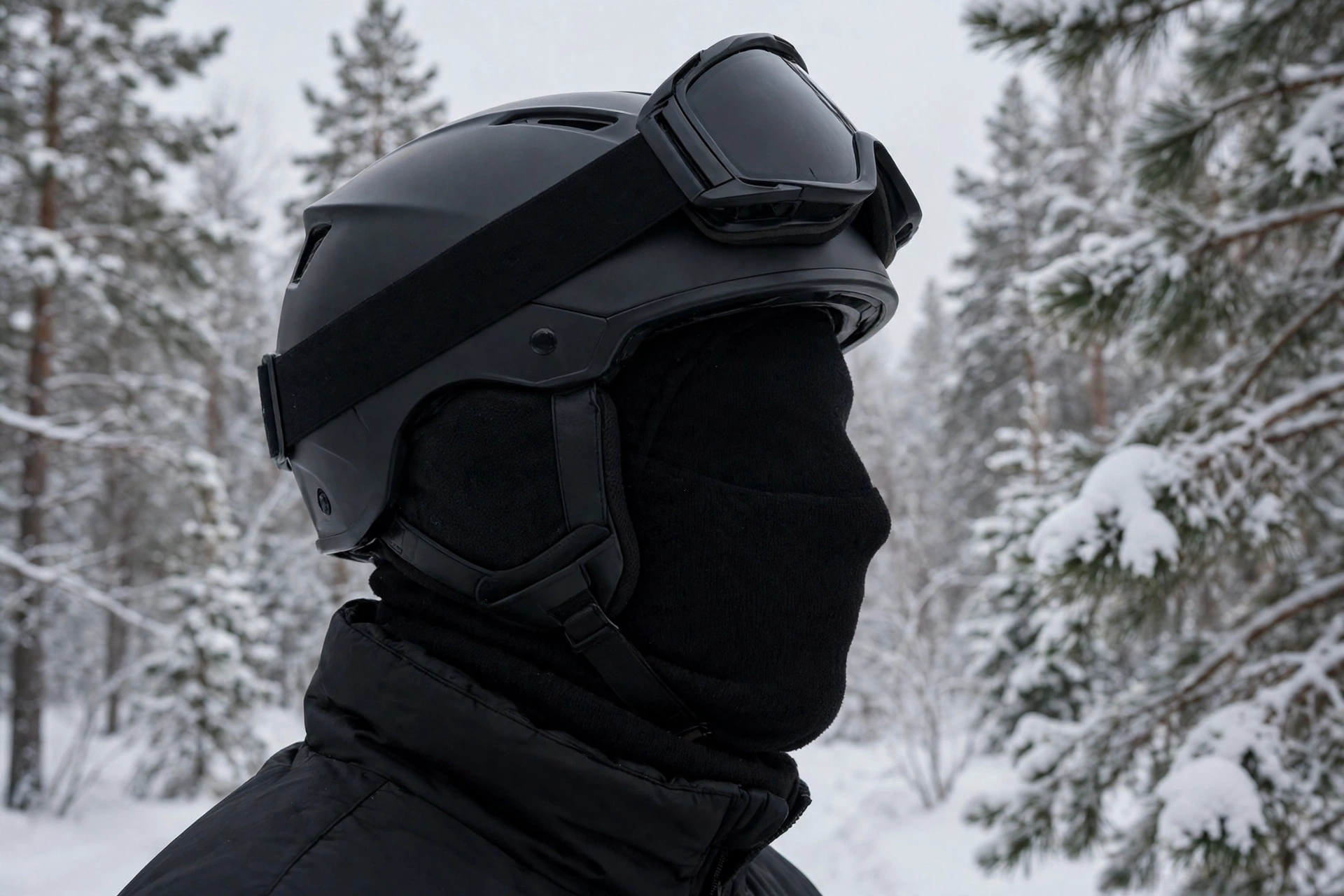
How Should the Balaclava Sit Around Your Eyes and Nose?
The eye opening should frame your eyes and sit below your eyebrows and above your cheekbones, flat against the skin. If its edge crosses where your helmet’s breath box or goggles seal, expect trouble: fabric trapped in a seal is a leak, and leaks at the nose are the fastest route to a fogged shield.
If your helmet has a breath box, the balaclava’s face opening should sit outside the box’s seal or fully inside it — never half under the edge. Many riders pull the balaclava’s mouth panel down below the chin and let the breath box sit against skin or the smooth fabric above it, keeping the seal continuous.
For goggle setups, check the foam sits on the balaclava evenly all the way around. Goggles over a balaclava is the classic mountain setup and works well, as long as no strap or fabric edge crosses the foam line and breaks the seal.
Will a Balaclava Change How Your Helmet Fits?
A thin one should not — and that is the test. After putting both on, do the normal fit checks: the helmet should sit level, feel evenly snug, and resist rocking when you shake your head. If it now perches high, feels loose enough to shift, or presses in new places, something is wrong.
The dangerous change is subtle looseness. Fabric compresses and lets the helmet move slightly, and a helmet that can shift cannot hold its liner — including systems like rotational-impact liners such as MIPS — in the position they are designed to work from. If you always ride with a balaclava, do your helmet fitting wearing it, and never size up to accommodate a thick one.
Pressure is the other change to hunt. Seams and wrinkles that feel like nothing at the trailhead become headaches by midday. If you find a hot spot, stop and re-smooth the fabric rather than enduring it — it takes thirty seconds and saves the ride.
Glasses wearers should do one extra check: put your glasses on after the balaclava and before the helmet, and confirm the arms sit flat against your temples rather than on a fold of fabric. Fabric under the arms both hurts and holds the glasses crooked, and a balaclava’s eye opening that rides too high can push frames upward every time you move your head. Sort the layering order at home — balaclava, glasses, helmet — and keep it the same every ride so it becomes automatic.
How Do You Stop Fogging When Wearing a Balaclava?
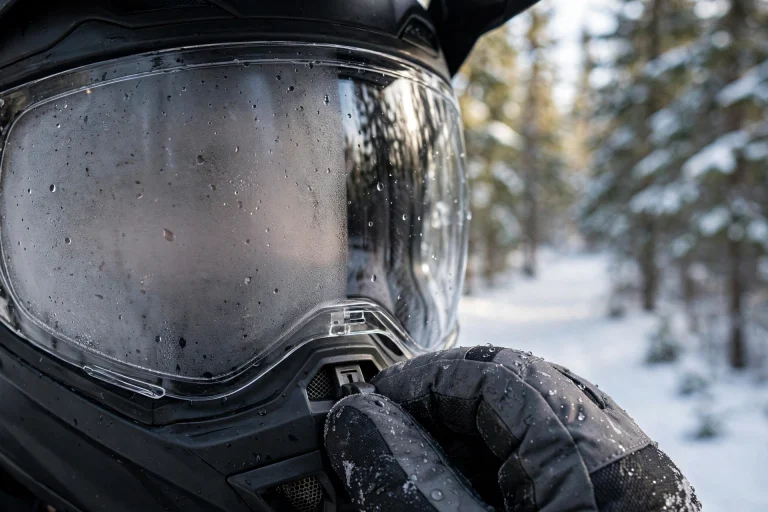
Most balaclava fogging is breath management. A balaclava covering your mouth and nose soaks up exhaled moisture and then steams it upward toward your shield or goggles. Pulling the face panel down under your chin so your breath goes straight into the helmet’s breath box solves most of it.
Keep seals clean and fabric out of them, as above, and manage effort: after digging out or a hard climb, crack the shield for the first minute back on the move so the accumulated moist air clears instead of condensing.
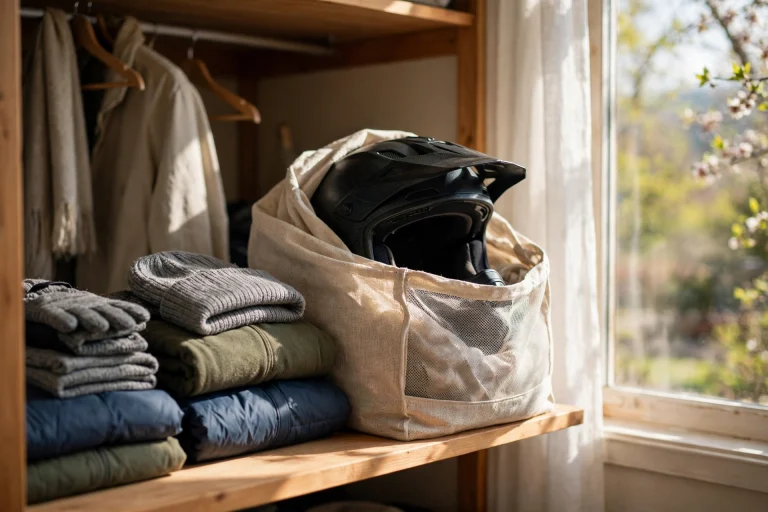
Finally, start dry. A balaclava that begins the day damp from yesterday’s ride will fog everything and chill your face. Carry a spare on multi-day trips and dry the used one each night — small discipline, large difference.
Frequently Asked Questions
Q: Should a balaclava cover my nose and mouth under a helmet?
A: Only if it does not break the breath box seal or funnel breath at your shield. Many riders pull the panel under the chin and let the breath box handle the breath — that combination fogs least.
Q: Do I need a bigger helmet to wear a balaclava?
A: No. A helmet should be fitted snug, and a thin balaclava adds almost no size. If a balaclava makes your helmet feel wrong, the balaclava is too thick or poorly smoothed — do not size up.
Q: What material is best for a balaclava under a snowmobile helmet?
A: Thin synthetic or merino with flat seams. Both wick sweat and stay warm when damp, unlike cotton, which holds moisture and turns cold against your face.

Olivia
Writer at Helmet Today, covering helmet reviews, fit and riding safety.