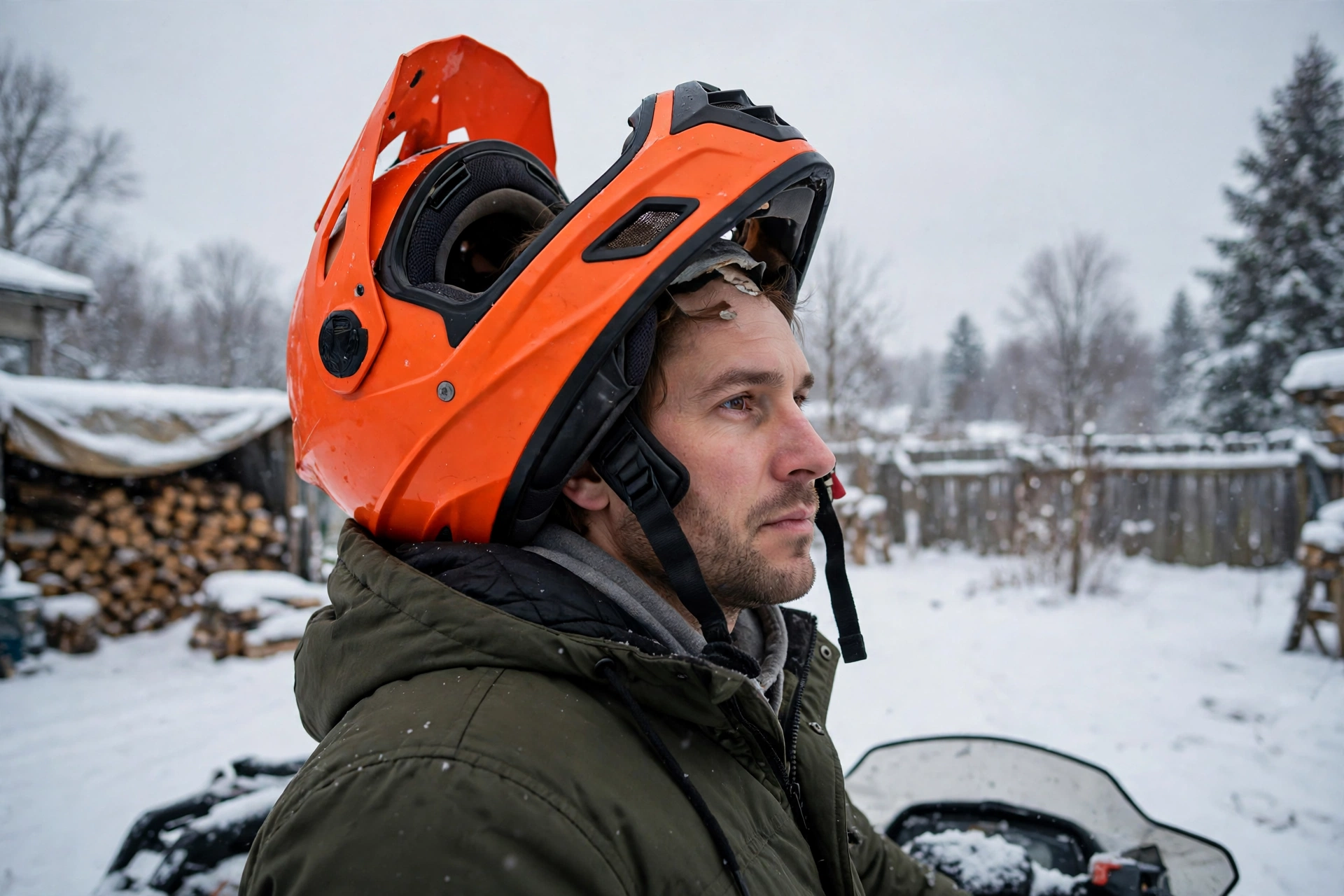
A snowmobile helmet is too big if it moves when your head does not: it should not rock side to side, lift at the back, twist when you grab the chin bar, or creep down over your eyes as you ride. A correct fit feels snug and even all the way around, moves your scalp with it when you push the shell, and stays planted over bumps and wind. If you can feel the helmet shift in normal riding, it is not a comfort quirk — it is a fit problem worth fixing.
This guide gives you the checks to run at home, explains why winter gear complicates them, and sets out your real options when a helmet turns out to be too large.
What Fit Checks Can You Do at Home?
Start with the shake test. Fasten the strap properly, then shake your head side to side and nod firmly. The helmet should follow your head as one unit, with the padding gripping your cheeks and crown. If the helmet lags, rocks, or clunks against your skull, it is too big — or the wrong head shape for you.
Next, the roll-off check. With the strap fastened, push upward on the back edge of the helmet and try to roll it forward off your head, then push the chin bar up and back. A well-fitted helmet resists strongly; one that rolls noticeably or feels like it could come off in a tumble is too loose to trust.
Finally, the pressure check. A new, correct helmet feels uniformly snug, sometimes with firm cheek pressure, but never with a single painful hotspot on the forehead or crown. Even snugness that feels slightly strict is normal and eases as padding beds in; looseness never improves with wear.
How Should the Helmet Move When You Push It?
Grab the chin bar and try to move the helmet left, right, up, and down. What you want is skin movement: the helmet and your scalp should move together, with your cheeks and forehead skin pulled along by the padding. If the shell slides over your hair while your head stays still, there is space inside that should not be there.
Check the back and sides specifically, because snowmobile helmets hide fit problems there. A helmet can feel tight at the cheeks — especially with a balaclava — while being loose at the crown and back, which is exactly where looseness lets it rotate in a fall. Press the rear of the shell forward: if the front drops toward your eyes, the back is too roomy.
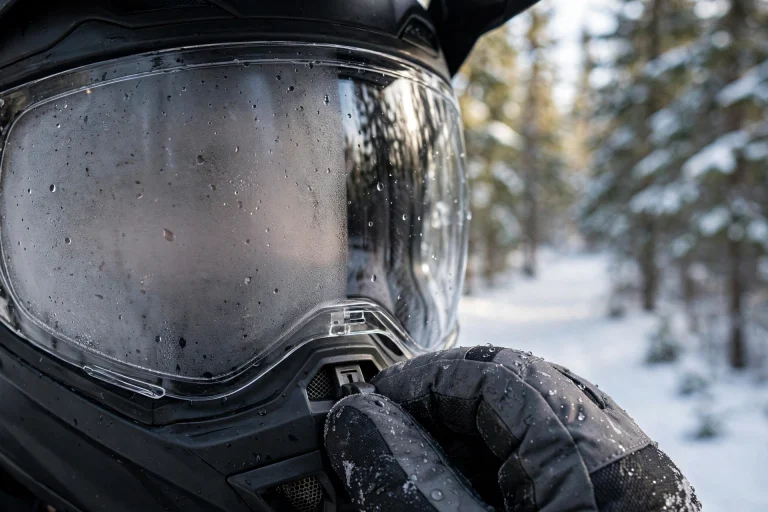
Also check with the shield working. Open and close it, and look for the helmet shifting as you do. On the trail, vibration and wind pressure are constant, and a helmet that moves during a simple shield flip at home will wander all day on the sled.
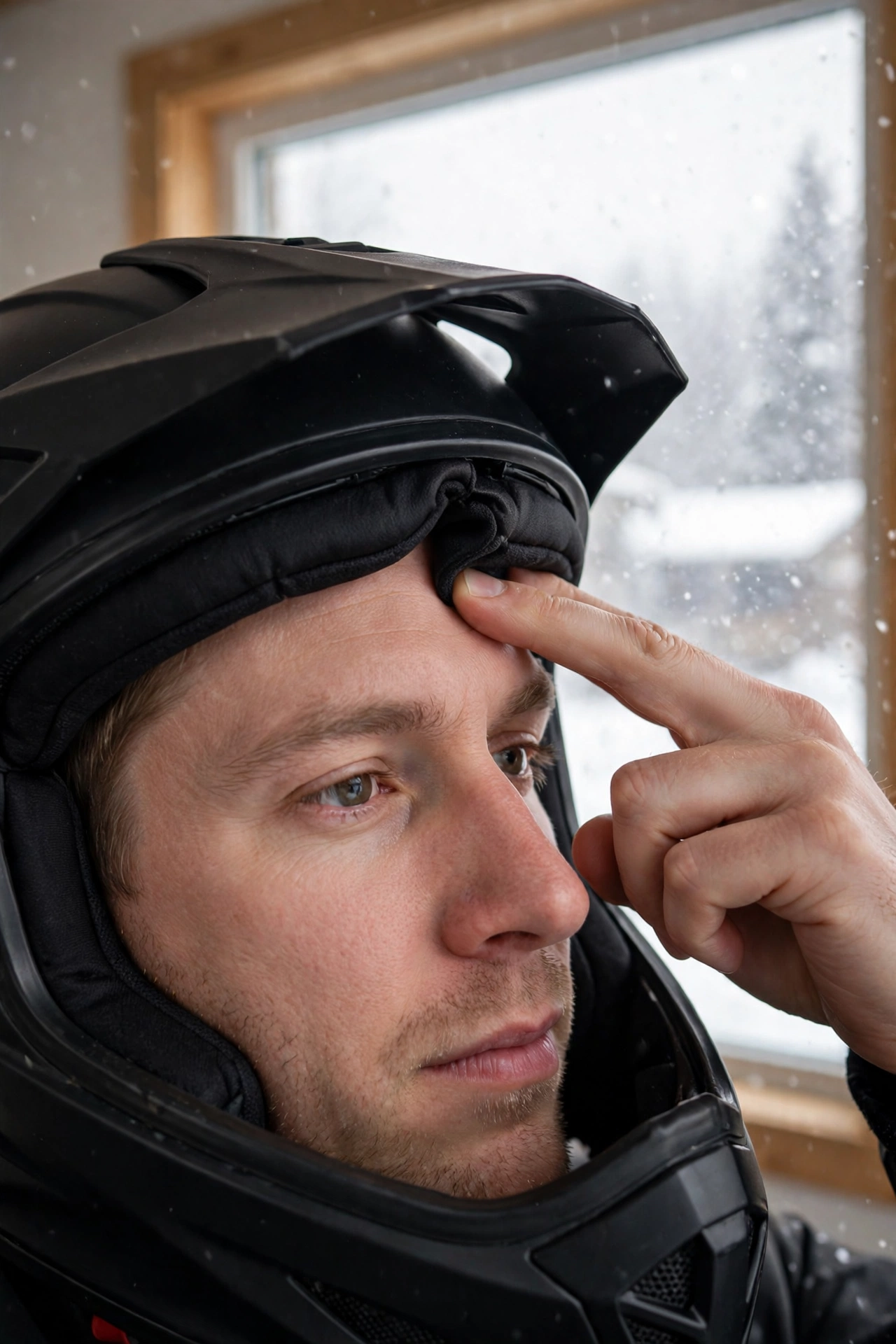
Why Does Cold-Weather Gear Change the Fit?
A balaclava adds a layer between your head and the padding, and it cuts both ways. A thick balaclava can make a too-big helmet feel acceptable in the shop and then compress and shift on the trail, while a thin one under a correctly sized helmet changes the fit only slightly. Always do your fit checks wearing the exact balaclava you ride in.
Cold itself matters too. Padding foams feel firmer in deep cold, so a helmet checked in a warm living room can feel different — usually tighter-feeling but sometimes oddly loose at soft points — after an hour outside. Materials your helmet uses behave one way at room temperature and slightly differently at trail temperature, which is worth remembering before you condemn or keep a borderline fit.
Your body changes as well. In cold air you may wear your hair differently, add a neck gaiter that pushes the helmet up from below, or ride with a jacket collar that lifts the helmet’s rear edge. All of these move a marginal helmet around, and none of them show up in a summer fitting.
Can Padding or a Balaclava Fix a Too-Big Helmet?
Sometimes, at the margins. Many helmets accept different thicknesses of cheek pads and crown liners, and going one step thicker can take up a small amount of space and turn a slightly loose helmet into a correct one. This is a legitimate fix when the shell size is right and the looseness is minor and even.
It does not fix a wrong shell size. If the helmet is a full size too big, thicker pads create a helmet that feels tight at the cheeks while still loose at the crown — the worst combination, because it feels fitted while moving where it matters. Stuffing extra layers, thick balaclavas, or beanies inside to fill space is not a fix at all: it adds slip planes and changes how the helmet sits.
Remember what the fit is for. The helmet’s liner manages impact energy and systems such as rotational-impact liners like MIPS manage twisting forces — but all of it assumes the helmet stays in position on your head during the crash. A helmet that rotates freely has already given up part of its protection before any technology inside it gets to work.
What Should You Do If Your Helmet Is Too Big?
If it is new, exchange it. Helmet sizing varies by brand and internal shape, so a smaller size in the same model — or a different model with a rounder or narrower internal shape — often solves the problem completely. Buy from sellers who allow fit exchanges on unworn helmets, and do your checks before the first ride, not after.
If it is a helmet you already own and pads cannot honestly fix it, replace it. That is an annoying expense, but a too-big helmet is genuinely less protection, not just less comfort, and it also works worse day to day: more wind noise, more cold leaks, more shield fogging from poor sealing, more fatigue from it shifting around.
And measure properly before the next purchase. Wrap a soft tape around your head at the largest point, just above your eyebrows and ears, and use the maker’s size chart as a starting point — then confirm with the shake, roll-off, and push tests above, balaclava on, because the chart gets you close and the tests tell you the truth.
Frequently Asked Questions
Q: Is a slightly loose snowmobile helmet really dangerous?
A: Yes. In a fall a loose helmet can rotate, shift off the area it should protect, or in the worst case come off. It also seals badly, so it is colder, noisier, and fogs more. Snug and even is the standard, not a preference.
Q: My helmet fits without a balaclava but feels tight with one. Is it too small?
A: Not necessarily — a thin balaclava should only make a correct fit feel slightly firmer. If it creates a forehead hotspot or headache, try a thinner balaclava first; if the pain persists, the helmet’s shape or size is wrong for you.
Q: Will a new helmet loosen up as it breaks in?
A: A little. Comfort padding typically relaxes slightly in the first hours of wear, which is why a new helmet should start snug. It will not shrink to fix looseness — a helmet that is loose when new only gets looser.

Olivia
Writer at Helmet Today, covering helmet reviews, fit and riding safety.