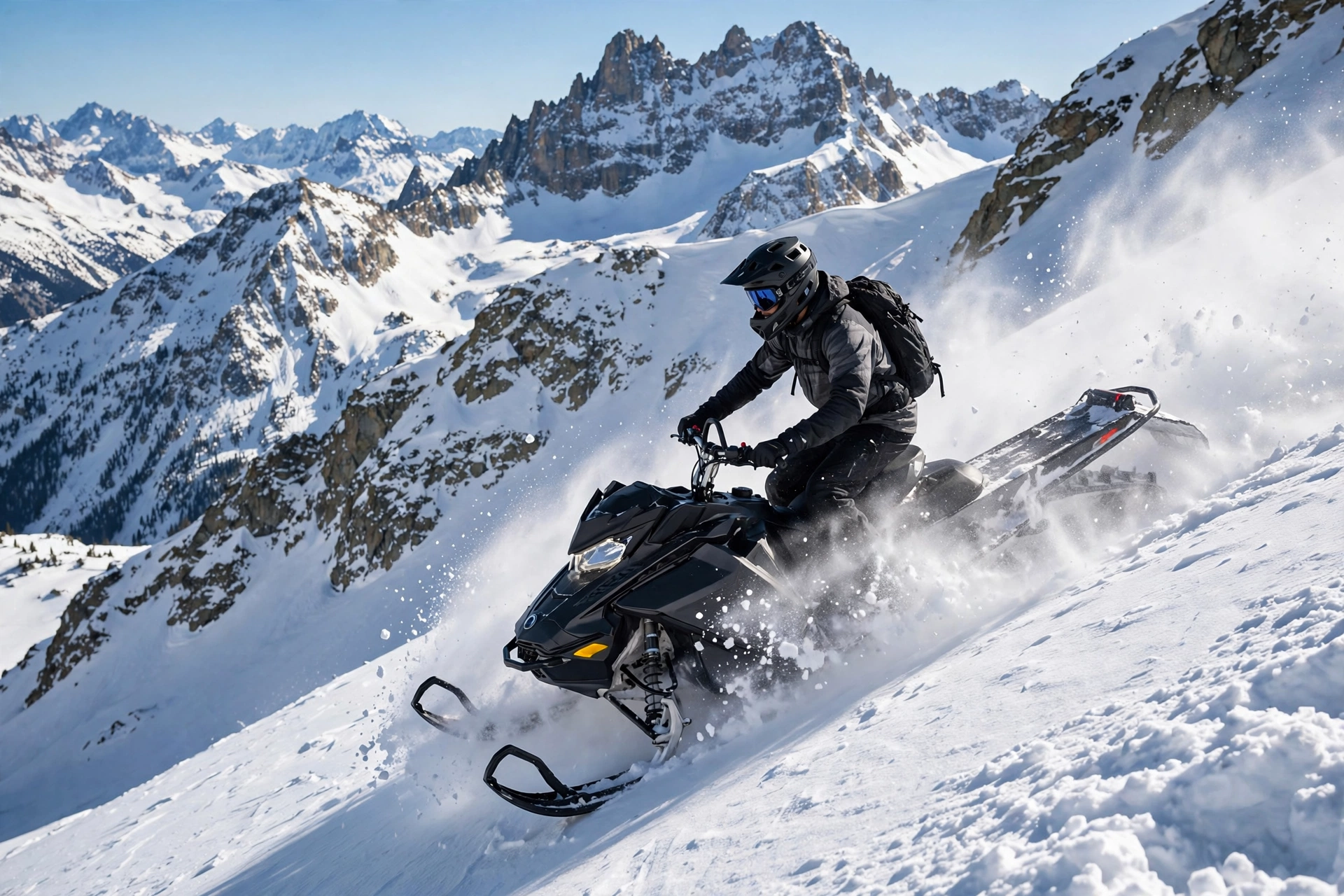
For backcountry snowmobiling, look for a helmet that puts fog control and low weight first: most backcountry riders choose a light motocross-style helmet with well-sealed dual-pane goggles and a spare pair, generous closable venting, and a fit that stays secure through constant movement — because backcountry riding is high-effort, stop-start, and far from help, and a helmet that fogs or exhausts your neck will end your day early.
Backcountry riding asks things of a helmet that trail riding never does. This guide works through the setup, the features that earn their weight, and the ones that do not.
Why Does Backcountry Riding Demand More From a Helmet?
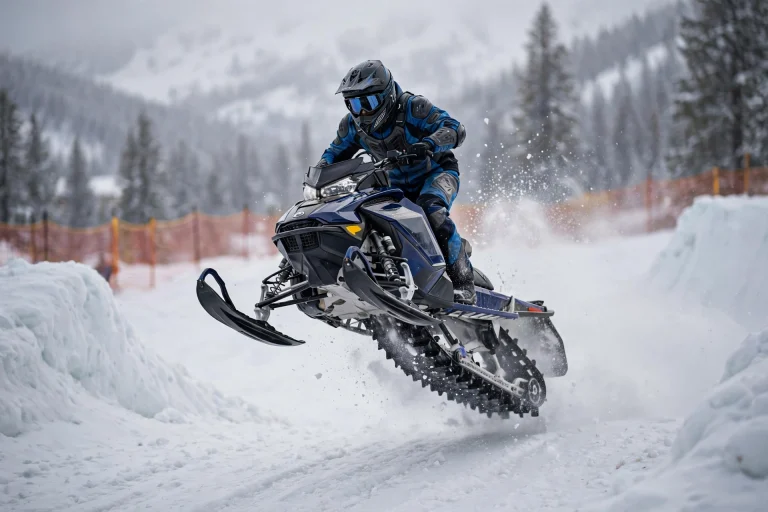
Backcountry riding is physical. You ride standing, throw the sled around, dig out stuck machines, hike short climbs, and work hard at altitude — then sit still on a ridge in wind while you glass a slope. Your helmet has to perform through huge swings in effort and temperature, often for long days, miles from the truck, where a fogged, frozen setup is a genuine problem and not just an annoyance.
Conditions are harder too. Deep snow means constant spray, tree riding means branches and close contact, and weather changes faster in the mountains. Your eye protection gets plastered, your vents get packed, and everything you wear is tested by repetition rather than by one dramatic moment.
Reliability is the final demand. In the backcountry there is no dealer, no spare helmet in the trailer at the next stop, and no short ride home. A setup built from simple, field-fixable parts — and backed by spares you carry — beats a clever setup that fails completely when one mechanism breaks.
Should You Choose a Shield Helmet or a Goggle Setup?
Most backcountry riders choose goggles, for the same reason racers do: effort. Hard riding produces more breath and heat than a shield and breath box can clear, and a fogged shield at the wrong moment — threading trees, side-hilling above exposure — is a safety problem. Goggles vent better under exertion, and when they ice, a spare pair from an inside pocket restores full vision in seconds.
The goggle system has to be a system. The goggle frame must seal into the helmet’s eyeport with no gaps, the foam must be substantial enough for cold, and you need at least one spare set — many experienced riders carry two, one clear or light-tinted and one for brightness. A goggle that almost fits the helmet is a fog and frostbite gap waiting for altitude.
A shield helmet still has backcountry defenders, mainly riders in very cold, lower-effort terrain — northern, flatter backcountry where the riding is travel more than athletics. If that is your backcountry, a well-sealed shield helmet, ideally heated, is a rational choice. Be honest about which backcountry you ride: the athletic majority is goggle country.
How Much Does Weight Matter on Long Backcountry Days?
More than anywhere else in snowmobiling. Backcountry riders move their heads constantly — scanning terrain, checking on the group, looking uphill for hazard — while their necks and shoulders are already working from riding standing and handling the sled. A heavy helmet multiplies that load for eight or more hours, and neck fatigue by mid-afternoon is a real, day-shortening problem.
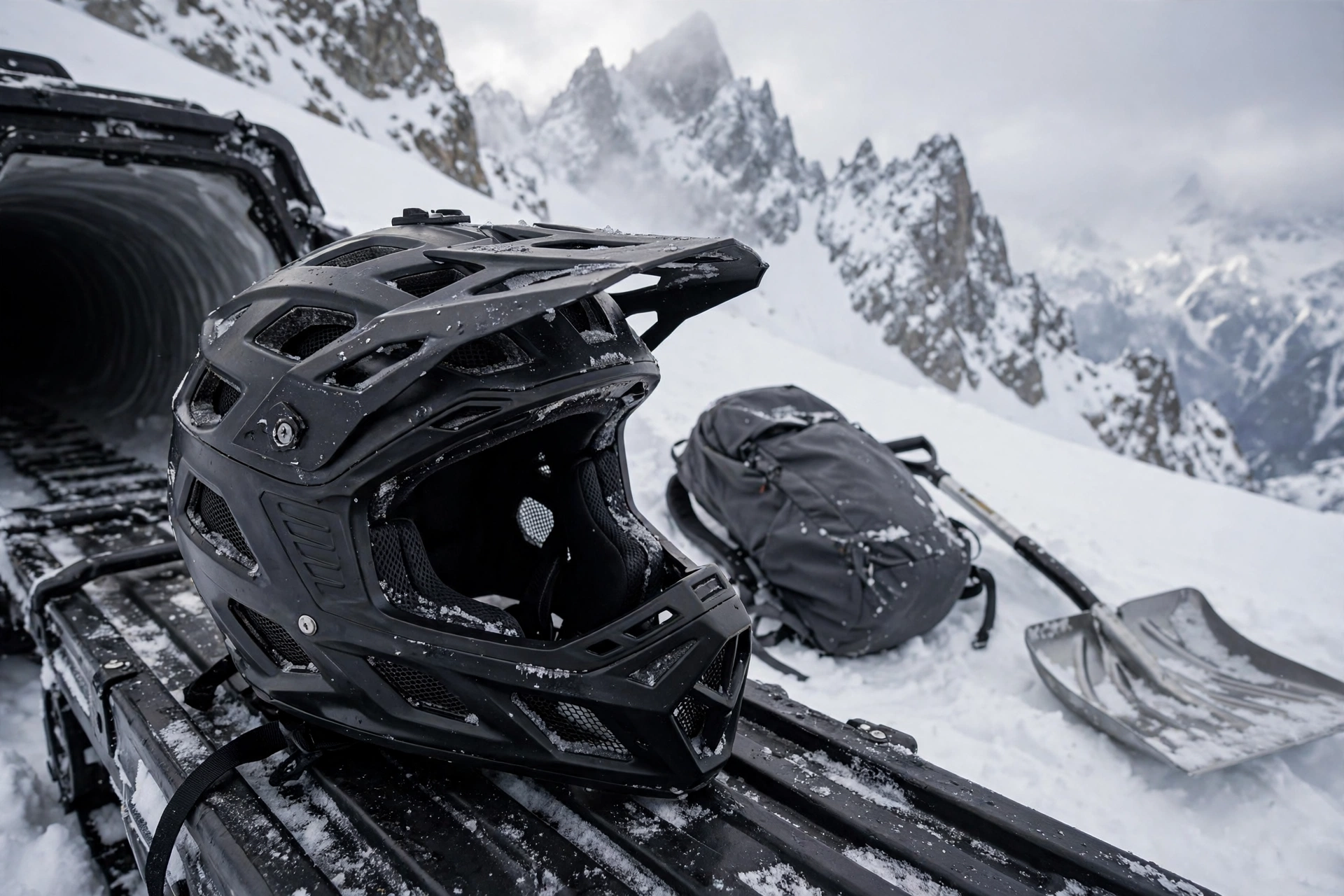
This is one reason the motocross-style helmet dominates backcountry use: without shield mechanisms and heavy sealing hardware, it is typically the lighter design. When you compare helmets, weigh the complete setup you will wear — helmet, goggles, any breath box, and accessories mounted on it — because cameras and lights add up on the part of you that can least afford it.
Weight is never a reason to compromise on the helmet’s core job, though. The shell, energy-absorbing liner, and in many modern helmets rotational-impact systems such as MIPS manage the impacts that backcountry terrain delivers — hidden stumps, rocks, and tree wells are exactly where that protection earns its keep. Choose the lightest helmet that fits you properly and is properly certified, not the lightest helmet at any cost.
What Ventilation and Fog Control Do You Need?
Venting you can operate with gloves, and close. Backcountry effort swings wildly — maximum output climbing, then near-zero output descending or waiting — and your helmet has to dump heat in the first phase and keep warmth in the second. Big, simple vent sliders you can find by feel, that do not pack solid with snow, are worth more than a maze of small ports.
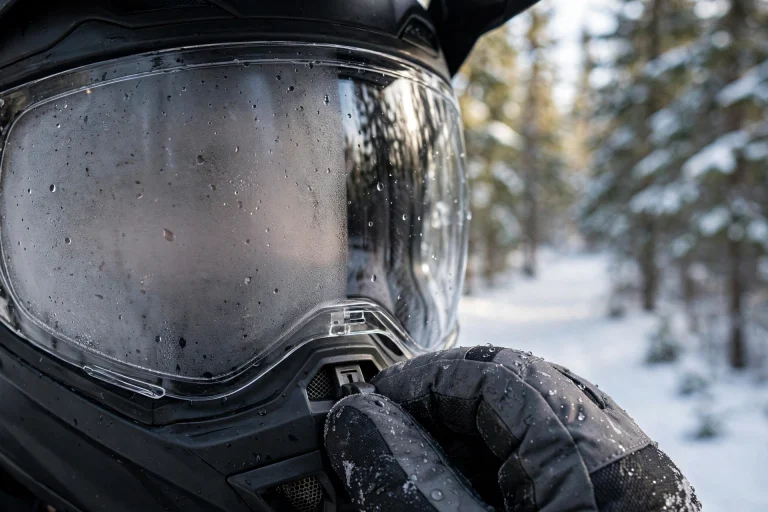
Fog control is a chain, and every link matters: the goggle seal at your face, dual-pane lenses with an intact seal, vent foam that filters snow without blocking air, and a breath route that keeps exhalation out of the goggle cavity — a breath deflector or mask in the chin bar earns its place here. Break one link and the chain fails, which is why backcountry riders test combinations at home rather than improvising at the trailhead.
Carrying discipline is part of fog control too. Spares kept warm and dry inside your jacket, a soft cloth for lenses, and the habit of swapping early — at the first hint of icing, not after vision is gone — keep small problems small all day.
What Else Should a Backcountry Helmet Handle?
Fit with your safety gear. Your helmet has to work with your avalanche transceiver routine, your pack’s straps and airbag if you carry one, and the collar of your shell — check the helmet does not get pushed around when you look up, bend down, or shoulder the pack. Helmet fit checks done in the garage should include the full kit you actually wear.
Communication and visibility are worth a thought. Many backcountry groups ride with radios, and helmet setups that accept speakers or work with your radio’s headset save fumbling. High-visibility colors and reflective details help your group keep track of you in trees and flat light — a small thing that matters when someone is counting helmets on a slope.
Finally, plan for the helmet’s whole life, not just its first season. Backcountry helmets get knocked, dropped, and crashed more than trail helmets do. Inspect yours honestly after every impact, keep the liner and goggle foam fresh, and retire it on condition — the middle of nowhere is the worst place to be wearing a helmet you no longer trust.
Frequently Asked Questions
Q: Why don’t backcountry riders use heated shields?
A: Some do, but most backcountry exertion fogs shields faster than heating can help, the cord ties you to the sled, and the system is one more thing to fail far from help. Goggles with warm spares are simpler, lighter, and easier to fix in the field.
Q: How many spare goggles should I carry in the backcountry?
A: At least one spare pair, kept warm inside your jacket; many riders carry two, with different lenses for bright and flat light. A spare that is frozen or full of snow is not a spare, so where you carry them matters as much as having them.
Q: Is a lighter helmet less protective for backcountry riding?
A: Not by itself. In general terms, certified helmets meet the same kind of impact standards regardless of small weight differences — weight mostly reflects design and features. What protects you is certification, correct fit, and a helmet that has not already taken a crash.

Olivia
Writer at Helmet Today, covering helmet reviews, fit and riding safety.