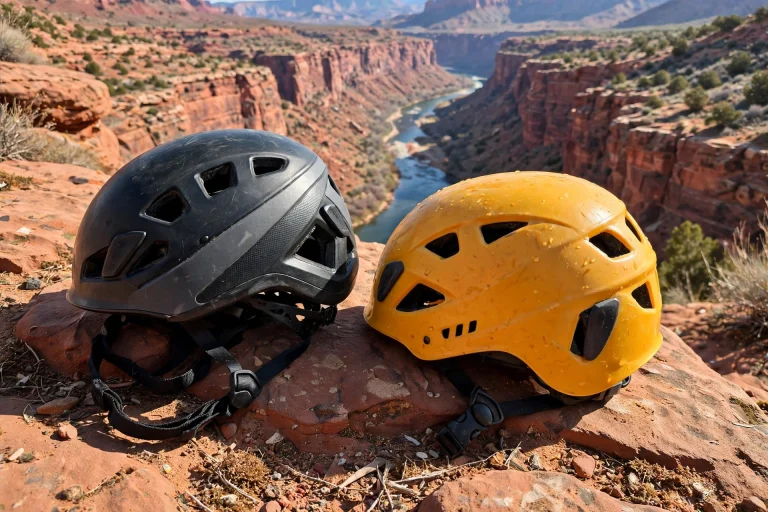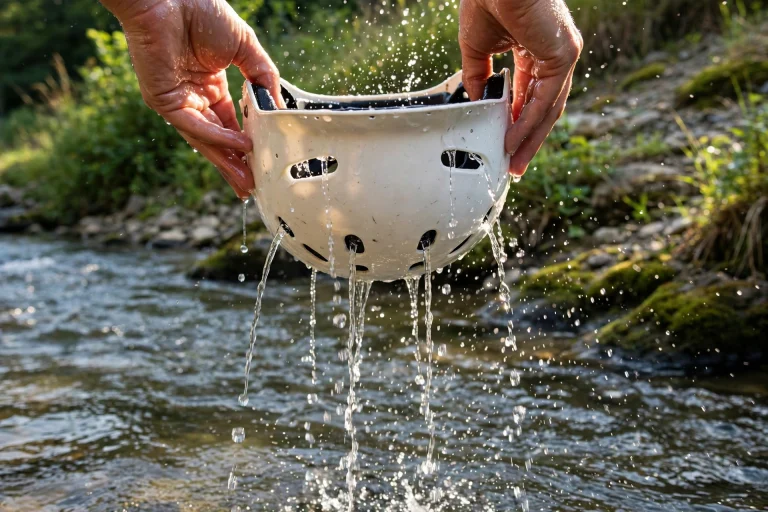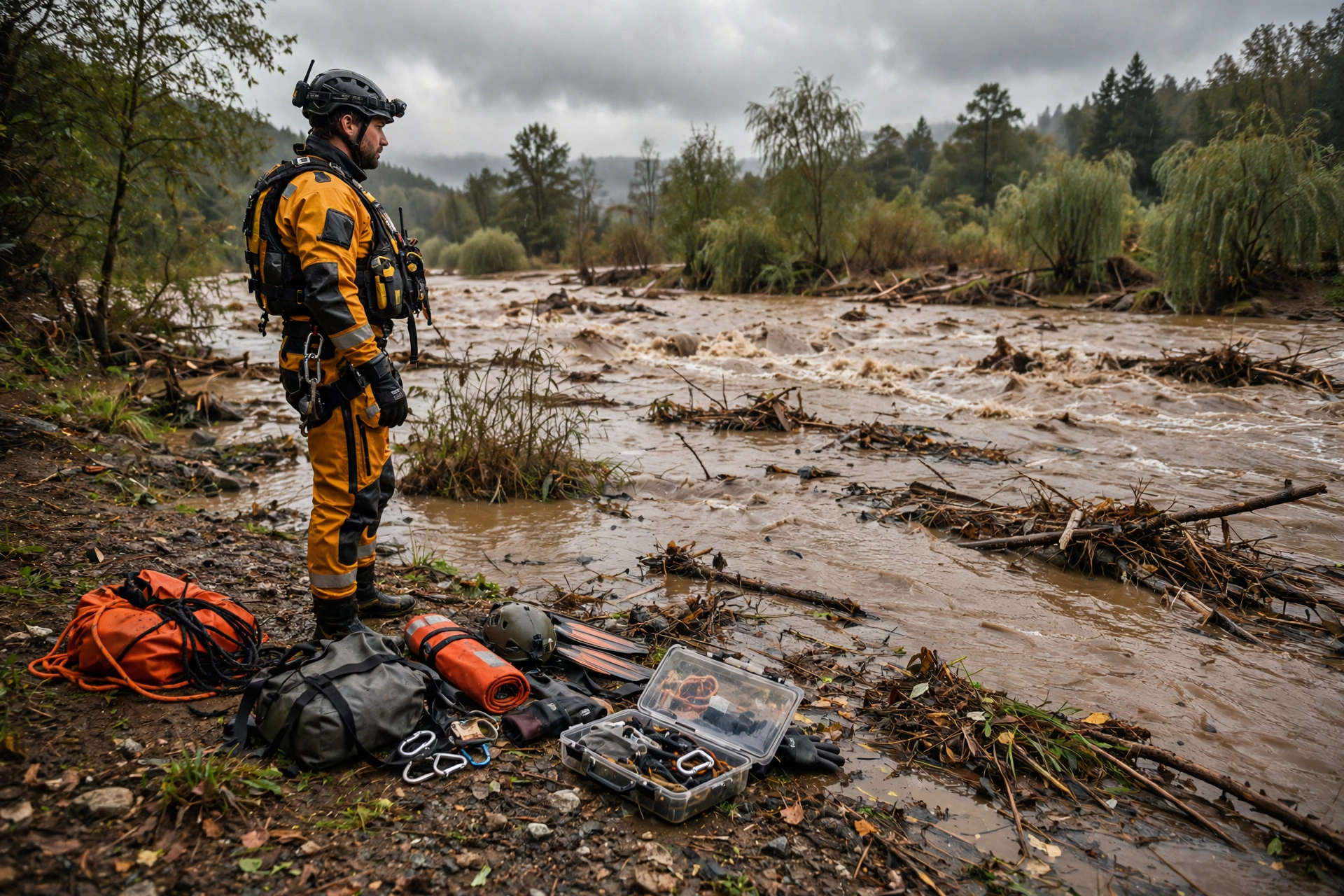
A swiftwater rescue helmet is different because it is built for rescuers who work in moving water on purpose: it offers fuller head coverage including the ears and back of the head, a high-retention strap system that stays on in current and during victim contact, fast drainage, and a shell and liner rated in general terms for repeated whitewater impacts rather than a single crash. It is professional safety kit, designed for the worst swim on the river, not a recreational paddling helmet with a rescue label.
Recreational paddlers and professional rescuers face the same river very differently. A paddler tries to avoid a swim; a rescuer wades, swims, and works in the current deliberately, often while managing a panicking victim. This guide explains what makes a rescue helmet different, feature by feature.
What Is a Swiftwater Rescue Helmet Used For?
It protects people whose job takes them into floodwater and fast rivers: firefighters, swiftwater rescue technicians, river guides, and rescue teams responding to vehicles, homes, and people caught by rising or moving water. In that setting the helmet goes on before the rescuer enters the water and stays on through wading, swimming, boat work, and rope work.
The hazards are specific. A rescuer’s head is exposed to rocks in current, debris carried by floodwater — branches, timber, and worse — low bridges and culverts, and contact with boats, boards, and the victim’s own equipment. Unlike a paddler, a rescuer may be stationary in the flow holding position, tethered on a line, or being lowered toward a victim, so impacts can come from any direction, including from behind.
That all-direction, work-in-the-water reality explains the design. A rescue helmet is not about style or minimal weight for a day of recreation; it is about coverage, retention, and reliability for someone who cannot choose to simply swim to the bank and stop.
How Is a Rescue Helmet Different From a Kayaking Helmet?
Coverage is the clearest difference. Recreational whitewater helmets often favour a lighter, lower cut, while rescue helmets typically extend lower at the back and sides, protecting the occipital area at the back of the skull and covering the ears. Ear coverage guards against hard water strikes and debris, and full coverage matters for a rescuer facing impacts from unpredictable directions.
Retention is the second difference. A rescue helmet’s strap system is built to a higher expectation: multiple attachment points, a secure chin strap, and a fit system designed to stay put in powerful current, through a full swim, and while a victim grabs or pulls at the rescuer. A helmet that comes off mid-rescue leaves its wearer exposed at the worst possible moment, so staying on is treated as a core protective feature, not a comfort detail.
The third difference is purpose of rating and build. In general terms, rescue helmets are tested to recognised whitewater helmet standards and are expected to handle repeated knocks across a working life of training and callouts, with shells, liners, and hardware that tolerate constant immersion and rough handling. Many also add rescue-specific details — high-visibility colours, rails or mounts for a light, and goggle or face-shield options — that a recreational helmet rarely offers.
Why Do Rescue Helmets Cover the Ears and Back of the Head?
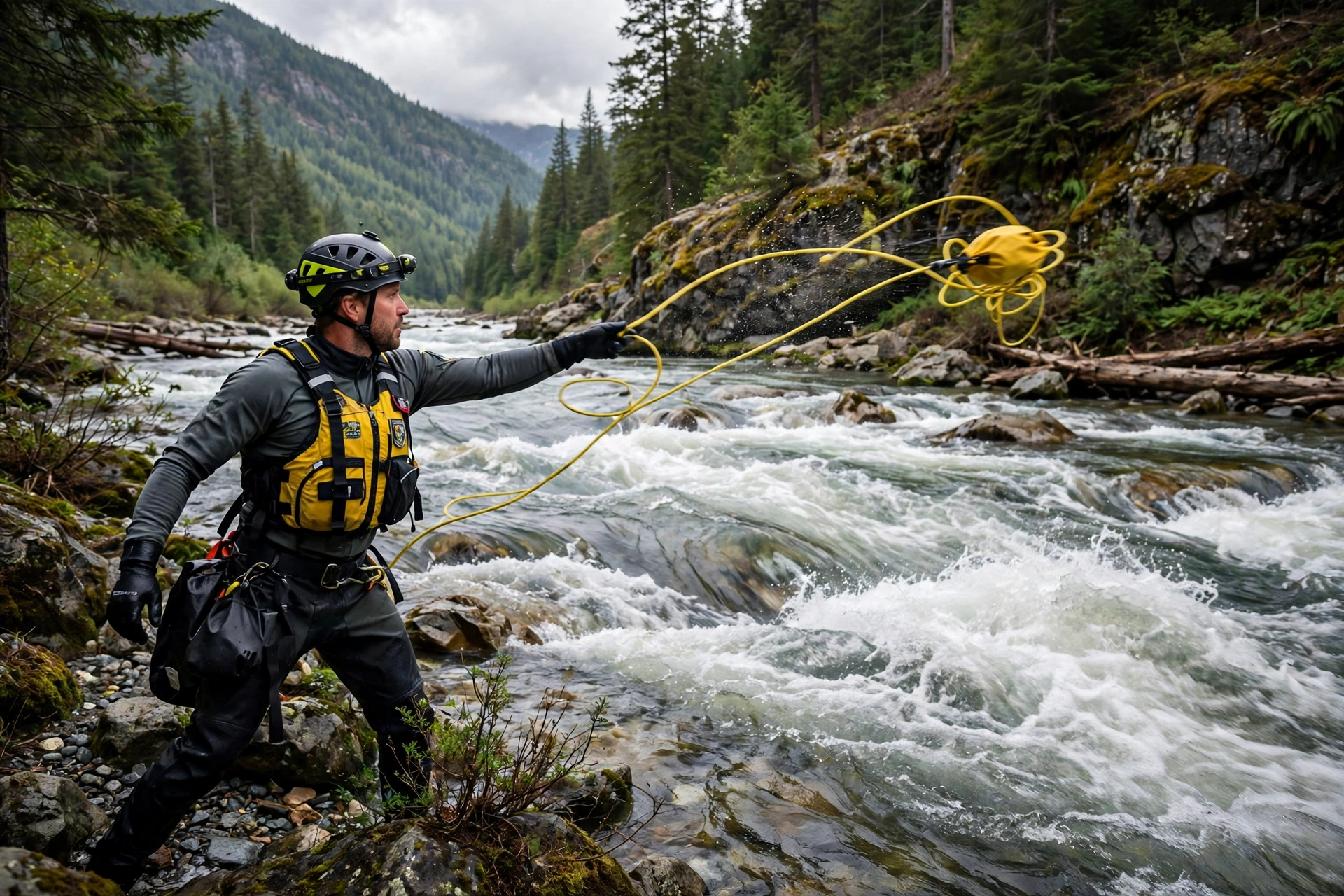
Because those are the areas moving water exposes. A swimmer or wading rescuer in current tends to travel feet-first on their back, which puts the back of the head toward the rocks coming downstream. A low cut over the occipital bone protects exactly the part of the skull most likely to meet a boulder in that position.
Ears need protection for a different reason: water itself. A fast slap of aerated whitewater, or being driven sideways against a wave, can strike the ear hard enough to injure the eardrum, and debris in floodwater adds an impact risk around the side of the head. Covered ears also sit under the strap system, which helps the helmet’s retention geometry work as designed.
Good rescue designs protect the ears without sealing them off from sound. Rescuers work by voice, whistle, and radio, so helmets use covered shapes with openings or shaping that lets hearing through while still shielding the ear itself. If a design muffles everything, it fails a real operational need.
Do Swiftwater Rescue Helmets Handle Angled Impacts Differently?
The impacts rescuers take are rarely square. Heads glance off rocks while being swept along, strike at an angle during a tethered pendulum swing, or are knocked sideways by debris — and glancing, angled blows add a twisting component that straight-on testing does not fully describe. Modern helmet thinking treats that rotational element seriously.
Learning what MIPS is for helmets explains the principle: a low-friction layer lets the helmet shift slightly on the head in an angled impact, reducing some of the rotational force passed to the brain. Rotational systems are still uncommon in rescue helmets compared with cycling, so coverage, rating, and retention remain the primary buying tests — but the principle shapes how better helmets of every kind are now designed and discussed.
For a rescue helmet, the practical version of impact science is this: a liner that manages energy across repeated knocks, a shell that spreads a blow, and a fit so secure that the helmet is correctly positioned when the impact arrives. Technology only works if the helmet is on, aligned, and still there after the first hit.
How Are Swiftwater Rescue Helmets Checked and Replaced?
Rescue helmets live a documented life. Teams typically inspect them before and after use — shell for cracks and gouges, liner for compression or damage, straps for fraying, buckles and adjusters for firm hold — and log hard impacts, because equipment that protects professionals is managed like other life-safety kit, not left to guesswork.
Replacement follows the same logic as any impact helmet, applied strictly: retire the helmet after a significant impact even if it looks sound, because crushed foam hides under the shell. Retire it, too, when age, constant immersion, and ultraviolet exposure have degraded straps, padding, or shell — in general terms, rescue helmets in regular service are replaced on condition and history, well before they look worn out.
Between callouts, care is simple and helps the helmet reach its full service life: rinse in fresh water, dry out of direct sun, store indoors away from fuel and solvents, and keep lights and other mounted accessories checked as part of the same inspection. The rescuer’s rule applies to the kit as much as the person: everything ready, before the water rises.
Frequently Asked Questions
Q: Can recreational paddlers wear a swiftwater rescue helmet?
A: Yes. Nothing stops a kayaker or rafter choosing a rescue helmet, and some prefer the extra coverage and retention. It will generally be heavier and warmer than a recreational model, which is the main trade-off.
Q: Why are rescue helmets usually bright colours?
A: Visibility. Rescuers need to be seen by their team, by boat and air support, and by victims, often in dirty, aerated water and poor light. Bright colours and reflective details are working features, not decoration.
Q: Does a swiftwater rescue helmet replace training?
A: No. A helmet is one item in a system that includes a buoyancy aid, dry suit, throw bags, and — above all — proper swiftwater training. The helmet protects a trained rescuer; it does not make an untrained one safe in moving water.

Olivia
Writer at Helmet Today, covering helmet reviews, fit and riding safety.