To choose a football helmet facemask by position, match the bar layout to what the position actually does: quarterbacks and skill players generally need open, wide-view masks for seeing the field, while linemen generally need heavier, more closed masks that stand up to constant hand contact at the line. The right facemask is the one that protects your face for your job on the field without blocking the vision that job depends on — and it must fit the helmet shell it is mounted on and meet the rules of your league or association.
What Do the Different Facemask Styles Mean?
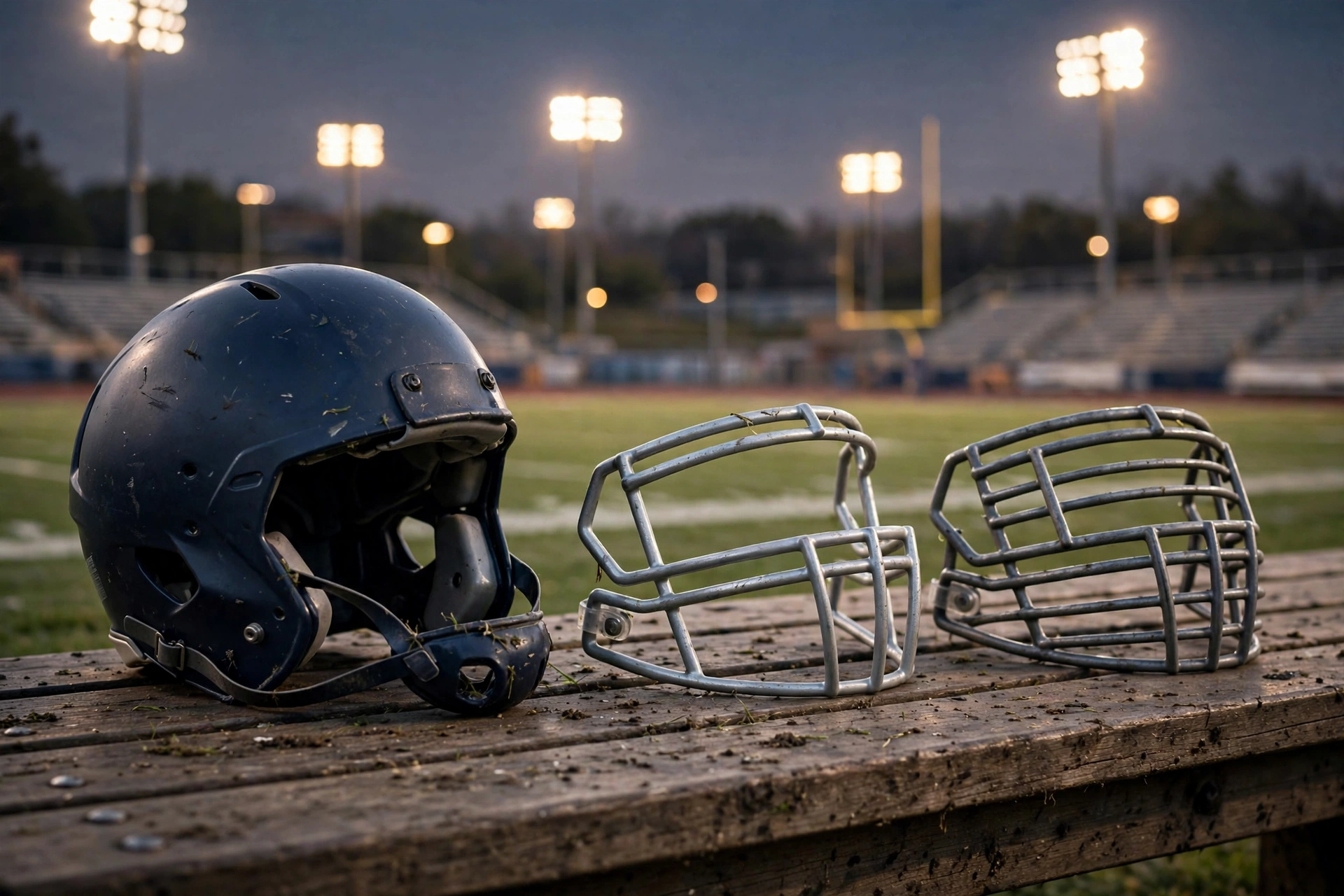
Facemasks are usually described by how many bars they have and how they are arranged, but the bar count alone does not tell the whole story. An open mask has fewer bars across the eye area, leaving a wide window for vision. A closed mask adds bars across the middle and lower face, narrowing the openings so fingers and forearms are less likely to reach through.
The material matters too. In general terms, heavier steel masks are common where durability is the priority, while lighter materials are chosen where weight and comfort matter more over a long game. Notice weight during a fitting, especially for younger or smaller players.
Another difference is the eye opening. Masks designed for vision keep the horizontal bars low and wide. Masks designed for the line of scrimmage put bars where hands will be, even if that costs a little vision. Neither design is better in the abstract — each is a trade between seeing and shielding, and the right trade depends on the position.
Which Facemask Suits a Quarterback?
Quarterbacks live by vision. They read defences before the snap, track receivers on the move, and throw through tight windows, so most quarterbacks favour an open mask with a wide, unobstructed eye area. Extra bars across the middle of the view can be a real problem when scanning the far side of the field or looking off a safety.
Protection still matters, because quarterbacks do get hit. The mask should still guard the nose, mouth and jaw, and the chin strap should hold the helmet firmly so the mask stays where it belongs on contact. Some quarterbacks add a visor for sun and glare, but visor rules vary by league and level, so check what your league or association allows before assuming a visor is permitted.
If you play quarterback, try the mask on with the helmet fully fitted and look through it the way you would on the field: downfield, to both sidelines, and down at the ball. A mask that looks fine staring straight ahead can still block a corner of your view when you turn your head.
What Should Linemen Look for in a Facemask?
Linemen — offensive and defensive — face the opposite trade. Every snap brings hands to the face and close-quarters pushing, so linemen generally need a more closed mask with extra bars protecting the nose, mouth and jaw. The openings should be small enough that fingers cannot easily reach through, and the mask should feel rigid when you push against it.
Durability is a bigger factor here than for any other position group. A lineman’s mask takes repeated contact all game, so a heavier, sturdier build is usually worth its extra weight. Check the attachment points: clips and screws should be tight, and there should be no cracked coating or bent bars.
Vision still counts, even for linemen. A defensive lineman needs to see the ball and the backfield, and an offensive lineman needs to pick up stunts and blitzes. The aim is the most closed mask that still lets you see what your job requires — not simply the most closed mask available. Try it on, get into your stance, and check that you can see the snap and the movement around you.
How Do Receivers, Defensive Backs and Linebackers Choose?
Receivers and defensive backs are vision-first players like quarterbacks, but they also take contact in the open field. Most favour an open or moderately open mask that keeps the eye area clear for tracking the ball, with enough lower bars to protect the mouth and jaw on tackles.
Linebackers sit between the two worlds. They read the play, drop into coverage, and also fill gaps and take on blockers, so their mask choice is often a middle ground: open enough to read the backfield, closed enough to handle contact near the line.
How Do You Check Fit and League Rules Before Buying?
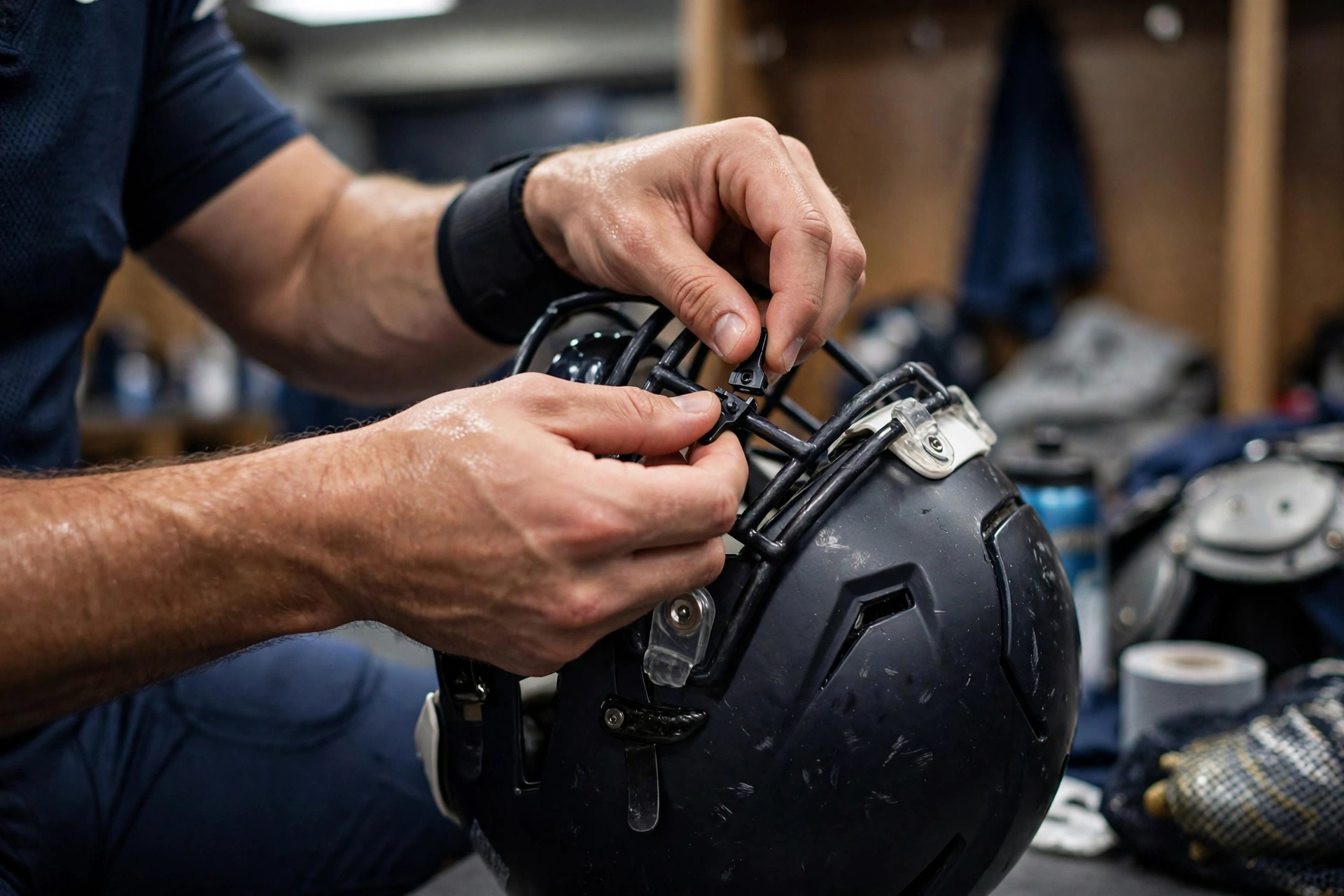
Start with compatibility. Not every mask fits every helmet shell, even from the same maker, so confirm that the mask is made for your exact helmet model and size before ordering. A mask that almost fits is not good enough: gaps at the attachment points or hardware that does not match can leave the face less protected.
Then check fit on your head, with the helmet fully strapped. The mask should sit centred on your face, with even spacing on both sides, and it should not press on your nose or chin when you talk or breathe hard. Move your head in every direction, and have someone check from the front that the mask has not shifted. If the helmet rocks or the mask moves independently of the shell, something is wrong with the fit or the hardware.
Finally, check the rules that apply to you. Some leagues and associations set requirements for facemask styles or added equipment, and those rules can differ by age group and level of play. Ask your coach or check your league’s equipment rules before buying, rather than discovering after purchase that your new mask is not permitted. The same applies to any add-on such as a visor.
Remember that the facemask is part of a system. The shell, padding, chin strap and mask all work together, and a mask change can slightly change how the helmet feels. After fitting a new mask, re-check the whole helmet: snug all round, no pressure points, chin strap firm, and vision clear. Modern helmet designs also include liner systems that manage different kinds of impact, as explained in this guide to what MIPS is for helmets.
Frequently Asked Questions
Q: Can I use the same facemask for every position?
A: Yes, if it fits your helmet and meets your league’s rules, but it may not be the best choice for that position. A lineman’s closed mask can limit a quarterback’s vision, and a quarterback’s open mask can leave a lineman’s face more exposed. Choose by what your position actually does.
Q: Does a facemask with more bars always protect better?
A: Not necessarily. More bars can shield the face from hands and fingers, but the mask must still fit the shell and attach securely. A heavier, more closed mask that fits poorly or blocks essential vision is not better than a well-fitted mask designed for the position.
Q: Should I change my facemask when I change position?
A: It is worth reviewing. If you move from a skill position to the line, or the other way, your vision and protection needs change, and a different mask may suit the new role better. Check compatibility with your helmet shell and your league’s rules, and test the new mask in a full fitting before game day.

Olivia
Writer at Helmet Today, covering helmet reviews, fit and riding safety.