For most e-bike commuters, a clear visor is the safer everyday choice, and a tinted visor is the better choice only for bright, sunny rides — so if you can only pick one, pick clear, and add tinted only if you regularly ride in strong sun. A visor shields your eyes from wind, rain, dust, and insects at e-bike speeds, but the tint decides how much light reaches your eyes, and that single difference changes whether you can see hazards clearly at dawn, in tunnels, under tree cover, and after dark.
This guide compares tinted and clear e-bike helmet visors for commuting, so you can match your choice to your route and the times of day you ride.
What Does an E-Bike Helmet Visor Actually Do?
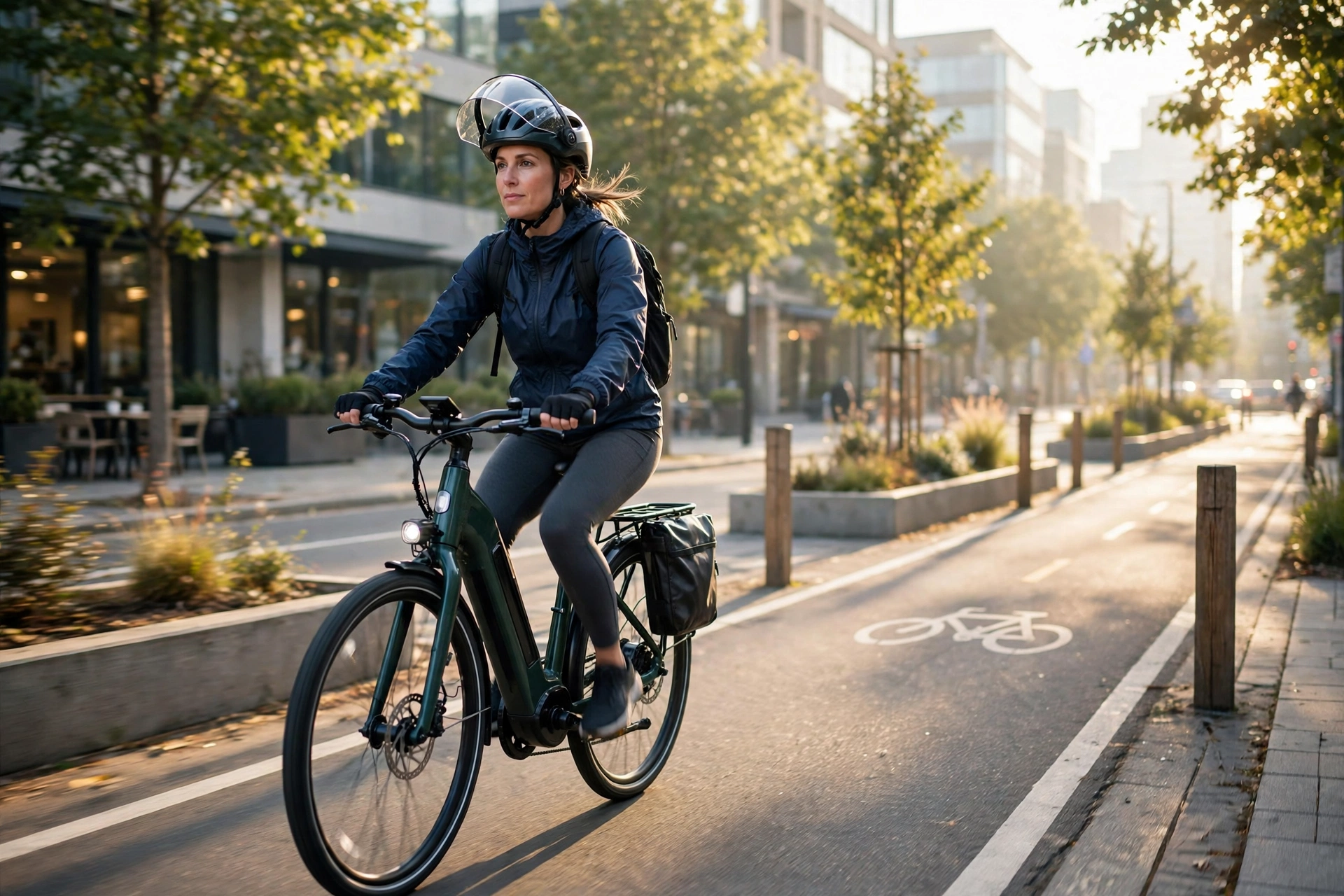
A visor is a transparent shield that sits in front of your eyes, attached to the helmet rather than worn separately like glasses. At e-bike commuting speeds, wind alone can make your eyes water, and that watering blurs your vision exactly when you need it most — approaching junctions, reading traffic, and spotting potholes. A visor blocks that wind, along with rain, road spray, dust, and the insects that are a genuine hazard on open roads in summer.
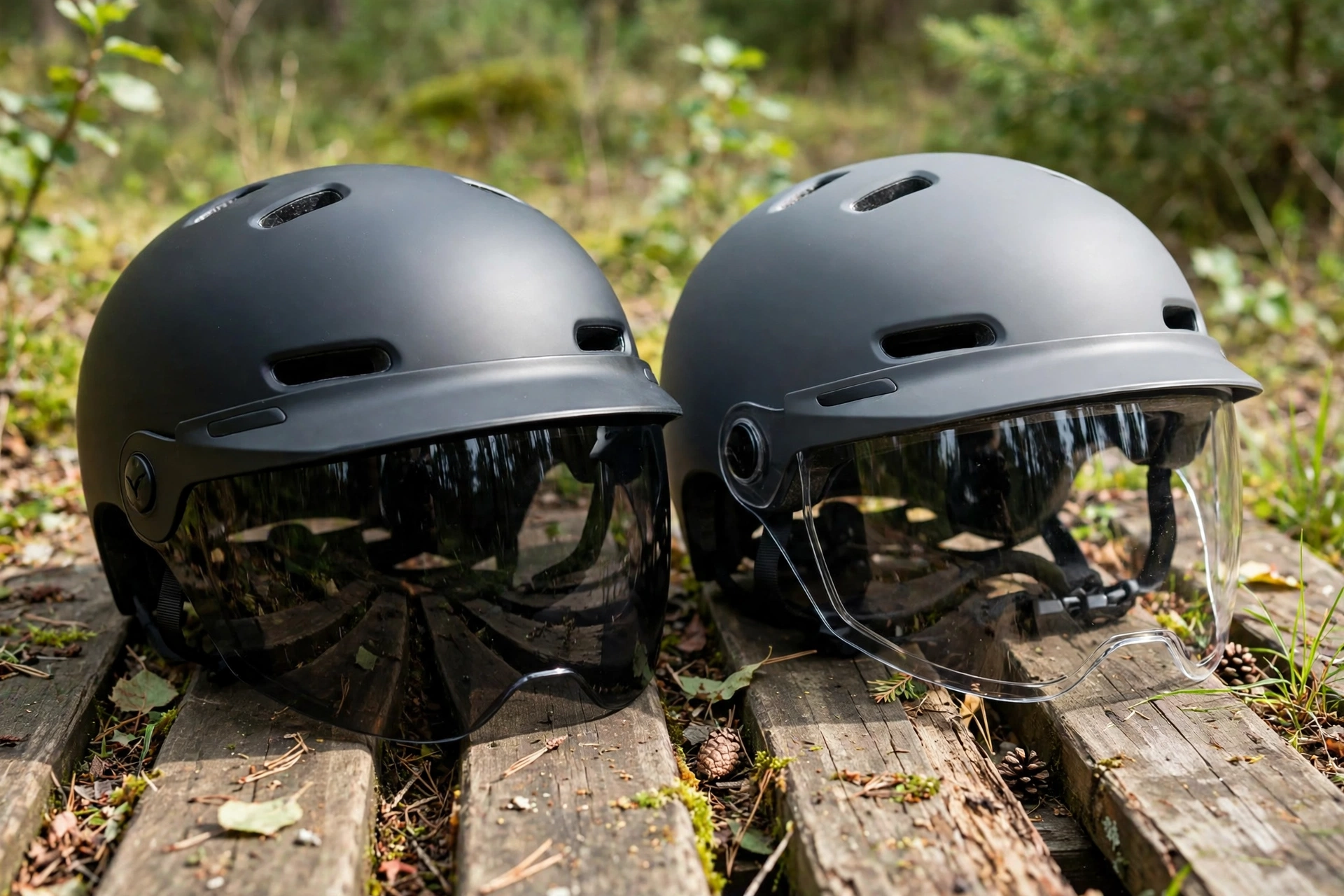
Visors differ from sunglasses in one important way: they cover a wider area and sit closer to the face, so they protect from the sides as well as the front. That matters on an e-bike because crosswinds and spray come at you from angles, not just head-on. The tint question is separate from all of that: a clear visor gives full protection with no change to the light reaching your eyes, while a tinted visor adds sun shading at the cost of reducing that light.
When Is a Tinted Visor the Better Choice?
A tinted visor earns its place on bright, sunny commutes, especially when you ride toward the sun in the morning or evening. Low sun is the hardest glare situation for a cyclist: it sits right at eye level, reflects off wet roads and car windscreens, and can hide a turning vehicle or a pedestrian stepping out. A tinted visor cuts that glare and reduces squinting, which in turn reduces eye fatigue on longer rides.
Tinted visors also help on consistently bright summer days and on open roads with little shade. If your commute is a midday ride in strong sunshine, a tinted visor is genuinely more comfortable than a clear one, and comfort matters because a rider who is squinting and tearing up is not seeing the road properly.
The catch is the word “consistently.” A tinted visor only helps while the light stays bright. The moment you enter shade, a tunnel, a wooded path, or an underpass, the tint works against you, darkening a scene that is already dim. That is why tinted visors suit riders whose whole route stays bright — and why they are a poor default for mixed-light commutes.
When Is a Clear Visor the Better Choice?
A clear visor is the better choice whenever light is limited or changing: early mornings, late evenings, overcast days, winter months, wooded trails, tunnels, and any ride that ends after sunset. In these conditions a clear visor gives you full protection with zero loss of vision, which is exactly what you want when hazards are already harder to see.
Clear visors are also the safer choice for commuters whose ride spans changing light. Many commutes start in daylight and end in dusk, or pass from open roads into shaded cycle paths. A clear visor handles every part of that ride equally well, with no moment where you are suddenly peering through a darkened lens in a dim stretch. For that reason, most commuters who ride year-round find a clear visor the most practical single option.
There is one more advantage worth noting: a clear visor works with other sun protection. On a bright day you can wear sunglasses underneath it and get the best of both — sun shading when you need it, and the ability to take the sunglasses off when the light drops, without losing wind and rain protection.
Can You Get the Best of Both Worlds?
Yes, and for regular commuters this is often the smartest answer. Several e-bike helmets now offer interchangeable visors, so you can fit a clear visor for winter and a tinted visor for summer, or swap them in seconds before a ride. Magnetic visor systems make this especially easy: the visor clicks on and off without tools, so keeping a spare in a pannier or backpack is realistic rather than a chore.
Another option is a photochromic visor, which darkens in bright light and clears in dim light. In general terms, these work well for rides that move between sun and shade, though they react more slowly than your eyes do — so check how a particular model behaves before relying on it for a dawn-to-dusk commute.
Whatever system you choose, fit and compatibility come first. A visor must sit correctly with the helmet’s retention system and not press on your nose or forehead, and if you wear prescription glasses, check that they fit comfortably behind the visor. The protection layer inside the helmet matters too: many modern helmets include a low-friction layer designed to reduce rotational forces in a crash, and you can read more in this guide to what MIPS is for helmets before you buy.
What Should You Check Before Buying a Visor Helmet?
Start with the visor itself: is it anti-scratch and does it resist fogging? A scratched or fogged visor is worse than no visor at all, because it puts a blurry layer between you and the road. Look for anti-fog coatings or ventilation that keeps air moving across the inside of the visor, and clean it only with a soft cloth and mild soap — harsh cleaners and paper towels scratch the surface over time.
Next, check how the visor moves. A flip-up visor should stay firmly up when raised and firmly down when lowered, with no wobble at speed, and a magnetic visor should hold securely over bumps and in strong wind. Try the mechanism in the shop if you can, with gloves on, since that is how you will use it on a winter commute.
Finally, check that replacements are available and affordable for the helmet you are buying. Visors scratch and coatings wear, so a helmet whose visor cannot be replaced has a built-in expiry date on its eye protection — a poor deal for a daily commuter.
Frequently Asked Questions
Q: Can I wear a tinted visor at night?
A: No — not safely. A tinted visor reduces the light reaching your eyes, which is the opposite of what you need after dark. If your commute includes any night riding, use a clear visor and add sunglasses for the bright parts of the ride instead.
Q: Do I still need sunglasses with a clear visor?
A: On bright days, yes, sunglasses under a clear visor give you sun protection plus wind and rain protection. On dull days you can leave the sunglasses off and the clear visor still does its job. That combination is the most flexible setup for a year-round commuter.
Q: How do I stop a visor fogging up?
A: In general terms, keep air moving: use the helmet vents, avoid stopping with the visor fully sealed against your face, and consider an anti-fog treatment made for visors. A flip-up visor lets you raise it briefly at junctions to clear it before you set off again.

Olivia
Writer at Helmet Today, covering helmet reviews, fit and riding safety.