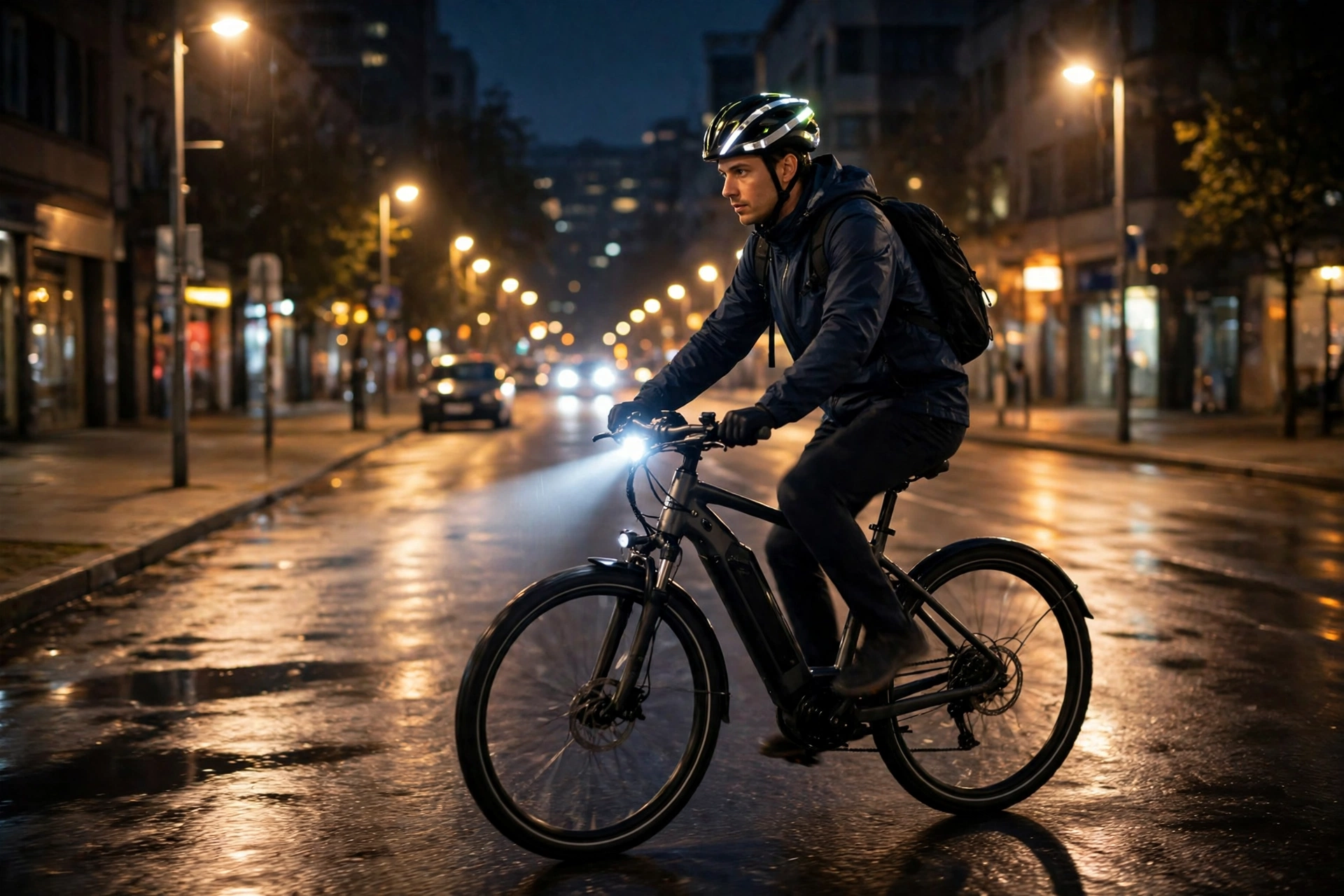
For night commuting on an e-bike, the essentials are a bright front light, a red rear light, reflective clothing and helmet details, and a clear visor or glasses — because being seen by drivers matters just as much as seeing the road yourself. Night riding is not just daytime riding in the dark: speeds feel faster, potholes and kerbs appear later, and drivers are less likely to expect a cyclist, so your whole setup needs to shift toward visibility and caution.
This guide covers the visibility tips that make the biggest difference for e-bike night commuters, from lights and reflectives to route choices and riding habits.
What Lights Do You Need for Night Commuting?
Lights are the single most important visibility item, and you need two kinds: lights to see with and lights to be seen by. A bright front light illuminates the road ahead so you can spot potholes, drains, and debris in time to react — at e-bike speeds you cover ground fast, so a weak light leaves you no braking distance. A steady beam is best for seeing, while a flashing mode can help you stand out in traffic, and many commuters run one of each.
The rear light matters just as much. Drivers approaching from behind need to spot you early, judge your speed, and give you room, and a red rear light — ideally flashing — does that far better than any reflective strip alone. Check the charge before every ride, because a light that dies halfway home leaves you invisible on the darkest part of the route.
Position matters too. Mount lights where they are not blocked by bags, racks, or your own body, and angle the front light slightly down so it lights the road without dazzling oncoming traffic.
How Does Reflective Gear Make You More Visible?
Reflective material works differently from lights: it bounces back the headlights of vehicles around you, making you glow brightly in exactly the direction of the traffic that needs to see you. The most effective placement is on moving parts — your ankles, knees, and pedalling legs — because the up-and-down motion catches drivers’ eyes and instantly reads as a cyclist.
A reflective vest or jacket is the obvious starting point, but do not stop there. Reflective strips on your helmet, reflective ankle bands, and reflective panniers all add up, and each one gives drivers another chance to spot you early. In general terms, the more angles you cover — front, back, and sides — the better, since junctions and side roads are where drivers approach you from the side.
Reflective gear is a supplement to lights, not a replacement. On unlit roads with no traffic behind you, there is nothing to reflect, so your lights carry the whole job. Think of reflectives as the layer that makes you unmissable once a vehicle is near, and lights as the layer that announces you before it arrives.
What Should You Wear on Your Head at Night?
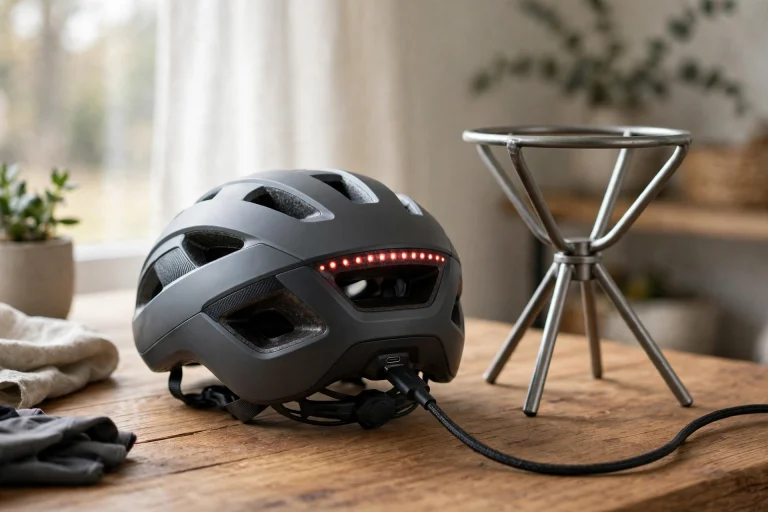
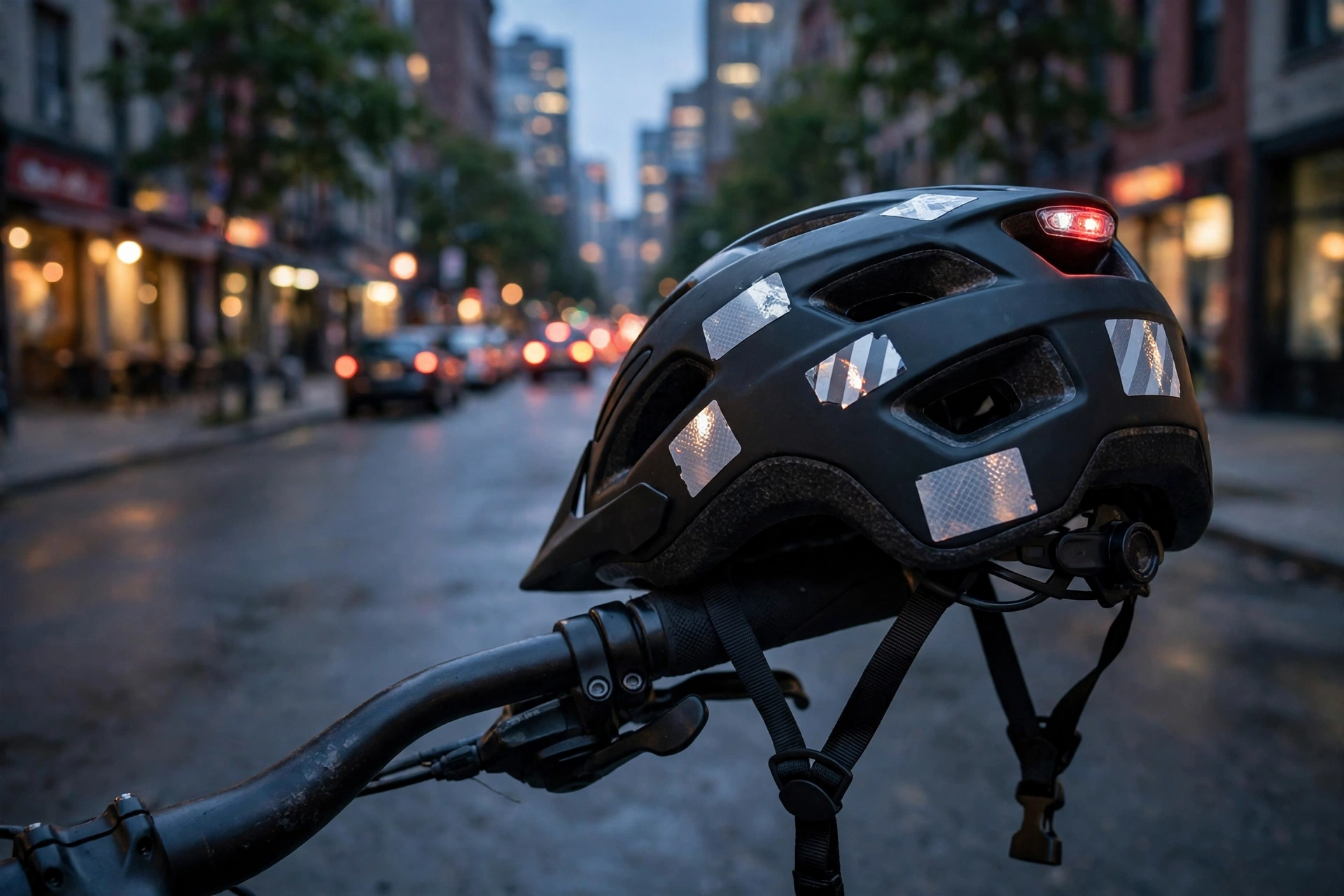
Your helmet is one of the most visible parts of you at night, because it sits at driver eye height. Choose a helmet in a light or bright colour if you can, and add reflective stickers or a reflective helmet cover — both are cheap, light, and make a real difference when headlights sweep across you. Some helmets come with built-in rear lights or reflective panels, worth considering if you ride at night often.
Eye protection needs a rethink after dark. A tinted visor or dark sunglasses cut the light reaching your eyes and make an already dim road darker, so switch to a clear visor or clear glasses for night rides. A clear visor keeps wind, rain, and insects out without costing you any vision — exactly what night riding demands.
Fit still comes first, day or night. A helmet that slips or sits too high because of a thick winter hat underneath protects less well than one fitted properly. If you ride in cold weather, use a thin skull cap or liner designed to fit under a helmet rather than a bulky hat, and re-check the fit with the liner on. The protection inside matters too: many modern helmets use a low-friction layer to reduce rotational forces in a crash, explained in this guide to what MIPS is for helmets.
How Should Your Riding Change After Dark?
Slow down, especially on roads you do not know well. At night your stopping distance effectively grows because you see hazards later, so riding a little slower buys back the reaction time darkness takes away.
Ride predictably and claim your space. Hold a steady line, signal early, and avoid weaving between parked cars or hugging the kerb where drains and debris collect. Drivers need to read your intentions from further away at night, so early signals help them do that. At junctions, assume you have not been seen until a driver clearly reacts to you — slowing or waving — rather than assuming your lights did the job.
Watch the road surface more carefully. Potholes, wet leaves, painted lines, and metal covers all become slippery or invisible at night, and a crash caused by a surface you could not see is the most common kind of night-commuting fall. Avoid painted markings and metal grates when wet, and treat every dark patch as a possible pothole until your light proves otherwise.
Which Route Is Safest for a Night Commute?
When you have a choice, pick the lit route over the shorter dark one. A well-lit main road with a cycle lane is usually safer at night than an unlit shortcut through a park or back street, even if it adds a few minutes. Lighting removes the guesswork: you can see the surface, drivers can see you, and junctions are readable from further away.
Consider traffic patterns too. A busy road at rush hour is full of drivers who are alert and expecting cyclists; the same road late at night may carry faster, less attentive traffic. If your commute ends late, a slightly longer route through lit, populated streets is often the wiser choice.
Finally, have a backup plan for the ride home. Know where you can stop safely if a light fails or the weather turns, keep your phone charged, and carry a small backup light — a tiny clip-on rear light weighs almost nothing and can rescue a ride that would otherwise end in darkness.
Frequently Asked Questions
Q: Is a flashing front light better than a steady one at night?
A: In general terms, a steady beam is better for seeing the road, and a flashing light is better for being noticed. Many night commuters use both: a steady light to illuminate the road and a smaller flashing light to catch drivers’ attention. Check your local rules, since some places restrict flashing lights on the road.
Q: Do I need reflective clothing if I have good lights?
A: Yes — they do different jobs. Lights announce you from a distance, while reflective material makes you glow brightly when a vehicle’s headlights hit you, especially from the side at junctions. Together they cover far more situations than either one alone.
Q: Can I wear a tinted visor for night commuting?
A: No. A tinted visor reduces the light reaching your eyes and makes night riding more dangerous. Use a clear visor or clear glasses at night, and save the tinted visor for bright daytime rides.

Olivia
Writer at Helmet Today, covering helmet reviews, fit and riding safety.