For winter commuting on an e-bike, the winning combination is a helmet that fits over a thin thermal liner, with ear covers for warmth and a clear visor or glasses for wind protection — because a warm helmet that fits badly protects worse than a cool helmet that fits well. Winter riding brings cold wind, shorter days, wet roads, and numb fingers, and your helmet setup has to handle all of them without compromising the fit that keeps you safe.
This guide explains how to stay warm on a winter e-bike commute while keeping your helmet fitting exactly as it should.
How Do You Keep Your Ears and Head Warm Without Ruining the Fit?
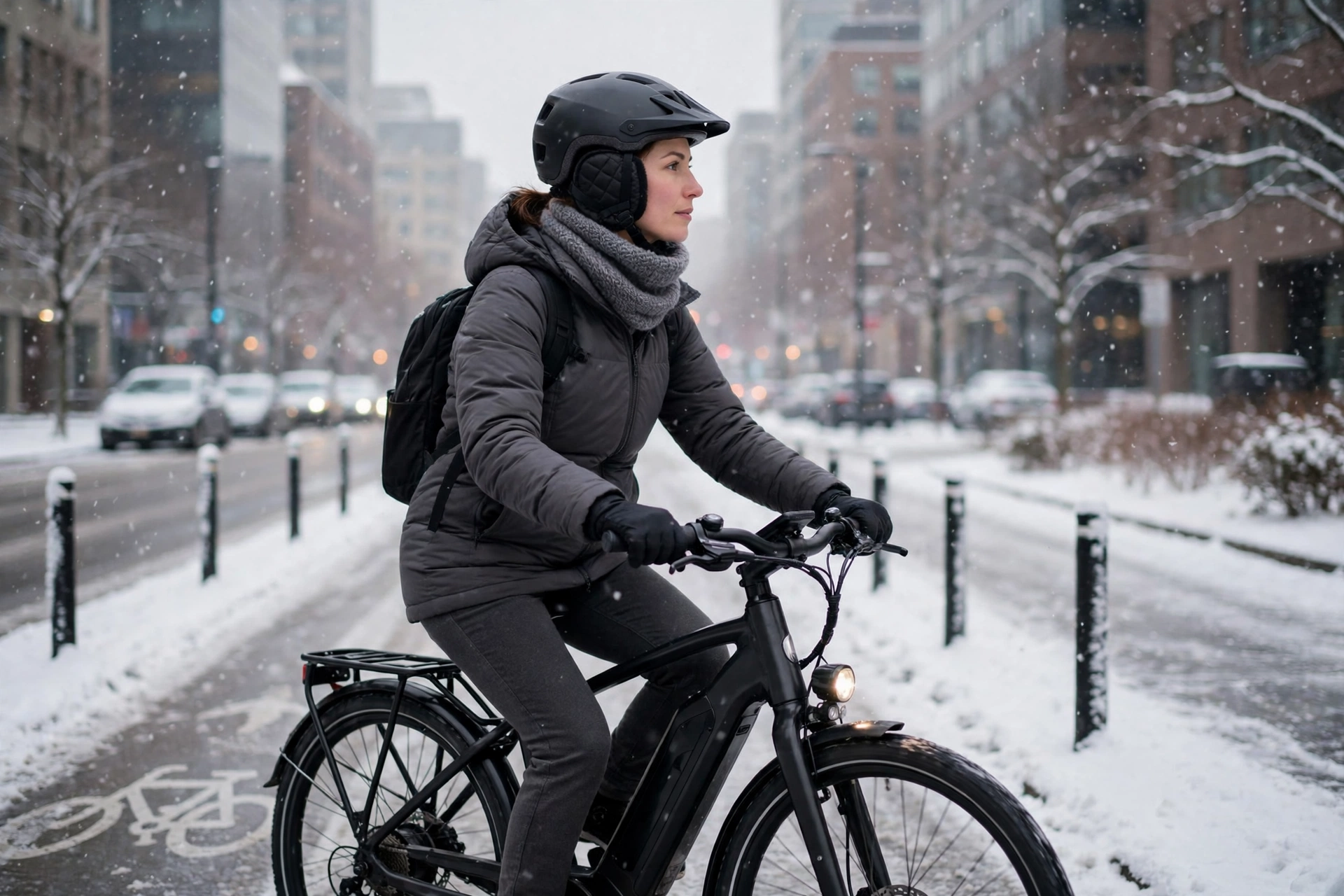
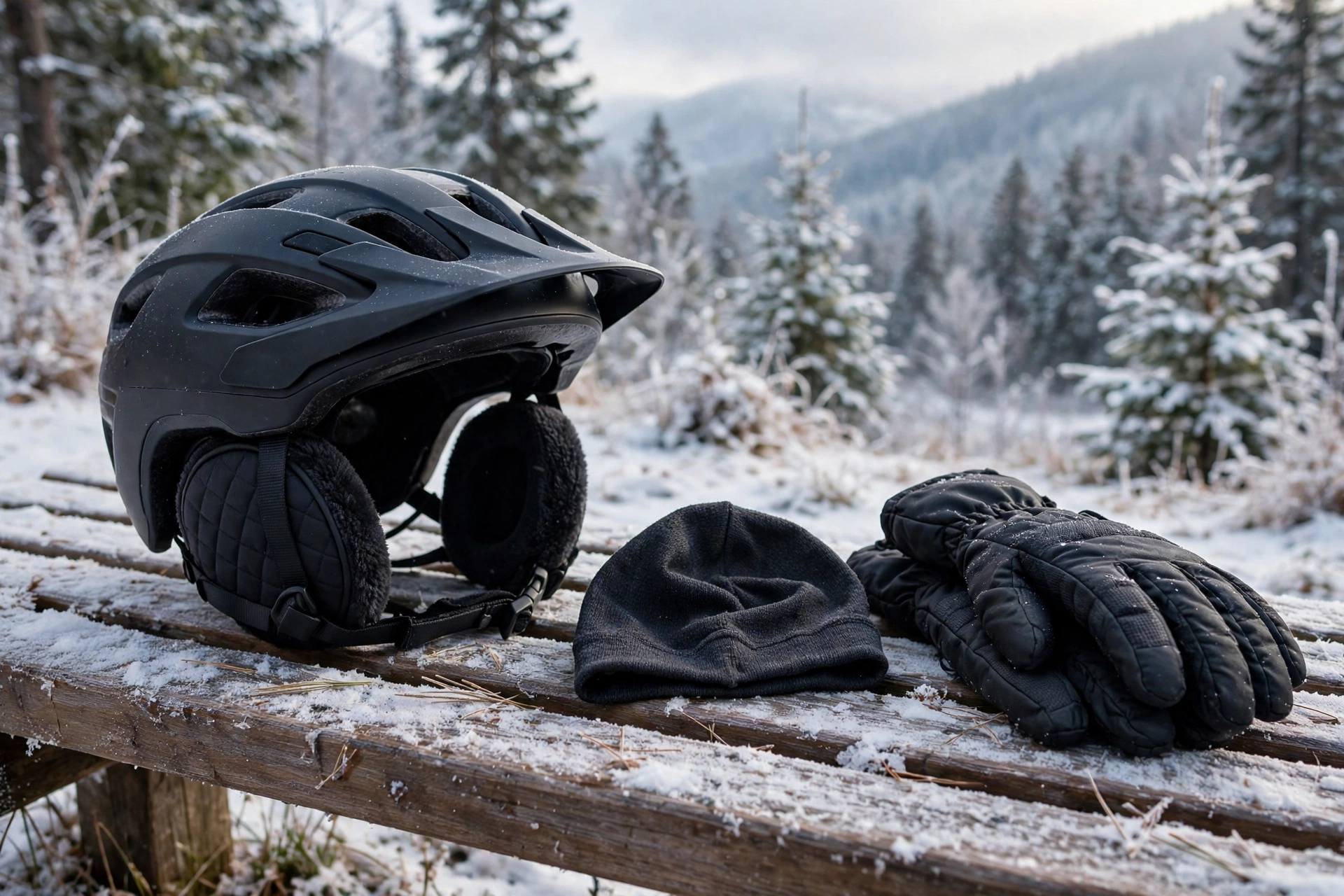
Cold wind at e-bike speeds strips heat from your head fast, and ears are usually the first thing to complain. The best solution is a helmet with built-in ear covers or clip-on winter pads, which add warmth without changing the internal shape of the helmet. These are designed to work with the helmet’s retention system, so the fit stays as the maker intended.
If your helmet has no winter option, a thin thermal skull cap or balaclava worn underneath is the next best thing — thin being the key word. A thick beanie or bulky hat pushes the helmet up and out, loosens the fit, and can leave the helmet sitting too high to protect your forehead properly. A thin liner adds warmth with minimal change to fit, and you should always re-adjust the straps and dial with the liner on.
Test the combination before you rely on it. Put the liner on, fit the helmet, fasten the straps, and shake your head firmly side to side and up and down. If the helmet rocks or slides, the combination is wrong — try a thinner liner or a different helmet. Warmth is worthless if the helmet moves out of position in the moment you need it.
What About Fogging, Wind, and Winter Glare?
Winter brings a fogging problem that summer riders rarely face: warm, moist breath meeting a cold visor or glasses lens. A clear visor with ventilation helps, since moving air across the inside of the visor carries moisture away before it condenses. Lifting the visor briefly at stops also clears it, and anti-fog treatments made for visors can help — just check they are safe for your visor’s coating first.
Wind protection matters as much as warmth. A clear visor or close-fitting glasses shield your eyes from icy wind that would otherwise make them water and blur your vision. This is not just comfort: watering eyes on a fast descent or an open road are a genuine safety issue, and the wind chill at e-bike speeds is far colder than the air temperature suggests.
Winter glare is easy to underestimate. Low sun, reflecting off wet roads, frost, and snow, can be blinding even on a cold day. A tinted visor is too dark for most winter light, so the practical answer is sunglasses under a clear visor: sun protection when the glare hits, and the ability to remove them instantly when you ride into shade or a tunnel.
How Should You Dress the Rest of Your Body for a Winter Commute?
Layering beats one thick jacket. Start with a moisture-wicking base layer, add an insulating mid-layer, and finish with a windproof and water-resistant outer layer. This system traps warm air, lets sweat escape, and lets you adjust as you warm up — because an e-bike commute warms you up quickly once the motor is helping, and overheating in a heavy coat leaves you soaked in sweat for the rest of the ride.
Hands and feet deserve special attention, since cold hands brake and steer badly. Insulated gloves that still let you operate brakes and gears are essential, and many winter commuters add bar mitts for the coldest days. For feet, waterproof overshoes over normal shoes beat heavy boots that do not fit the pedals well.
Visibility is a winter issue too, because winter commutes often happen in darkness at both ends of the day. Reflective details on your jacket, helmet, and bags, plus reliable lights, matter even more in winter — and rain, fog, and spray all reduce how far drivers can see you, so assume you are less visible than you feel.
How Does Cold Weather Affect the Helmet Itself?
Cold itself does not damage a modern helmet, but winter habits can. Never dry a wet helmet on a radiator or with a hair dryer on hot: heat warps shells, softens adhesives, and ages the impact foam invisibly. Instead, bring the helmet indoors, open the straps, remove the pads if they come out, and let it air-dry at room temperature. A helmet put away damp will smell and degrade faster, so drying is part of winter maintenance, not an optional extra.
Straps and buckles also behave differently in the cold. Webbing stiffens, buckles get harder to operate with gloves, and adjusters can slip if they are not checked. Before winter sets in, inspect the straps, buckles, and retention dial, and practise adjusting them with your winter gloves on. Small problems found at home are easy; the same problems found on a freezing roadside are miserable.
Finally, remember that winter is when helmets take the most knocks — dropped on icy ground, knocked off a rack, banged against a pannier. Any helmet that has taken a hard impact should be replaced, since the foam inside can be damaged without visible cracks. The protection systems inside modern helmets, including low-friction layers, are explained in this guide to what MIPS is for helmets.
What Winter Commuting Habits Keep You Safe?
Slow down on wet, icy, and leaf-covered surfaces. E-bikes accelerate easily, but braking distances grow sharply on slippery roads, and a fall at low speed on ice hurts just as much as one at higher speed. Brake earlier and more gently, avoid sudden steering, and treat painted lines, metal covers, and drains as slippery until proven otherwise.
Allow extra time. Winter commutes take longer — slower riding, heavier clothing, more stops to clear a visor or adjust gloves — and rushing cancels out every other safety measure. Leaving five minutes earlier is the cheapest safety upgrade a winter commuter can buy.
Keep a simple winter kit in your bag: a dry pair of gloves, a small cloth for the visor, a backup light, and a charged phone. These weigh almost nothing and turn a minor winter problem — fogged vision, dead light, soaked gloves — from a ride-ruining event into a two-minute fix.
Frequently Asked Questions
Q: Can I wear a beanie under my e-bike helmet in winter?
A: Only a very thin one. A thick beanie pushes the helmet up, loosens the fit, and can leave your forehead unprotected. Use a thin thermal skull cap or a helmet with built-in ear covers instead, and always re-check the fit with the liner on.
Q: How do I stop my visor fogging in winter?
A: In general terms, keep air moving across the visor with the helmet vents, lift the visor briefly at stops, and consider an anti-fog treatment made for visors. Avoid sealing the visor tight against your face when stopped, since trapped warm breath is what causes the fog.
Q: Should I use a tinted visor for winter sun?
A: Usually not — winter light is often too dim for a tinted visor, and it will darken shaded stretches and tunnels dangerously. Wear sunglasses under a clear visor instead, so you can remove the tint instantly when the light drops.

Olivia
Writer at Helmet Today, covering helmet reviews, fit and riding safety.