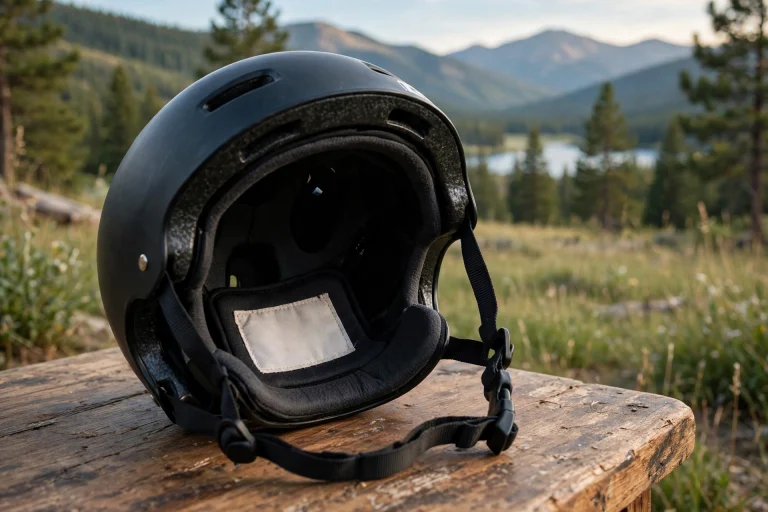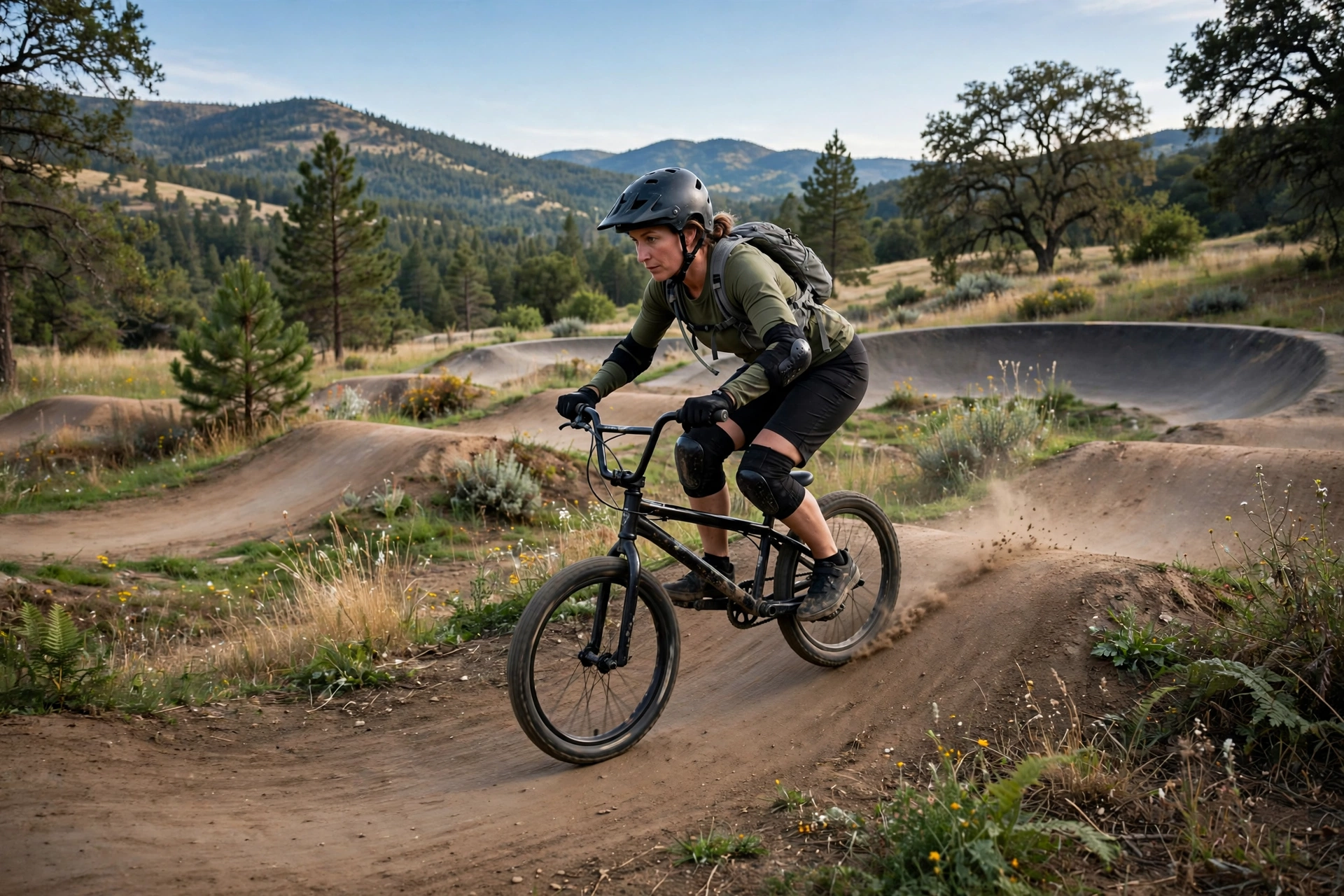
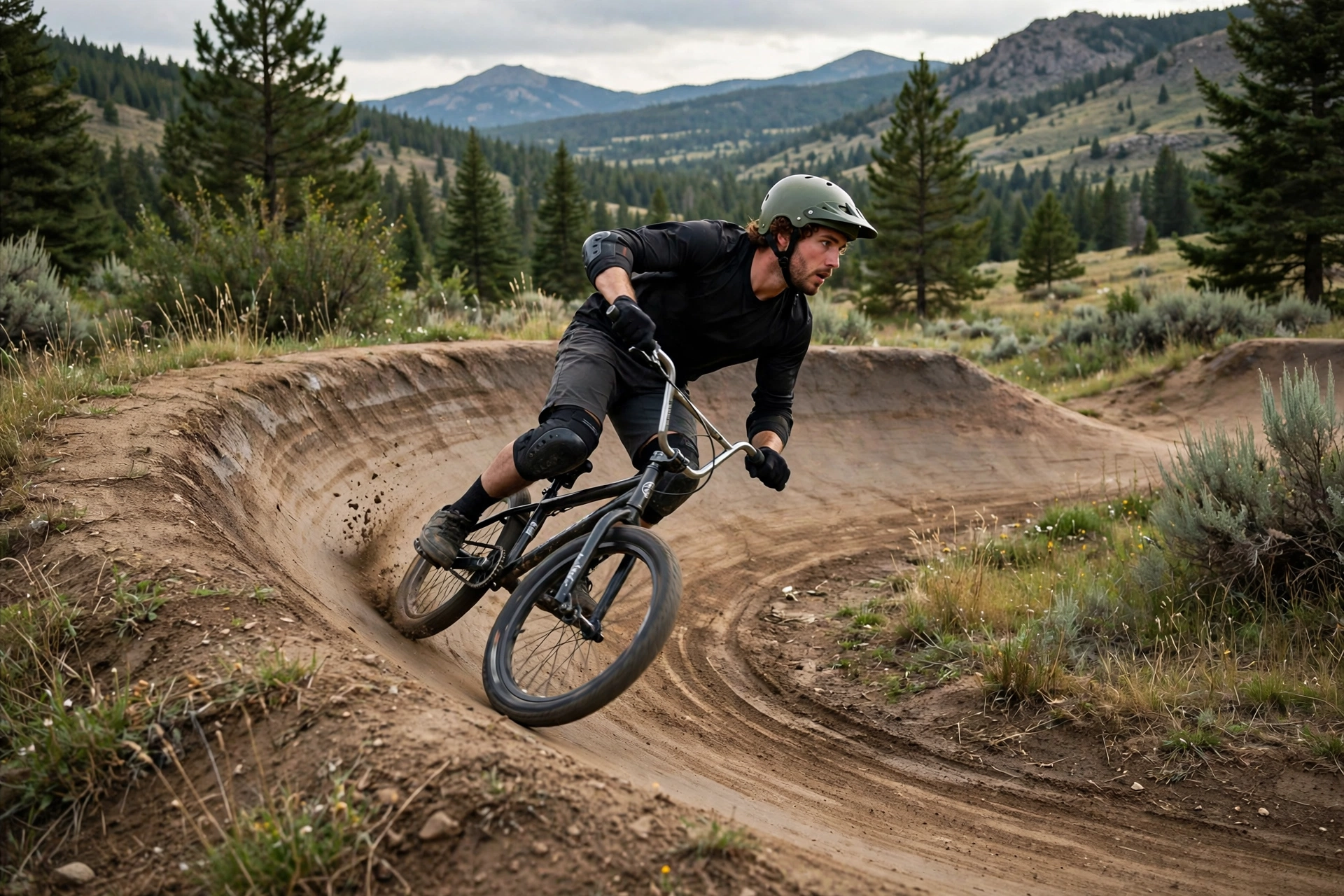
For pump track riding, look for a helmet that is light, well-ventilated, and secure enough to stay put through pumping, jumping, and fast berms — usually an open-face BMX or mountain bike helmet, with a full face helmet for bigger, faster tracks. In general terms, pump track falls are fast and forward, so a helmet that fits snugly and does not shift at speed is essential.
Pump tracks are deceptively demanding. You ride continuously, pumping rollers and berms without pedalling, and speed builds quickly. A helmet for pump track riding needs to handle that speed, the sweat of continuous effort, and the falls that come when a berm or roller catches you out. This guide covers what to prioritise.
What Makes Pump Track Riding Different From Other BMX?
Pump track riding is continuous and fast. Unlike street or park riding, where you pause between tricks, a pump track lap flows without stopping, and you generate speed by pumping rather than pedalling. That means you are moving quickly for long stretches, with your head exposed to wind and to the consequences of a fast fall.
Falls on a pump track tend to be forward and at speed. You might wash out on a berm, case a roller, or get thrown over the bars on a jump. The ground is usually hard-packed dirt, asphalt, or concrete, none of which is forgiving. Speed plus hard ground is why helmet choice matters here even though there are no big gaps or stair sets.
Pump tracks also vary. A small, flat beginner track is a different proposition from a large track with big berms, jumps, and high speeds. The bigger and faster the track, the more protection is worth having, and some riders switch to a full face helmet as tracks get larger.
Open-Face or Full Face Helmet for Pump Track?
For most pump track riding, an open-face helmet is the standard choice. It is light, well-ventilated, and gives good hearing and vision, which matter when you are riding fast laps and need to hear other riders. A good open-face BMX or trail helmet covers the top, back, and sides of the head well enough for typical pump track falls.
A full face helmet becomes worth considering on bigger, faster tracks, especially where there are jumps or where riders are pushing their speed. The chin bar protects your face in a forward fall at speed, which is the fall pump track riders most need to worry about. Downhill-style full face helmets are heavier and hotter, but lighter full face models designed for trail and dirt jumping offer a middle ground.
The decision often comes down to how fast you ride and how hard you push. A rider cruising a beginner track does not need a full face helmet. A rider racing laps on a big track, or learning jumps on it, may well benefit from one. If you are unsure, start with a good open-face helmet and consider a full face helmet as your speed and ambition grow.
How Important Are Fit and Ventilation on a Pump Track?
Fit is critical on a pump track because speed and pumping motion test it constantly. A helmet that rocks or slides when you pump hard will distract you and may not be in the right place when you fall. The helmet should sit level, feel snug, and stay put through vigorous head movement. Test it by shaking your head hard before you ride — if it shifts, adjust it or try another size.
Ventilation matters because pump track riding is continuous, sweaty work. Unlike park riding, there are no long breaks between runs, so heat builds steadily. A well-ventilated helmet with good airflow keeps you cooler and more focused over a long session, and reduces the sweat running into your eyes on fast laps.
Goggles or glasses compatibility is worth checking too. Some pump track riders wear glasses for dust and sun, and a helmet that works with them without pressing the arms into your head is a real comfort win. Try the combination before you commit, especially with a full face helmet.
What Features Are Worth Paying For?
Adjustable fit systems are genuinely useful for pump track riding. A dial or cradle at the back of the helmet lets you fine-tune fit quickly, which matters when you share a helmet or when padding compresses over time. A helmet that can be adjusted to stay snug is a helmet that keeps protecting you.
Removable, washable padding is another practical feature. Pump track helmets get sweaty fast, and pads you can wash last longer and smell better. It is a small thing that makes a big difference to how pleasant a helmet is to own.
Weight is worth considering as well, since pump track riding involves constant head movement. A lighter helmet is less tiring over a long session and less likely to shift. But as with other disciplines, weight should not override fit and coverage. A light helmet that wobbles is worse than a slightly heavier one that stays put. For background on safety features, see what MIPS is for helmets.
What About Kids Riding Pump Tracks?
Kids love pump tracks, and they need helmets that fit properly above all else. A child’s helmet should sit level, cover the forehead, and stay snug without wobbling. Because children grow, check fit regularly — a helmet that fitted six months ago may be too small now.
For kids, a lighter helmet is a real advantage, since children feel helmet weight more than adults. Ventilation matters too, because kids overheat faster and are less likely to complain about it before it affects them. A comfortable, well-fitting helmet is one a child will wear without argument.
Parents should also check that a child’s helmet meets a recognised safety standard and replace it after any hard impact, even if it looks fine. Children fall often on pump tracks, and a helmet that has already absorbed one hard hit may not absorb the next one as well.
Frequently Asked Questions
Q: Do I need a full face helmet for a pump track?
A: Not usually. An open-face helmet suits most pump track riding. A full face helmet is worth considering on bigger, faster tracks or when learning jumps.
Q: Can I use a skate helmet on a pump track?
A: Yes, in general terms. A skate-style helmet covers the back and sides of the head well. Just make sure it fits snugly and stays put at speed, and consider a more ventilated helmet for long, hot sessions.
Q: How do I stop my helmet sliding on a pump track?
A: Check the size, tighten the fit system or pads, and fasten the strap snugly under your chin. If the helmet still slides during hard pumping, it is the wrong size or shape for your head.

Olivia
Writer at Helmet Today, covering helmet reviews, fit and riding safety.