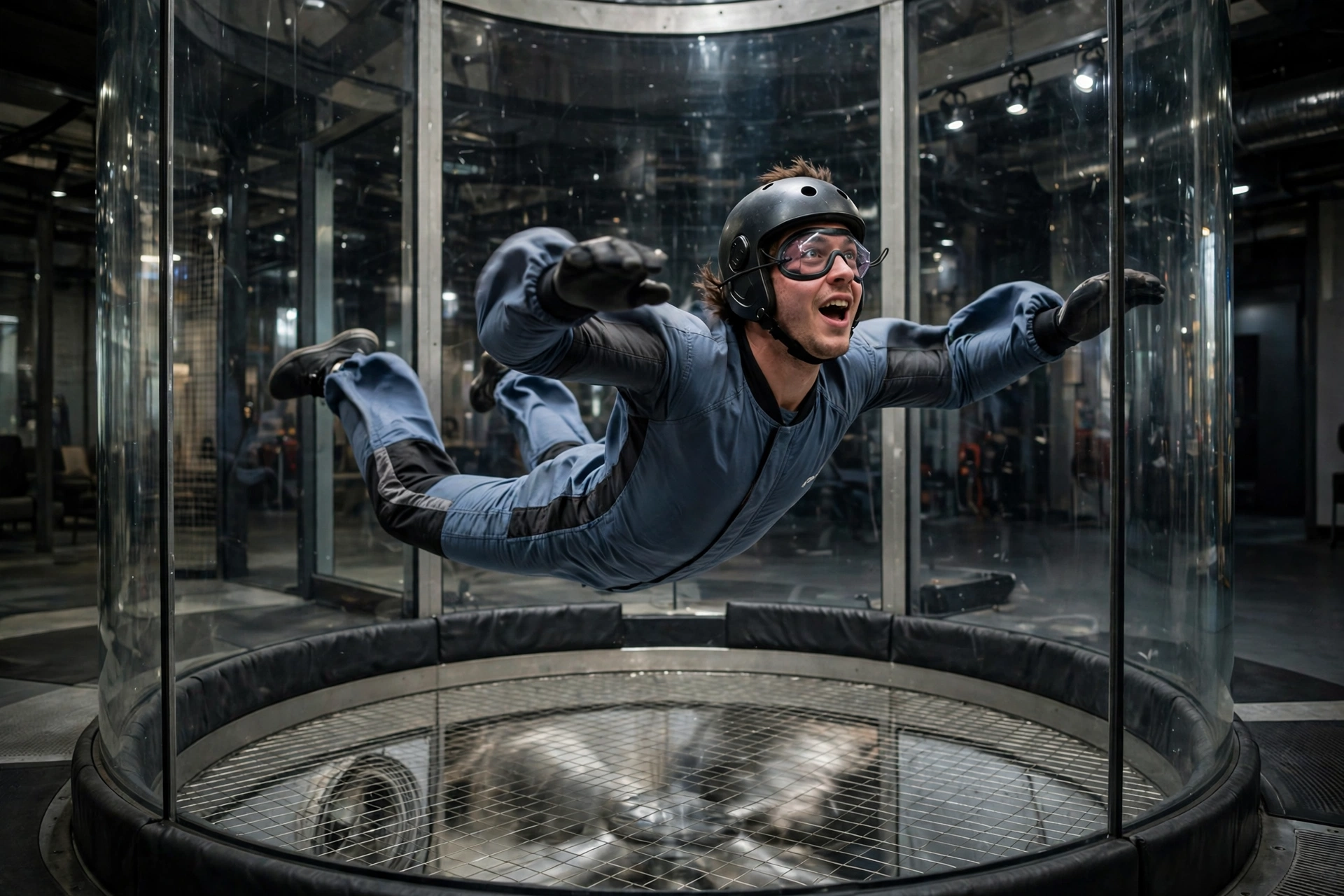
In general terms, yes — most indoor skydiving centres provide a helmet for first-time flyers and require it to be worn in the wind tunnel, so you do not usually need to bring your own, but you should check the centre’s rules before your visit. Helmets in the tunnel protect against bumps on the walls, the net, and other flyers, and they also keep hair out of the airflow.
Indoor skydiving looks gentle from the viewing area, but the wind inside the tunnel is powerful, and a first-time flyer is still learning to control their body in it. Bumps happen, especially in the early minutes, and a helmet turns a knock that might hurt into something minor. That is why centres treat helmets as standard kit rather than an optional extra.
Why Is a Helmet Worn in a Wind Tunnel?
The main reason is protection from contact. A new flyer can drift into the tunnel wall, touch the floor net, or collide gently with an instructor during a manoeuvre. These contacts are usually low speed, but a bare head hitting a hard wall or a metal fitting still hurts, and a helmet spreads that impact and protects against cuts and bruises.
Helmets also help with the practicalities of flying. Long hair in a powerful airstream whips around the face and blocks vision, and a helmet keeps it contained. The helmet can also carry communication equipment, so the instructor can talk to the flyer during the session, which is especially useful for first-timers learning body position.
For experienced flyers practising advanced moves, the reasons are similar but the speeds and angles are greater. Spins, flips, and formation work inside the tunnel bring flyers closer to walls and to each other, and a helmet is part of the standard safety kit for that kind of flying, just as it is outdoors.
Does the Centre Provide the Helmet?
In general terms, yes. Most indoor skydiving centres include a helmet in the price of a first-time package, along with a flight suit, goggles, and ear protection. The helmet will be a tunnel helmet, chosen for indoor use, and staff will help you fit it before your flight. You do not need to buy one for a first visit.
Hygiene is handled by the centre, usually with liners, cleaning between sessions, or disposable caps worn under the helmet. If you are concerned about hygiene, ask the centre what it provides, and bring a thin cap or head covering if you prefer your own layer under the helmet. Centres deal with this question regularly and will tell you what is acceptable.
Some centres allow experienced flyers to bring their own helmets, provided they suit tunnel use. A skydiving helmet that fits well and has no protruding parts that could snag is usually acceptable, but check first, since some centres restrict outside helmets for safety or insurance reasons. For a first visit, using the centre’s helmet is the simplest option.
What Kind of Helmet Is Used Indoors?
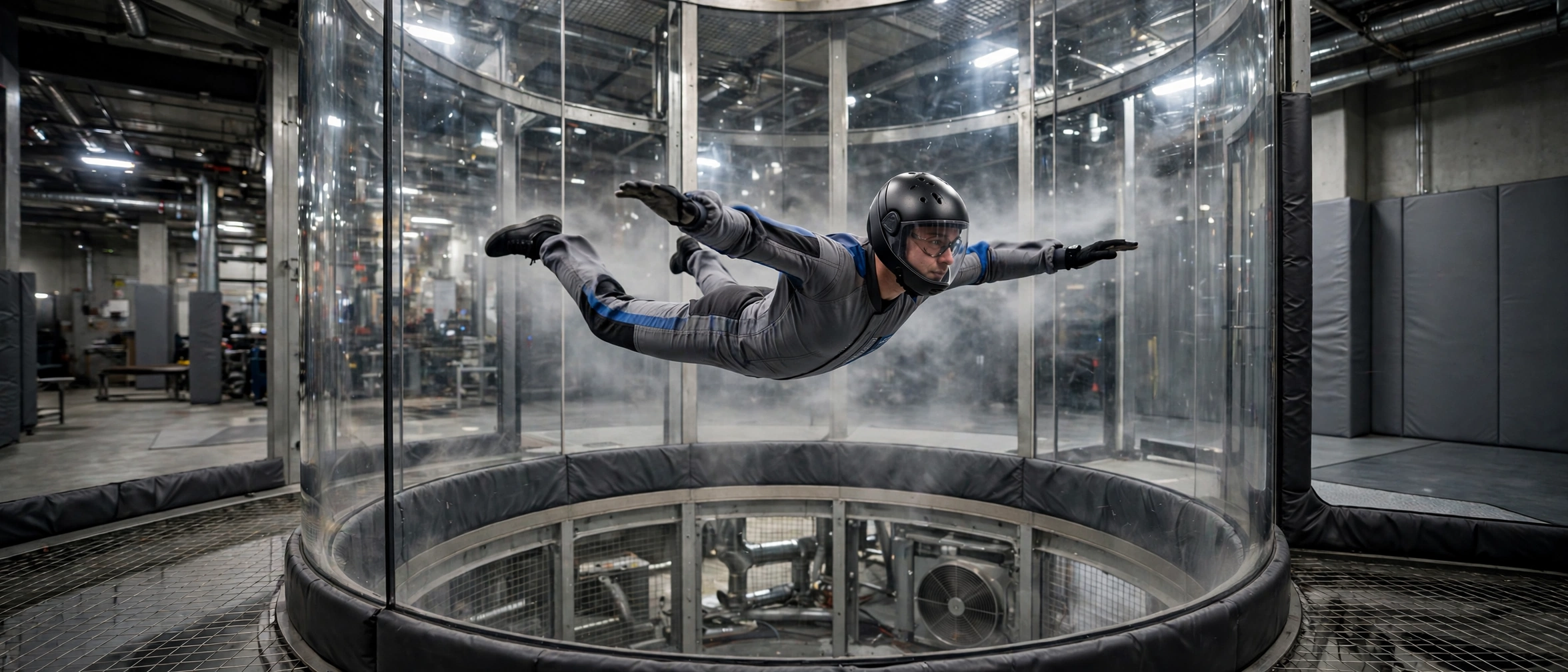
Indoor helmets are usually light, open-face or full-face helmets designed for tunnel flying. They prioritise a secure fit, good vision, and compatibility with goggles and communication systems. They do not need the same weather protection as an outdoor skydiving helmet, since there is no sun, rain, or cold to deal with inside the tunnel.
Fit matters just as much indoors as outdoors. A helmet that is too loose will shift in the airflow and block vision, while one that is too tight becomes uncomfortable within minutes. Staff will check the fit before your flight, and you should speak up if the helmet pinches, rocks, or presses on your ears. A quick size change before flying is far better than struggling through a session.
Goggles are usually worn with the helmet, and the combination should be checked together. The goggles should seal around the eyes without fogging badly, and the helmet should not push them out of place. If you wear glasses, tell the centre in advance, since it can provide goggles designed to fit over them.
Do Children Need Helmets for Indoor Skydiving?
Yes — children flying indoors wear helmets just like adults, and centres take extra care with their fit. A child’s helmet must be the right size for a smaller head, not simply the smallest adult helmet pulled tighter. Centres that welcome children will have children’s sizes available, and staff will check the fit carefully.
Parents should also check age, height, and weight requirements before booking, since these vary by centre. Some centres set minimum ages or sizes for tunnel flying, and those limits exist for safety and for the practicalities of the wind system. A quick call or website check before booking avoids disappointment on the day.
For a child’s first flight, the same advice applies as for adults: use the centre’s helmet, let staff fit it, and raise any discomfort before the flight starts. Children who are comfortable and can see and hear clearly enjoy the experience far more, and a well-fitted helmet is part of that comfort.
Can You Fly Indoors Without a Helmet?
In general terms, no, not as a first-time flyer at a commercial centre. The centre’s rules will require a helmet, and staff will not send you into the tunnel without one. That rule protects both the flyer and the centre, and it is not something you can negotiate away on the day.
Experienced flyers training at a centre may have different arrangements, but even they usually wear helmets for tunnel work, especially when practising dynamic moves. The culture of indoor skydiving treats helmets as normal equipment, not as a burden, and most regular flyers would not consider flying without one.
If you have a medical or comfort concern about wearing a helmet, raise it with the centre before booking rather than on arrival. Staff can explain the options, check sizes, and advise whether indoor flying is suitable for you. That conversation is far more useful than arriving and hoping for an exception, and it reflects the same principle that applies to every helmet: protection only works when the helmet fits and is worn, as explained for angled-impact systems in this guide to what MIPS means for helmets.
Frequently Asked Questions
Q: Do I need to buy a helmet before indoor skydiving?
A: In general terms, no. Most centres provide a helmet as part of a first-time package, fitted by staff before your flight. Bring your own only if you are an experienced flyer and the centre allows it.
Q: Will the helmet hurt or feel uncomfortable?
A: It should not, when fitted correctly. A tunnel helmet is light and should feel snug without pinching. Tell staff at once if it hurts, rocks, or blocks your vision, so they can change the size.
Q: Can I wear glasses under an indoor skydiving helmet?
A: In general terms, yes, with goggles designed to fit over glasses. Tell the centre when you book so it can have suitable goggles ready, and check the fit of helmet and goggles together before flying.

Olivia
Writer at Helmet Today, covering helmet reviews, fit and riding safety.