In general terms, yes — volunteer firefighters wear the same types of helmets as career firefighters, meeting the same standards for structural firefighting, though the exact model, colour, and issuing arrangements depend on the department. A volunteer entering a burning building faces the same heat, flame, and falling debris as a career firefighter, so the protection required is the same, and departments do not cut corners on volunteer head protection.
There are differences in how helmets are provided, maintained, and replaced, and volunteers sometimes wonder whether their equipment is second class. In well-run departments, it is not. Understanding how volunteer helmet provision works, and what to check, helps volunteers be confident in their kit.
Do Volunteers Get the Same Standard of Helmet?
Yes, in general terms. Volunteer departments issue helmets that meet the same standards for structural firefighting as those worn by career firefighters in the same country. The standard, not the employment status of the wearer, determines the protection level, and a helmet that meets the standard protects a volunteer just as it protects a career firefighter.
What may differ is the model. A volunteer department with a smaller budget may choose a different, less expensive model that still meets the standard, while a large career department may buy a premium model with extra features. The core protection is the same, even if the comfort features, weight, or accessories differ. That is a purchasing decision, not a safety compromise, provided the helmet genuinely meets the relevant standard.
Some volunteer departments also rely on donated or second-hand helmets, which is where caution is needed. A donated helmet is only safe if its history is known, it has been inspected, it is within its service life, and it has not taken a serious impact or heat damage. A helmet with an unknown history should not be issued, however generous the donation. If you are offered a helmet and its history is unclear, ask for an inspection before accepting it.
How Are Volunteer Helmets Issued and Fitted?
Volunteer departments usually issue helmets in the same way as career departments: a helmet is assigned to an individual, fitted to that person, and recorded in the department’s equipment system. Personal issue is important, because a helmet fitted to one person may not fit another, and a shared helmet that is never properly adjusted is a safety risk.
Some smaller departments use pooled helmets, kept on the appliance and shared among whoever responds. This can work if the helmets are adjustable and each firefighter checks and adjusts the fit before use, but it is less ideal than personal issue. If your department uses pooled helmets, take the time to adjust the suspension and chin strap every time you put one on, and check that it sits level and stays put.
Fitting should follow the same principles as for any firefighter: fit with the hood and breathing apparatus, check that the helmet sits level, and make sure the chin strap holds it securely. New volunteers should have their fit checked by an experienced member, and the fit should be rechecked whenever hoods, masks, or helmets change. A helmet that fits well is one a volunteer will trust, and trust in equipment matters when the alarm sounds at night.
Do Volunteers Wear Different Helmet Colours?
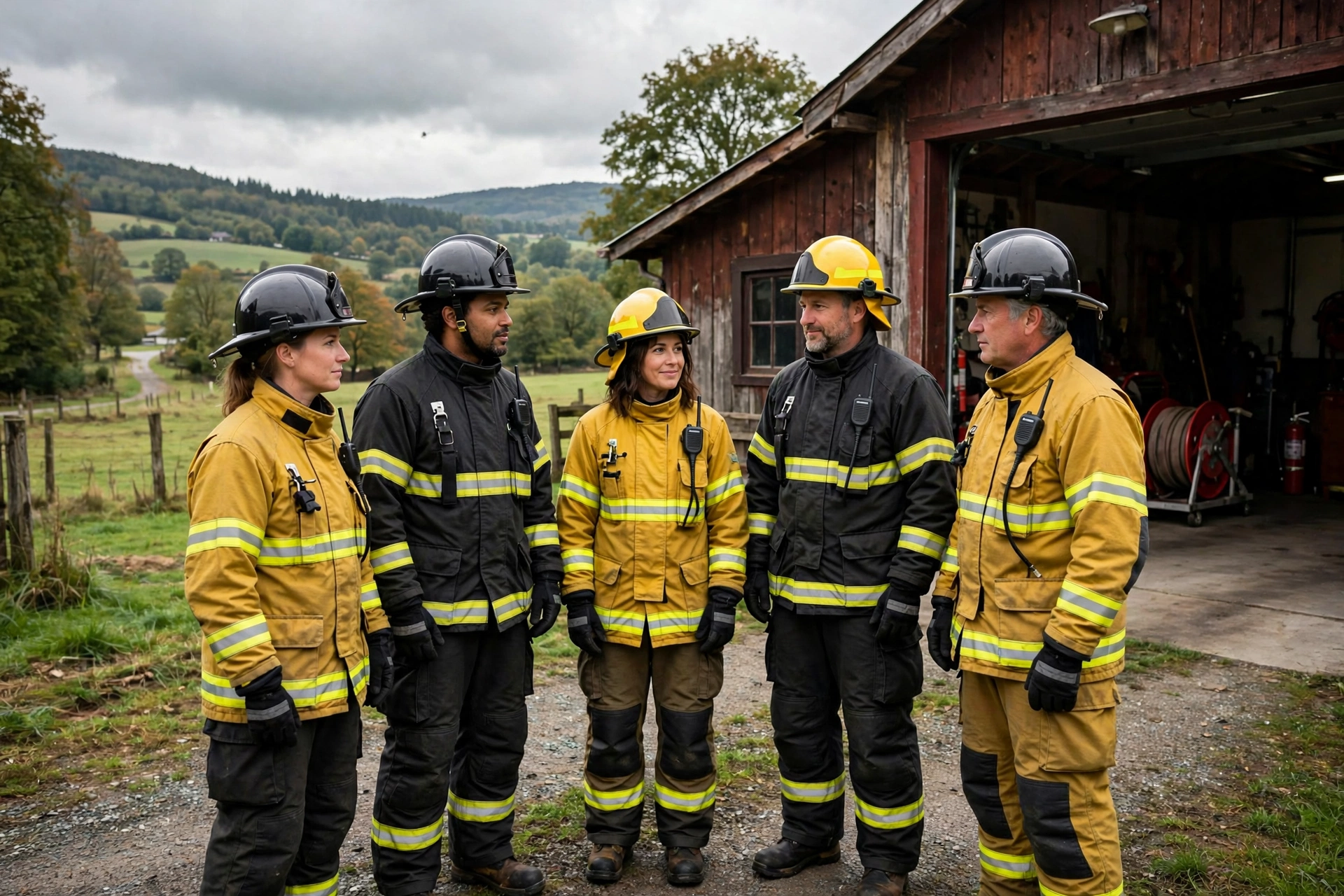
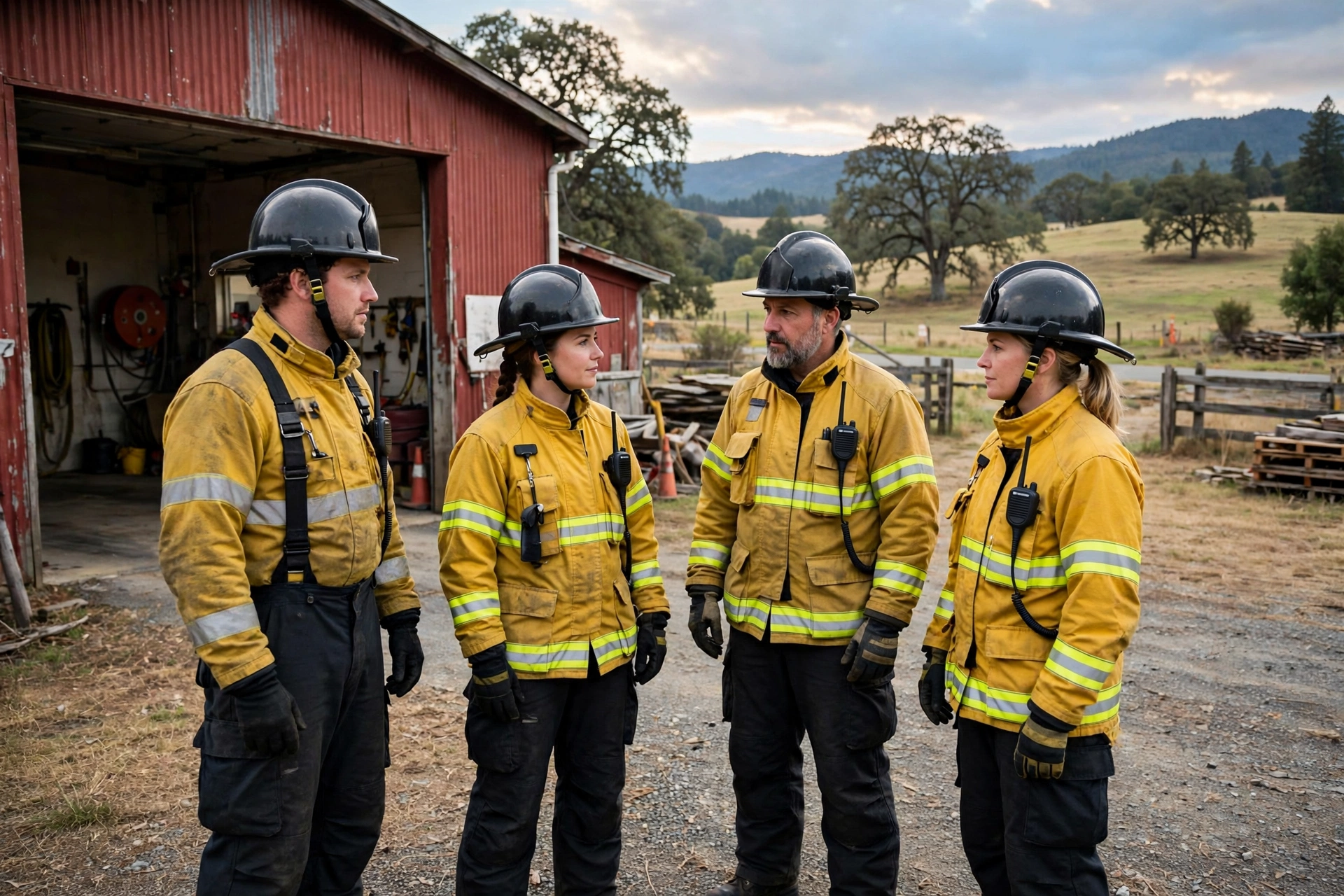
Helmet colours for volunteers follow the department’s system, just as they do for career firefighters, but the system itself varies. In some departments, volunteers wear the same colours as career firefighters in the same roles, so a volunteer firefighter’s helmet is indistinguishable from a career colleague’s. In others, volunteers may wear a distinct colour or marking that identifies them as volunteers, which can help with supervision and public recognition.
A distinct colour for volunteers is not a sign of lower status or lesser protection. It is an identification choice, similar to the way some departments mark probationary firefighters or specialist roles. The protection comes from the helmet’s construction and standard, not its colour, and a volunteer in a distinct colour is just as well protected as a career firefighter in the standard colour.
Who Pays for Volunteer Firefighter Helmets?
In general terms, the department or the governing authority provides helmets for volunteers, just as it provides turnout gear and breathing apparatus. Volunteers are not normally expected to buy their own structural fire helmets, because the department needs to control standards, fitting, and maintenance, and a personally bought helmet may not match the department’s system.
Funding arrangements vary. Some departments are funded by local government, some by fundraising and community support, and some by a mix of both. Budget pressure can affect how often helmets are replaced or which models are bought, but it should not affect whether volunteers get helmets that meet the standard. If a department cannot afford compliant helmets, that is a problem for the governing authority to solve, not a risk for volunteers to absorb.
Some volunteers choose to buy additional personal items, such as helmet lamps, visor accessories, or comfort liners, and departments usually allow this if the items are compatible and approved. Any addition should be checked with the equipment officer first, since an unapproved accessory could interfere with the helmet’s performance or with other kit. The same care applies to any helmet accessory, and the same principle of fit-first protection applies across helmet types, as explained in this guide to what MIPS means for helmets.
What Should a Volunteer Check Before Using a Helmet?
Before your first use, and regularly thereafter, check the helmet’s condition: shell for cracks or heat damage, liner and suspension for wear, chin strap and buckle for security, and visor or shield for scratches. Check the manufacture date and the department’s record for the helmet, and ask about its service life and replacement schedule if you do not know them.
Check the fit with your full kit, as described above, and speak up if the helmet does not fit. A helmet that is too big, too small, or uncomfortable is not a minor inconvenience, it is a safety issue, and a good department would rather exchange a helmet than send a firefighter into a fire with poor protection. New volunteers sometimes hesitate to raise equipment concerns, but raising them is part of being a safe firefighter.
Finally, look after the helmet as you would any piece of safety equipment: clean it after calls, store it properly, and report damage promptly. Volunteers who treat their kit well help the whole department, since well-maintained equipment lasts longer, performs better, and costs less to replace. That care, combined with proper training, is what makes volunteer firefighting as safe as it can be.
Frequently Asked Questions
Q: Do volunteer firefighters get worse helmets than career firefighters?
A: In general terms, no. Volunteer helmets must meet the same standards for structural firefighting, though the model may differ. A helmet with an unknown history or visible damage should never be issued, whatever its source.
Q: Can volunteers buy their own fire helmets?
A: Departments normally issue helmets so they can control standards, fitting, and maintenance. Volunteers may buy approved accessories, but should check with the equipment officer before adding anything to a department helmet.
Q: Do volunteer helmets have different colours?
A: It depends on the department. Some use the same colours for volunteers and career firefighters, while others mark volunteers with a distinct colour for identification. Colour does not affect the helmet’s protection.

Olivia
Writer at Helmet Today, covering helmet reviews, fit and riding safety.