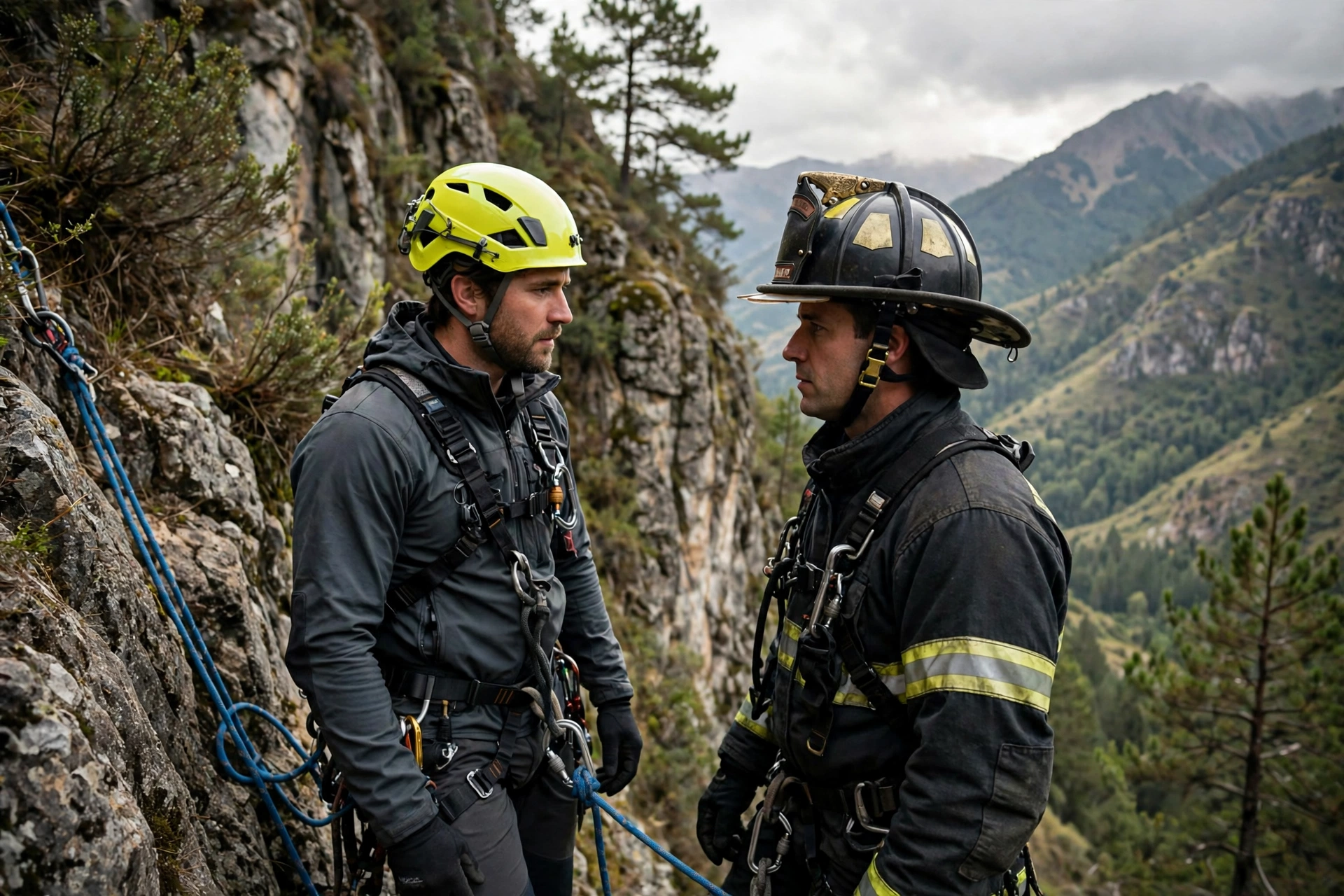
In general terms, a technical rescue helmet and a fire helmet differ in the same way a rescue helmet differs from a fire helmet overall: the rescue helmet is lighter, better ventilated, and built for impacts in varied positions, while the fire helmet is heavier, heat-resistant, and built for flame, heat, and falling debris in a burning building. The distinction matters because technical rescue work and structural firefighting expose the head to different hazards, and the wrong helmet leaves the most important risk uncovered.
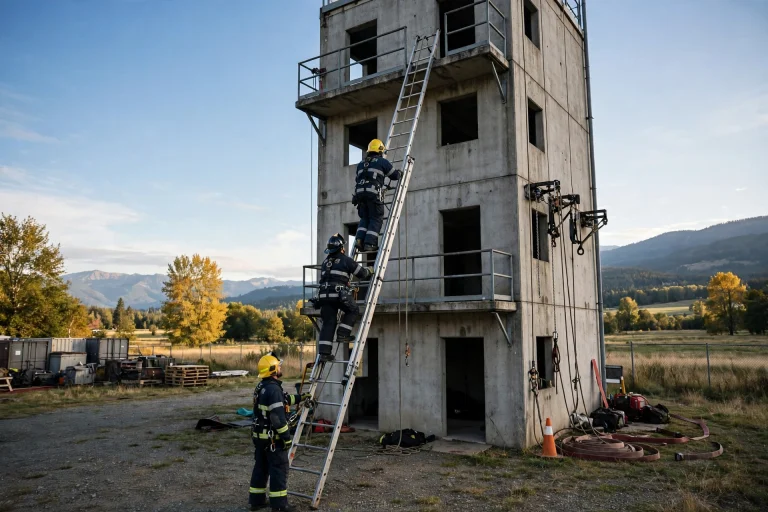
Technical rescue covers a wide range of work: rope rescue, confined space rescue, trench and structural collapse, vehicle extrication, and swiftwater rescue. Each of these involves movement in awkward positions, often for hours, and often in darkness or confined spaces. A helmet designed for that work looks and feels different from one designed for a fire, and understanding why helps crews choose correctly.
What Makes a Technical Rescue Helmet Different?
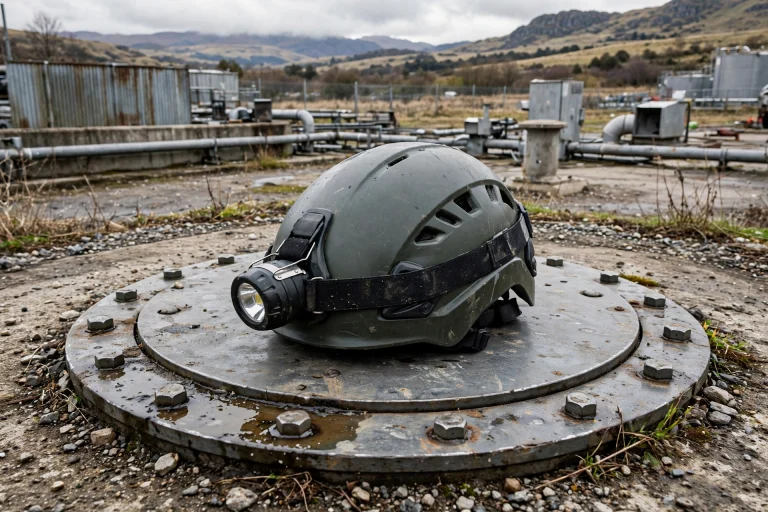
The most obvious difference is weight and ventilation. Technical rescue helmets are designed to be worn for long operations, often involving climbing, crawling, and heavy physical work. They are therefore lighter than fire helmets, with ventilation channels that help manage heat build-up during exertion. That ventilation would be a liability in a fire, where it could admit heat and embers, but in rescue work at normal temperatures, it is a major comfort advantage.
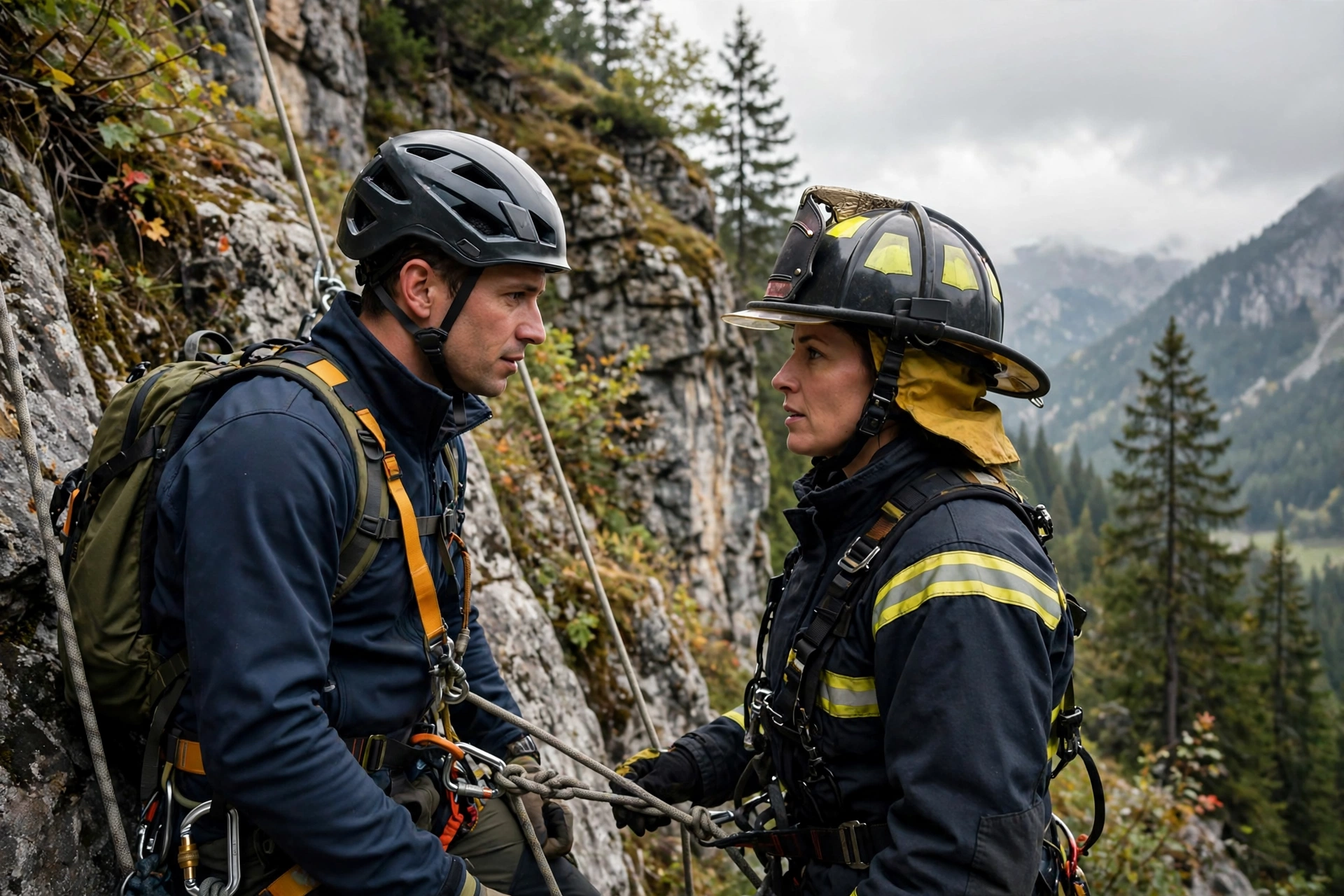
The fit system is also different. Rescue helmets typically have a multi-point chin strap and a suspension that keeps the helmet stable when the wearer is inverted, hanging on a rope, or crawling through a confined space. A fire helmet’s strap is designed for firefighting movements, which are demanding but do not usually involve hanging upside down. In rope rescue, a helmet that slips or comes off is not just uncomfortable, it leaves the head unprotected at height.
Accessory mounting is another key difference. Technical rescue helmets usually have built-in clips or slots for headlamps, which are essential in dark, confined, or night-time rescue work. Some also accept visors, goggles, or hearing protection, and the mounting points are designed to hold accessories securely during movement. Fire helmets also carry lamps and visors, but their mounting systems are tuned to firefighting rather than rope and confined-space work.
What Makes a Fire Helmet Different?
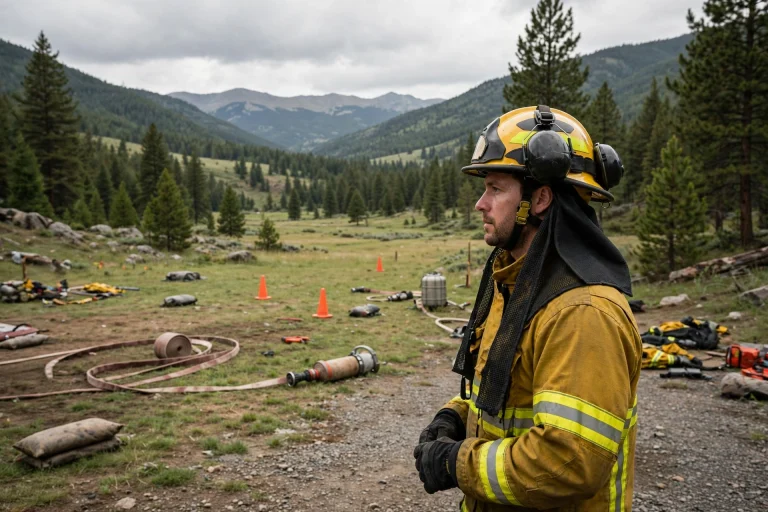
A fire helmet’s defining feature is heat resistance. Its shell and liner are chosen to withstand high temperatures without softening, and its design includes features such as a long rear brim to channel water and debris away from the neck, and ear and neck covers to protect against radiant heat. These features add weight and bulk, but they are essential in a burning building.
The fire helmet is also part of a complete protective ensemble. It is designed to work with a fire suit, hood, gloves, boots, and breathing apparatus as a single system, and its shape and fittings reflect that. The helmet’s brim, shield, and suspension all assume the wearer is in full fire kit, and they are optimised for that context rather than for rope work or confined spaces.
Because of its heat focus, a fire helmet is less ventilated and heavier than a rescue helmet. On a long technical rescue in warm weather, that weight and lack of ventilation cause fatigue and overheating, which themselves become safety risks. A tired, overheated rescuer makes poorer decisions and moves less safely, so wearing the wrong helmet can undermine the rescue in indirect ways as well as direct ones.
Can a Technical Rescue Helmet Be Used in a Fire?
In general terms, no. A technical rescue helmet is not designed to withstand the heat and flame of a structural fire, and wearing one into a burning building would leave the wearer dangerously exposed. The ventilation channels, lighter shell materials, and lower profile that make it excellent for rescue work are liabilities in a fire, where heat resistance is the priority.
There are edge cases, such as a rescue helmet worn during a rescue in a building after the fire is out and the structure has cooled, where heat is no longer a hazard and impact protection is the main concern. In those cases, a rescue helmet may be appropriate, but the decision should be based on a proper risk assessment, not on convenience. If there is any chance of re-ignition or residual heat, the fire helmet remains the right choice.
Which Helmet for Which Rescue Scenario?
For rope rescue, whether on cliffs, in industrial settings, or in urban environments, a technical rescue helmet is the standard choice. Its stable fit, lamp mounts, and light weight suit the work, and its impact protection covers the main hazards: falling objects, contact with rock or structure, and the consequences of a fall.
For confined space rescue, the rescue helmet again suits the work, since the wearer may be crawling, crouching, or working in a horizontal position, and a lamp is often essential. The helmet’s low profile helps in tight spaces, and its ventilation helps during strenuous work in a warm, enclosed environment.
For vehicle extrication, either type may be seen, depending on the service and the situation. If fire is a risk, for example with leaking fuel, the fire helmet and full fire kit are appropriate. If the scene is a straightforward extrication with no fire risk, a rescue helmet gives better comfort and mobility for the cutting and spreading work. Many crews carry both and choose per incident, which is the most flexible approach.
How Do You Choose and Maintain the Right Helmet?
Start with the work your team actually does. If your team attends both fires and technical rescues, plan for both helmet types, and make sure crews know which to pick for each incident type. Training should include helmet selection as part of the incident briefing, so that the choice becomes routine rather than an afterthought.
Fit and maintenance matter for both types. A rescue helmet that fits badly will slip during rope work, and a fire helmet that fits badly will shift in a fire. Check the fit with the other kit worn for that role, including lamps, goggles, and communications, and inspect both helmet types regularly for shell damage, liner wear, and strap condition.
Finally, keep the two types clearly distinguished in storage, so that a crew member under pressure does not grab the wrong one. Colour coding, labelling, or separate storage locations all help, and they are worth the small effort. A helmet system that is easy to get right under stress is a safer system, and that principle applies to every helmet choice, including the impact technology explained in this guide to what MIPS means for helmets.
Frequently Asked Questions
Q: Is a technical rescue helmet the same as a rescue helmet?
A: In general terms, yes. Technical rescue helmet is the fuller name for the type often called a rescue helmet, used for rope, confined space, collapse, and vehicle rescue work where impact protection, not heat resistance, is the priority.
Q: Can I use my fire helmet for rope rescue training?
A: You can, but a technical rescue helmet is better suited, since it is lighter, better ventilated, and more stable when inverted or hanging. For regular rope work, invest in a proper rescue helmet.
Q: Do rescue teams carry both helmet types?
A: Many do. Teams that attend both fires and rescues often carry a structural fire helmet and a technical rescue helmet, choosing the right one for each incident based on the hazards present.

Olivia
Writer at Helmet Today, covering helmet reviews, fit and riding safety.