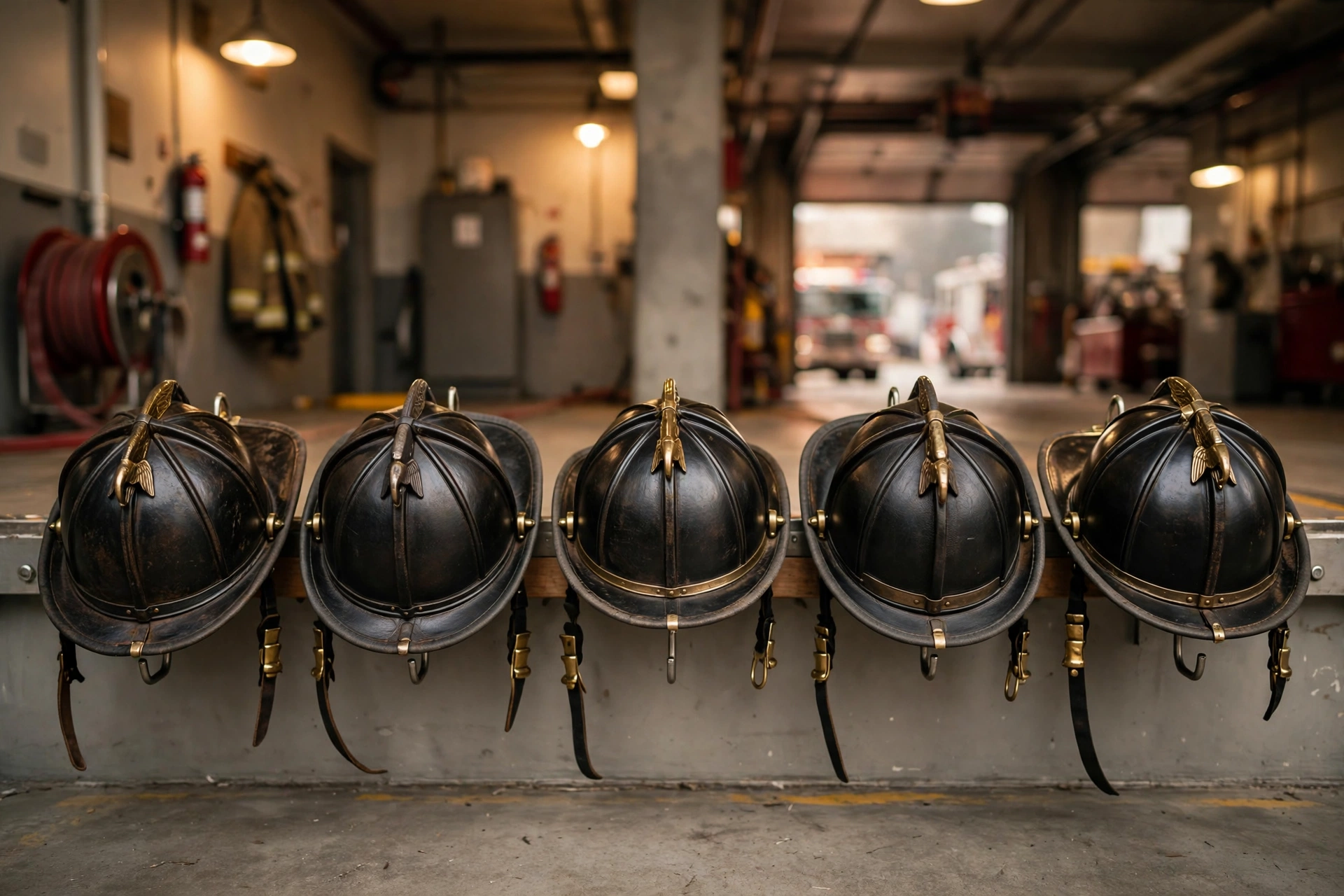
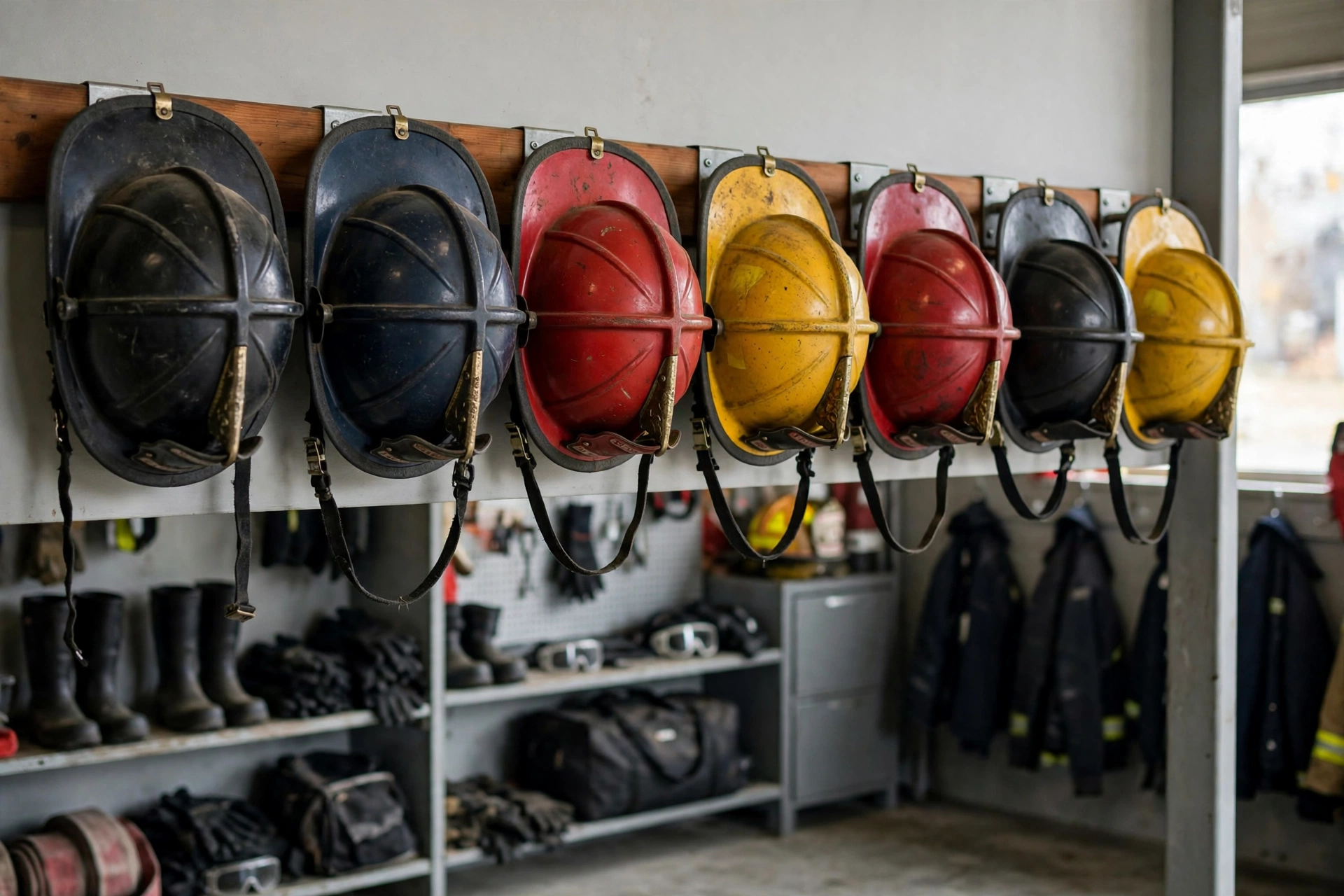
Fire helmets should be stored upright on a rack or shelf in a cool, dry, well-ventilated spot at the station, away from direct sunlight, heat sources, and chemicals. In general terms, good storage is not just tidiness: heat, ultraviolet light, and damp can age a helmet’s shell and suspension long before its next call, so where a helmet sits between shifts matters almost as much as how it is worn.
Most stations solve this with a simple helmet rack in the apparatus bay or gear room, where each helmet has its own hook or shelf and air can circulate around it. This guide covers the storage habits that protect a helmet, the mistakes that quietly shorten its life, and how to set up a station storage spot that works on a busy shift.
Why Does Fire Helmet Storage Matter?
A fire helmet spends most of its life waiting. Between calls it may sit for hours or days, and during that time it is exposed to whatever surrounds it: sunlight through a bay window, heat from a nearby appliance, exhaust fumes, or damp air in a gear room. Over time, these exposures can fade shells, dry out suspension straps, and weaken adhesives and padding. None of this happens overnight, which is exactly why it is easy to miss.
Storage also affects readiness. A helmet stored in a consistent, known spot is grabbed in seconds, while one buried under turnout gear or left on a truck seat costs time on a call-out. Stations that treat helmet storage as part of readiness — the same way they treat checking an air pack — get both benefits: helmets that last longer and crews that kit up faster.
Where Is the Best Place to Store a Fire Helmet at the Station?
The best storage spot is indoors, out of direct sunlight, and away from heat. A gear room or a rack on the apparatus bay wall usually fits the bill, provided the rack is not next to a heater, a boiler, or a south-facing window that bakes in the afternoon. The spot should be dry and ventilated rather than sealed and damp: a closed locker with no airflow can trap moisture after a wet call, and damp padding takes far longer to dry.
Height matters too. Helmets stored at waist or shoulder height are easy to reach and less likely to be knocked to the floor than helmets balanced on top of a locker. If space is tight, wall-mounted helmet racks or individual hooks keep helmets separated and off the ground.
Should Fire Helmets Be Stored Upside Down or Upright?
Upright is the better choice in general terms. Storing a helmet upright, resting on its brim or on a purpose-made rack cradle, keeps its shape and keeps the suspension hanging naturally inside the shell. It also lets air flow through the helmet, which helps damp liners and padding dry out after a call.
Storing a helmet upside down is not disastrous for a short spell, but it is not ideal as a habit. An inverted helmet collects dust and drips inside the shell, and its weight rests on the brim edge rather than spreading evenly. Hanging a helmet by its chin strap is another habit worth avoiding: it stretches the strap over time and can distort the suspension. A rack, hook through the shell’s hanger loop where one is provided, or a shelf is a kinder option.
What Damages a Fire Helmet in Storage?
Sunlight is one of the quietest enemies. Ultraviolet light fades shells and can make some plastics brittle over long exposure, so a helmet left on a dashboard or a sunny windowsill ages faster than one on a shaded rack. Heat is another: storing helmets near radiators, drying cabinets set too hot, or engine compartments can warp shells and dry out straps. In general terms, if a spot feels uncomfortably warm to stand in, it is too warm for a helmet.
Chemicals deserve attention as well. Helmets stored beside cleaning solvents, fuels, or decontamination chemicals can suffer if a container leaks or fumes concentrate in a closed space. Keep helmets away from chemical stores, and never store a helmet in the same compartment as fuel cans or solvent bottles. Damp is the final culprit: a helmet put away soaking wet, inside a sealed bag or locker, can grow mould in its padding and develop a smell that is hard to remove. Let helmets air-dry before they go back on the rack.
How Should Helmets Be Stored After a Call?
After a call, the routine matters more than the rack. Shake off loose debris, wipe the shell with a damp cloth if it is sooty or dirty, and check the helmet briefly for obvious damage before it goes back. If the helmet is wet, leave it in a ventilated spot to dry before returning it to its usual place — and do not use direct heat to speed this up, since high heat can damage the shell and suspension.
Turnout gear and helmets are often stored together, and that is fine as long as the helmet is not crushed under heavy gear. A helmet wedged beneath a pile of coats and boots can have its brim bent or its suspension compressed, so give it its own hook or shelf within the same gear area.
How Do You Set Up Helmet Storage for a Whole Crew?
For a full crew, the system needs to be simple enough to survive a busy night. A labelled rack near the apparatus, one space per firefighter, is the classic answer, and it works because it is obvious and fast. Each space should be big enough that helmets do not knock against each other, since repeated knocks chip shells and scuff visors. If the station uses helmet-mounted lights or cameras, leave room for those so they are not crushed against the wall.
Spare helmets and helmets awaiting repair need their own clearly marked spot, separate from front-line helmets. Nothing slows a call-out like grabbing a helmet that is out of service. A simple tag or a separate shelf for spares and repairs prevents that mix-up. Finally, review the storage area now and then: racks loosen, labels fade, and a gear room that was dry last winter may develop a leak. A quick quarterly check of the storage spot itself is a small job that protects every helmet in it. If you are learning about helmet technology, reading about what MIPS is for helmets can help you understand one of the features you may see listed on modern helmets.
Frequently Asked Questions
Q: Can I store a fire helmet in my personal vehicle?
A: In general terms, short trips are fine, but a vehicle is a poor long-term store: summer heat, sunlight through glass, and loose gear sliding around can all damage a helmet. A station rack is the better home.
Q: Should a fire helmet be stored in a bag?
A: A breathable helmet bag is fine for transport and keeps dust off, but do not seal a damp helmet in a bag or locker. Let it dry first, and use a bag that allows some airflow.
Q: How often should stored helmets be checked?
A: A quick visual check after each call, plus a more careful inspection on a regular schedule set by your department, is a sensible routine. Storage itself should be checked now and then for damp, heat, or damage to the rack.

Olivia
Writer at Helmet Today, covering helmet reviews, fit and riding safety.