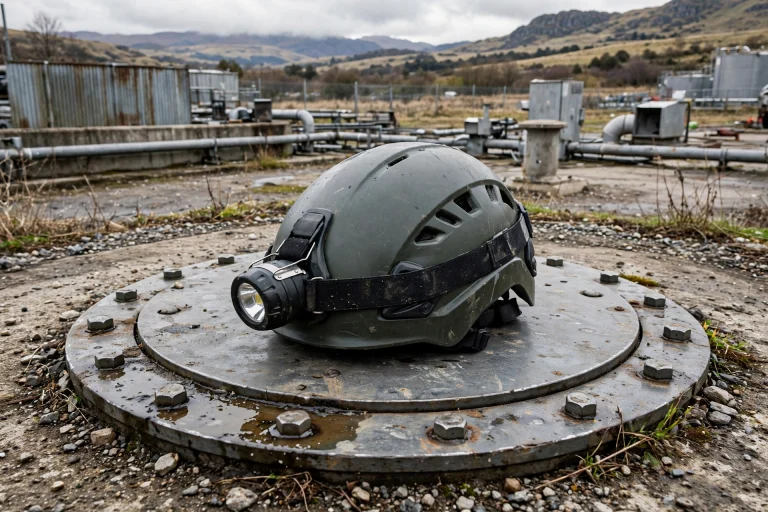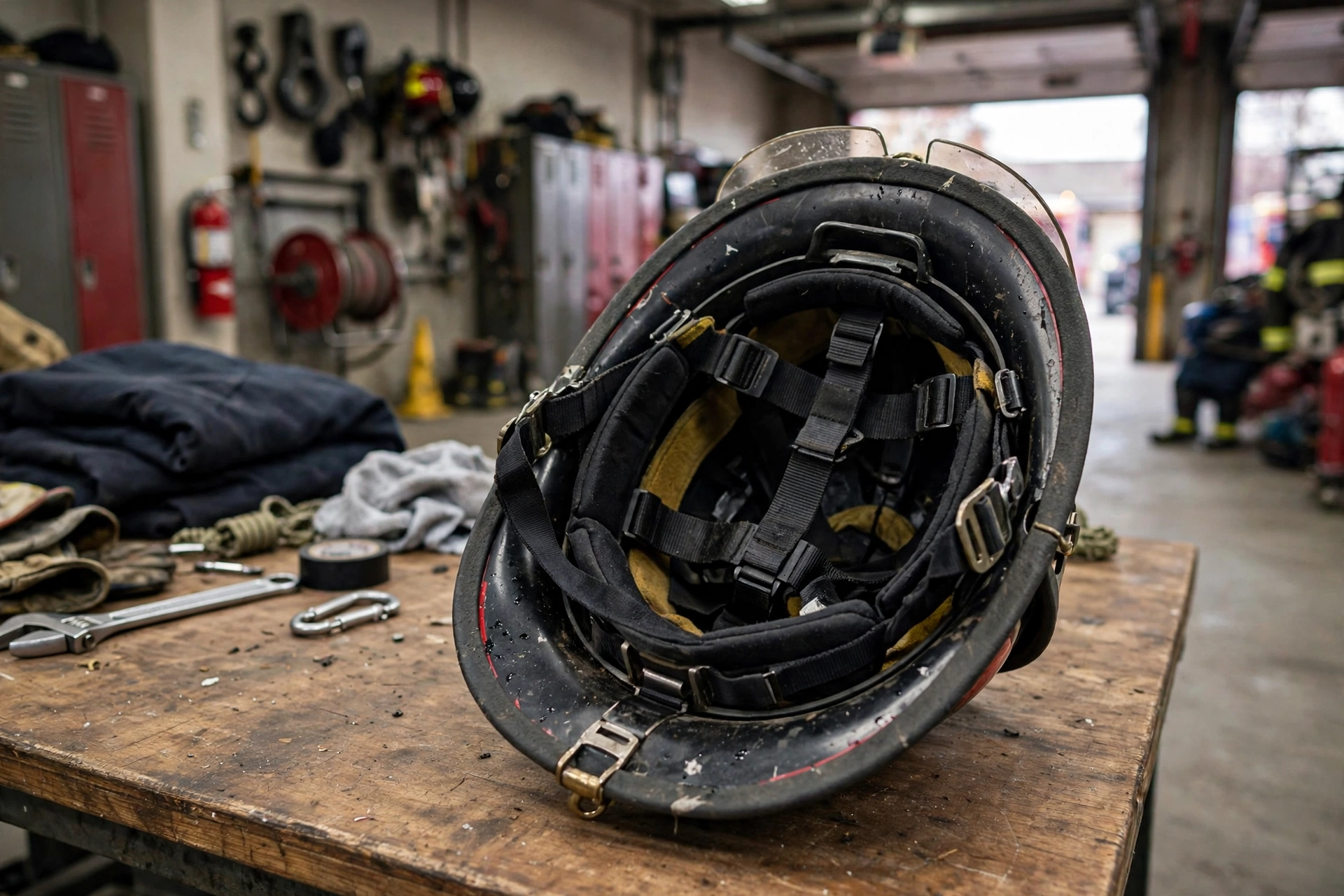
A fire helmet’s suspension and fit are adjusted with the internal cradle, the ratchet or sizing band at the back, and the chin strap, so that the helmet sits level, feels snug all around, and stays put when you move. In general terms, a helmet that fits well protects better and feels better on a long call, while a loose or tilted helmet can shift at the worst moment and become a distraction.
Most modern fire helmets share the same basic adjustment points, even though the details vary between makers. This guide walks through each one, the order to adjust them in, and the checks that confirm the fit is right before you go on a call.
What Parts Make Up a Fire Helmet’s Suspension?
The suspension is the webbing and padding system inside the shell that holds the helmet on your head and creates a gap between the shell and your skull. That gap matters: it is part of how the helmet absorbs impact, and it also lets air circulate. The main parts are the cradle or crown straps that sit over the top of your head, the sizing band that runs around your head, and the nape strap or ratchet at the back that tightens the fit.
Comfort padding sits over the webbing where it touches your head, and the chin strap holds everything in place from below. Some helmets add a ratchet dial at the rear for fine adjustment, while others use a sliding or hook-and-loop band.
How Do You Adjust the Sizing Band and Ratchet?
Start with the helmet clean and dry, and put it on without gloves so you can feel the fit. First, set the sizing band: on a ratchet model, turn the dial to loosen the band fully, put the helmet on, then tighten until it feels snug but not tight. On a slide-band model, adjust the band length evenly on both sides so the helmet sits centred. The band should grip around the widest part of your head, just above your ears and eyebrows.
Next, check the height. The helmet should sit level, low enough to cover your forehead, without tilting forward over your eyes or back off your forehead. If your helmet has a height adjustment on the cradle, use it to raise or lower the helmet on your head until the brim sits where you want it. Small changes here make a big difference: a helmet riding high leaves your forehead exposed, while one riding low can block your vision and press on your ears.

How Should the Chin Strap and Nape Strap Be Set?
The chin strap is the last line of defence against the helmet coming off, so it deserves care. Fasten it snugly under your chin, tight enough that you can fit about two fingers between strap and chin but not so tight that it is uncomfortable to talk or swallow. A strap left dangling or fastened loosely lets the helmet rock or come off in a fall, which defeats the purpose of wearing it.
The nape strap, which sits at the back of the head, stops the helmet sliding forward. Adjust it so it cradles the base of your skull without riding up onto the crown or digging into your neck. On many helmets the nape strap and the sizing band work together: tightening one changes the feel of the other, so go back and forth in small steps until both feel right. If your helmet has a chin cup rather than a plain strap, centre the cup under your chin and adjust both sides evenly so the helmet does not pull to one side.
How Do You Check That the Fit Is Right?
Once adjusted, run through a quick fit check. Shake your head firmly side to side and up and down: the helmet should move with your head, not slide around it. Push the front brim up gently: the helmet should resist and stay in place rather than tipping back. Look up, down, and sideways to make sure the brim and any visor or eye shield do not block your vision or catch on your breathing apparatus mask if you wear one.
Comfort over time is the other test. A fit that feels fine for thirty seconds can develop a pressure point after an hour, so wear the adjusted helmet for a while during a drill or station duties before deciding it is right. Hot spots on the forehead or the sides of the head often mean the cradle needs repositioning rather than simply loosening the band. If you cannot get a comfortable, stable fit after trying the adjustments, the helmet may be the wrong size or the suspension may be worn, and that is worth raising with your equipment officer rather than living with.
How Often Should Suspension Be Re-Adjusted or Replaced?
Suspension settings drift with use. Straps stretch slightly, padding compresses, and a helmet shared between shifts may be re-adjusted every time it changes hands. Get into the habit of checking the fit each time you put the helmet on, not just when it is new. A quick shake test and strap check takes seconds and catches a loosened ratchet before a call.
The suspension itself wears out over time. Frayed webbing, cracked cradle clips, a ratchet that no longer holds, or padding that has gone flat are all signs that parts need replacing. In general terms, suspension components are replaceable on most helmets, and replacing worn parts is far cheaper than replacing the whole helmet.
What Are Common Fit Mistakes to Avoid?
The most common mistake is wearing the helmet too far back, leaving the forehead exposed. This often happens when the sizing band is too loose or the cradle sits too high, and it is easy to miss because the helmet still feels secure. Another frequent mistake is over-tightening the ratchet to compensate for a wrong size: a too-tight helmet causes headaches and pressure marks, and firefighters end up loosening it on the job, which brings back the original problem.
Other mistakes include leaving the chin strap unfastened for comfort, wearing a thick beanie or hood under the helmet in a way that changes the fit, and ignoring a helmet that rocks because the suspension is worn. Each of these is fixable, and most are caught by the shake test and a look in the mirror before a shift. If you are learning about helmet technology, reading about what MIPS is for helmets can help you understand one of the features you may see listed on modern helmets.
Frequently Asked Questions
Q: How tight should a fire helmet’s ratchet be?
A: Snug enough that the helmet does not slide when you shake your head, but not so tight that it causes pressure or a headache. You should be able to wear it comfortably for a long call without constantly adjusting it.
Q: Can I adjust a fire helmet to fit over a hood?
A: In general terms, yes, if the hood is part of your issued kit and the helmet is designed to be worn with it. Adjust the fit while wearing the hood, and re-check the fit without it, since the two fits can differ.
Q: What if my helmet keeps slipping forward?
A: Check the nape strap first: it may be too loose or riding too high. Then check the cradle height and the chin strap. If it still slips after adjustment, the suspension may be worn or the size may be wrong.

Olivia
Writer at Helmet Today, covering helmet reviews, fit and riding safety.