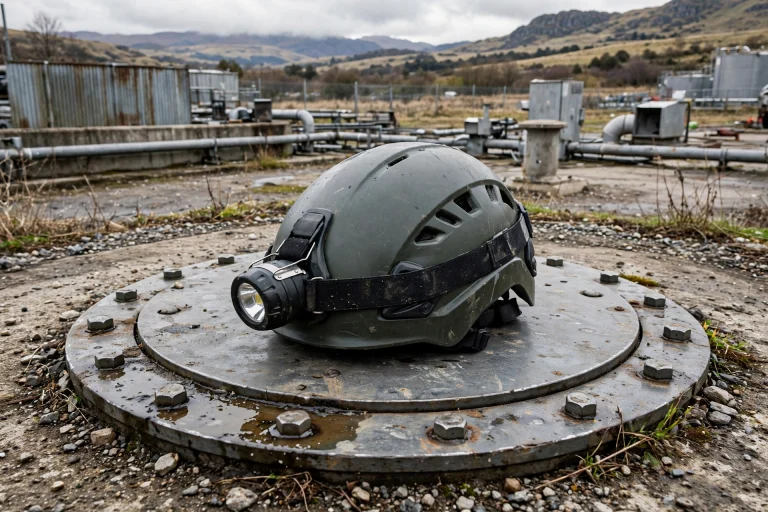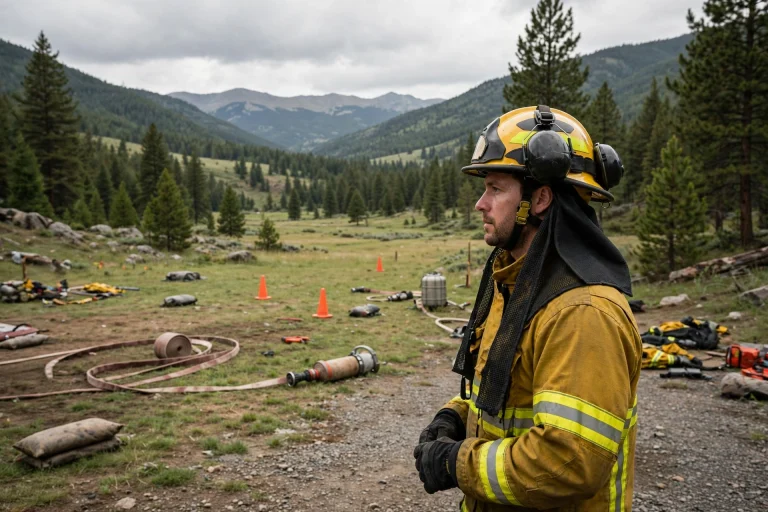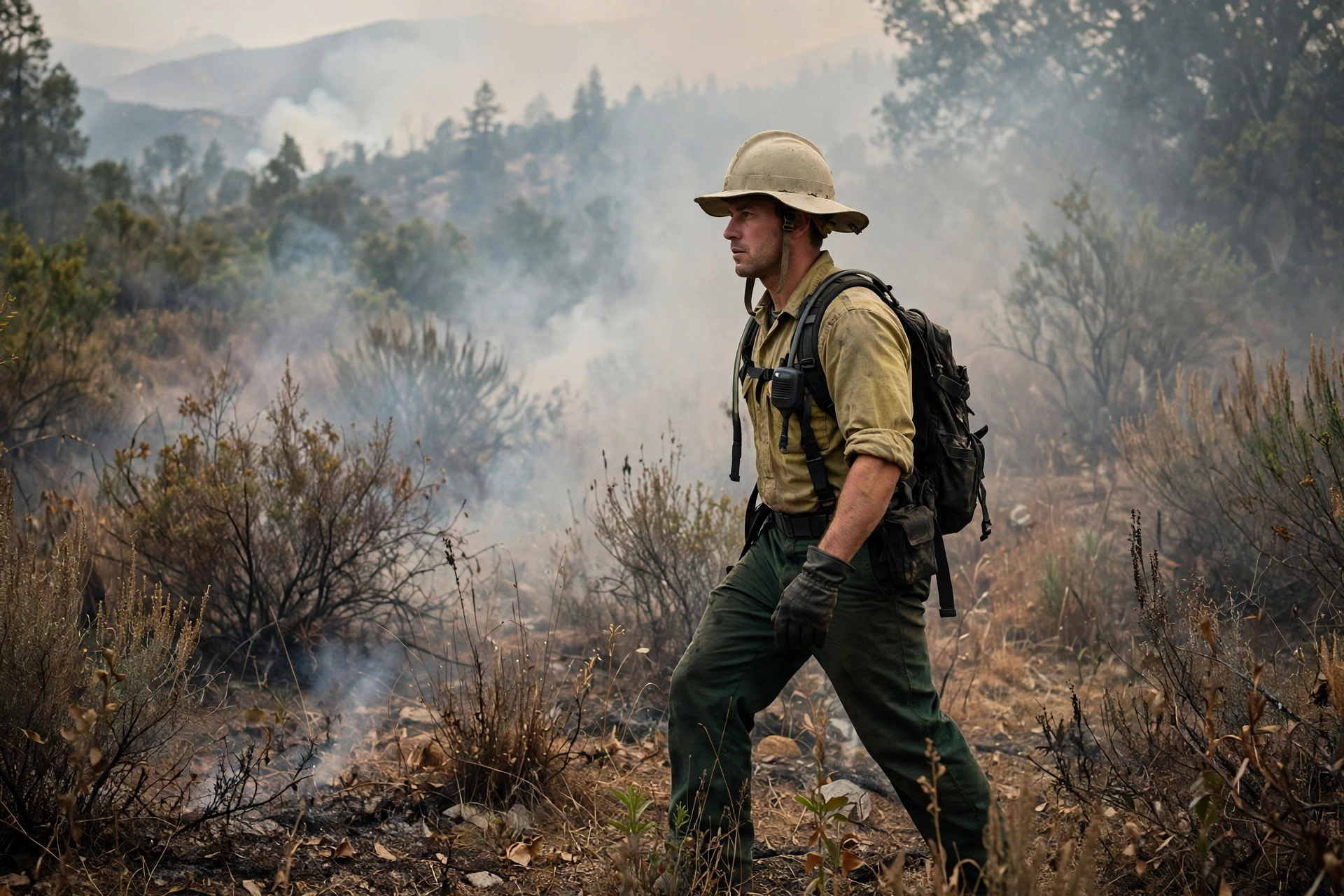
A fire helmet for wildland firefighting is lighter and more ventilated than a structural helmet, with no breathing-apparatus interface, a brim or shroud that sheds embers and sun, and fittings for goggles and a headlamp instead of a face shield. In general terms, everything changes because the job changes: wildland crews walk long distances in heat and smoke, rather than entering burning buildings with an air pack.
Wildland helmets are built around a different set of hazards — radiant heat, falling branches, embers, and long hours outdoors — and they are judged by a different standard. This guide explains what changes, why, and what to look for in a wildland helmet.
How Is Wildland Firefighting Different From Structural Firefighting?
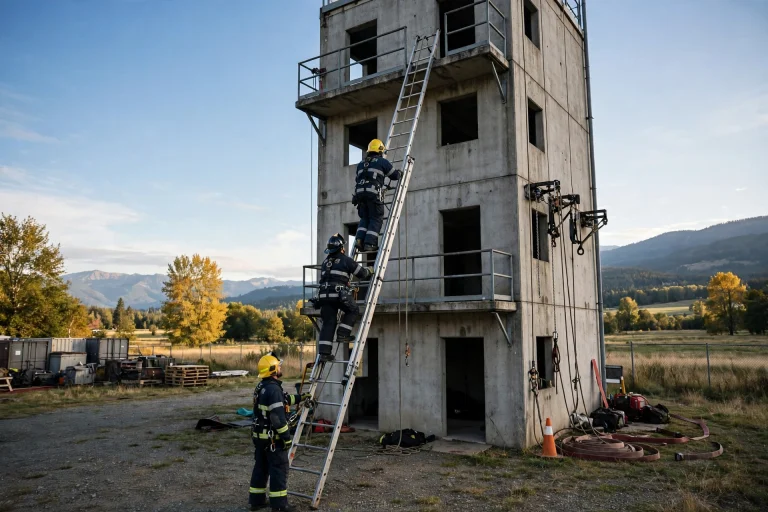
Structural firefighting happens inside buildings, where the main threats are intense heat, flame, smoke, and collapsing structure, and where crews wear breathing apparatus and heavy turnout gear. Wildland firefighting happens outdoors, across terrain that may be steep, uneven, and far from roads. Crews may hike for hours carrying tools, dig fireline, and work in smoke and heat without ever entering a building.
That difference drives every design choice. A structural helmet is built to withstand high heat and to interface with a breathing apparatus mask and hood. A wildland helmet is built to be light enough to wear all day, ventilated enough to manage heat, and protective against the hazards of the bush: falling limbs, embers, sun, and debris kicked up by wind or tools. Weight that is tolerable for a thirty-minute interior attack becomes a serious burden over a twelve-hour shift on a fireline.
What Changes in the Helmet’s Shape and Weight?
Wildland helmets are noticeably lighter than structural helmets, often by a wide margin, and they usually have a full brim or a wide peak that shades the face and neck and sheds embers and rain. Many have ventilation slots or a design that allows airflow, since heat build-up is a constant problem outdoors. The shell is typically a hard hat style shell rather than the tall traditional or modern structural shape, which keeps the profile low for working under branches.
The suspension is simpler and lighter too, often a standard hard-hat-style suspension with a comfortable liner, rather than the heavier cradle systems found in structural helmets. Because wildland crews wear helmets for very long shifts, comfort and ventilation are not luxuries: a helmet that cooks its wearer will be loosened, removed, or resented, and none of those outcomes helps safety. Fit adjustment is usually a simple ratchet or slide band, quick to set and easy to adjust with gloves on.
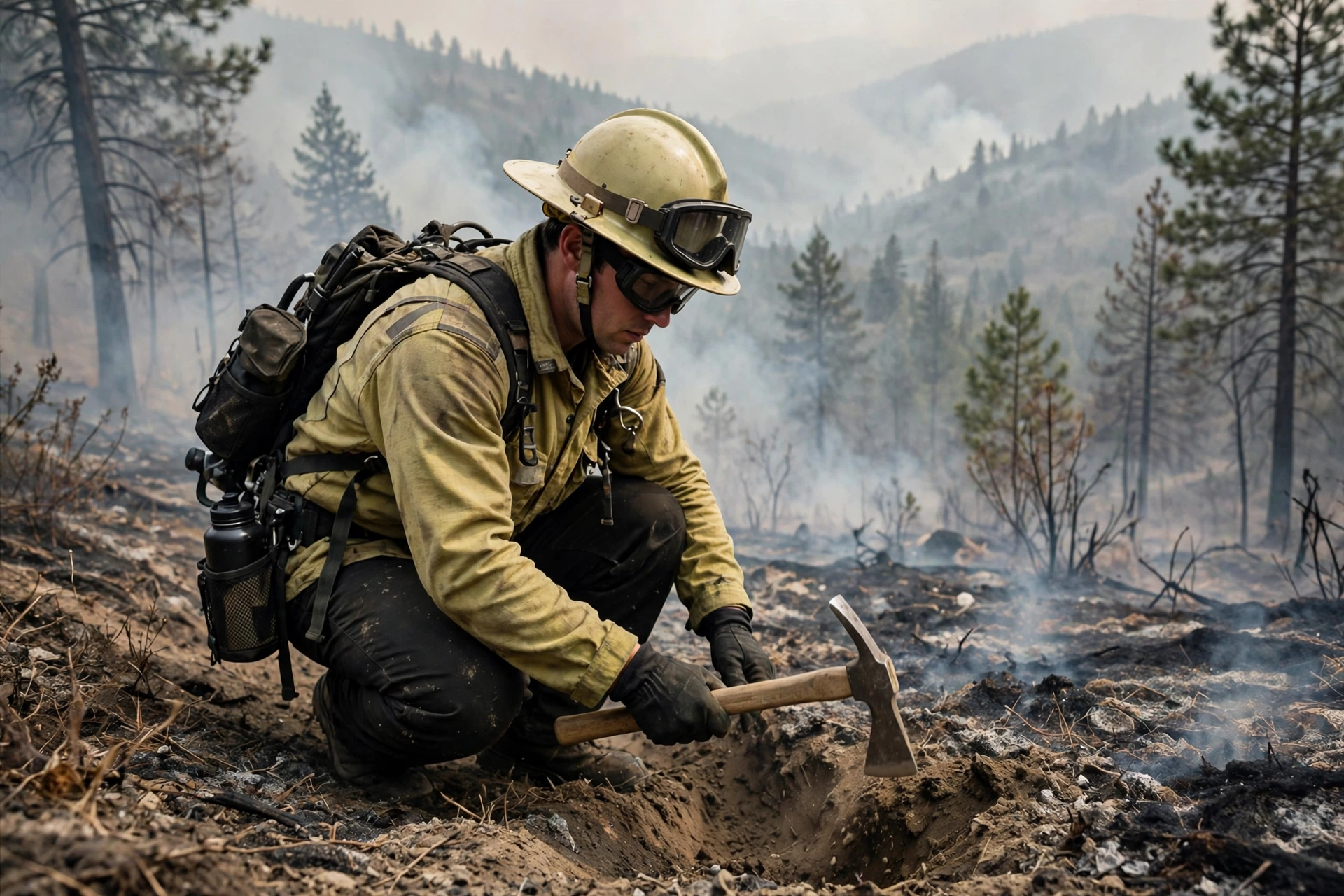
What About Face, Eye, and Neck Protection?
Structural helmets often carry a face shield and are worn with a hood and breathing apparatus mask. Wildland helmets take a different approach: eye protection comes from goggles or safety glasses, often carried on the helmet and dropped down when smoke or ash thickens. Many wildland helmets have goggle clips or a retainer at the back to hold goggles in place when not in use.
Neck protection comes from a shroud or neck curtain, a flap of fire-resistant fabric that hangs from the back of the helmet and shields the neck from embers, sun, and radiant heat. Ear covers serve a similar purpose at the sides. These are lighter and more flexible than structural helmet ear covers, and they are often removable so crews can adjust for conditions. A headlamp mount on the front is common, since wildland shifts frequently extend into darkness.
What Standard Does a Wildland Helmet Meet?
Wildland helmets are judged against a different standard from structural helmets, reflecting their different hazards. In general terms, the relevant standard addresses impact, penetration, heat resistance, and electrical insulation for outdoor fire work, rather than the extreme heat and flame exposure of interior structural firefighting. The label inside the helmet states which standard it meets, and crews should check that label rather than assuming any hard-looking helmet qualifies.
It is important not to mix the two roles up. A structural helmet worn on a wildland fire is heavier and hotter than needed, and a wildland helmet worn into a burning building does not provide the heat and flame protection that structural work demands. Departments that do both kinds of work usually issue both kinds of helmet, and crews are trained to pick the right one for the incident. Using the wrong helmet for the job is a common mistake in departments that cover both urban and rural areas.
What Should You Look for When Choosing a Wildland Helmet?
Start with weight and ventilation, since these decide whether the helmet is wearable for a full shift. Then check the brim: a full brim shades well and sheds embers, but some crews prefer a cap style with a front peak for working under low branches. Check that goggles fit comfortably with the helmet, and that the shroud or neck curtain attaches securely and does not flap into your vision.
Colour and visibility are worth a thought too. Many wildland helmets come in bright colours that help crews spot each other in smoke and bush, and reflective markings add visibility at night. Finally, consider how the helmet works with the rest of your kit: hearing protection for chainsaw work, a headlamp for night shifts, and a chin strap that keeps the helmet on in wind or when bending and digging. A helmet that integrates with your kit is one you will keep on. If you are learning about helmet technology, reading about what MIPS is for helmets can help you understand one of the features you may see listed on modern helmets.
Frequently Asked Questions
Q: Can I wear a structural fire helmet for wildland firefighting?
A: In general terms, it is not the right tool for the job: it is heavier, hotter, and built for interior heat rather than long outdoor shifts. A wildland helmet is lighter, ventilated, and designed for the hazards of the fireline.
Q: Do wildland helmets protect against radiant heat?
A: They offer protection against embers, sun, and moderate radiant heat, especially with a shroud fitted, but they are not designed for the intense heat of interior structural firefighting. Crews should keep a safe distance from the fire edge as trained.
Q: Are goggles required with a wildland helmet?
A: Eye protection is standard practice in wildland work, and goggles are the usual choice because they seal against smoke and ash. Many wildland helmets are designed to carry goggles when not in use.

Olivia
Writer at Helmet Today, covering helmet reviews, fit and riding safety.