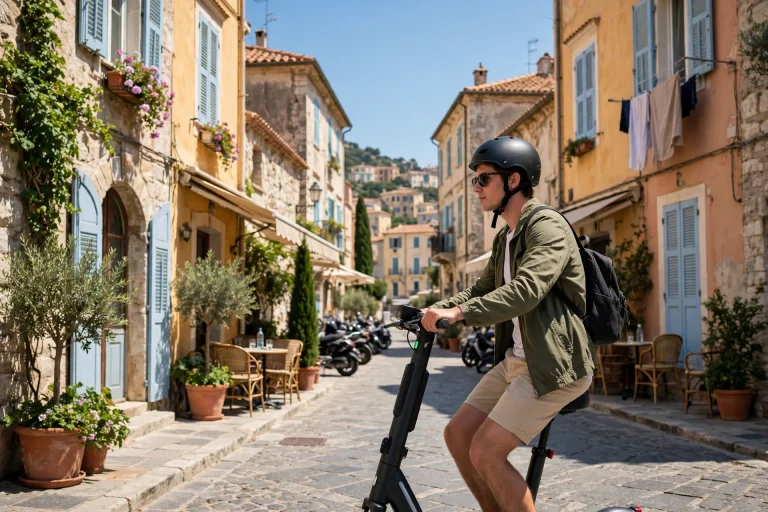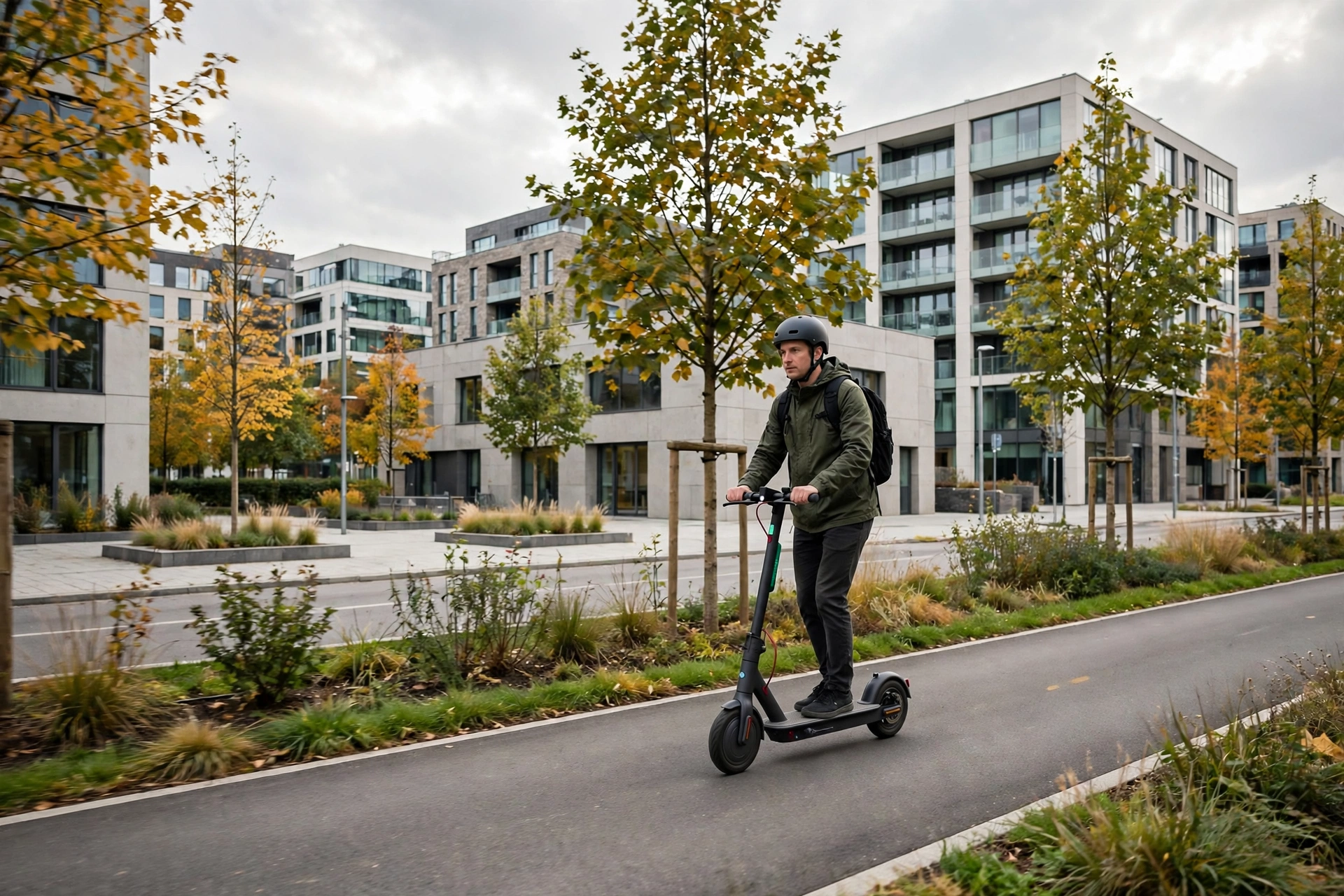
In general terms, e-scooters are legal on German roads under national rules for small electric vehicles, and helmet use is strongly recommended but not generally compulsory for adult riders — although that general picture comes with important conditions, and riders should check the current local rules before riding. Germany was one of the earlier European countries to regulate e-scooters nationally, which means the basic framework is more settled than in some countries, but local rules, rental terms, and insurance requirements still matter. A helmet may not always be a legal must, but it remains the simplest protection a rider has.
This guide explains, in general terms, how e-scooter helmet rules work in Germany, what other rules apply alongside them, and what visitors and residents should know before hiring or riding. It is general information only, not legal advice, and it avoids specific fines or statute numbers, since those details can change.
Are E-Scooters Legal in Germany?
Yes, in general terms. E-scooters that meet the national requirements for small electric vehicles may be used on roads and cycle paths in Germany, provided they carry the required equipment and insurance marking. That national framework is why rental e-scooters are a common sight in German cities, and why the rules feel more consistent than in countries where e-scooters operate only under local trials.
Consistency does not mean anything goes. E-scooters must be ridden on the road or on cycle paths where available, not on pavements, and they are single-rider vehicles: carrying a passenger is not permitted. Riders are also subject to the same drink-driving principles as other road users, in general terms, and riding under the influence can carry serious consequences. Local authorities can also set additional restrictions, so a rule that applies in one city may not be identical in another.
Do You Have to Wear a Helmet on an E-Scooter in Germany?
In general terms, there is no general legal requirement for adult e-scooter riders in Germany to wear a helmet, but helmets are officially recommended, and many rental operators and safety organisations encourage them strongly. The absence of a legal requirement should not be read as a safety judgement: e-scooter riders are unprotected in a fall, and head injuries are a real risk even at modest urban speeds.
Some rental operators offer helmets or give riders the option to add one, and some employers or tour operators require helmets as a condition of their own hire terms, even where the law does not. In practice, then, a rider may face a helmet requirement from the operator even though the national law does not impose one. The sensible approach is to wear a helmet whether or not anyone requires it, and to check the rental terms before you ride.
What Other Rules Apply to E-Scooter Riders in Germany?
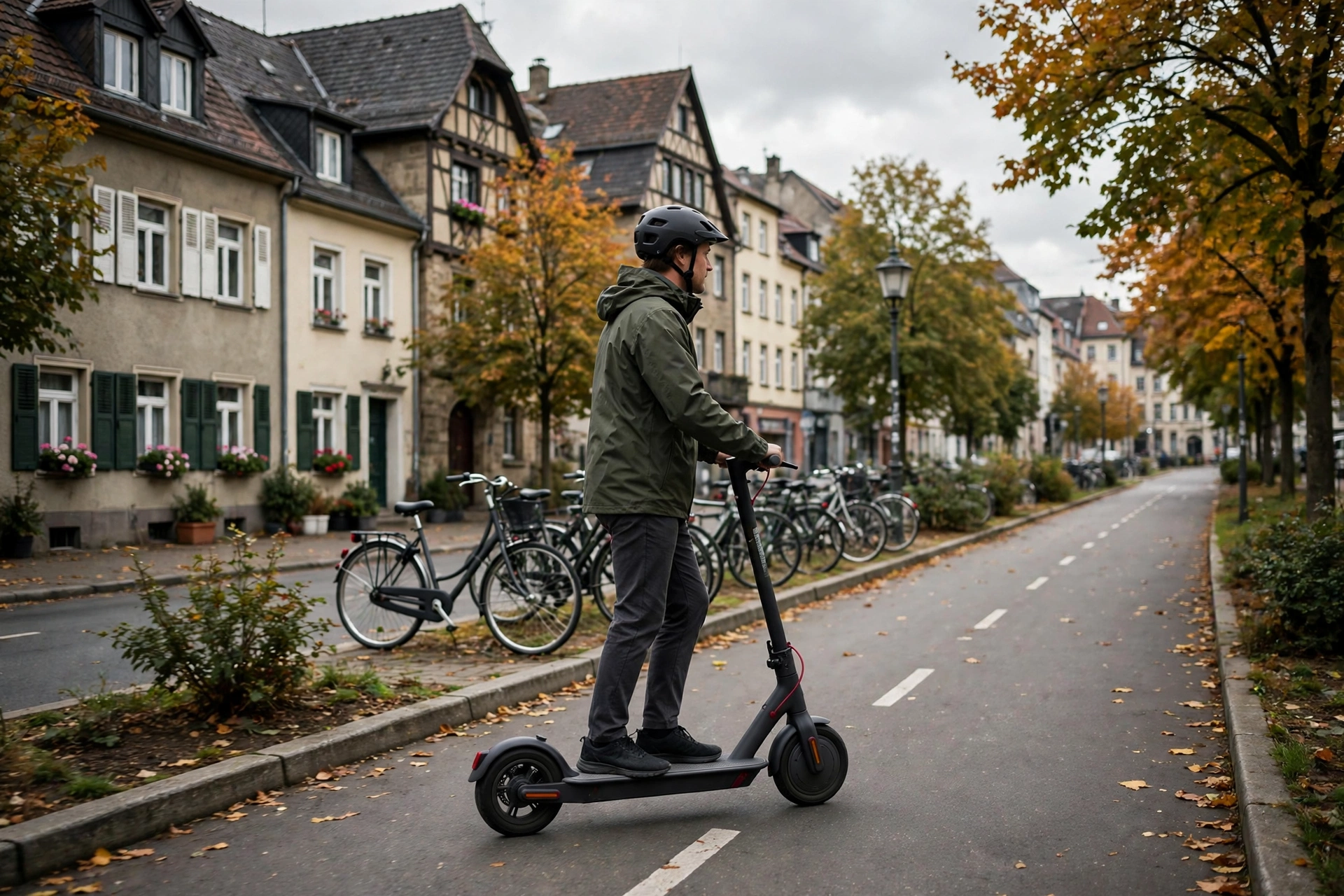
Besides the pavement ban and the single-rider rule, e-scooter riders in Germany must, in general terms, be of a minimum age set by the regulations, ride a vehicle that meets the national equipment and insurance requirements, and follow normal traffic rules, including signals and right of way. E-scooters used on public roads must be insured, which for rental scooters is handled by the operator, and for private scooters is the owner’s responsibility.
Parking rules also matter, particularly for rental scooters. Many cities require rental scooters to be left in designated areas or at least not blocking pavements, entrances, or access routes. Riders who abandon a scooter carelessly can face action from the operator, including account penalties, even apart from any official enforcement. Riding responsibly includes parking responsibly.
What About Visitors Riding E-Scooters in Germany?
Visitors may use rental e-scooters in Germany under the same general rules as residents, and rental apps typically explain the key conditions before the first ride. Language can be a barrier, so it is worth reading the app’s terms in your own language where available, and asking at the rental point if anything is unclear. Do not assume the rules from your home country travel with you: helmet requirements, pavement rules, and age limits all differ across Europe.
Visitors should also think about insurance and liability. Rental cover is arranged by the operator, but it does not remove the rider’s responsibility to ride lawfully and carefully. If you are injured or injure someone else while riding outside the rules — on a pavement, with a passenger, or under the influence — the consequences can be much more serious than a warning. Checking the rules first is a small effort that avoids a large problem.
What Kind of Helmet Suits E-Scooter Riding in Germany?
A well-fitting cycle helmet is the usual choice: light, ventilated, and designed for the speeds and fall types typical of urban e-scooter riding. It should sit level, cover the forehead, and remain stable when you shake your head gently with the straps fastened. A helmet that tips back, presses painfully, or slides around is the wrong fit, however good it looks.
German cities see heavy cycle traffic, and e-scooter riders share cycle paths with cyclists, so visibility matters too. Bright colours, reflective details, and lights help other road users see you, especially in winter or at dusk. Some riders choose helmets with built-in lights or visors, but fit and condition matter more than extras. A helmet damaged in a crash should be replaced, since internal damage is often invisible. For background on how helmet liners manage impact forces, this guide to modern helmet liner technology explains the basics.
How Can Riders Keep Up With Changing Rules?
E-scooter regulation is still a young area, and rules can be adjusted as cities learn from experience. Before riding in a new German city, check the rental operator’s current terms and any local guidance, and watch for signs or app notifications about restricted zones. A few minutes of checking beats an enforcement stop or a collision made worse by riding somewhere you should not have been.
The habits that keep riders safe are consistent whatever the current rules say: wear a helmet, ride on the road or cycle path, carry no passengers, keep to the speed the vehicle and the area allow, and park considerately. Rules set the floor; good judgement sets the standard.
Frequently Asked Questions
Q: Is a helmet legally required on an e-scooter in Germany?
A: In general terms, no general legal requirement applies to adult riders, but helmets are officially recommended and some operators require them in their hire terms. Wearing one is strongly advised.
Q: Can tourists ride rental e-scooters in Germany?
A: Yes, in general terms, under the same rules as residents. Read the rental app’s terms, follow road and cycle path rules, and do not assume your home country’s rules apply.
Q: Where can e-scooters be ridden in Germany?
A: In general terms, on roads and cycle paths, not on pavements, and only one rider per scooter. Local restrictions and designated parking areas may also apply.

Olivia
Writer at Helmet Today, covering helmet reviews, fit and riding safety.