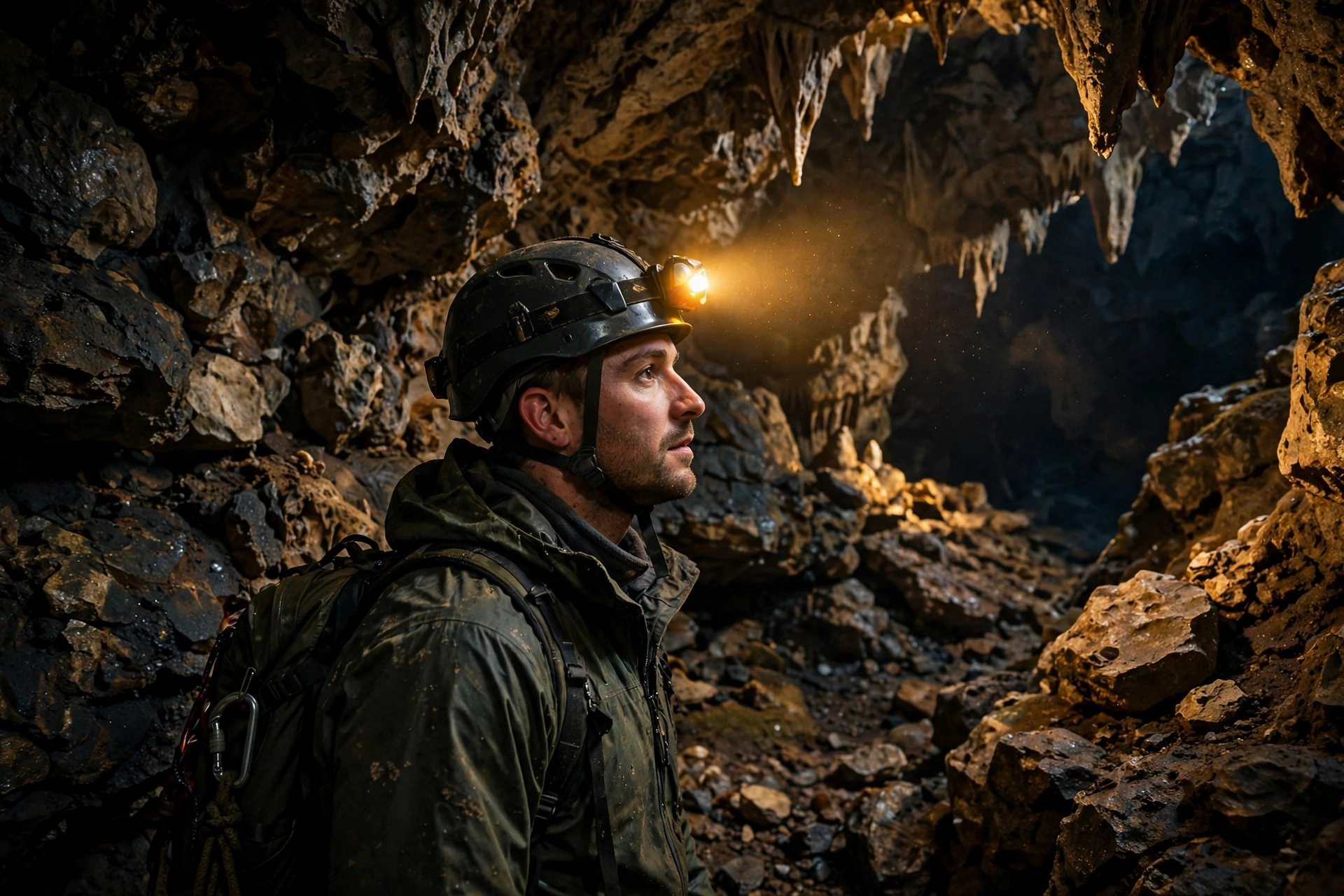
Choose a caving helmet that fits snugly, carries a secure lamp mount, protects against falling rock and bumps in low passages, and stays comfortable for hours underground. A caving helmet is not just a hard hat with a light on it — it is the piece of gear that protects your head while you crawl, climb, and squeeze through spaces where you cannot always see what is above you.
This guide walks through the choices that matter: shell type, fit, lamp mounting, ventilation, and the features that separate a good caving helmet from a poor one.
What Makes a Caving Helmet Different From Other Helmets?
Caving helmets are built for a world of falling rock, low ceilings, and constant contact with stone. The shell needs to resist penetration from a falling rock and absorb impacts from the side as well as the top, because in a crawl or a tight passage you are just as likely to hit your head sideways as from above.
The helmet also has to carry a lamp. Caving happens in total darkness, so the lamp is not an accessory — it is your only light. A caving helmet therefore needs a mount that holds the lamp firmly, keeps it aimed where you look, and survives knocks without shedding the lamp into a stream or down a pitch.
Comfort over long trips matters more underground than in most sports. A caving trip can last many hours, and a helmet that pinches, slips, or presses on your forehead will become miserable long before the trip ends. Weight, padding, and balance all count.
Which Shell Type Should You Choose for Caving?
In general terms, caving helmets come in two broad shell styles: hard plastic shells and foam-lined climbing-style shells. Hard shells are tough, resist abrasion against rock, and tend to last well in rough cave conditions. Foam-lined shells are lighter and often more comfortable, and they absorb impact by deforming, which suits climbers and cavers who value low weight.
Neither style is universally better. A hard shell suits wet, muddy, abrasive caves where the helmet will be scraped against rock all day. A lighter foam shell suits long trips and vertical caving, where every gram on your head adds up over hours of climbing. Think about the caves you actually visit, not the caves you imagine visiting.
Whichever shell you choose, check that it covers the sides and back of your head well, not just the top. Low passages and traverses put the sides of your head against rock, and a helmet with skimpy side coverage leaves a gap exactly where you need protection.
How Should a Caving Helmet Fit?
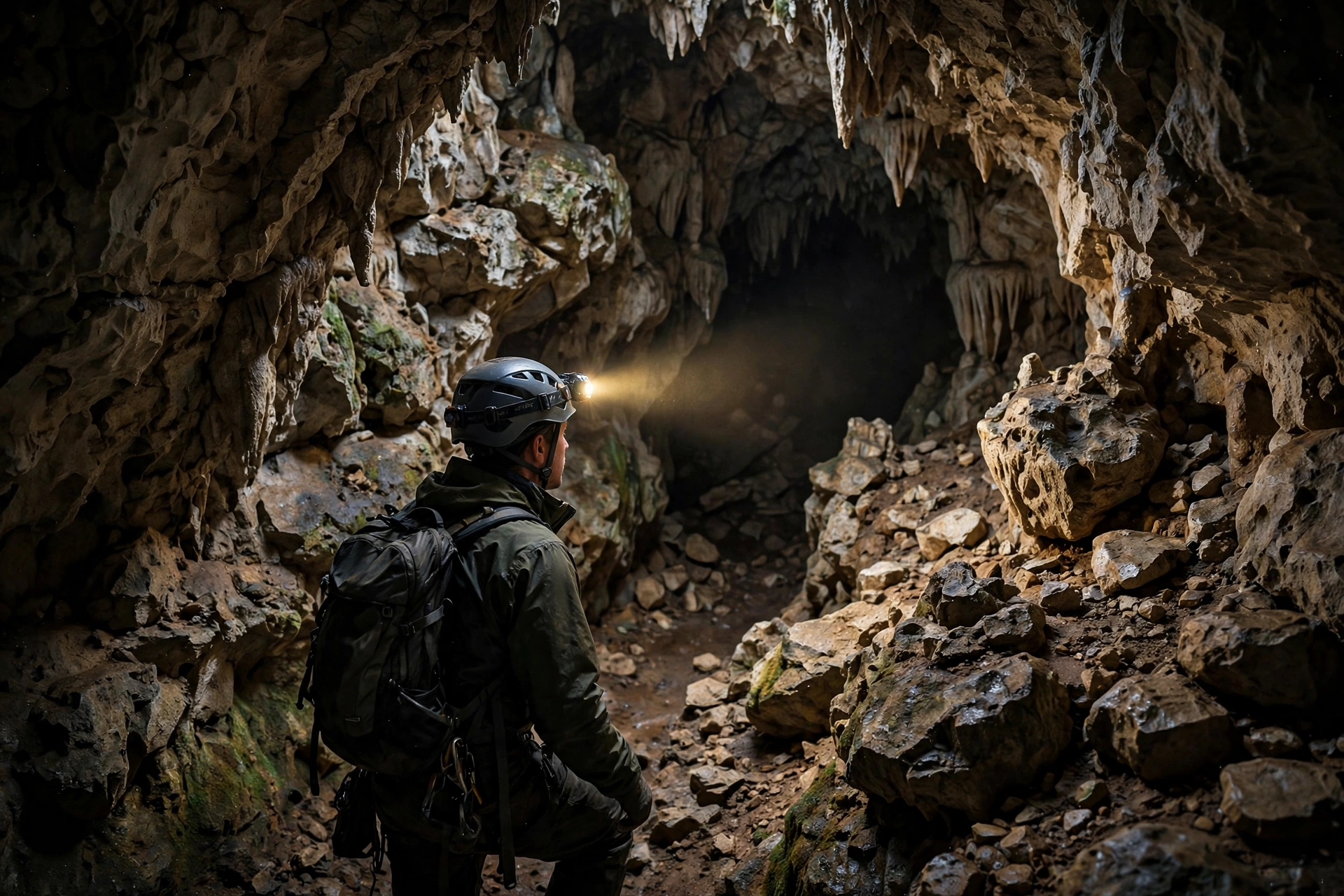
A caving helmet should sit level on your head, snug enough that it does not rock when you shake your head, but not so tight that it gives you a headache within an hour. The fit system — usually a dial, a sliding cradle, or adjustable straps — should be easy to adjust with cold, muddy, or gloved hands, because that is how you will be adjusting it underground.
Try the helmet on with the lamp attached, since the lamp changes the balance. A helmet that feels fine bare can feel front-heavy once a lamp and battery are added. If the helmet tips forward when you look down, the fit system or the lamp position needs adjusting.
Check the chin strap too. It should hold the helmet in place without choking you, and it should be adjustable enough to fit over a hood or balaclava in a cold cave. A helmet that stays put when you crawl, duck, and climb is a helmet that will actually protect you when it matters.
What Lamp Mount Features Matter Most?
The mount is the detail that makes or breaks a caving helmet. Look for a mount that locks the lamp in place with a positive click or screw, rather than a friction fit that can work loose. The lamp should sit centred on the front of the helmet so its beam follows your gaze, and the mount should let you tilt the beam up and down without tools.
Consider how the lamp is powered. Some lamps use a battery pack mounted on the helmet, others run a cable to a battery on your belt or harness. A helmet-mounted battery keeps everything in one place but adds weight to your head; a remote battery lightens the helmet but adds a cable to manage. Both work, and the choice is mostly about balance and personal preference.
Also check whether the mount accepts the lamp you already own, or whether it locks you into one maker’s system. A versatile mount that accepts common lamp brackets gives you more choice and makes replacement easier if a lamp is damaged underground.
What Else Should You Look For in a Caving Helmet?
Ventilation matters, but in a different way from sports helmets. Caves are often cool and damp, so you do not need the large vents of a cycling helmet, but some airflow helps prevent the helmet from becoming a sweat trap on a long, strenuous trip. Small, protected vents that do not let in drips or mud are the practical compromise.
Durability of the small parts counts too: buckles, dials, and clips that crack in the cold or clog with mud will fail at the worst moment. Choose a helmet whose fit system and clips feel solid and simple, with as few fragile parts as possible. And when you compare helmets, look at how they manage impact energy overall — modern approaches such as rotational-impact liners like MIPS are designed to reduce twisting forces in angled impacts, which is exactly the kind of glancing blow a low cave roof delivers.
Finally, buy a helmet you can get spare parts for: replacement padding, straps, and lamp clips. A caving helmet that cannot be maintained is a helmet with a short life, however good it feels on day one.
Frequently Asked Questions
Q: Can I use a climbing helmet for caving?
A: In general terms, yes — many cavers use climbing-style helmets, especially for vertical caving. Just make sure it has a secure lamp mount, good side coverage, and a fit system you can adjust with gloved hands.
Q: Can I use a construction hard hat for caving?
A: Not ideally. A hard hat is designed for top impacts on a work site and usually lacks a lamp mount, side coverage, and a chin strap suited to crawling and climbing. A purpose-made caving or climbing helmet is a better choice.
Q: How tight should a caving helmet be?
A: Snug enough that it does not rock or slide when you shake your head, but loose enough to wear comfortably for hours. If it gives you a headache within an hour on the surface, it will be worse underground.

Olivia
Writer at Helmet Today, covering helmet reviews, fit and riding safety.