The difference between a cranial helmet and a regular baby helmet is purpose: a cranial helmet is a custom medical device that guides head shape as a baby grows, while a regular baby helmet is a soft protective helmet meant to cushion everyday bumps and falls. They look similar at a glance — both sit on a baby’s head — but they are designed, fitted, and used in completely different ways, and one cannot do the other’s job.
Confusion between the two is common, especially when shopping online, where soft baby helmets are sometimes described in vague terms. This guide explains, in general terms, what each helmet is for, how they differ in fit and shape, how daily routines differ, and how families can tell which type, if either, applies to their child. It is general information only, not medical advice for any individual child.
What Is Each Helmet Designed to Do?
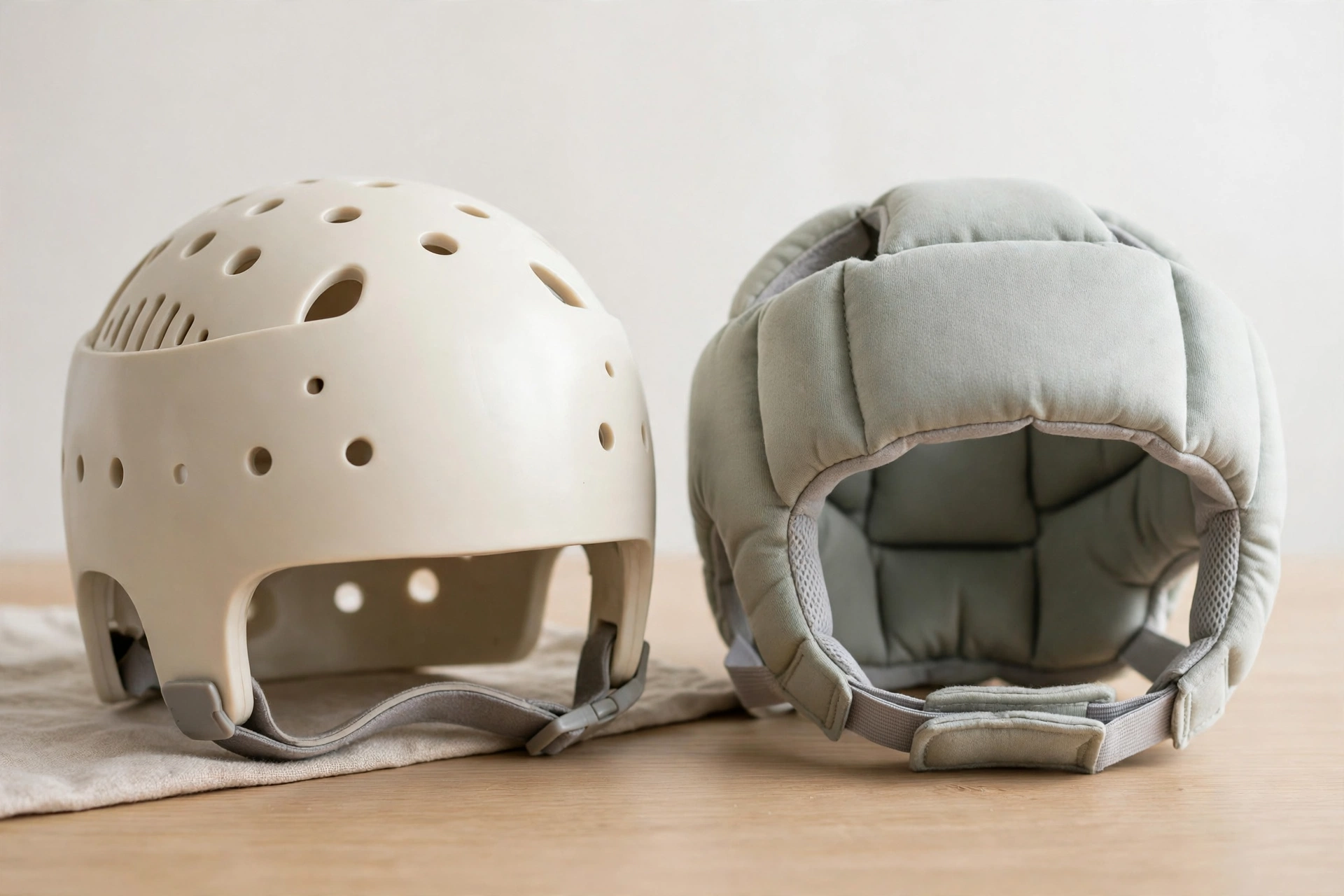
A cranial helmet is designed to reshape. It is prescribed by a clinician after a head-shape assessment, custom-made to the individual baby’s head, and worn for most of the day over a period of months. Its inner shape holds the fuller areas of the head gently in place and leaves space over flatter areas, so that as the skull grows, growth is directed toward a more even shape. It is not designed to absorb impact, and it should not be treated as safety equipment.
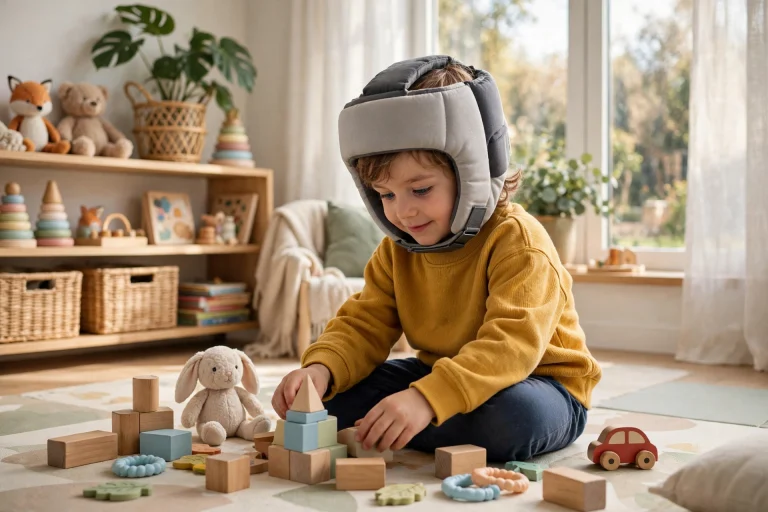
A regular baby helmet, often sold as a soft head protector or toddler safety helmet, is designed to protect. It is usually made of soft foam with a fabric cover, bought in standard sizes, and worn during play, early walking, or other activities where a baby or toddler might bump their head. Its job is to soften minor knocks against furniture, floors, and playground surfaces. It does not guide head shape, and wearing one will not change the shape of a baby’s skull in any planned way.
The distinction matters because the two helmets carry different expectations. A cranial helmet comes with clinical supervision, fitting appointments, and a treatment plan. A regular baby helmet comes with a size chart and care instructions, and no clinical follow-up. Buying the wrong type for the wrong reason wastes money at best and, in the case of a baby who needs clinical assessment, can delay the right care.
How Do They Differ in Fit and Shape?
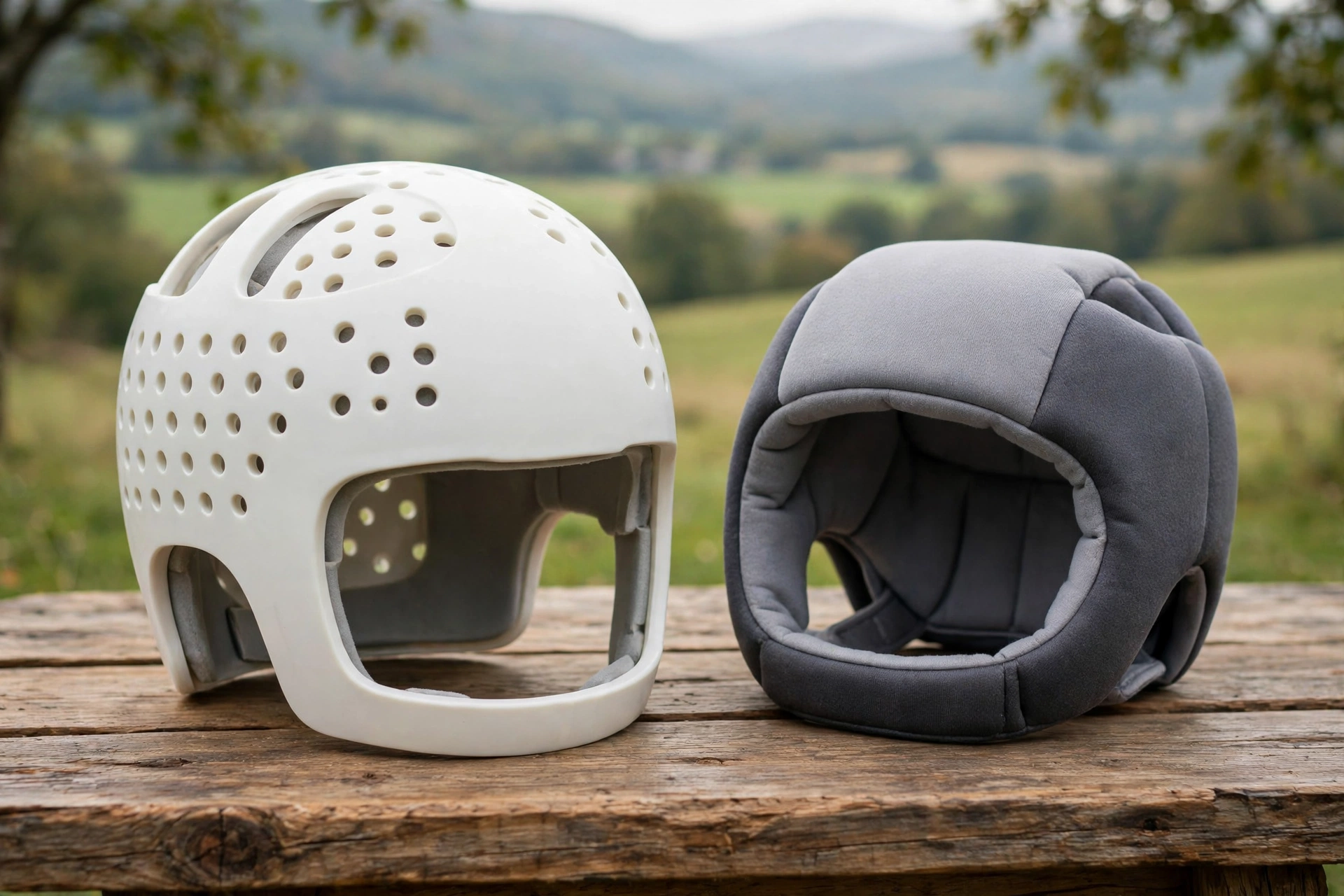
Fit is where the difference becomes visible. A cranial helmet is made for one baby: it is built from a scan or mould of that baby’s head, and its inner surface is shaped to match that head’s specific pattern of fullness and flatness. Two babies with the same head circumference can have quite different cranial helmets, because the shape inside is what matters, not just the size. Adjustments are made by the clinic as the baby grows, often by modifying the inner lining.
A regular baby helmet, by contrast, is made in standard sizes — small, medium, large — and fits by circumference and a chin strap. Its inner surface is uniform padding, the same all the way around, because its job is to cushion evenly rather than to direct growth. Some models have adjustable straps or removable pads to fine-tune the fit, but none of them is shaped to an individual baby’s head.
Weight and materials differ too. Cranial helmets are usually a hard outer shell with a foam lining, light but rigid enough to hold their shape. Regular baby helmets are softer throughout, with a foam body and a fabric cover, because they need to absorb a knock rather than hold a shape.
How Do Daily Routines Differ?
Daily routines differ mainly in how long each helmet is worn and who supervises it. A cranial helmet is typically worn for most of the day and night, with a short daily break for cleaning and skin checks, and the family attends regular clinic appointments for fit checks and progress reviews. The schedule is set by the clinician, and parents are usually asked to report skin problems or fit changes promptly rather than adjusting the helmet themselves.
A regular baby helmet is worn only during the activity it is bought for — playtime, a walk, or a session on a ride-on toy — and taken off afterwards. There are no appointments, no treatment timeline, and no clinical measurements. Care is simpler: wipe it clean, check the straps, and replace it if the foam is damaged or compressed. Parents decide when it is worn, based on the activity and their own judgement.
Cleaning routines differ as well. Cranial helmets need regular cleaning of both the shell and the lining, plus skin checks, because they are worn for long hours against a baby’s head. Regular baby helmets need cleaning too, but less often and with less at stake, since they are worn for shorter periods. If you are learning about helmet features in general, reading about what MIPS is for helmets can help you understand a different helmet technology, though it applies to sports helmets rather than either of these types.
How Do You Know Which Type Applies to Your Child?
In general terms, the question to ask is what problem you are trying to solve. If the concern is head shape — a flat spot that is not improving, or an uneven shape noticed by a health visitor or paediatrician — that is a clinical question, and the right next step is to raise it with a clinician rather than buying a helmet online. A clinician can assess the shape, discuss repositioning, and decide whether a cranial helmet or another approach is appropriate.
If the concern is bumps during play or early walking, a regular soft baby helmet may be worth considering, and the choice is a shopping decision rather than a medical one: size, comfort, coverage, and ease of cleaning matter most. It is still worth checking that the helmet fits well and does not slip over the baby’s eyes, and that it is comfortable enough that the child will actually wear it.
When in doubt, ask a clinician before buying. This is especially important if a baby has a diagnosed condition, is under specialist care, or has already been referred for a head-shape assessment. A short conversation can prevent the common mistake of buying a soft helmet for a head-shape concern, or seeking a cranial helmet for everyday bump protection. General information in articles like this one cannot replace advice tailored to an individual child.
Frequently Asked Questions
Q: Can a regular baby helmet reshape my baby’s head?
A: No, not in any planned way. A regular baby helmet has uniform padding designed to cushion bumps, not to direct growth. Head-shape concerns should be discussed with a clinician, who can advise whether a cranial helmet or another approach is appropriate.
Q: Can a cranial helmet protect my baby from falls?
A: A cranial helmet is not designed as impact protection and should not be relied on for that purpose. Its rigid shell and custom shape serve a different job: guiding head growth under clinical supervision.
Q: Can a baby wear both types of helmet?
A: In general terms, a baby under cranial helmet treatment follows the clinic’s wearing schedule, and adding another helmet over or instead of it is not advisable without asking the clinic first. Always follow your clinician’s advice for your child.

Olivia
Writer at Helmet Today, covering helmet reviews, fit and riding safety.